
Daniel 3:19
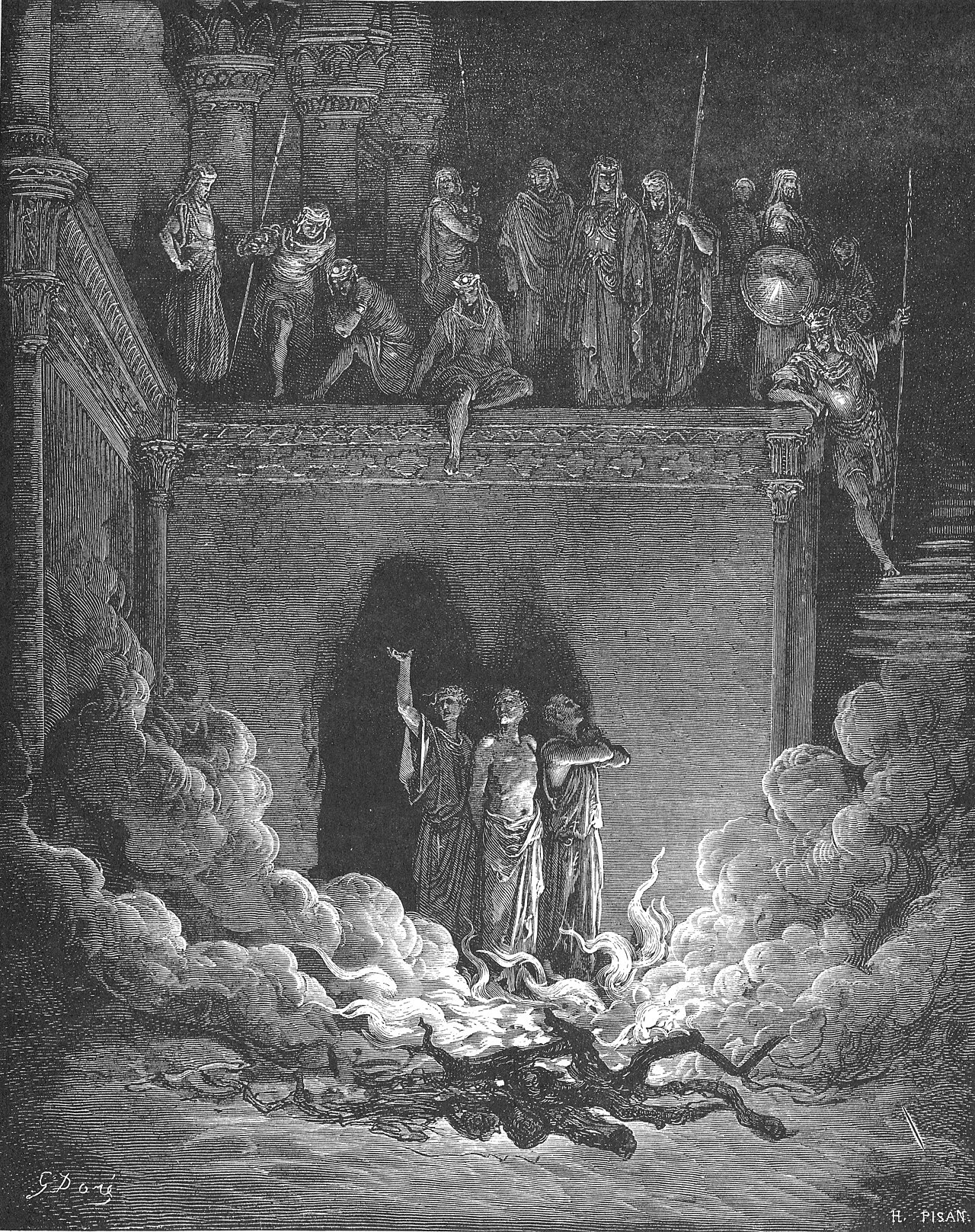
in Daniel 3At this, Nebuchadnezzar was filled with rage, and the expression on his face changed toward Shadrach, Meshach, and Abednego. He gave orders to heat the furnace seven times hotter than usual,
BSB
The same verse in ASV and KJV ▾
ASV
Then was Nebuchadnezzar full of fury, and the form of his visage was changed against Shadrach, Meshach, and Abed-nego: therefore he spake, and commanded that they should heat the furnace seven times more than it was wont to be heated.
KJV
Then was Nebuchadnezzar full of fury, and the form of his visage was changed against Shadrach, Meshach, and Abed–nego: therefore he spake, and commanded that they should heat the furnace one seven times more than it was wont to be heated.
⋯
This verse in Daniel 3
Commentary
12 notes on this verseVerse 19. "Then Nebuchadnezzar was filled with rage, and the aspect of his countenance was wholly altered." In certain Psalms the titles contain the notation; "On behalf of those who are to be wholly altered." And so the expression "wholly altered" is ambiguous, comprising both the idea of change for the worse or change for the better. Now of course the alteration of Nebuchadnezzar's visage cannot be reconciled with a favorable sense.
This site's exposition
seven times hotter than usual
Jamieson, Fausset and Brown note that the king had shown forbearance in verses 14 and 15, and anger fills him once it is refused. They render the order as hotter than it was ever seen to be heated. Matthew Henry says it made the rescue more illustrious.
This site's exposition
seven times hotter than usual
on Daniel 3:19-23
The king's face changes and he orders the furnace heated “seven times hotter than usual”. The three are tied up “wearing robes, trousers, turbans, and other clothes,” and “the fiery flames killed the men who carried up” the prisoners, so the fire is shown to be real before the miracle. Still “firmly bound,” they “fell into the blazing fiery furnace”.
The record, by era
The Church Fathers2 voices
And so indeed they prevailed, if it is necessary to speak the truth, the boys… For as strong as the word of the boys was, so was the king wrathful and he said, "Heat the furnace seven times hotter," who was, as always, already defeated by them. For the king prevailed in terrestrial matters, but the three boys prevailed in faith towards God.
But someone will say, "And so was not Daniel, being a friend of the king, able to intercede on their behalf and pardon the three boys?" He was able, but it happened in this way so that the great works of God may be shown and the Babylonians may learn to fear God, and on account of this find rest, so that also their faith may be shown and God may be glorified in them. For if this had not happened the Babylonians would be able to say, "If Daniel did not intercede with the king on their behalf, these boys would today be destroyed in fire," and reckon grace to be human rather than the power of God. But why was the king not sorely pricked, having actually seen Daniel, who was a Jew, and why did he not say to him, "Why do you not worship the image?" He no doubt would have said to the king, "Because I do not worship works made with hands, but the living God who made heaven and earth and has lordship over all flesh." Just as he answered Cyrus in the presence of Bel. The king, having been stunned, said to him… … Bel, except according to the thoughts of the satraps. "For thirty days if one should ask any God or man but from you, he shall be cast into the den of lions." [Daniel 6:7] So it was necessary for the three boys alone to be glorified in the furnace, but before Bel and the reigning Cyrus, it was necessary for Daniel alone to be cast into the den of lions, each of them arranging their own part and observing their own season, so that even Nebuchadnezzar the king of the Babylonians, who saw that the three boys were not destroyed by fire, may glorify God, and Cyrus the Persian, who saw that Daniel was not swallowed by the lions, may be taught that God alone is the God of heaven. And so in this way in due time God administers the affairs of men through his slaves the prophets and persuades all men to come to knowledge of himself. [1 Timothy 2:4; 2 Timothy 3:7]
The Puritans and the Awakening3 voices
But God brought glory to himself out of this foolish instance of the tyrant's rage; for, though it would not have made their death the more grievous, yet it did make their deliverance much the more illustrious. He ordered them to be bound in their clothes, and cast into the midst of the burning fiery furnace, which was done accordingly,
We are not careful - Hebrew. We care not: there is no need of any answer in this case for it is in vain for us to debate the matter; the king is resolved to have his will of us, and we are resolved on the contrary. But if not - It was therefore all one to them, which way God would honour himself; they were resolved to suffer rather than sin, and leave the cause to God.
Then was Nebuchadnezzar full of fury,....
4 more voices on this verse
The Puritans and the Awakening1 voice
Their miraculous preservation in the fire by the power of God, and their invitation out of the fire by the favour of the king, who was by this miracle convinced of his error in casting them in,
The Nineteenth Century3 voices
A commentator
Jamieson, Fausset & Brown1802–1910
Commentary Critical and Explanatory on the Whole Bible (1871)
proposed
visage . . . changed--He had shown forbearance (Da 3:14, 15) as a favor to them, but now that they despise even his forbearance, anger "fills" him, and is betrayed in his whole countenance. seven times more than it was wont--literally, "than it was (ever) seen to be heated." Seven is the perfect number; that is, it was made as hot as possible.
quarantine:debris (2026-07-29) — starts-lowercase
Then was Nebuchadnezzar full of fury - How strange is this, after having had so many proofs of the supremacy of Jehovah! He had seen how God poured contempt upon his authority in the case of the three Hebrews, and yet he will try his strength once more! How infatuated is man! Seven times more - As hot as it could be made. Seven expresses the great intensity of the heat.
A commentator
Albert Barnes1798–1870
Notes, Explanatory and Practical, on the Old and New Testaments (1832-1869)
proposed
Then was Nebuchadnezzar full of fury - Margin, “filled.” He was exceedingly enraged. He evidently was not prepared for a stand so firm and determined on their part, and he did not appreciate their motives, nor was he disposed to yield to them the privilege and right of following their honest convictions.
The words behind it
22 Hebrew wordsEvery Hebrew word of this verse in the order it stands, with what it means and the door to its own study. The last column counts the times a word stands in the whole Bible: the rarer the word, the more the places it appears belong together.
| Hebrew | Sound | Meaning | Word study | In the Bible |
|---|---|---|---|---|
| בֵּאדַ֨יִן | bedayin | <in> then | H116 → | 57 times |
| נְבוּכַדְנֶצַּ֜ר | nevukhadnetzar | Nebuchadnezzar | H5020 → | 31 times |
| הִתְמְלִ֣י | hitmeli | he was filled | H4391 → | |
| חֱמָ֗א | chema' | anger | H2528 → | |
| וּצְלֵ֤ם | utzelem | and [the] image of | H6755 → | 17 times |
| אַנְפּ֙וֹהִי֙ | ʾanpohi | face his | H600 → | |
| אֶשְׁתַּנִּ֔י | ʾeshtanu | it was changed | H8133 → | 21 times |
| עַל־ | ʾal- | against | H5922 → | 104 times |
| שַׁדְרַ֥ךְ | shadrakh | Shadrach | H7715 → | 14 times |
| מֵישַׁ֖ךְ | meishakh | Meshach | H4336 → | 14 times |
| וַעֲבֵ֣ד | vaaved | and Abed- | H5665 → | 28 times |
| נְג֑וֹ | nego | -nego | H5665 → | 28 times |
| עָנֵ֤ה | ʾaneh | [he was] replying | H6032 → | 30 times |
| וְאָמַר֙ | veamar | and [he was] saying | H560 → | 71 times |
| לְמֵזֵ֣א | lemeze' | to heat | H228 → | 3 times |
| לְאַתּוּנָ֔א | leatuna' | <obj.> furnace the | H861 → | 10 times |
| חַ֨ד־ | chad- | one | H2298 → | 14 times |
| שִׁבְעָ֔ה | shivah | seven | H7655 → | 6 times |
| עַ֛ל | ʾal | over | H5922 → | 104 times |
| דִּ֥י | di | that | H1768 → | 345 times |
| חֲזֵ֖ה | chazeh | [was] proper | H2370 → | 31 times |
| לְמֵזְיֵֽהּ׃ | lemezeyeh | to heat it | H228 → | 3 times |
בֵּאדַ֨יִן<in> then
bedayinH116 →57 times
נְבוּכַדְנֶצַּ֜רNebuchadnezzar
nevukhadnetzarH5020 →31 times
הִתְמְלִ֣יhe was filled
hitmeliH4391 →
חֱמָ֗אanger
chema'H2528 →
וּצְלֵ֤םand [the] image of
utzelemH6755 →17 times
אַנְפּ֙וֹהִי֙face his
ʾanpohiH600 →
אֶשְׁתַּנִּ֔יit was changed
ʾeshtanuH8133 →21 times
עַל־against
ʾal-H5922 →104 times
שַׁדְרַ֥ךְShadrach
shadrakhH7715 →14 times
מֵישַׁ֖ךְMeshach
meishakhH4336 →14 times
וַעֲבֵ֣דand Abed-
vaavedH5665 →28 times
נְג֑וֹ-nego
negoH5665 →28 times
עָנֵ֤ה[he was] replying
ʾanehH6032 →30 times
וְאָמַר֙and [he was] saying
veamarH560 →71 times
לְמֵזֵ֣אto heat
lemeze'H228 →3 times
לְאַתּוּנָ֔א<obj.> furnace the
leatuna'H861 →10 times
חַ֨ד־one
chad-H2298 →14 times
שִׁבְעָ֔הseven
shivahH7655 →6 times
עַ֛לover
ʾalH5922 →104 times
דִּ֥יthat
diH1768 →345 times
חֲזֵ֖ה[was] proper
chazehH2370 →31 times
לְמֵזְיֵֽהּ׃to heat it
lemezeyehH228 →3 times
A shaded row is a word that stands 400 times or fewer in the Bible.
The walk
8 stopsEach card is a verse this one points to, and under it the verses that one points to in turn. Where several paths arrive at the same place, that place is listed first: the text keeps returning to it.
Through
Proverbs 21:24Mocker is the name of the proud and arrogant man—of him who acts with excessive pride.
it leads to
- Psalms 1:1
Blessed is the man who does not walk in the counsel of the wicked, or set foot on the path of sinners, or sit in the seat of mockers.
- Psalms 1:1
Through
Daniel 5:6his face grew pale and his thoughts so alarmed him that his hips gave way and his knees knocked together.
it leads to
- Nahum 2:10
She is emptied! Yes, she is desolate and laid waste! Hearts melt, knees knock, bodies tremble, and every face grows pale!
- Ezekiel 7:17
Every hand will go limp, and every knee will turn to water.
- Daniel 7:28
Thus ends the matter. As for me, Daniel, my thoughts troubled me greatly, and my face turned pale. But I kept the matter to myself.”
- Daniel 4:5
I had a dream, and it frightened me; while in my bed, the images and visions in my mind alarmed me.
- Nahum 2:10
Through
Leviticus 26:28then I will walk in fury against you, and I, even I, will punish you sevenfold for your sins.
it leads to
- Isaiah 59:18
So He will repay according to their deeds: fury to His enemies, retribution to His foes, and recompense to the islands.
- Ezekiel 8:18
Therefore I will respond with wrath. I will not look on them with pity, nor will I spare them. Although they shout loudly in My ears, I will not listen to them.”
- Ezekiel 5:13
And when My anger is spent and I have vented My wrath against them, I will be appeased. And when I have spent My wrath on them, they will know that I, the LORD,…
- Isaiah 59:18
Where this verse is studied
On this page
About Daniel
This page draws on 11 works. Open the list of works
This page draws on Adam Clarke, Commentary on the Bible; Albert Barnes, Notes, Explanatory and Practical, on the Old and New Testaments (1832-1869); Carl Friedrich Keil, Biblical Commentary on the Book of Daniel; Hippolytus of Rome, Commentary on Daniel 2.25.2-3; Hippolytus of Rome, Commentary on Daniel 2.25.4-26.4; Jamieson, Fausset & Brown, Commentary Critical and Explanatory on the Whole Bible; Jerome, St. Jerome, Commentary on Daniel, CHAPTER THREE; John Gill, Exposition of the Old Testament; John Gill, Exposition of the Old Testament (1748-1763); John Wesley, Explanatory Notes upon the Old Testament and Matthew Henry, Commentary on the Whole Bible.