
2 Samuel 23:2
in 2 Samuel 23The Spirit of the LORD spoke through me; His word was on my tongue.
BSB
The same verse in ASV and KJV ▾
ASV
The Spirit of Jehovah spake by me, And his word was upon my tongue.
KJV
The Spirit of the Lord spake by me, and his word was in my tongue.
⋯
This verse in 2 Samuel 23
Commentary
6 notes on this verseA commentator
Jamieson, Fausset & Brown1802–1910
Commentary Critical and Explanatory on the Whole Bible (1871)
The Spirit of the Lord spake by me--Nothing can more clearly show that all that is excellent in spirit, beautiful in language, or grand in prophetic imagery, which the Psalms of David contain, were owing, not to his superiority in natural talents or acquired knowledge, but to the suggestion and dictates of God's Spirit.
This site's exposition
the last words of David
on 2 Samuel 23:1-3
David's titles are stacked in rising order: son of Jesse, the man raised up on high, the anointed of the God of Jacob, the sweet psalmist of Israel. The Spirit of the LORD spake by me is David's own account of how the psalms were made, one of only four occurrences of that name of the Spirit in these two books, and Acts 1:16 says the same thing of him from the other side. The oracle itself is one sentence: he that ruleth over men must be just, ruling in the fear of God.
This site's exposition
His word was on my tongue
The Spirit of the LORD spoke through David, and Adam Clarke reads two claims here: the Spirit supplied the matter of the song, and His word on the tongue supplied its wording. Jamieson, Fausset and Brown credit the beauty of the Psalms to the dictation of the Spirit over the own gifts of David. Cyril of Jerusalem counts David among the prophets.
The record, by era
The Church Fathers1 voice
In Moses' day the Spirit was given by the imposition of hands; and Peter imparted the Spirit by the imposition of hands. Upon you also, who are to be baptized, the grace will come. In what manner I do not say, for I do not anticipate the proper time.… We learn clearly in the book of Kings [Samuel], of Samuel and David, how by the Holy Spirit they prophesied and were leaders of the prophets. Samuel in fact was called the "seer."
The Puritans and the Awakening1 voice
The Spirit of the Lord spake by me,....
The Nineteenth Century1 voice
The Spirit of the Lord spake by me - Hence the matter of his writing came by direct and immediate inspiration. His word was in my tongue - Hence the words of this writing were as directly inspired as the matter.
How the passage was read
What the Jewish commentators add
On the verses either side of this one
These are Dovid's words. Dovid's last prophecy. What were the first words? The words of the song that were said above. 1 But all the songs and praises that he [Dovid] said are not called "words". 2 The use of the word דִּבְרֵי here denotes prophecy, not songs and praises.
This section is reception history: how the passage was read and kept in the Jewish tradition. Where a reading parts from an essential of the Christian faith, the section says so at that point.
Texts and citation data: Sefaria; each excerpt follows its version’s licence. 4 further sources are cited on this chapter that carry no English text this site may quote or only restate the verse.
The words behind it
7 Hebrew wordsEvery Hebrew word of this verse in the order it stands, with what it means and the door to its own study. The last column counts the times a word stands in the whole Bible: the rarer the word, the more the places it appears belong together.
| Hebrew | Sound | Meaning | Word study | In the Bible |
|---|---|---|---|---|
| ר֥וּחַ | ruach | [the] spirit of | H7307 → | 378 times |
| יְהוָ֖ה | yahweh | Yahweh | H3068 → | 6520 times |
| דִּבֶּר־ | diber- | he has spoken | H1696 → | 1141 times |
| בִּ֑י | bi | by <the> me | ||
| וּמִלָּת֖וֹ | umilato | and speech his | H4405 → | |
| עַל־ | ʾal- | [is] on | H5921 → | 5755 times |
| לְשׁוֹנִֽי׃ | leshoni | tongue my | H3956 → |
ר֥וּחַ[the] spirit of
ruachH7307 →378 times
יְהוָ֖הYahweh
yahwehH3068 →6520 times
דִּבֶּר־he has spoken
diber-H1696 →1141 times
בִּ֑יby <the> me
bi
וּמִלָּת֖וֹand speech his
umilatoH4405 →
עַל־[is] on
ʾal-H5921 →5755 times
לְשׁוֹנִֽי׃tongue my
leshoniH3956 →
A shaded row is a word that stands 400 times or fewer in the Bible.
The walk
8 stopsEach card is a verse this one points to, and under it the verses that one points to in turn. Where several paths arrive at the same place, that place is listed first: the text keeps returning to it.
Through
2 Peter 1:21For no such prophecy was ever brought forth by the will of man, but men spoke from God as they were carried along by the Holy Spirit.
it leads to
- Acts 1:16
“Brothers, the Scripture had to be fulfilled which the Holy Spirit foretold through the mouth of David concerning Judas, who became a guide for those who arrested Jesus.
Reached by 2 separate paths from here.
- 2 Timothy 3:15–17
From infancy you have known the Holy Scriptures, which are able to make you wise for salvation through faith in Christ Jesus.
- 1 Peter 1:11
trying to determine the time and setting to which the Spirit of Christ in them was pointing when He predicted the sufferings of Christ and the glories to follow.
- Luke 1:70
as He spoke through His holy prophets, those of ages past,
- Hebrews 10:15
The Holy Spirit also testifies to us about this. First He says:
- Acts 1:16
Through
Mark 12:36Speaking by the Holy Spirit, David himself declared: ‘The Lord said to my Lord, “Sit at My right hand until I put Your enemies under Your feet.”’
it leads to
- Psalms 110:1
The LORD said to my Lord: “Sit at My right hand until I make Your enemies a footstool for Your feet.”
- Hebrews 1:13
Yet to which of the angels did God ever say: “Sit at My right hand until I make Your enemies a footstool for Your feet”?
- Matthew 22:43–45
Jesus said to them, “How then does David in the Spirit call Him ‘Lord’? For he says:
- Psalms 110:1
Where this verse is studied
On this page
About 2 Samuel
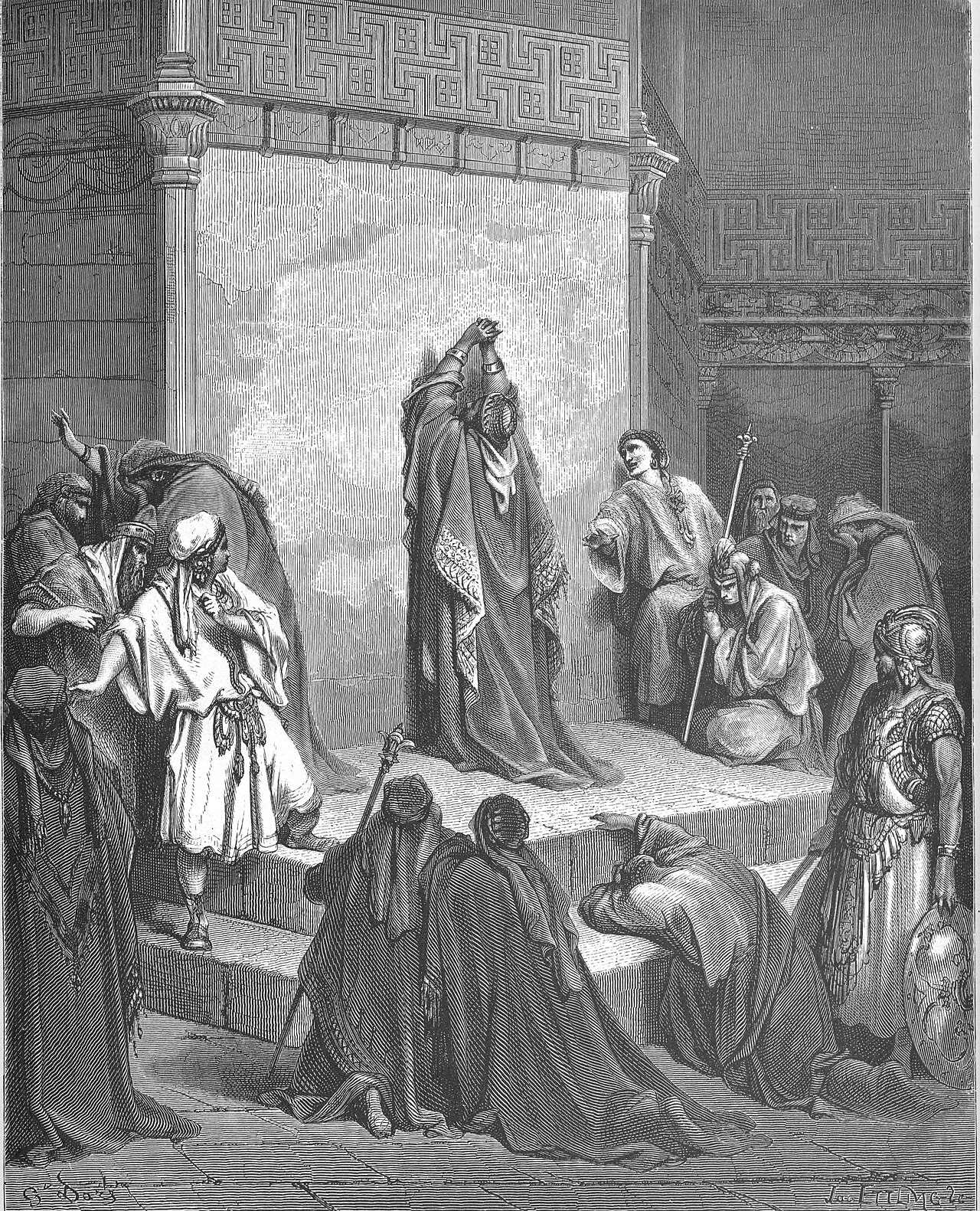
This page draws on Adam Clarke, Commentary on the Bible; Cyril of Jerusalem, Catechetical Lecture 16:26, 28; Jamieson, Fausset & Brown, Commentary Critical and Explanatory on the Whole Bible; John Gill, Exposition of the Old Testament (1748-1763); Keil and Delitzsch, Biblical Commentary on the Books of Samuel and Matthew Henry, Commentary on the Whole Bible.