
2 Samuel 21:10
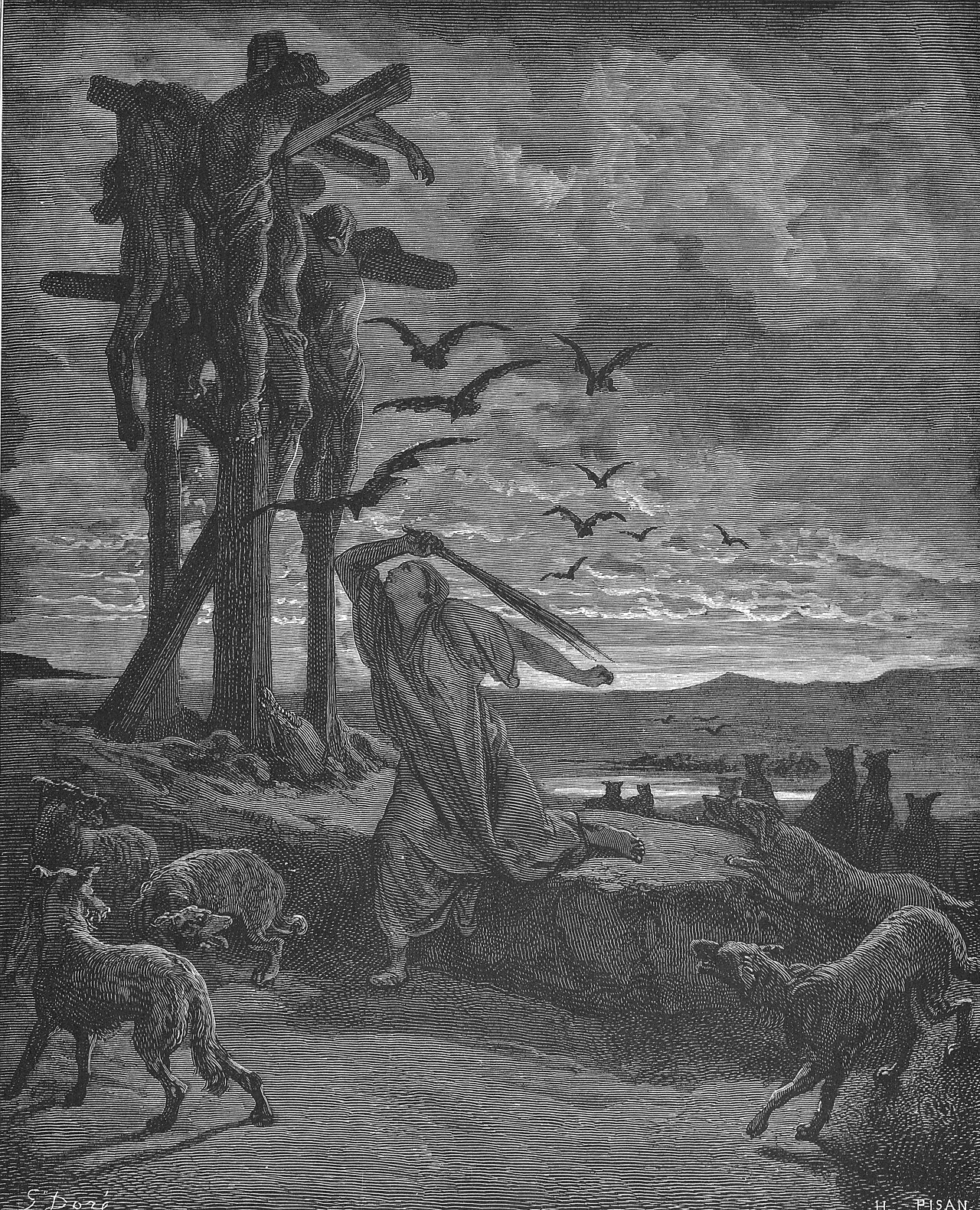
in 2 Samuel 21And Rizpah the daughter of Aiah took sackcloth and spread it out for herself on a rock. From the beginning of the harvest until the rain from heaven poured down on the bodies, she did not allow the birds of the air to rest on them by day, nor the beasts of the field by night.
BSB
The same verse in ASV and KJV ▾
ASV
And Rizpah the daughter of Aiah took sackcloth, and spread it for her upon the rock, from the beginning of harvest until water was poured upon them from heaven; and she suffered neither the birds of the heavens to rest on them by day, nor the beasts of the field by night.
KJV
And Rizpah the daughter of Aiah took sackcloth, and spread it for her upon the rock, from the beginning of harvest until water dropped upon them out of heaven, and suffered neither the birds of the air to rest on them by day, nor the beasts of the field by night.
⋯
This verse in 2 Samuel 21
Commentary
7 notes on this verseRizpah - took sackcloth - Who can read the account of Rizpah’s maternal affection for her sons that were now hanged, without feeling his mind deeply impressed with sorrows? Did God require this sacrifice of Saul’s sons, probably all innocent of the alleged crime of their father? Was there no other method of averting the Divine displeasure? Was the requisition of the Gibeonites to have Saul’s sons sacrificed to God, to be considered as an oracle of God? Certainly not; God will not have man’s blood for sacrifice, no more than he will have swine’s blood.
This site's exposition
spread it for her upon the rock
on 2 Samuel 21:10-11
Rizpah pitches sackcloth on the bare rock and keeps a vigil the law did not require of her, driving off carrion birds by day and wild animals by night across the months from barley harvest until the autumn rain finally falls. Wesley reads her vigil as evidence the bodies had to stay exposed rather than be buried at once, until God's judgment against the land was answered. Word of her watch reaches David, and Gill reads the report as moving him to compassion rather than offense, since a grieving mother's faithfulness could not be mistaken for a grudge against the throne. One woman's unbroken watch over the dead becomes the reason a king finally remembers the unburied bones of a whole family.
The record, by era
The Puritans and the Awakening4 voices
Spread it - As a tent to dwell in: being informed that their bodies were not to be taken away speedily, as the course of the law was in ordinary cases, but were to continue there until God was intreated, and removed the present judgment.
He that is thus left hanged is accursed; therefore ordinary malefactors must not be so abused; but therefore these must, because they were sacrificed, not to the justice of the nation, but for the crime of the nation (no less a crime than the violation of the public faith) and for the deliverance of the nation from no less a judgment than a general famine.
And Rizpah the daughter of Aiah took sackcloth,....
David was so far from being displeased at what Rizpah had done that he was himself stirred up by it to do honour to the house of Saul, and to these branches of it among the rest; thus it appeared that it was not out of any personal disgust to the family that he delivered them up, and that he had not desired the woeful day, but that he was obliged to do it for the public good.
The Nineteenth Century1 voice
A commentator
Albert Barnes1798–1870
Notes, Explanatory and Practical, on the Old and New Testaments (1832-1869)
proposed
Dropped - Rather, “poured,” the proper word for heavy rain Exo 9:33. The “early rain,” or heavy rain of autumn, usually began in October, so that Rizpah’s devoted watch continued about six months. How rare rain was in harvest we learn from 1Sa 12:17-18; Pro 26:1. The reason of the bodies being left unburied, contrary to Deu 21:23, probably was that the death of these men being an expiation of the guilt of a violated oath, they were to remain until the fall of rain should give the assurance that God’s anger was appeased, and the national sin forgiven. Birds of the air ... beasts of the field - It is well known how in the East, on the death e. g. of a camel in a caravan, the vultures instantly flock to the carcass. (Compare Mat 24:28.)
How the passage was read
What the Jewish commentators add
Until the rains fell on them. During the rainy season in Tishri. Their bones were not removed for burial. But is it not written, "His body should not remain [hanging] overnight" 18 Devorim:22. Why did Dovid let this happen? ?
This section is reception history: how the passage was read and kept in the Jewish tradition. Where a reading parts from an essential of the Christian faith, the section says so at that point.
Texts and citation data: Sefaria; each excerpt follows its version’s licence. 3 further sources are cited on this chapter that carry no English text this site may quote or only restate the verse.
The words behind it
29 Hebrew wordsEvery Hebrew word of this verse in the order it stands, with what it means and the door to its own study. The last column counts the times a word stands in the whole Bible: the rarer the word, the more the places it appears belong together.
| Hebrew | Sound | Meaning | Word study | In the Bible |
|---|---|---|---|---|
| וַתִּקַּ֣ח | vatikach | and she took | H3947 → | 966 times |
| רִצְפָּה֩ | ritzpah | Rizpah | H7532 → | 4 times |
| בַת־ | vat- | [the] daughter of | H1323 → | 588 times |
| אַיָּ֨ה | ʾaiyah | Aiah | H345 → | 6 times |
| אֶת־ | ʾet- | <obj.> | H853 → | 10935 times |
| הַשַּׂ֜ק | hasak | <the> sackcloth | H8242 → | 49 times |
| וַתַּטֵּ֨הוּ | vatatehu | and she spread out it | H5186 → | 214 times |
| לָ֤הּ | lah | for <the> herself | ||
| אֶל־ | ʾel- | to | H413 → | 5510 times |
| הַצּוּר֙ | hatzur | the rock | H6697 → | 78 times |
| מִתְּחִלַּ֣ת | mitechilat | from [the] beginning of | H8462 → | 22 times |
| קָצִ֔יר | katzir | harvest | H7105 → | 54 times |
| עַ֛ד | ʾad | until | H5704 → | 1261 times |
| נִתַּךְ־ | nitakh- | it was poured out | H5413 → | |
| מַ֥יִם | mayim | water | H4325 → | 581 times |
| עֲלֵיהֶ֖ם | ʾaleihem | on them | H5921 → | 5755 times |
| מִן־ | min- | from | H4480 → | 1188 times |
| הַשָּׁמָ֑יִם | hashamayim | the heavens | H8064 → | 421 times |
| וְלֹֽא־ | velo'- | and not | H3808 → | 5168 times |
| נָתְנָה֩ | natenah | she permitted | H5414 → | 2011 times |
| ע֨וֹף | of | [the] bird[s] of | H5775 → | |
| הַשָּׁמַ֜יִם | hashamayim | the heavens | H8064 → | 421 times |
| לָנ֤וּחַ | lanuach | to rest | H5117 → | 142 times |
| עֲלֵיהֶם֙ | ʾaleihem | on them | H5921 → | 5755 times |
| יוֹמָ֔ם | yomam | by day | H3119 → | |
| וְאֶת־ | veet | and <obj.> | H853 → | 10935 times |
| חַיַּ֥ת | chaiyat | [the] animal[s] of | H2416 → | 498 times |
| הַשָּׂדֶ֖ה | hasadeh | the field | H7704 → | 334 times |
| לָֽיְלָה׃ | layelah | night | H3915 → | 233 times |
וַתִּקַּ֣חand she took
vatikachH3947 →966 times
רִצְפָּה֩Rizpah
ritzpahH7532 →4 times
בַת־[the] daughter of
vat-H1323 →588 times
אַיָּ֨הAiah
ʾaiyahH345 →6 times
אֶת־<obj.>
ʾet-H853 →10935 times
הַשַּׂ֜ק<the> sackcloth
hasakH8242 →49 times
וַתַּטֵּ֨הוּand she spread out it
vatatehuH5186 →214 times
לָ֤הּfor <the> herself
lah
אֶל־to
ʾel-H413 →5510 times
הַצּוּר֙the rock
hatzurH6697 →78 times
מִתְּחִלַּ֣תfrom [the] beginning of
mitechilatH8462 →22 times
קָצִ֔ירharvest
katzirH7105 →54 times
עַ֛דuntil
ʾadH5704 →1261 times
נִתַּךְ־it was poured out
nitakh-H5413 →
מַ֥יִםwater
mayimH4325 →581 times
עֲלֵיהֶ֖םon them
ʾaleihemH5921 →5755 times
מִן־from
min-H4480 →1188 times
הַשָּׁמָ֑יִםthe heavens
hashamayimH8064 →421 times
וְלֹֽא־and not
velo'-H3808 →5168 times
נָתְנָה֩she permitted
natenahH5414 →2011 times
ע֨וֹף[the] bird[s] of
ofH5775 →
הַשָּׁמַ֜יִםthe heavens
hashamayimH8064 →421 times
לָנ֤וּחַto rest
lanuachH5117 →142 times
עֲלֵיהֶם֙on them
ʾaleihemH5921 →5755 times
יוֹמָ֔םby day
yomamH3119 →
וְאֶת־and <obj.>
veetH853 →10935 times
חַיַּ֥ת[the] animal[s] of
chaiyatH2416 →498 times
הַשָּׂדֶ֖הthe field
hasadehH7704 →334 times
לָֽיְלָה׃night
layelahH3915 →233 times
A shaded row is a word that stands 400 times or fewer in the Bible.
The walk
8 stopsEach card is a verse this one points to, and under it the verses that one points to in turn. Where several paths arrive at the same place, that place is listed first: the text keeps returning to it.
Through
Deuteronomy 21:23you must not leave the body on the tree overnight, but you must be sure to bury him that day, because anyone who is hung on a tree is under God’s curse. You must…
it leads to
- Galatians 3:13
Christ redeemed us from the curse of the law by becoming a curse for us. For it is written: “Cursed is everyone who is hung on a tree.”
- John 19:31
It was the day of Preparation, and the next day was a High Sabbath. In order that the bodies would not remain on the cross during the Sabbath, the Jews asked Pilate to have…
- Galatians 3:13
Through
Zechariah 10:1Ask the LORD for rain in springtime; the LORD makes the storm clouds, and He will give everyone showers of rain and crops in the field.
it leads to
- James 5:16–18
Therefore confess your sins to each other and pray for each other so that you may be healed. The prayer of a righteous man has great power to prevail.
- Matthew 7:7–8
Ask, and it will be given to you; seek, and you will find; knock, and the door will be opened to you.
- Isaiah 44:3
For I will pour water on the thirsty land, and currents on the dry ground. I will pour out My Spirit on your descendants, and My blessing on your offspring.
- Psalms 65:9
You attend to the earth and water it; with abundance You enrich it. The streams of God are full of water, for You prepare our grain by providing for the earth.
- James 5:7
Be patient, then, brothers, until the Lord’s coming. See how the farmer awaits the precious fruit of the soil—how patient he is for the fall and spring rains.
- James 5:16–18
Through
1 Kings 21:27When Ahab heard these words, he tore his clothes, put on sackcloth, and fasted. He lay down in sackcloth and walked around meekly.
it leads to
- 2 Kings 6:30
When the king heard the words of the woman, he tore his clothes. And as he passed by on the wall, the people saw the sackcloth under his clothes next to his skin.
- 2 Kings 6:30
Where this verse is studied
On this page
Studies4
On this verse
About 2 Samuel
This page draws on Adam Clarke, Commentary on the Bible; Albert Barnes, Notes, Explanatory and Practical, on the Old and New Testaments (1832-1869); John Gill, Exposition of the Old Testament; John Gill, Exposition of the Old Testament (1748-1763); John Wesley, Explanatory Notes upon the Old Testament and Matthew Henry, Commentary on the Whole Bible.