
2 Samuel 21:13
in 2 Samuel 21So David had the bones of Saul and his son Jonathan brought from there, along with the bones of those who had been hanged.
BSB
The same verse in ASV and KJV ▾
ASV
and he brought up from thence the bones of Saul and the bones of Jonathan his son: and they gathered the bones of them that were hanged.
KJV
And he brought up from thence the bones of Saul and the bones of Jonathan his son; and they gathered the bones of them that were hanged.
⋯
This verse in 2 Samuel 21
Commentary
3 notes on this verseAnd he brought up from thence the bones of Saul, and the bones of Jonathan his son,.... Which had been buried there under an oak, 1Ch 10:12, and they gathered the bones of them that were hanged; the seven sons of Saul, who had been lately hanged; who either had hung so long that their flesh was consumed, and the bones dropped upon the ground, from whence they gathered them; or they took them down and burnt the flesh off of them, and took the bones to bury them, which was not usually done (u). (u) Lipsins de Cruce, l.
This site's exposition
struck down Saul at Gilboa
on 2 Samuel 21:12-14
David sends for the bones of Saul and Jonathan, and Adam Clarke notes he may have sent messengers. The bones of the seven hanged men are gathered with them, and Saul and Jonathan are buried in the tomb of Kish in Zela. Then “God answered their prayers for the land”.
This site's exposition
who had been hanged
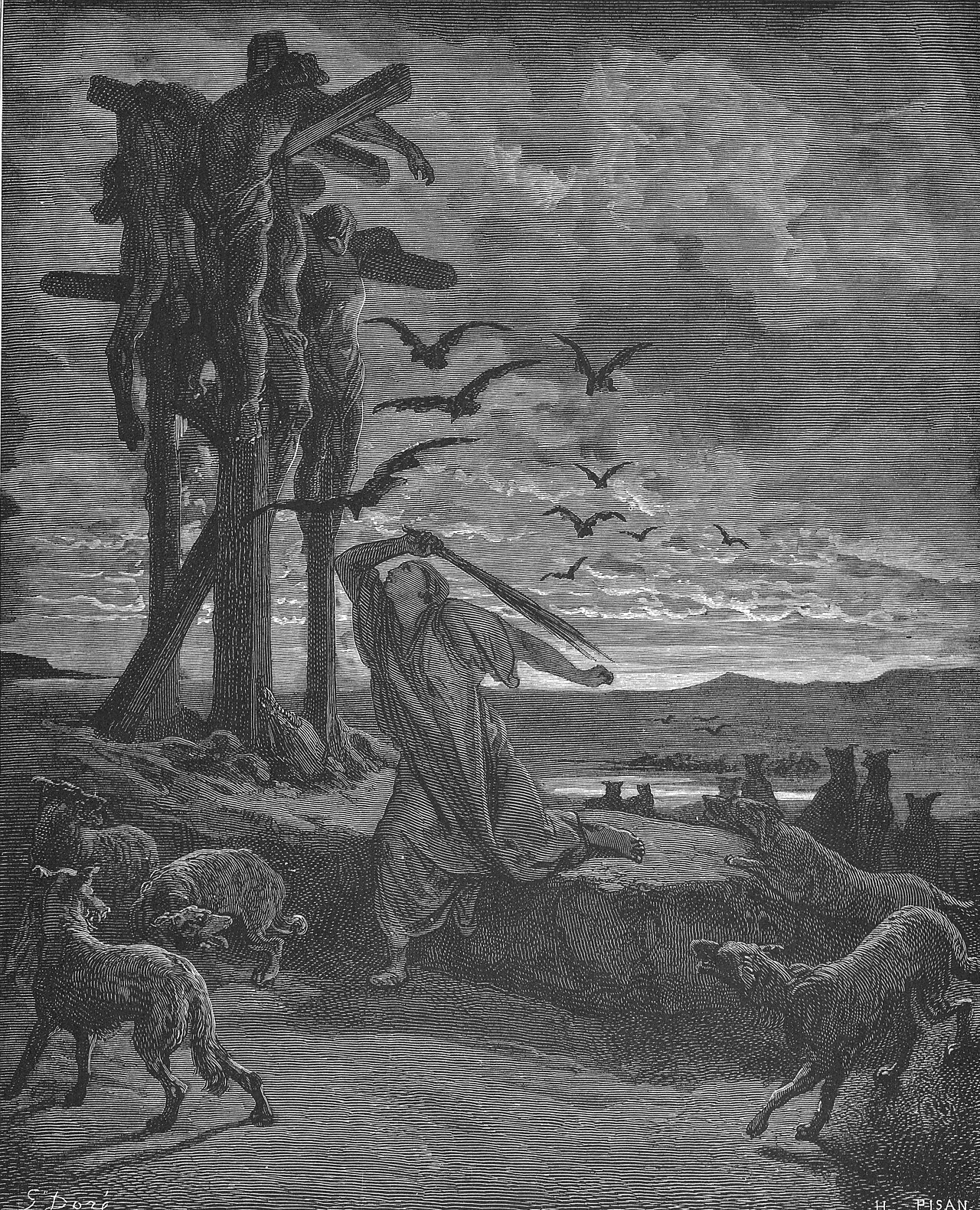
The bones of Saul and Jonathan had lain under an oak at Jabesh, as 1 Chronicles 10:12 records. John Gill suggests the seven had hung so long that their flesh was gone and their bones had dropped to the ground. The months of Rizpah's vigil lie behind this gathering.
How the passage was read
What the Jewish commentators add
They gathered the bones. Of the seven people that were hung there. 21 In verse.
2 more on this passage, in their own words ▾
He took Shaul's bones. He [Dovid] was told concerning them, "Because of Shaul" 20 Earlier in:1. who was not eulogized according to halachah.
Everything that the king had commanded. To eulogize them in all of the cities of Yisroel.
This section is reception history: how the passage was read and kept in the Jewish tradition. Where a reading parts from an essential of the Christian faith, the section says so at that point.
Texts and citation data: Sefaria; each excerpt follows its version’s licence. 3 further sources are cited on this chapter that carry no English text this site may quote or only restate the verse.
The words behind it
13 Hebrew wordsEvery Hebrew word of this verse in the order it stands, with what it means and the door to its own study. The last column counts the times a word stands in the whole Bible: the rarer the word, the more the places it appears belong together.
| Hebrew | Sound | Meaning | Word study | In the Bible |
|---|---|---|---|---|
| וַיַּ֤עַל | vaiyaal | and he brought up | H5927 → | 890 times |
| מִשָּׁם֙ | misham | from there | H8033 → | 834 times |
| אֶת־ | ʾet- | <obj.> | H853 → | 10935 times |
| עַצְמ֣וֹת | atzmot | [the] bones of | H6106 → | 126 times |
| שָׁא֔וּל | shaul | Saul | H7586 → | 402 times |
| וְאֶת־ | veet | and <obj.> | H853 → | 10935 times |
| עַצְמ֖וֹת | atzmot | [the] bones of | H6106 → | 126 times |
| יְהוֹנָתָ֣ן | yehonatan | Jonathan | H3083 → | 81 times |
| בְּנ֑וֹ | beno | son his | H1121 → | 4930 times |
| וַיַּ֣אַסְפ֔וּ | vaiyaasfu | and they gathered | H622 → | 200 times |
| אֶת־ | ʾet- | <obj.> | H853 → | 10935 times |
| עַצְמ֖וֹת | atzmot | [the] bones of | H6106 → | 126 times |
| הַמּוּקָעִֽים׃ | hamukaim | the impaled [men] | H3363 → | 8 times |
וַיַּ֤עַלand he brought up
vaiyaalH5927 →890 times
מִשָּׁם֙from there
mishamH8033 →834 times
אֶת־<obj.>
ʾet-H853 →10935 times
עַצְמ֣וֹת[the] bones of
atzmotH6106 →126 times
שָׁא֔וּלSaul
shaulH7586 →402 times
וְאֶת־and <obj.>
veetH853 →10935 times
עַצְמ֖וֹת[the] bones of
atzmotH6106 →126 times
יְהוֹנָתָ֣ןJonathan
yehonatanH3083 →81 times
בְּנ֑וֹson his
benoH1121 →4930 times
וַיַּ֣אַסְפ֔וּand they gathered
vaiyaasfuH622 →200 times
אֶת־<obj.>
ʾet-H853 →10935 times
עַצְמ֖וֹת[the] bones of
atzmotH6106 →126 times
הַמּוּקָעִֽים׃the impaled [men]
hamukaimH3363 →8 times
A shaded row is a word that stands 400 times or fewer in the Bible.
Where this verse is studied
About 2 Samuel
Who and where
3 names in this verse with a page on the site.
- PersonUnited MonarchyDavidSecond king of united Israel, shepherd-turned-monarch, ancestor of the Messiah, and traditional author of many Psalms.
- PersonUnited monarchySaulIsrael's first king, head and shoulders above the people; began in humility, ended in rejection — sparing what God devoted, consul…
- PersonEarly monarchyJonathanSon of King Saul who climbed a cliff to rout a garrison on the conviction that nothing restrains Jehovah; cut a covenant of steadf…
This page draws on Adam Clarke, Commentary on the Bible; John Gill, Exposition of the Old Testament (1748-1763) and John Gill, Exposition of the Old Testament.