
2 Samuel 14:4
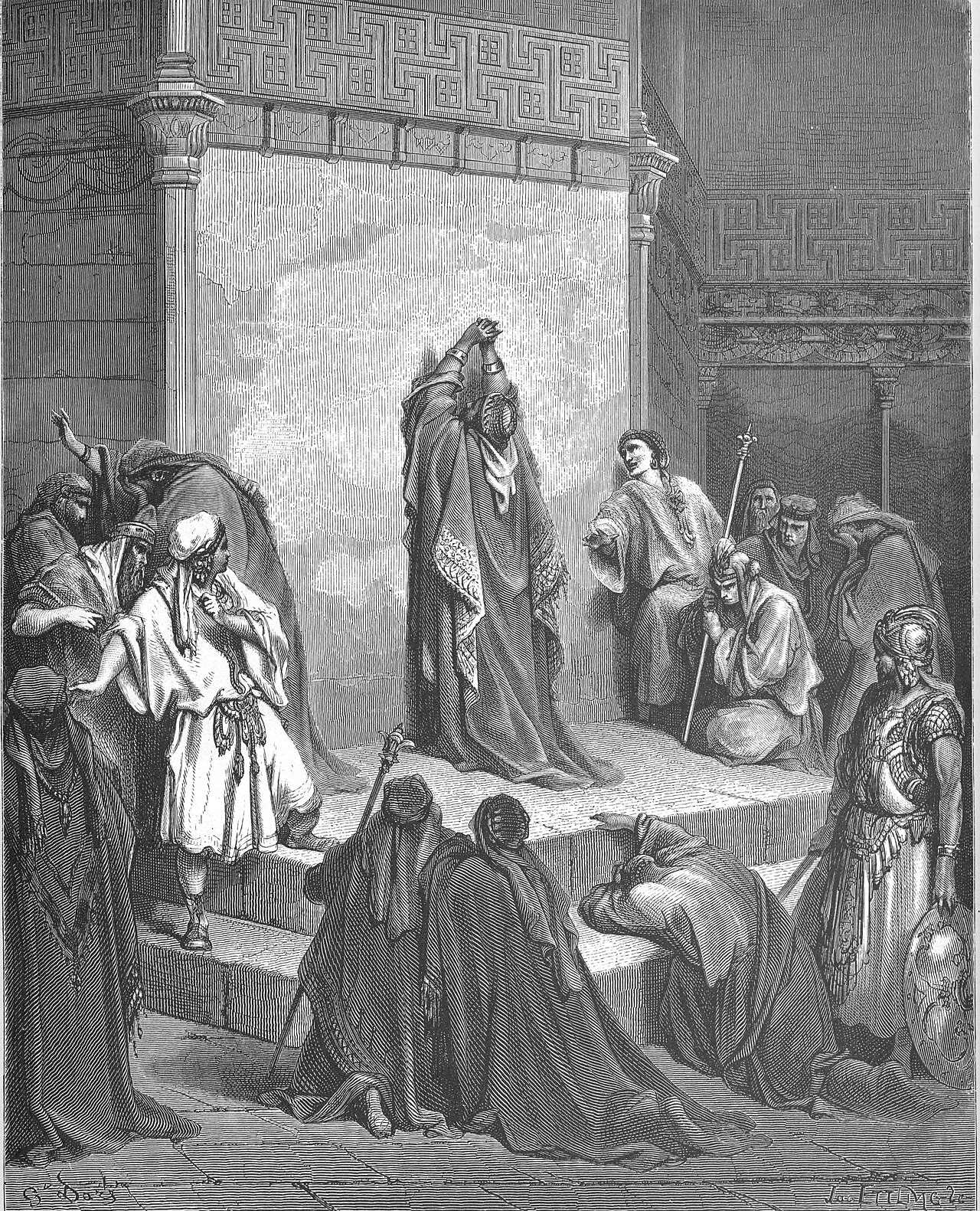
in 2 Samuel 14When the woman from Tekoa went to the king, she fell facedown in homage and said, “Help me, O king!”
BSB
The same verse in ASV and KJV ▾
ASV
And when the woman of Tekoa spake to the king, she fell on her face to the ground, and did obeisance, and said, Help, O king.
KJV
And when the woman of Tekoah spake to the king, she fell on her face to the ground, and did obeisance, and said, Help, O king.
⋯
This verse in 2 Samuel 14
Commentary
4 notes on this verseAnd when the woman of Tekoah spake to the king,.... Or after she had spoken to him, being introduced by Joab, as is probable; when she had saluted him with God save the king, or May the king live, or some such like expressions: she fell on her face to the ground, and did obeisance; to him as her king, in reverence of his majesty: and said, help, O king; signifying that she was in great distress, and came to him for assistance and deliverance.
This site's exposition
Help, O king
on 2 Samuel 14:4-5
She falls on her face and cries Help, O king, and a claim of a dead husband sets the widow's frame before Joab's real subject is ever spoken. Barnes reads the cry itself as the same word that stands behind Hosanna, a plea for present rescue rather than a formal complaint filed before a court. The king answers plainly, drawing her case out with a single question.
The record, by era
The Nineteenth Century2 voices
A commentator
Albert Barnes1798–1870
Notes, Explanatory and Practical, on the Old and New Testaments (1832-1869)
Spake - Seems to be an accidental error for came, which is found in many manuscipts and versions. Help - literally, save (see the margin). It is the same cry as Hosanna, i. e. save now Psa 118:25.
A commentator
Jamieson, Fausset & Brown1802–1910
Commentary Critical and Explanatory on the Whole Bible (1871)
proposed
And Joab sent to Tekoah, and fetched thence a wise woman--The king was strongly attached to Absalom; and having now got over his sorrow for the violent death of Amnon, he was desirous of again enjoying the society of his favorite son, who had now been three long years absent.
The words behind it
13 Hebrew wordsEvery Hebrew word of this verse in the order it stands, with what it means and the door to its own study. The last column counts the times a word stands in the whole Bible: the rarer the word, the more the places it appears belong together.
| Hebrew | Sound | Meaning | Word study | In the Bible |
|---|---|---|---|---|
| וַ֠תֹּאמֶר | vatomer | and she said | H559 → | 5305 times |
| הָאִשָּׁ֤ה | haishah | the woman | H802 → | 781 times |
| הַתְּקֹעִית֙ | hatekoit | <the> Tekoite | H8621 → | 7 times |
| אֶל־ | ʾel- | to | H413 → | 5510 times |
| הַמֶּ֔לֶךְ | hamelekh | the king | H4428 → | 2525 times |
| וַתִּפֹּ֧ל | vatipol | and she fell | H5307 → | 435 times |
| עַל־ | ʾal- | on | H5921 → | 5755 times |
| אַפֶּ֛יהָ | ʾapeiha | face her | H639 → | 276 times |
| אַ֖רְצָה | ʾartzah | [the] ground towards | H776 → | 2504 times |
| וַתִּשְׁתָּ֑חוּ | vatishtachu | and she bowed down | H7812 → | 172 times |
| וַתֹּ֖אמֶר | vatomer | and she said | H559 → | 5305 times |
| הוֹשִׁ֥עָה | hoshiah | save ! | H3467 → | 206 times |
| הַמֶּֽלֶךְ׃ ס | hamelekh | O king | H4428 → | 2525 times |
וַ֠תֹּאמֶרand she said
vatomerH559 →5305 times
הָאִשָּׁ֤הthe woman
haishahH802 →781 times
הַתְּקֹעִית֙<the> Tekoite
hatekoitH8621 →7 times
אֶל־to
ʾel-H413 →5510 times
הַמֶּ֔לֶךְthe king
hamelekhH4428 →2525 times
וַתִּפֹּ֧לand she fell
vatipolH5307 →435 times
עַל־on
ʾal-H5921 →5755 times
אַפֶּ֛יהָface her
ʾapeihaH639 →276 times
אַ֖רְצָה[the] ground towards
ʾartzahH776 →2504 times
וַתִּשְׁתָּ֑חוּand she bowed down
vatishtachuH7812 →172 times
וַתֹּ֖אמֶרand she said
vatomerH559 →5305 times
הוֹשִׁ֥עָהsave !
hoshiahH3467 →206 times
הַמֶּֽלֶךְ׃ סO king
hamelekhH4428 →2525 times
A shaded row is a word that stands 400 times or fewer in the Bible.
The walk
8 stopsEach card is a verse this one points to, and under it the verses that one points to in turn. Where several paths arrive at the same place, that place is listed first: the text keeps returning to it.
Through
2 Samuel 1:2On the third day a man with torn clothes and dust on his head arrived from Saul’s camp. When he came to David, he fell to the ground to pay him homage.
it leads to
- 1 Samuel 4:12
That same day a Benjamite ran from the battle line all the way to Shiloh, with his clothes torn and dirt on his head.
- 2 Samuel 4:10
when someone told me, ‘Look, Saul is dead,’ and thought he was a bearer of good news, I seized him and put him to death at Ziklag. That was his reward for his news!
- Joshua 7:6
Then Joshua tore his clothes and fell facedown before the ark of the LORD until evening, as did the elders of Israel; and they all sprinkled dust on their heads.
- 1 Samuel 4:12
Through
1 Samuel 25:23When Abigail saw David, she quickly got off the donkey, fell facedown, and bowed before him.
it leads to
- 1 Samuel 20:41
When the young man had gone, David got up from the south side of the stone, fell facedown, and bowed three times. Then he and Jonathan kissed each other and wept together—though David wept…
- Joshua 15:18
One day Acsah came to Othniel and urged him to ask her father for a field. When she got off her donkey, Caleb asked her, “What do you desire?”
- Judges 1:14
One day Acsah came to Othniel and urged him to ask her father for a field. When she got off her donkey, Caleb asked her, “What do you desire?”
- 1 Samuel 20:41
Through
1 Samuel 20:41When the young man had gone, David got up from the south side of the stone, fell facedown, and bowed three times. Then he and Jonathan kissed each other and wept together—though David wept…
it leads to
- Genesis 29:11
Then Jacob kissed Rachel and wept aloud.
- 1 Samuel 18:3
Then Jonathan made a covenant with David because he loved him as himself.
- Genesis 29:11
About 2 Samuel
Who and where
1 name in this verse with a page on the site.
This page draws on Albert Barnes, Notes on the Old Testament; Albert Barnes, Notes, Explanatory and Practical, on the Old and New Testaments (1832-1869); Jamieson, Fausset & Brown, Commentary Critical and Explanatory on the Whole Bible; John Gill, Exposition of the Old Testament (1748-1763) and John Gill, Exposition of the Old Testament.