
2 Samuel 11:26
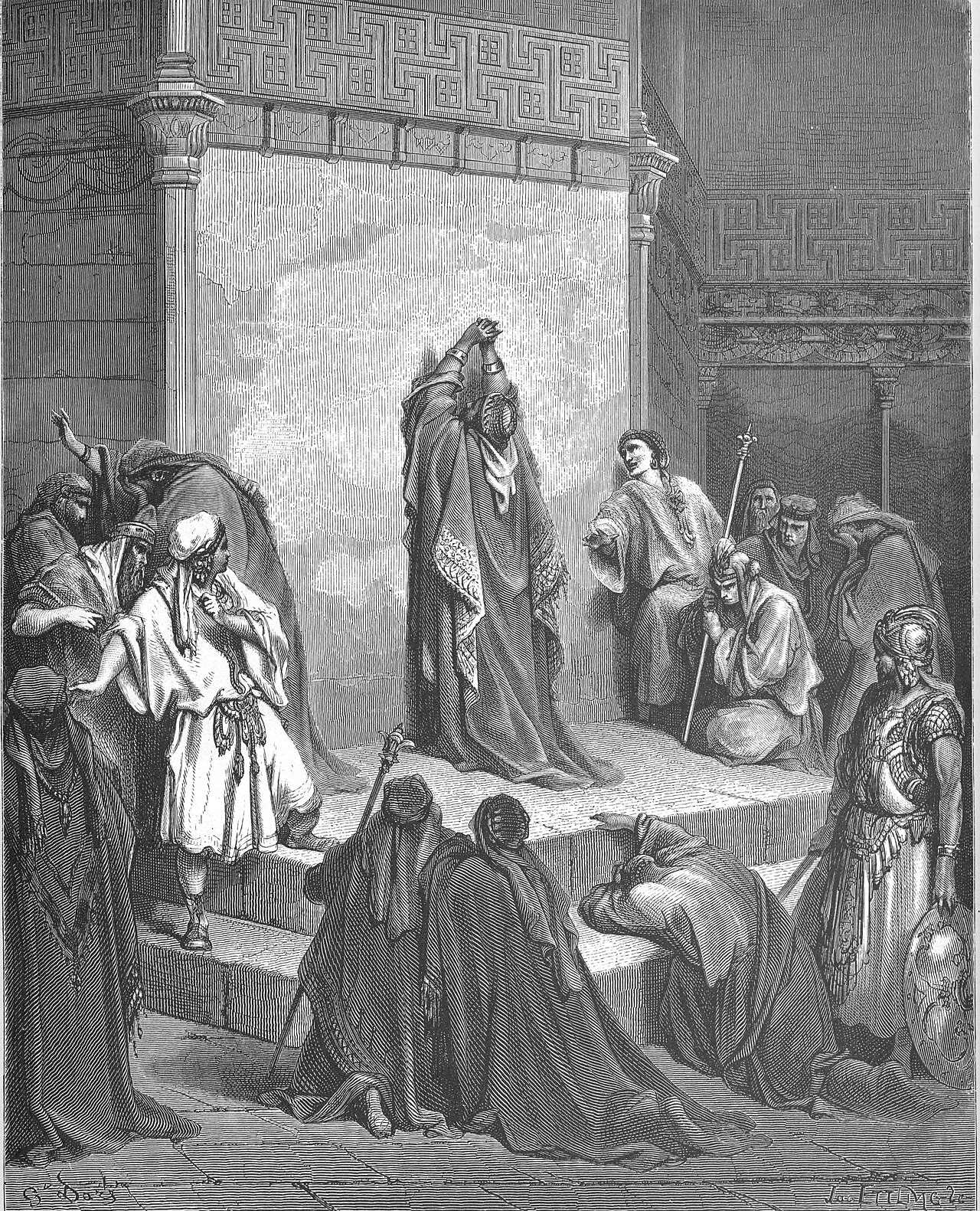
in 2 Samuel 11When Uriah’s wife heard that her husband was dead, she mourned for him.
BSB
The same verse in ASV and KJV ▾
ASV
And when the wife of Uriah heard that Uriah her husband was dead, she made lamentation for her husband.
KJV
And when the wife of Uriah heard that Uriah her husband was dead, she mourned for her husband.
⋯
This verse in 2 Samuel 11
Commentary
7 notes on this verseShe mourned for her husband - The whole of her conduct indicates that she observed the form without feeling the power of sorrow. She lost a captain and got a king for her spouse; this must have been deep affliction indeed: and therefore: - - Lachrymas non sponte cadentes Effudit; gemitusque expressit pectore laeto. “She shed reluctant tears, and forced out groans from a joyful heart.
This site's exposition
When Uriah’s wife heard that her husband was dead
on 2 Samuel 11:26-27
Bathsheba mourns for her husband, and the record gives only the outward form. When the mourning is over David brings her to his house, marries her, and she bears him a son. Every step so far is told without a word of judgment, and only the chapter's last clause breaks the silence: “the thing that David had done was evil in the sight of the LORD”. That verdict opens into Nathan's parable in chapter 12.
The record, by era
The Church Fathers1 voice
We have taken up the task of writing an apology for the present style of the prophet David, not because he needs this gift, who has excelled in such great merits and flourished in virtues, but because many people, reading the sequence of his deeds without considering the power of the Scriptures or the hidden mysteries, wonder how such a great prophet did not avoid the contagion of adultery first and then of murder. Therefore, it was our desire to review the history itself, which seems to have been exposed to sin.
The Puritans and the Awakening3 voices
Note, God sees and hates sin in his own people. Nay, the nearer any are to God in profession the more displeasing to him their sins are; for in them there is more ingratitude, treachery, and reproach, than in the sins of others. Let none therefore encourage themselves in sin by the example of David; for those that sin as he did will fall under the displeasure of God as he did.
Let him that readeth understand what the best of men are when God leaves them to themselves. David's Sin with Bath-sheba. 1 And it came to pass, after the year was expired, at the time when kings go forth to battle, that David sent Joab, and his servants with him, and all Israel; and they destroyed the children of Ammon, and besieged Rabbah.
quarantine:scripture (2026-07-29) — verbatim-run:41w-of-64
And when the wife of Uriah heard that Uriah her husband was dead,....
The Nineteenth Century1 voice
A commentator
Albert Barnes1798–1870
Notes, Explanatory and Practical, on the Old and New Testaments (1832-1869)
proposed
Bath-sheba’s mourning, like that of Abigail 1Sa 25:39-42, was probably limited to the customary time of seven days.
The words behind it
10 Hebrew wordsEvery Hebrew word of this verse in the order it stands, with what it means and the door to its own study. The last column counts the times a word stands in the whole Bible: the rarer the word, the more the places it appears belong together.
| Hebrew | Sound | Meaning | Word study | In the Bible |
|---|---|---|---|---|
| וַתִּשְׁמַע֙ | vatishma' | and she heard | H8085 → | 1159 times |
| אֵ֣שֶׁת | ʾeshet | [the] wife of | H802 → | 781 times |
| אֽוּרִיָּ֔ה | ʾuriyah | Uriah | H223 → | 39 times |
| כִּי־ | ki- | that | H3588 → | 4482 times |
| מֵ֖ת | met | he had died | H4191 → | 839 times |
| אוּרִיָּ֣ה | ʾuriyah | Uriah | H223 → | 39 times |
| אִישָׁ֑הּ | ʾishah | husband her | H376 → | 1663 times |
| וַתִּסְפֹּ֖ד | vatispod | and she mourned | H5594 → | 30 times |
| עַל־ | ʾal- | on | H5921 → | 5755 times |
| בַּעְלָֽהּ׃ | ba'lah | husband her | H1167 → | 84 times |
וַתִּשְׁמַע֙and she heard
vatishma'H8085 →1159 times
אֵ֣שֶׁת[the] wife of
ʾeshetH802 →781 times
אֽוּרִיָּ֔הUriah
ʾuriyahH223 →39 times
כִּי־that
ki-H3588 →4482 times
מֵ֖תhe had died
metH4191 →839 times
אוּרִיָּ֣הUriah
ʾuriyahH223 →39 times
אִישָׁ֑הּhusband her
ʾishahH376 →1663 times
וַתִּסְפֹּ֖דand she mourned
vatispodH5594 →30 times
עַל־on
ʾal-H5921 →5755 times
בַּעְלָֽהּ׃husband her
ba'lahH1167 →84 times
A shaded row is a word that stands 400 times or fewer in the Bible.
The walk
8 stopsEach card is a verse this one points to, and under it the verses that one points to in turn. Where several paths arrive at the same place, that place is listed first: the text keeps returning to it.
Through
Genesis 27:41Esau held a grudge against Jacob because of the blessing his father had given him. And Esau said in his heart, “The days of mourning for my father are at hand; then I will…
it leads to
- 1 John 3:12–15
Do not be like Cain, who belonged to the evil one and murdered his brother. And why did Cain slay him? Because his own deeds were evil, while those of his brother were righteous.
- Genesis 37:4
When Joseph’s brothers saw that their father loved him more than any of them, they hated him and could not speak a kind word to him.
- Genesis 50:3–4
taking the forty days required to complete the embalming. And the Egyptians mourned for him seventy days.
- 1 John 3:12–15
Through
2 Samuel 14:2So Joab sent to Tekoa to bring a wise woman from there. He told her, “Please pretend to be a mourner; put on clothes for mourning and do not anoint yourself with oil. Act…
it leads to
- 2 Chronicles 11:6
He built up Bethlehem, Etam, Tekoa,
- Ruth 3:3
Therefore wash yourself, put on perfume, and wear your best clothes. Go down to the threshing floor, but do not let the man know you are there until he has finished eating and drinking.
- Amos 1:1
These are the words of Amos, who was among the sheepherders of Tekoa—what he saw concerning Israel two years before the earthquake, in the days when Uzziah was king of Judah and Jeroboam son…
- 2 Chronicles 11:6
Through
2 Samuel 3:31Then David ordered Joab and all the people with him, “Tear your clothes, put on sackcloth, and mourn before Abner.” And King David himself walked behind the funeral bier.
it leads to
- Genesis 37:34
Then Jacob tore his clothes, put sackcloth around his waist, and mourned for his son many days.
- 2 Samuel 1:2
On the third day a man with torn clothes and dust on his head arrived from Saul’s camp. When he came to David, he fell to the ground to pay him homage.
- Genesis 37:34
Where this verse is studied
On this page
About 2 Samuel
This page draws on Adam Clarke, Commentary on the Bible; Albert Barnes, Notes, Explanatory and Practical, on the Old and New Testaments (1832-1869); Ambrose of Milan, Apology for the Prophet David, Chapter 1; John Gill, Exposition of the Old Testament (1748-1763) and Matthew Henry, Commentary on the Whole Bible.