
2 Kings 3:11
in 2 Kings 3But Jehoshaphat asked, “Is there no prophet of the LORD here? Let us inquire of the LORD through him.” And one of the servants of the king of Israel answered, “Elisha son of Shaphat is here. He used to pour water on the hands of Elijah.”
BSB
The same verse in ASV and KJV ▾
ASV
But Jehoshaphat said, Is there not here a prophet of Jehovah, that we may inquire of Jehovah by him? And one of the king of Israel’s servants answered and said, Elisha the son of Shaphat is here, who poured water on the hands of Elijah.
KJV
But Jehoshaphat said, Is there not here a prophet of the Lord, that we may enquire of the Lord by him? And one of the king of Israel’s servants answered and said, Here is Elisha the son of Shaphat, which poured water on the hands of Elijah.
⋯
This verse in 2 Kings 3
Commentary
10 notes on this verseA commentator
Albert Barnes1798–1870
Notes, Explanatory and Practical, on the Old and New Testaments (1832-1869)
A prophet of the Lord - i. e. of Yahweh. It was necessary to inquire thus definitely, as there were still plenty of prophets who were only prophets of Baal 2Ki 3:13. Here is Elisha - Jehoram appears to have been ignorant of his presence with the host, and one of his “servants,” or officers, answered Jehoshaphat’s inquiry. Which poured water - An act signifying ministration or attendance (compare Joh 13:5 ff).
This site's exposition
Is there not here a prophet of the Lord
on 2 Kings 3:11-12
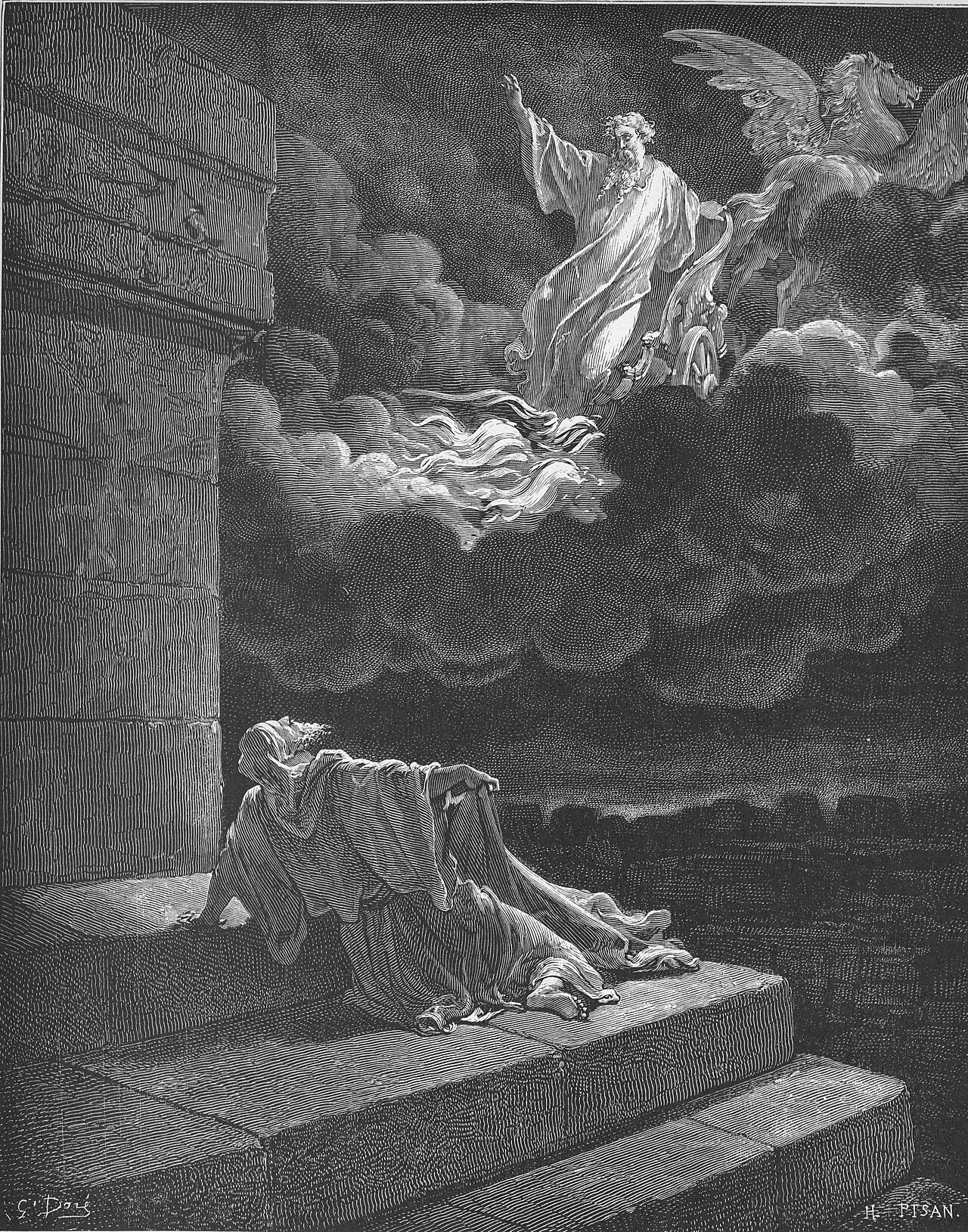
Jehoshaphat's question repeats his own words to Ahab at 1 Ki 22:7 almost exactly, the one instinct that never fails him even in bad company. The servant who names Elisha does it by a small credential rather than a title, which poured water on the hands of Elijah, the posture of an apprentice rather than an office. That same humility is what the mantle at 1 Ki 19:19-21 was thrown over, and the servant's memory of it is the reason three kings now go down to find him.
The record, by era
The Church Fathers1 voice
After the death of Ahab, his son Ahaziah died too, and since he had no children, his brother Jehoram took his place. Therefore the Scripture reports that he moved with his army against the king of Moab. He went to war because Mesha, king of …
The Puritans and the Awakening4 voices
Poured water - Who was his servant; this being one office of a servant: and this office was the more necessary among the Israelites, because of the frequent washings which their law required. Probably it was by a special direction from God, that Elisha followed them, unasked, unobserved.
Probably it was such a servant as Obadiah was to his father Ahab, one that feared the Lord; to such a one Elisha made himself known, not to the kings. The account he gives of him is that it was he that poured water on the hands of Elijah, that is, he was his servant, and particularly attended him when he washed his hands.
But Jehoshaphat said, is there not here a prophet of the Lord, that we may inquire of the Lord by him?....
The thought of this, we may suppose, encouraged Jehoshaphat to ask, Is there not here a prophet of the Lord, like unto Moses? He was the more concerned because it was by his advice that they fetched this compass through the wilderness,
3 more voices on this verse
The Nineteenth Century3 voices
A commentator
Jamieson, Fausset & Brown1802–1910
Commentary Critical and Explanatory on the Whole Bible (1871)
They were disappointed by finding the wady of this valley, the brook Zered (De 2:13-18) [ROBINSON], dry. But the pious mind of Jehoshaphat inquired for a prophet of the Lord; and, on being informed that Elisha was at hand, the three kings "went down to him"; that is, to his tent, which was either in the camp, or close by it.
A commentator
Jamieson, Fausset & Brown1802–1910
Commentary Critical and Explanatory on the Whole Bible (1871)
proposed
which poured water on the hands of Elijah--that is, was his servant--this being one of the common offices of a servant. The phrase is used here as synonymous with "a true and eminent prophet," who will reveal God's will to us.
quarantine:debris (2026-07-29) — starts-lowercase
Is there not here a prophet of the Lord - The kings of Judah still acknowledged the true God, and him only. Poured water on the hands of Elijah - That is, was his constant and confidential servant.
How the passage was read
What the Jewish commentators add
Who poured water on the hands of Eliyahu. On Mount Carmel, 7 See I Melochim:34 and Rashi there.
1 more on this passage, in their own words ▾
To hand them over, etc. For they will die of thirst. 6 The three kings will be handed over to Moav because either they will die of thirst, or if they scatter across the countryside in search for water, they will be in an unprotected and vulnerable position.—Radak
This section is reception history: how the passage was read and kept in the Jewish tradition. Where a reading parts from an essential of the Christian faith, the section says so at that point.
Texts and citation data: Sefaria; each excerpt follows its version’s licence. 4 further sources are cited on this chapter that carry no English text this site may quote or only restate the verse.
The words behind it
26 Hebrew wordsEvery Hebrew word of this verse in the order it stands, with what it means and the door to its own study. The last column counts the times a word stands in the whole Bible: the rarer the word, the more the places it appears belong together.
| Hebrew | Sound | Meaning | Word study | In the Bible |
|---|---|---|---|---|
| וַיֹּ֣אמֶר | vaiyomer | and he said | H559 → | 5305 times |
| יְהוֹשָׁפָ֗ט | yehoshafat | Jehoshaphat | H3092 → | 84 times |
| הַאֵ֨ין | haein | ¿ [is] there not | H369 → | 789 times |
| פֹּ֤ה | poh | here | H6311 → | 82 times |
| נָבִיא֙ | navi' | a prophet | H5030 → | 314 times |
| לַֽיהוָ֔ה | layahweh | of Yahweh | H3068 → | 6520 times |
| וְנִדְרְשָׁ֥ה | venidreshah | and let us consult | H1875 → | 164 times |
| אֶת־ | ʾet- | <obj.> | H853 → | 10935 times |
| יְהוָ֖ה | yahweh | Yahweh | H3068 → | 6520 times |
| מֵאוֹת֑וֹ | meoto | from <obj.> him | H853 → | 10935 times |
| וַ֠יַּעַן | vaiyaan | and he answered | H6030 → | 331 times |
| אֶחָ֞ד | ʾechad | one | H259 → | 971 times |
| מֵעַבְדֵ֤י | meavdei | from [the] servants of | H5650 → | 799 times |
| מֶֽלֶךְ־ | melekh- | [the] king of | H4428 → | 2525 times |
| יִשְׂרָאֵל֙ | yisrael | Israel | H3478 → | 2507 times |
| וַיֹּ֔אמֶר | vaiyomer | and he said | H559 → | 5305 times |
| פֹּ֚ה | poh | [is] here | H6311 → | 82 times |
| אֱלִישָׁ֣ע | ʾelisha' | Elisha | H477 → | 58 times |
| בֶּן־ | ben- | [the] son of | H1121 → | 4930 times |
| שָׁפָ֔ט | shafat | Shaphat | H8202 → | |
| אֲשֶׁר־ | ʾasher- | who | H834 → | 5497 times |
| יָ֥צַק | yatzak | he poured | H3332 → | 50 times |
| מַ֖יִם | mayim | water | H4325 → | 581 times |
| עַל־ | ʾal- | on | H5921 → | 5755 times |
| יְדֵ֥י | yedei | [the] hands of | H3027 → | 1618 times |
| אֵלִיָּֽהוּ׃ | ʾeliyahu | Elijah | H452 → | 71 times |
וַיֹּ֣אמֶרand he said
vaiyomerH559 →5305 times
יְהוֹשָׁפָ֗טJehoshaphat
yehoshafatH3092 →84 times
הַאֵ֨ין¿ [is] there not
haeinH369 →789 times
פֹּ֤הhere
pohH6311 →82 times
נָבִיא֙a prophet
navi'H5030 →314 times
לַֽיהוָ֔הof Yahweh
layahwehH3068 →6520 times
וְנִדְרְשָׁ֥הand let us consult
venidreshahH1875 →164 times
אֶת־<obj.>
ʾet-H853 →10935 times
יְהוָ֖הYahweh
yahwehH3068 →6520 times
מֵאוֹת֑וֹfrom <obj.> him
meotoH853 →10935 times
וַ֠יַּעַןand he answered
vaiyaanH6030 →331 times
אֶחָ֞דone
ʾechadH259 →971 times
מֵעַבְדֵ֤יfrom [the] servants of
meavdeiH5650 →799 times
מֶֽלֶךְ־[the] king of
melekh-H4428 →2525 times
יִשְׂרָאֵל֙Israel
yisraelH3478 →2507 times
וַיֹּ֔אמֶרand he said
vaiyomerH559 →5305 times
פֹּ֚ה[is] here
pohH6311 →82 times
אֱלִישָׁ֣עElisha
ʾelisha'H477 →58 times
בֶּן־[the] son of
ben-H1121 →4930 times
שָׁפָ֔טShaphat
shafatH8202 →
אֲשֶׁר־who
ʾasher-H834 →5497 times
יָ֥צַקhe poured
yatzakH3332 →50 times
מַ֖יִםwater
mayimH4325 →581 times
עַל־on
ʾal-H5921 →5755 times
יְדֵ֥י[the] hands of
yedeiH3027 →1618 times
אֵלִיָּֽהוּ׃Elijah
ʾeliyahuH452 →71 times
A shaded row is a word that stands 400 times or fewer in the Bible.
The walk
8 stopsEach card is a verse this one points to, and under it the verses that one points to in turn. Where several paths arrive at the same place, that place is listed first: the text keeps returning to it.
Through
1 Chronicles 15:13It was because you Levites were not with us the first time that the LORD our God burst forth in anger against us. For we did not consult Him about the proper order.”
it leads to
- 2 Samuel 6:3
They set the ark of God on a new cart and brought it from the house of Abinadab, which was on the hill. Uzzah and Ahio, the sons of Abinadab, were guiding the new…
- 1 Corinthians 14:40
But everything must be done in a proper and orderly manner.
- 1 Corinthians 11:2
Now I commend you for remembering me in everything and for maintaining the traditions, just as I passed them on to you.
- 1 John 1:8–10
If we say we have no sin, we deceive ourselves, and the truth is not in us.
- 2 Samuel 6:3
Through
2 Kings 3:3Nevertheless, he clung to the sins that Jeroboam son of Nebat had caused Israel to commit; he did not turn away from them.
it leads to
- 1 Kings 14:16
So He will give Israel over on account of the sins Jeroboam has committed and has caused Israel to commit.”
- 1 Kings 14:16
Through
Psalms 74:9There are no signs for us to see. There is no longer any prophet. And none of us knows how long this will last.
it leads to
- Amos 8:11
Behold, the days are coming, declares the Lord GOD, when I will send a famine on the land—not a famine of bread or a thirst for water, but a famine of hearing the words…
- Ezekiel 7:26
Disaster upon disaster will come, and rumor after rumor. Then they will seek a vision from a prophet, but instruction from the priests will perish, as will counsel from the elders.
- Amos 8:11
Through
1 Kings 19:21So Elisha turned back from him, took his pair of oxen, and slaughtered them. With the oxen’s equipment, he cooked the meat and gave it to the people, and they ate. Then he set…
it leads to
- 2 Samuel 24:22
Araunah said to David, “My lord the king may take whatever seems good and offer it up. Here are the oxen for a burnt offering and the threshing sledges and ox yokes for the…
- 2 Samuel 24:22
Where this verse is studied
On this page
About 2 Kings
Who and where
2 names in this verse with a page on the site.
- PersonDivided kingdomElijahThe Tishbite who shut heaven for three years and a half, called down fire on Carmel, heard the still small voice at Horeb, and wen…
- PersonDivided kingdomElishaElijah's successor with the firstborn's double portion; the prophet of the healed spring, the widow's oil, the Shunammite's son, N…
This page draws on 9 works. Open the list of works
This page draws on Adam Clarke, Commentary on the Bible; Albert Barnes, Notes, Explanatory and Practical, on the Old and New Testaments (1832-1869); Ephrem the Syrian, ON THE SECOND BOOK OF KINGS 3:9; Jamieson, Fausset & Brown, Commentary Critical and Explanatory on the Whole Bible; John Gill, Exposition of the Old Testament; John Gill, Exposition of the Old Testament (1748-1763); John Wesley, Explanatory Notes upon the Old Testament; Keil, The Books of the Kings and Matthew Henry, Commentary on the Whole Bible.