
2 Chronicles 9:29
in 2 Chronicles 9As for the rest of the acts of Solomon, from beginning to end, are they not written in the Records of Nathan the Prophet, in the Prophecy of Ahijah the Shilonite, and in the Visions of Iddo the Seer concerning Jeroboam son of Nebat?
BSB
The same verse in ASV and KJV ▾
ASV
Now the rest of the acts of Solomon, first and last, are they not written in the history of Nathan the prophet, and in the prophecy of Ahijah the Shilonite, and in the visions of Iddo the seer concerning Jeroboam the son of Nebat?
KJV
Now the rest of the acts of Solomon, first and last, are they not written in the book of Nathan the prophet, and in the prophecy of Ahijah the Shilonite, and in the visions of Iddo the seer against Jeroboam the son of Nebat?
⋯
This verse in 2 Chronicles 9
Commentary
5 notes on this verseA commentator
Albert Barnes1798–1870
Notes, Explanatory and Practical, on the Old and New Testaments (1832-1869)
The book of Nathan ... - On the “books” here mentioned, see the introduction to Chronicles, the second note. We hear nothing of Iddo in Kings: but he is mentioned below twice 2Ch 12:15; 2Ch 13:22. In the latter of these passages he is called not “the seer,” but “the prophet.” He seems to have been the author of three works: (1) Visions against Jeroboam; (2) A book of genealogies; and (3) A commentary or history. According to some, he was identical with Oded, the father of Azariah, who prophesied in the reign of Asa (see the 2Ch 15:1 note).
This site's exposition
the visions of Iddo the seer
The Chronicler names his own sources by title, the book of Nathan, the prophecy of Ahijah the Shilonite, and the visions of Iddo the seer against Jeroboam the son of Nebat. Jeroboam is named here and nowhere else told: Chronicles never narrates his rise, his rebellion, or the kingdom's division, so the one mention of his name stands as a citation with no story attached to it in this book. Henry reads the silence over Solomon's own sin the same way, as an intimation that what is not repeated is not held against him.
The record, by era
The Puritans and the Awakening2 voices
His sin is not again recorded, because it was repented of, and pardoned, and became as if it had never been. Scripture-silence sometimes speaks. I am willing to believe that its silence here concerning the sin of Solomon is an intimation that none of the sins he committed were mentioned against him, Ezek. xxxiii.
7 Happy are thy men, and happy are these thy servants, which stand continually before thee, and hear thy wisdom. 8 Blessed be the L ORD thy God, which delighted in thee to set thee on his throne, to be king for the L ORD thy God: because thy God loved Israel, to establish them for ever, therefore made he thee king over them, to do judgment and justice.
quarantine:scripture (2026-07-29) — scripture-overlap:94%@v7-8
The Nineteenth Century1 voice
Nathan the prophet - These books are all lost. See the account of Solomon, his character, and a review of his works, at the end of 1Ki 11:43 (note). I. By the kindness of a learned friend, who has made this kind of subjects his particular study, I am able to give a more correct view of the value of the talent of gold and the talent of silver than that which I have quoted 1Ki 10:17, from Mr. Reynold’s State of the Greatest King. 1. To find the equivalent in British standard to an ounce troy of pure gold, valued at eighty shillings, and to a talent of the same which weighs one thousand eight hundred ounces troy. The ounce contains four hundred and eighty grains, and the guinea weighs one hundred and twenty-nine grains, or five pennyweights and nine grains. (1) As 129 grains: 21 shillings:: 480, the number of grains in an ounce: 78.1395348s. or 3l. 18s. 1d. 2.69767q.; the equivalent in our silver coin to one ounce of standard gold. (2) As 78.1395348 shillings, the value of an ounce of standard gold,: 80 shillings, the value of an ounce troy of pure gold,:: 80 shillings: 81.9047619 shillings, the equivalent in British standard to one ounce of pure gold. Instead of the preceding, the following proportions may be used: - (1) As 21.5 shillings: 21 shillings:: 80 shillings: 78.1395348 shillings. This multiplied by 1800, the number of troy ounces in a Hebrew talent, gives 140651.16264s. or 7032l. 11s. 1d. 3.8q., the equivalent to one talent of standard gold. (2) As 21 standard: 21.5 pure:: 80 pure: 81.9047619 standard. This multiplied by 1800 gives 147428.67142s. or 7371l. 8s. 6d. 3.4q., the equivalent to one talent of pure gold. 2. […]
The words behind it
23 Hebrew wordsEvery Hebrew word of this verse in the order it stands, with what it means and the door to its own study. The last column counts the times a word stands in the whole Bible: the rarer the word, the more the places it appears belong together.
| Hebrew | Sound | Meaning | Word study | In the Bible |
|---|---|---|---|---|
| וּשְׁאָר֙ | ushear | and [the] rest of | H7605 → | |
| דִּבְרֵ֣י | divrei | [the] matters of | H1697 → | 1440 times |
| שְׁלֹמֹ֔ה | shelomoh | Solomon | H8010 → | 291 times |
| הָרִאשֹׁנִ֖ים | harishonim | <the> former | H7223 → | 182 times |
| וְהָאֲחֲרוֹנִ֑ים | vehaacharonim | and <the> latter | H314 → | 51 times |
| הֲלֹא־ | halo'- | ¿ not | H3808 → | 5168 times |
| הֵ֣ם | hem | [are] they | H1992 → | 553 times |
| כְּתוּבִ֗ים | ketuvim | written | H3789 → | 224 times |
| עַל־ | ʾal- | on | H5921 → | 5755 times |
| דִּבְרֵי֙ | divrei | [the] words of | H1697 → | 1440 times |
| נָתָ֣ן | natan | Nathan | H5416 → | |
| הַנָּבִ֔יא | hanavi' | the prophet | H5030 → | 314 times |
| וְעַל־ | veal- | and on | H5921 → | 5755 times |
| נְבוּאַ֞ת | nevuat | [the] prophecy of | H5016 → | |
| אֲחִיָּ֣ה | ʾachiyah | Ahijah | H281 → | |
| הַשִּֽׁילוֹנִ֗י | hashiloni | the Shilonite | H7888 → | |
| וּבַחֲזוֹת֙ | uvachazot | and in [the] visions | H2378 → | |
| יֶעְדּ֣וֹ | ye'di | Iddo | H3260 → | |
| הַחֹזֶ֔ה | hachozeh | the seer | H2374 → | 17 times |
| עַל־ | ʾal- | on | H5921 → | 5755 times |
| יָרָבְעָ֖ם | yaraveam | Jeroboam | H3379 → | 104 times |
| בֶּן־ | ben- | [the] son of | H1121 → | 4930 times |
| נְבָֽט׃ | nevat | Nebat | H5028 → | 25 times |
וּשְׁאָר֙and [the] rest of
ushearH7605 →
דִּבְרֵ֣י[the] matters of
divreiH1697 →1440 times
שְׁלֹמֹ֔הSolomon
shelomohH8010 →291 times
הָרִאשֹׁנִ֖ים<the> former
harishonimH7223 →182 times
וְהָאֲחֲרוֹנִ֑יםand <the> latter
vehaacharonimH314 →51 times
הֲלֹא־¿ not
halo'-H3808 →5168 times
הֵ֣ם[are] they
hemH1992 →553 times
כְּתוּבִ֗יםwritten
ketuvimH3789 →224 times
עַל־on
ʾal-H5921 →5755 times
דִּבְרֵי֙[the] words of
divreiH1697 →1440 times
נָתָ֣ןNathan
natanH5416 →
הַנָּבִ֔יאthe prophet
hanavi'H5030 →314 times
וְעַל־and on
veal-H5921 →5755 times
נְבוּאַ֞ת[the] prophecy of
nevuatH5016 →
אֲחִיָּ֣הAhijah
ʾachiyahH281 →
הַשִּֽׁילוֹנִ֗יthe Shilonite
hashiloniH7888 →
וּבַחֲזוֹת֙and in [the] visions
uvachazotH2378 →
יֶעְדּ֣וֹIddo
ye'diH3260 →
הַחֹזֶ֔הthe seer
hachozehH2374 →17 times
עַל־on
ʾal-H5921 →5755 times
יָרָבְעָ֖םJeroboam
yaraveamH3379 →104 times
בֶּן־[the] son of
ben-H1121 →4930 times
נְבָֽט׃Nebat
nevatH5028 →25 times
A shaded row is a word that stands 400 times or fewer in the Bible.
The walk
8 stopsEach card is a verse this one points to, and under it the verses that one points to in turn. Where several paths arrive at the same place, that place is listed first: the text keeps returning to it.
Through
1 Chronicles 29:29Now the acts of King David, from first to last, are indeed written in the Chronicles of Samuel the Seer, the Chronicles of Nathan the Prophet, and the Chronicles of Gad the Seer,
it leads to
- 1 Samuel 9:9
(Formerly in Israel, a man on his way to inquire of God would say, “Come, let us go to the seer.” For the prophet of today was formerly called the seer.)
- 1 Samuel 9:9
Through
1 Kings 11:29During that time, the prophet Ahijah the Shilonite met Jeroboam on the road as he was going out of Jerusalem. Now Ahijah had wrapped himself in a new cloak, and the two of them…
it leads to
- 1 Kings 12:15
So the king did not listen to the people, and indeed this turn of events was from the LORD, to fulfill the word He had spoken to Jeroboam son of Nebat through Ahijah the…
- 1 Kings 14:2
and Jeroboam said to his wife, “Now get up, disguise yourself so they will not recognize you as my wife, and go to Shiloh. For Ahijah the prophet is there; it was he who…
- 1 Kings 12:15
Through
2 Chronicles 12:15Now the acts of Rehoboam, from first to last, are they not written in the records of Shemaiah the Prophet and of Iddo the Seer concerning the genealogies? There was war between Rehoboam and…
it leads to
- 2 Chronicles 12:5
Then Shemaiah the prophet came to Rehoboam and the leaders of Judah who had gathered at Jerusalem because of Shishak, and he said to them, “This is what the LORD says: ‘You have forsaken…
- 1 Kings 12:22
But the word of God came to Shemaiah the man of God:
- 2 Chronicles 13:22
Now the rest of the acts of Abijah, along with his ways and his words, are written in the Treatise of the Prophet Iddo.
- 2 Chronicles 12:5
Through
2 Samuel 12:1Then the LORD sent Nathan to David, and when he arrived, he said, “There were two men in a certain city, one rich and the other poor.
it leads to
- 1 Kings 20:35–41
Meanwhile, by the word of the LORD, one of the sons of the prophets said to his companion, “Strike me, please!” But the man refused to strike him.
- Psalms 51:1–19
Have mercy on me, O God, according to Your loving devotion; according to Your great compassion, blot out my transgressions.
- 1 Kings 20:35–41
About 2 Chronicles
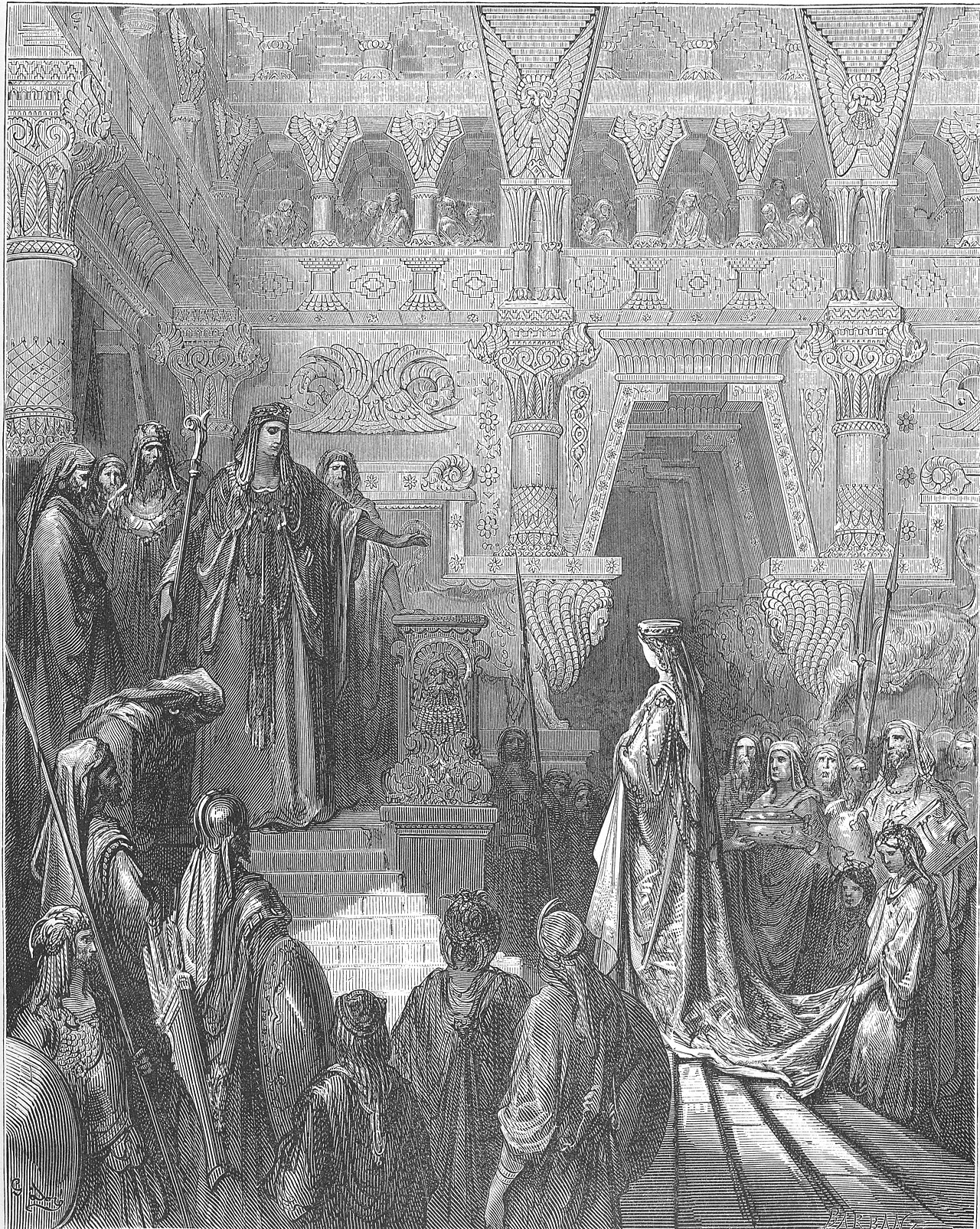
Who and where
2 names in this verse with a page on the site.
This page draws on Adam Clarke, Commentary on the Bible; Albert Barnes, Notes, Explanatory and Practical, on the Old and New Testaments (1832-1869); Albert Barnes, Notes on the Old Testament and Matthew Henry, Commentary on the Whole Bible.