
2 Chronicles 20:19
in 2 Chronicles 20And the Levites from the Kohathites and Korahites stood up to praise the LORD, the God of Israel, shouting in a very loud voice.
BSB
The same verse in ASV and KJV ▾
ASV
And the Levites, of the children of the Kohathites and of the children of the Korahites, stood up to praise Jehovah, the God of Israel, with an exceeding loud voice.
KJV
And the Levites, of the children of the Kohathites, and of the children of the Korhites, stood up to praise the Lord God of Israel with a loud voice on high.
⋯
This verse in 2 Chronicles 20
Commentary
4 notes on this verseAnd the Levites, of the children of the Kohathites, and of the children of the Korhites,.... Who were of the posterity of Kohath, in the line of Korah: stood up to praise the Lord God of Israel with a loud voice on high; in high notes; they being the course in turn at this time for this service.
This site's exposition
bowed his head with his face
on 2 Chronicles 20:18-19
Worship answers the oracle before any deliverance is seen: the king on his face, all Judah falling before the LORD, and the Levites standing to praise with a loud voice on high. The narrator names the Kohathites and the Korhites, and the second name carries a history: Korah's rebellion died in Num 16, but the children of Korah died not, and his line became a house of singers whose psalms the Psalter keeps. The rebel's descendants lead the praise on the eve of a battle God will fight.
The record, by era
The Puritans and the Awakening1 voice
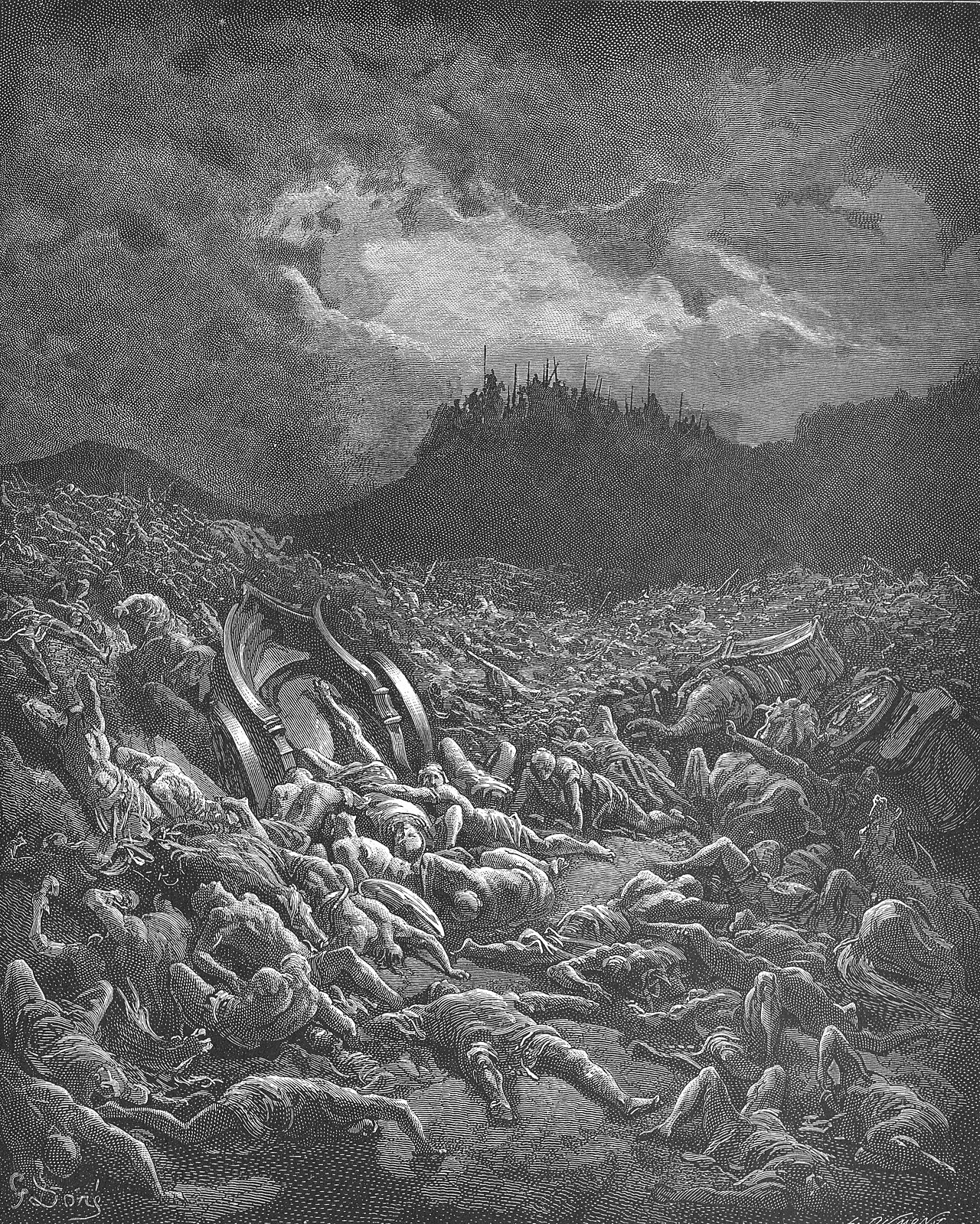
30 So the realm of Jehoshaphat was quiet: for his God gave him rest round about. We have here the foregoing prayer answered and the foregoing promise performed, in the total overthrow of the enemies' forces and the triumph (for so it was rather than a victory) of Jehoshaphat's forces over them. Never was army drawn out to the field of battle as Jehoshaphat's was.
The Nineteenth Century1 voice
A commentator
Jamieson, Fausset & Brown1802–1910
Commentary Critical and Explanatory on the Whole Bible (1871)
proposed
the Levites . . . stood up to praise the Lord--doubtless by the king's command. Their anthem was sung with such a joyful acclaim as showed that they universally regarded the victory as already obtained.
quarantine:debris (2026-07-29) — starts-lowercase
The words behind it
15 Hebrew wordsEvery Hebrew word of this verse in the order it stands, with what it means and the door to its own study. The last column counts the times a word stands in the whole Bible: the rarer the word, the more the places it appears belong together.
| Hebrew | Sound | Meaning | Word study | In the Bible |
|---|---|---|---|---|
| וַיָּקֻ֧מוּ | vaiyakumu | and they stood | H6965 → | 628 times |
| הַלְוִיִּ֛ם | halviyim | the Levites | H3881 → | 291 times |
| מִן־ | min- | of | H4480 → | 1188 times |
| בְּנֵ֥י | benei | [the] descendants of | H1121 → | 4930 times |
| הַקְּהָתִ֖ים | hakehatim | the Kohathites | H6956 → | 15 times |
| וּמִן־ | umin- | and of | H4480 → | 1188 times |
| בְּנֵ֣י | benei | [the] descendants of | H1121 → | 4930 times |
| הַקָּרְחִ֑ים | hakarechim | the Korahites | H7145 → | |
| לְהַלֵּ֗ל | lehalel | to praise | H1984 → | 165 times |
| לַיהוָה֙ | layahweh | <to> Yahweh | H3068 → | 6520 times |
| אֱלֹהֵ֣י | ʾelohei | [the] God of | H430 → | 2601 times |
| יִשְׂרָאֵ֔ל | yisrael | Israel | H3478 → | 2507 times |
| בְּק֥וֹל | bekol | with a voice | H6963 → | 506 times |
| גָּד֖וֹל | gadol | great | H1419 → | 526 times |
| לְמָֽעְלָה׃ | lemaelah | <to> upwards <towards> | H4605 → | 140 times |
וַיָּקֻ֧מוּand they stood
vaiyakumuH6965 →628 times
הַלְוִיִּ֛םthe Levites
halviyimH3881 →291 times
מִן־of
min-H4480 →1188 times
בְּנֵ֥י[the] descendants of
beneiH1121 →4930 times
הַקְּהָתִ֖יםthe Kohathites
hakehatimH6956 →15 times
וּמִן־and of
umin-H4480 →1188 times
בְּנֵ֣י[the] descendants of
beneiH1121 →4930 times
הַקָּרְחִ֑יםthe Korahites
hakarechimH7145 →
לְהַלֵּ֗לto praise
lehalelH1984 →165 times
לַיהוָה֙<to> Yahweh
layahwehH3068 →6520 times
אֱלֹהֵ֣י[the] God of
ʾeloheiH430 →2601 times
יִשְׂרָאֵ֔לIsrael
yisraelH3478 →2507 times
בְּק֥וֹלwith a voice
bekolH6963 →506 times
גָּד֖וֹלgreat
gadolH1419 →526 times
לְמָֽעְלָה׃<to> upwards <towards>
lemaelahH4605 →140 times
A shaded row is a word that stands 400 times or fewer in the Bible.
The walk
8 stopsEach card is a verse this one points to, and under it the verses that one points to in turn. Where several paths arrive at the same place, that place is listed first: the text keeps returning to it.
Through
Psalms 44:1We have heard with our ears, O God; our fathers have told us the work You did in their days, in the days of old.
it leads to
- Psalms 78:3–6
that we have heard and known and our fathers have relayed to us.
- Exodus 13:14–15
In the future, when your son asks you, ‘What does this mean?’ you are to tell him, ‘With a mighty hand the LORD brought us out of Egypt, out of the house of slavery.
- Deuteronomy 6:20
In the future, when your son asks, “What is the meaning of the decrees and statutes and ordinances that the LORD our God has commanded you?”
- Judges 6:13
“Please, my Lord,” Gideon replied, “if the LORD is with us, why has all this happened to us? And where are all His wonders of which our fathers told us, saying, ‘Has not the…
- Joel 1:3
Tell it to your children; let your children tell it to their children, and their children to the next generation.
- Psalms 78:3–6
Through
1 Chronicles 23:54,000 are to be gatekeepers, and 4,000 are to praise the LORD with the instruments I have made for giving praise.”
it leads to
- Psalms 87:7
Singers and pipers will proclaim, “All my springs of joy are in You.”
- Psalms 87:7
Through
1 Chronicles 16:42Heman and Jeduthun had with them trumpets and cymbals for the music and instruments for the songs of God. And the sons of Jeduthun were stationed at the gate.
it leads to
- Psalms 84:10
For better is one day in Your courts than a thousand elsewhere. I would rather be a doorkeeper in the house of my God than dwell in the tents of the wicked.
- Psalms 84:10
Through
1 Chronicles 16:5Asaph was the chief, Zechariah was second, then Jeiel, Shemiramoth, Jehiel, Mattithiah, Eliab, Benaiah, Obed-edom, and Jeiel. They were to play the harps and lyres, while Asaph sounded the cymbals
it leads to
- 1 Chronicles 6:39
Heman’s kinsman was Asaph, who served at his right hand:
- 1 Chronicles 6:39
About 2 Chronicles
This page draws on Alfred Edersheim, The Temple: Its Ministry and Services; Jamieson, Fausset & Brown, Commentary Critical and Explanatory on the Whole Bible; John Gill, Exposition of the Old Testament (1748-1763); Keil, The Books of the Chronicles and Matthew Henry, Commentary on the Whole Bible.