

2 Maccabees 3 · Featured Study · A Labeled Study Resource, Not Canon
Heliodorus in the Treasury
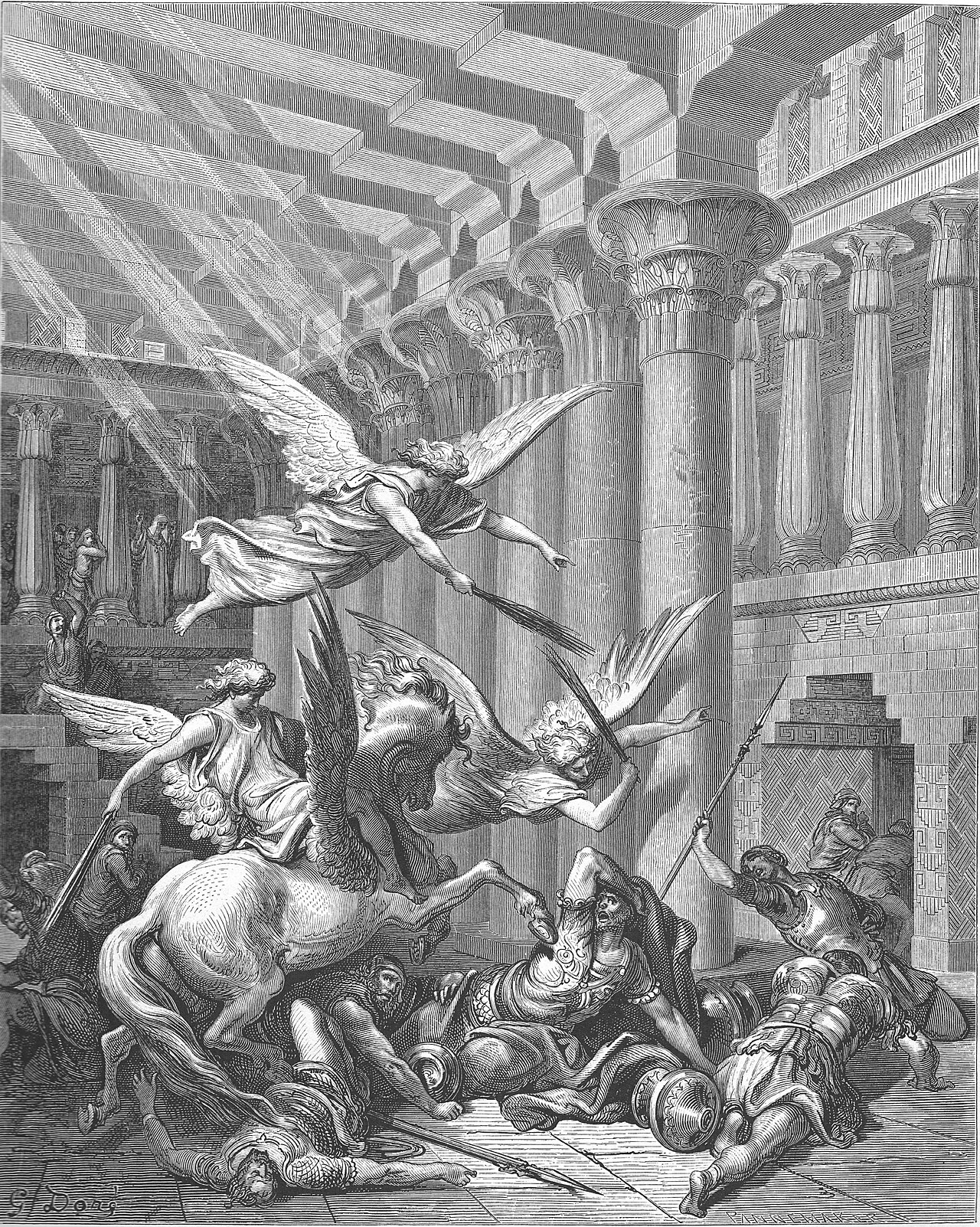
Before Antiochus, before the martyrs, before the revolt, 2 Maccabees opens with a different kind of story. A royal chancellor named Heliodorus marches into Jerusalem with his guard to confiscate the temple treasury — deposits held in trust for widows and orphans — and inside the sacred precincts something his soldiers cannot fight meets him: a rider in golden armor, and two young men who scourge him to the ground. The man who walked in at the head of a column is carried out on a stretcher. The book tells it as its thesis statement: the house has a Guardian. This page walks the scene, hangs the art it inspired for twenty centuries — and adds the modern footnote the story never expected: an inscribed stone, published in 2007, that names the very man.
Raphael, The Expulsion of Heliodorus from the Temple, 1511-1512. Public domain.
Summary
A royal officer sent to seize the Jerusalem temple treasury is struck down by a rider and two young men before he can touch it, then carried out helpless. A stone published in 2007 names the real official, and the story lands on the same truth 2 Kings 6 tells about Elisha.
- Heliodorus was sent by the Seleucid king to confiscate deposits held in trust for widows and orphans
- 2 Maccabees 3 describes a rider in golden armor and two young men who struck him down inside the treasury
- A Greek inscription published in 2007 confirms Heliodorus was a real official with exactly this portfolio, though it cannot confirm the apparition itself
- The scene inspired Doré's engravings and Raphael's Vatican fresco, and points to the same guarded-house theme as 2 Kings 6:17
The Man Who Walked In, and How He Left
2 Maccabees 3, beat by beat: the apparition verbatim
1 · THE INFORMER
A temple official named Simon, out of spite, tells the Seleucid governor the Jerusalem treasury holds untold sums (3:4–6). The king sends his chancellor to collect.
2 · THE CITY IN DREAD
The high priest Onias pleads: the deposits are widows' and orphans' trusts (3:10–12). Priests prostrate before the altar; the city pours into the streets (3:14–21).
3 · THE RIDER
“…there appeared unto them an horse with a terrible rider upon him… and he ran fiercely, and smote at Heliodorus with his forefeet, and it seemed that he that sat upon the horse had complete harness of gold.” (3:25)
4 · THE TWO YOUNG MEN
“Moreover two other young men appeared before him, notable in strength, excellent in beauty, and comely in apparel, who stood by him on either side; and scourged him continually…” (3:26)
5 · CARRIED OUT
“Thus him, that lately came with a great train and with all his guard into the said treasury, they carried out, being unable to help himself with his weapons: and manifestly they acknowledged the power of God.” (3:28)
One title in the scene is worth a student’s pause: the narrator calls God “the Lord of spirits” (3:24) — the very title the Parables of Enoch use dozens of times for the God enthroned over the unseen world. Two books of the same era, reaching for the same name for the God whose armies no chancellor’s guard can see.
- ch 3the book's thesis scene
- 3 figuresone rider, two scourgers
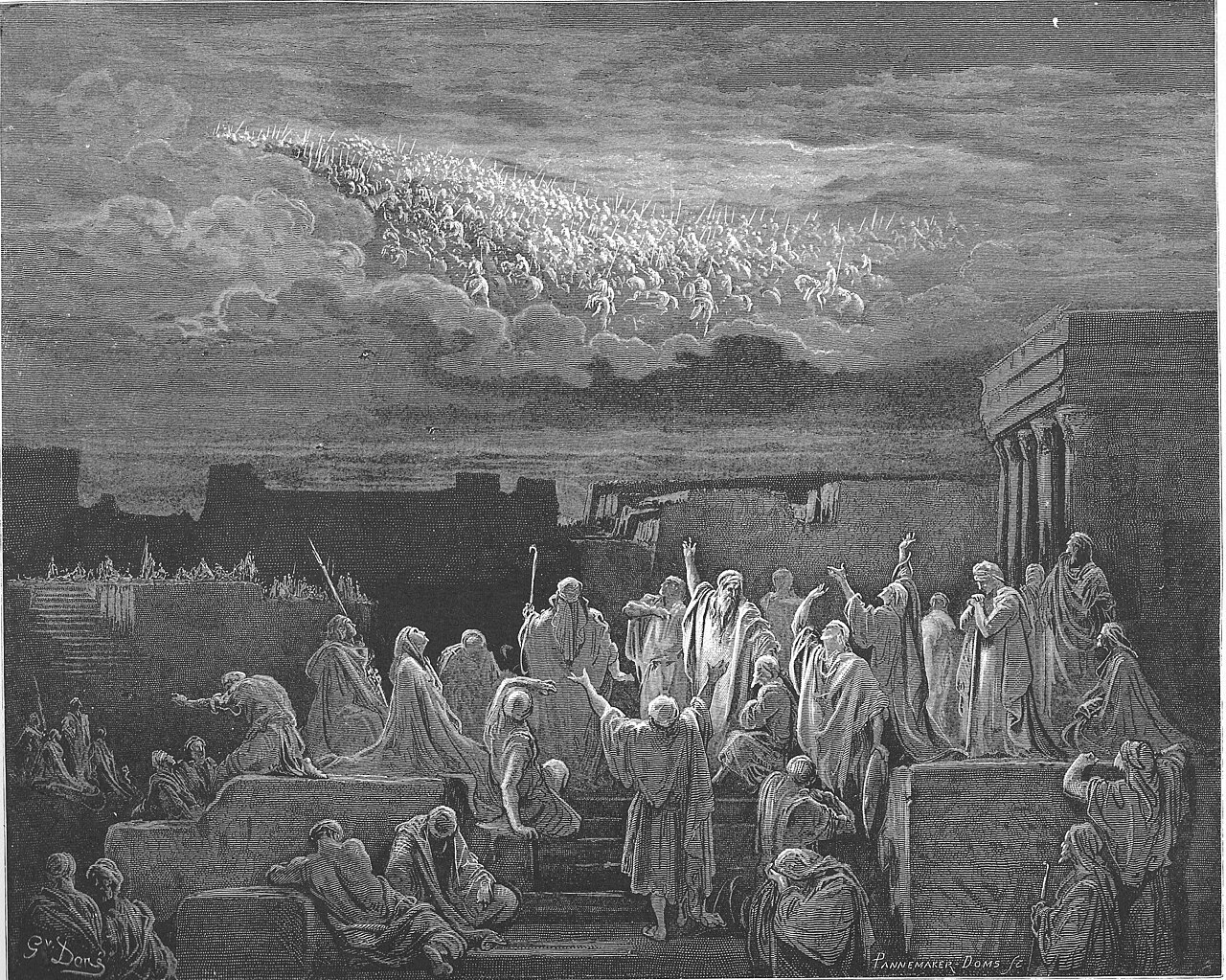
- 40 dayshorsemen over the city (5:2)
- 2007the stele that names the man
- 2 Kgs 6:17the canon's own unseen army
The Stone That Names Him
the Heliodorus stele: what archaeology shows, and what it doesn't
For centuries a reader could wonder whether Heliodorus was even a real person. Then a Greek inscription surfaced — published in 2007, with further fragments later excavated at Maresha in Israel — carrying orders from King Seleucus IV (187–175 BC) concerning his chief minister Heliodorusand the administrative oversight of the sanctuaries of Coele-Syria and Phoenicia — the very portfolio, the very officer, the very years 2 Maccabees 3 describes.
What the stele proves: the honest boundarythe man, the office, the moment: not the miracle
The stele documents that Heliodorus existed, that he was Seleucus IV’s powerful minister, and that the crown was actively asserting control over the region’s temples in exactly this period — the precise administrative world 2 Maccabees 3 presupposes. It does not, and cannot, document an apparition; no inscription could. This page keeps the line bright: archaeology has confirmed the story’s stage and cast; the scene on that stage is the book’s own testimony, received as a labeled study resource. That is what honest evidence handling looks like: claim exactly what the stone shows, and nothing more.
The scene’s afterlife in art is its own witness to its power: Doré engraved it, and Raphael painted The Expulsion of Heliodorusonto a Vatican wall five centuries ago — the stretcher, the golden rider, the scourgers, exactly as the old book stages them.
The Guarded House
where the story points
The canon has its own version of this scene. When the king of Syria sent an army for Elisha, the prophet’s servant despaired until his eyes were opened — “and, behold, the mountain was full of horses and chariots of fire round about Elisha” (2 Kings 6:17). The unseen defense is Scripture’s own doctrine; 2 Maccabees 3 is the era retelling it about its own temple. And the deeper point survives every question about the story’s genre: the treasury Heliodorus came for held the deposits of widows and orphans — and the God of Israel identifies with exactly those people, in both Testaments, with a jealousy no chancellor should test.
A generation later, the guarded house was defiled anyway — Antiochus stripped it, and no rider appeared. The book itself explains its own theology: the sanctuary’s safety tracked the people’s faithfulness (deSilva). The New Testament carries the thread to its end: the true temple was never the building. “Destroy this temple, and in three days I will raise it up… he spake of the temple of his body” (John 2:19, 21). 2 Maccabees remains a labeled study resource beside the sixty-six books; its opening scene remains one of the era’s great pictures of a truth the canon states outright: the Lord of spirits is not an absentee landlord.
The Voices on This Scene
with the work named
An Introduction to the Apocrypha (Oxford University Press, 1957)
The standard account of 2 Maccabees' character as “pathetic history” (narrative written to move the reader) with the Heliodorus episode as its programmatic opening: the house is guarded when Israel is faithful.
Introducing the Apocrypha: Message, Context, and Significance (Baker Academic, 2002)
On the book's theology of the temple: the Heliodorus story as the thesis the martyrdoms and the cleansing then argue: the sanctuary's safety tracks the covenant faithfulness of the people.
The Apocrypha and Pseudepigrapha of the Old Testament, vol. I (Oxford, 1913)
The standard critical edition: 2 Maccabees 3 with notes, including the apparition's literary framing.
Marcus Brown's own commentary leads above all; within a tier, all voices are equal.
Read the Great Books
the works this study is built on
2 Maccabees 3
c. 124–100 BC: a labeled study resource, not canon
The whole scene (the informer, the pleading city, the rider) in MannaFest’s own reader.
READ IT →2 Kings 6: the unseen army
Scripture: read it in MannaFest’s own reader
The canon’s own opened-eyes scene: horses and chariots of fire around the prophet.
READ IT →The Apocrypha and Pseudepigrapha of the Old Testament, vol. I
R. H. Charles, ed. · 1913
The standard critical edition: 2 Maccabees with introduction and notes.
READ IT FREE →Keep studying
Read it4