
1 Samuel 13:11
in 1 Samuel 13“What have you done?” Samuel asked. And Saul replied, “When I saw that the troops were deserting me, and that you did not come at the appointed time and the Philistines were gathering at Michmash,
BSB
The same verse in ASV and KJV ▾
ASV
And Samuel said, What hast thou done? And Saul said, Because I saw that the people were scattered from me, and that thou camest not within the days appointed, and that the Philistines assembled themselves together at Michmash;
KJV
And Samuel said, What hast thou done? And Saul said, Because I saw that the people were scattered from me, and that thou camest not within the days appointed, and that the Philistines gathered themselves together at Michmash;
⋯
This verse in 1 Samuel 13
Commentary
14 notes on this verse16. The prophet indeed knew what he had done, but by asking, he was reproving the act of disobedience. Hence also to Adam sinning in paradise, the Lord says: "Adam, where are you?" (Gen. 3:9). The magnitude of the guilt can also be conveyed through this question — as if he were saying openly: Does it seem a small thing to you that you sinned by disobeying? Rather, by sinning you fell from the lofty summit of your glory.
This site's exposition
Just as he finished offering the burnt offering, Samuel arrived
on 1 Samuel 13:10-12
Samuel arrives just as the offering ends, so the text measures the wait Saul could not finish. Saul's answer stacks three complaints before he names his act: the troops deserting, Samuel's lateness, and the Philistines gathering at Michmash. His own words, "I felt compelled to offer the burnt offering," are those of a man who knew the act was not his to perform.
This site's exposition
What have you done
Samuel knows what Saul has done, and Gregory the Dialogist heard the question as a rebuke in the form of an inquiry. He set it beside the LORD's call to Adam at Genesis 3:9, asked of a man who had just disobeyed. Adam's answer at Genesis 3:12 also laid the fault elsewhere.
The record, by era
The Church Fathers3 voices
A commentator
Apostolic ConstitutionsCONSTITUTIONS OF THE HOLY APOSTLES 8.5.46 · Written before 380.
proposed
Now this we all in common do charge you, that every one remain in that rank which is appointed him, and do not transgress his proper bounds; for they are not ours but God's.… And those things which are allotted for the high priests to do, those might not be meddled with by the priests; and what things were allotted to the priests, the Levites might not meddle with; but every one observed those ministrations which were written down and appointed for them. And if any would meddle beyond the tradition, death was his punishment. And Saul's example does show this most plainly, who, thinking he might offer sacrifice without the prophet and high priest Samuel, drew upon himself a sin and a curse without remedy. Nor did even his having anointed him king discourage the prophet.
Saul also was dishonored because he did not wait for Samuel the high priest. It behooves you, therefore, also to reverence your superiors.
A commentator
John ChrysostomHOMILIES ON THE GOSPEL OF MATTHEW 86.3 · Written in the 5th century.
proposed
And mark it, he [the devil] desired to bring Saul into [the] superstition of witchcraft. But if he had counseled this at the beginning, the other would not have given heed; for how should he, who was even driving them out? Therefore gently and by little and little he leads him on to it. For when he had disobeyed Samuel and had caused the burnt offering to be offered, when he was not present, being blamed for it, he says, "The compulsion from the enemy was too great," and when he ought to have bewailed, he felt as though he had done nothing.Again God gave him the commands about the Amalekites, but he transgressed these too. Then he proceeded to his crimes about David, and thus slipping easily and little by little he did not stop, until he came to the very pit of destruction and cast himself in.
The Medieval Church1 voice
Because I saw that the people were slipping away from me, etc. The mystical sense of these words, as is clear from what was explained above, is easily understood. He immediately added, and said: Moreover, the Philistines were gathered together at Michmash, which means in …
The Puritans and the Awakening1 voice
He charges him with being an enemy to himself and his interest-- Thou hast done foolishly, and a rebel to God and his government--" Thou hast not kept the commandment of the Lord thy God, that commandment wherewith he intended to try thy obedience." Note, Those that disobey the commandments of God do foolishly for themselves. Sin is folly, and sinners are the greatest fools.
6 more voices on this verse
The Puritans and the Awakening3 voices
He went out to bless him, so the word is, as if he now thought himself a complete priest, empowered to bless as well as sacrifice, whereas he should have gone out to be blessed by him. (3.) That he charged Samuel with breach of promise: Thou camest not within the days appointed (
quarantine:debris (2026-07-29) — unbalanced-parens
And Samuel said, what hast thou done?
Thus the scoffers of the latter days think the promise of Christ's coming is broken, because he does not come in their time, though it is certain he will come at the set time. (4.) That when he was charged with disobedience he justified himself in what he had done, and gave no sign at all of repentance for it.
The Nineteenth Century3 voices
A commentator
Jamieson, Fausset & Brown1802–1910
Commentary Critical and Explanatory on the Whole Bible (1871)
Saul said, Bring hither a burnt offering to me, and peace offerings--Saul, though patriotic enough in his own way, was more ambitious of gaining the glory of a triumph to himself than ascribing it to God.
And Saul said - Here he offers three excuses for his conduct: 1. The people were fast leaving his standard. 2. Samuel did not come at the time, למועד lemoed; at the very commencement of the time he did not come, but within that time he did come. 3. The Philistines were coming fast upon him. Saul should have waited out the time; and at all events he should not have gone contrary to the counsel of the Lord.
A commentator
Albert Barnes1798–1870
Notes, Explanatory and Practical, on the Old and New Testaments (1832-1869)
proposed
Saul had come from Michmash to Gilgal, expecting to gather the force of the whole nation around him. Instead of that, the people fled, leaving him in the exposed plain with only 600 men 1Sa 13:15. The Philistines occupied Michmash, and might at any moment pour down the valley upon Gilgal. Saul’s situation was obviously one of extreme peril. A few hours’ delay might prove fatal to him and his little army. Hence, he “forced” himself, etc.
How the passage was read
What the Jewish commentators add
What have you done? Did I not say to you, "I will go down to you to offer the burnt-offering?" I will offer it up, and not you.
1 more on this passage, in their own words ▾
So I forced myself. I overcame my will, for my heart told me to wait for you, and against my will I suppressed my heart, and offered the burnt-offering. 8 Shaul realized that it was not proper for him to offer the sacrifice.
This section is reception history: how the passage was read and kept in the Jewish tradition. Where a reading parts from an essential of the Christian faith, the section says so at that point.
Texts and citation data: Sefaria; each excerpt follows its version’s licence. 4 further sources are cited on this chapter that carry no English text this site may quote or only restate the verse.
The words behind it
20 Hebrew wordsEvery Hebrew word of this verse in the order it stands, with what it means and the door to its own study. The last column counts the times a word stands in the whole Bible: the rarer the word, the more the places it appears belong together.
| Hebrew | Sound | Meaning | Word study | In the Bible |
|---|---|---|---|---|
| וַיֹּ֥אמֶר | vaiyomer | and he said | H559 → | 5305 times |
| שְׁמוּאֵ֖ל | shemuel | Samuel | H8050 → | 141 times |
| מֶ֣ה | meh | what? | H4100 → | 752 times |
| עָשִׂ֑יתָ | ʾasita | have you done | H6213 → | 2628 times |
| וַיֹּ֣אמֶר | vaiyomer | and he said | H559 → | 5305 times |
| שָׁא֡וּל | shaul | Saul | H7586 → | 402 times |
| כִּֽי־ | ki- | if | H3588 → | 4482 times |
| רָאִיתִי֩ | raiti | I saw | H7200 → | 1300 times |
| כִֽי־ | khi- | that | H3588 → | 4482 times |
| נָפַ֨ץ | nafatz | it was scattered | H5310 → | |
| הָעָ֜ם | haam | the people | H5971 → | 1873 times |
| מֵעָלַ֗י | mealai | from with <the> me | H5921 → | 5755 times |
| וְאַתָּה֙ | veatah | and you | H859 → | 1094 times |
| לֹא־ | lo'- | not | H3808 → | 5168 times |
| בָ֙אתָ֙ | vata | you had come | H935 → | 2568 times |
| לְמוֹעֵ֣ד | lemoed | to [the] appointed time of | H4150 → | 223 times |
| הַיָּמִ֔ים | haiyamim | the days | H3117 → | 2304 times |
| וּפְלִשְׁתִּ֖ים | ufelishtim | and [the] Philistines | H6430 → | 287 times |
| נֶאֱסָפִ֥ים | neesafim | [were] gathering | H622 → | 200 times |
| מִכְמָֽשׂ׃ | mikhmas | Micmash | H4363 → | 11 times |
וַיֹּ֥אמֶרand he said
vaiyomerH559 →5305 times
שְׁמוּאֵ֖לSamuel
shemuelH8050 →141 times
מֶ֣הwhat?
mehH4100 →752 times
עָשִׂ֑יתָhave you done
ʾasitaH6213 →2628 times
וַיֹּ֣אמֶרand he said
vaiyomerH559 →5305 times
שָׁא֡וּלSaul
shaulH7586 →402 times
כִּֽי־if
ki-H3588 →4482 times
רָאִיתִי֩I saw
raitiH7200 →1300 times
כִֽי־that
khi-H3588 →4482 times
נָפַ֨ץit was scattered
nafatzH5310 →
הָעָ֜םthe people
haamH5971 →1873 times
מֵעָלַ֗יfrom with <the> me
mealaiH5921 →5755 times
וְאַתָּה֙and you
veatahH859 →1094 times
לֹא־not
lo'-H3808 →5168 times
בָ֙אתָ֙you had come
vataH935 →2568 times
לְמוֹעֵ֣דto [the] appointed time of
lemoedH4150 →223 times
הַיָּמִ֔יםthe days
haiyamimH3117 →2304 times
וּפְלִשְׁתִּ֖יםand [the] Philistines
ufelishtimH6430 →287 times
נֶאֱסָפִ֥ים[were] gathering
neesafimH622 →200 times
מִכְמָֽשׂ׃Micmash
mikhmasH4363 →11 times
A shaded row is a word that stands 400 times or fewer in the Bible.
The walk
8 stopsEach card is a verse this one points to, and under it the verses that one points to in turn. Where several paths arrive at the same place, that place is listed first: the text keeps returning to it.
Through
Genesis 3:13Then the LORD God said to the woman, “What is this you have done?” “The serpent deceived me,” she replied, “and I ate.”
it leads to
- 2 Corinthians 11:3
I am afraid, however, that just as Eve was deceived by the serpent’s cunning, your minds may be led astray from your simple and pure devotion to Christ.
- 1 Timothy 2:14
And it was not Adam who was deceived, but the woman who was deceived and fell into transgression.
- Genesis 3:4–6
“You will not surely die,” the serpent told her.
- John 18:35
“Am I a Jew?” Pilate replied. “Your own people and chief priests handed You over to me. What have You done?”
- Genesis 4:10–12
“What have you done?” replied the LORD. “The voice of your brother’s blood cries out to Me from the ground.
- 2 Corinthians 11:3
Through
1 Samuel 13:2He chose for himself three thousand men of Israel: Two thousand were with Saul at Michmash and in the hill country of Bethel, and a thousand were with Jonathan in Gibeah of Benjamin. And…
it leads to
- 1 Samuel 13:5
Now the Philistines assembled to fight against Israel with three thousand chariots, six thousand horsemen, and troops as numerous as the sand on the seashore. They went up and camped at Michmash, east of…
Reached by 2 separate paths from here.
- 1 Samuel 13:5
Through
1 Samuel 13:5Now the Philistines assembled to fight against Israel with three thousand chariots, six thousand horsemen, and troops as numerous as the sand on the seashore. They went up and camped at Michmash, east of…
it leads to
- Joshua 11:4
So these kings came out with all their armies, a multitude as numerous as the sand on the seashore, along with a great number of horses and chariots.
- Joshua 11:4
Through
1 Samuel 13:23And a garrison of the Philistines had gone out to the pass at Michmash.
it leads to
- Isaiah 10:28
Assyria has entered Aiath and passed through Migron, storing their supplies at Michmash.
- Isaiah 10:28
Where this verse is studied
On this page
Studies1
About 1 Samuel
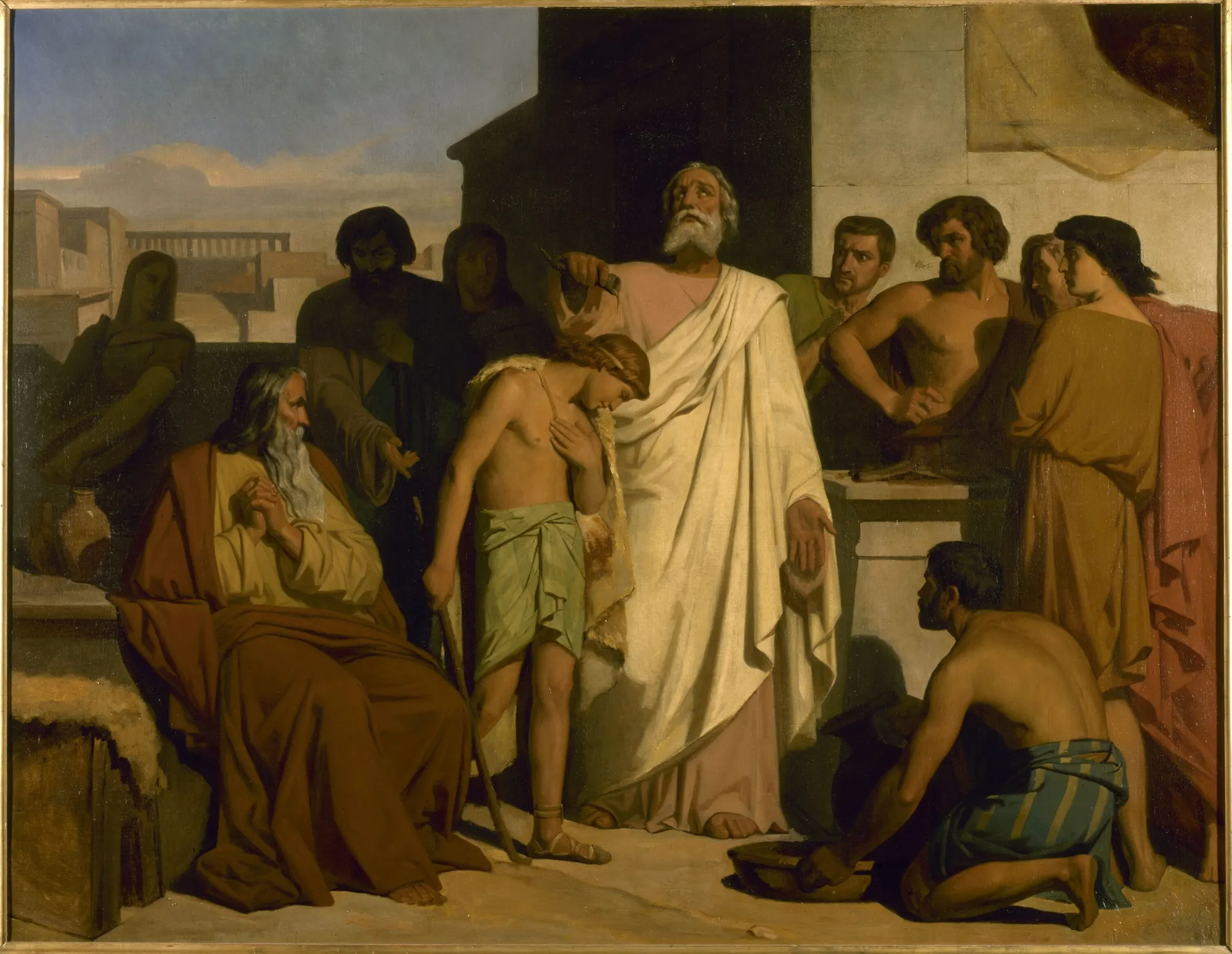
Who and where
2 names in this verse with a page on the site.
- PersonJudges to monarchySamuelAsked of God by Hannah and lent to the LORD at Shiloh; the last judge and first of the prophets after Moses, who anointed both Sau…
- PersonUnited monarchySaulIsrael's first king, head and shoulders above the people; began in humility, ended in rejection — sparing what God devoted, consul…
This page draws on 11 works. Open the list of works
This page draws on Adam Clarke, Commentary on the Bible; Albert Barnes, Notes, Explanatory and Practical, on the Old and New Testaments (1832-1869); Apostolic Constitutions, CONSTITUTIONS OF THE HOLY APOSTLES 8.5.46; Bede, Commentary on Samuel; Gregory the Dialogist, Commentary on 1 Kings, Book 5, Chapter 3; Jamieson, Fausset & Brown, Commentary Critical and Explanatory on the Whole Bible; John Chrysostom, HOMILIES ON THE GOSPEL OF MATTHEW 86.3; John Gill, Exposition of the Old Testament (1748-1763); Keil and Delitzsch, Biblical Commentary on the Books of Samuel; Matthew Henry, Commentary on the Whole Bible and Pseudo-Ignatius, LETTER TO THE MAGNESIANS 3.