
1 Chronicles 4:11
in 1 Chronicles 4Chelub the brother of Shuhah was the father of Mehir, who was the father of Eshton.
BSB
The same verse in ASV and KJV ▾
ASV
And Chelub the brother of Shuhah begat Mehir, who was the father of Eshton.
KJV
And Chelub the brother of Shuah begat Mehir, which was the father of Eshton.
⋯
This verse in 1 Chronicles 4
Commentary
3 notes on this verseA commentator
Albert Barnes1798–1870
Notes, Explanatory and Practical, on the Old and New Testaments (1832-1869)
It has been conjectured from the strangeness of all the names in this list, that we have here a fragment of Canaanite record, connected with the family of the “Shua,” whose daughter Judah took to wife 1Ch 2:3; Gen 38:2, and whose family thus became related to the tribe of Judah.
This site's exposition
the brother of Shuah begat Mehir
on 1 Chronicles 4:11-20
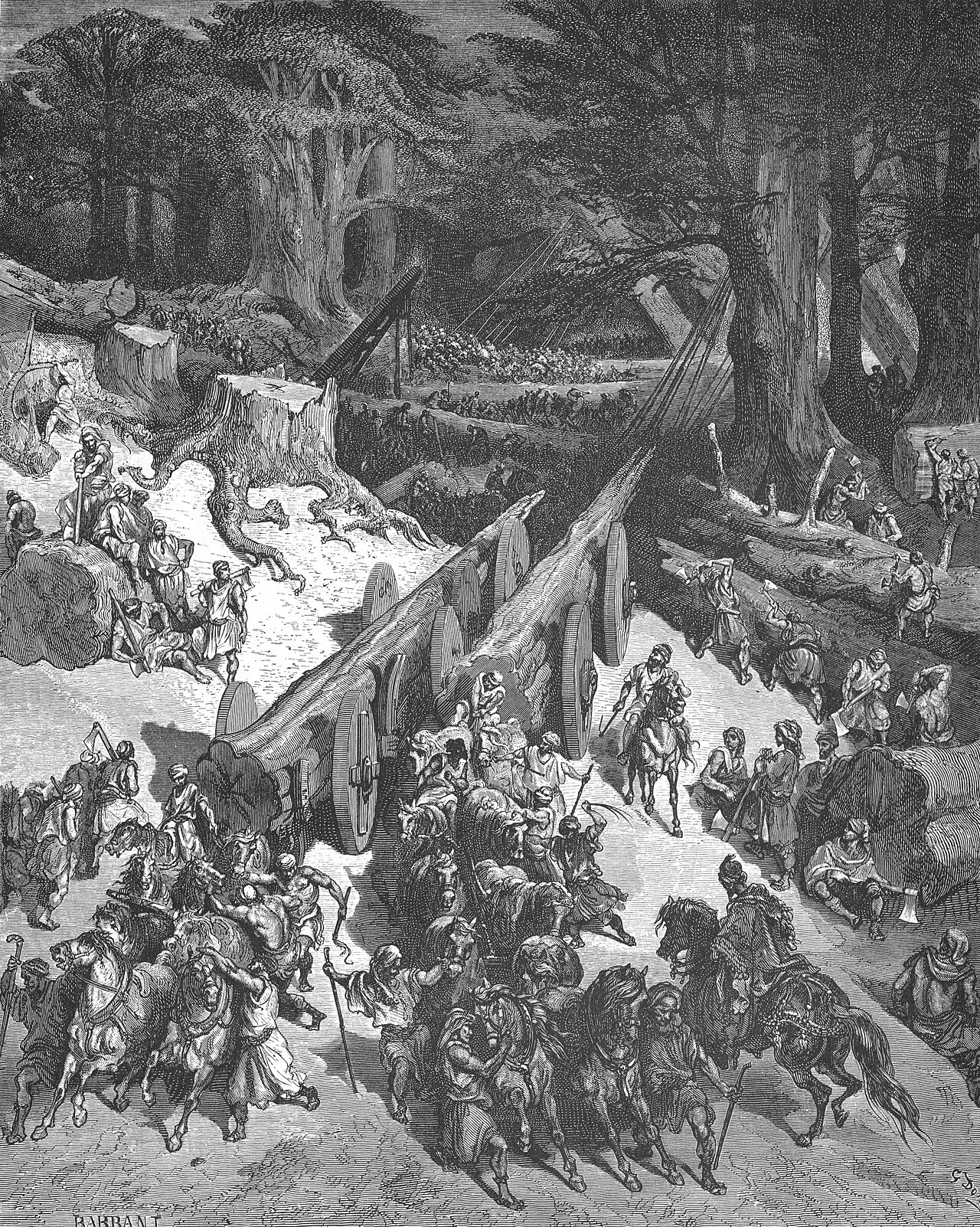
This unit gathers several branches of Caleb's descendants, including the craftsmen of the valley of Charashim at verse fourteen, carpenters and smiths named for their trade rather than for any deed. Verse eighteen preserves an otherwise unrecorded marriage, Bithiah the daughter of Pharaoh taken by a descendant of Caleb, an Egyptian princess grafted into Judah's genealogy without further comment. Most of the names in this stretch occur nowhere else in Scripture, which is part of what these chapters are doing, keeping every family on record even where no story survives to go with the name.
The record, by era
The Puritans and the Awakening1 voice
And Chelub the brother of Shuah begat Mehir,.... If Shuah is the same with Hushah, 1Ch 4:4, then Chelub was the son of Ezer: which was the father of Eshton; not the prince of a place called Eshton, as Vatablus; for it is the name of a man, the son of Mehir, and who in the next verse is said to beget sons.
How the passage was read
What the Jewish commentators add
And Celub, the brother of Shuhah He briefly enumerates families, although he did not mention him above; similarly (v. 13): “and the sons of Kenaz,” although he did not mention him above; and similarly (verse 14): “And Meonothai,” was not mentioned, for so is the manner of this Book.
1 more on this passage, in their own words ▾
the leader of Ir Nahash the name of a city, and Tehinnah (was) its leader.
This section is reception history: how the passage was read and kept in the Jewish tradition. Where a reading parts from an essential of the Christian faith, the section says so at that point.
Texts and citation data: Sefaria; each excerpt follows its version’s licence. 4 further sources are cited on this chapter that carry no English text this site may quote or only restate the verse.
The words behind it
9 Hebrew wordsEvery Hebrew word of this verse in the order it stands, with what it means and the door to its own study. The last column counts the times a word stands in the whole Bible: the rarer the word, the more the places it appears belong together.
| Hebrew | Sound | Meaning | Word study | In the Bible |
|---|---|---|---|---|
| וּכְל֥וּב | ukheluv | and Kelub | H3620 → | |
| אֲחִֽי־ | ʾachi- | [the] brother of | H251 → | 630 times |
| שׁוּחָ֖ה | shuchah | Shuhah | H7746 → | |
| הוֹלִ֣יד | holid | he fathered | H3205 → | 496 times |
| אֶת־ | ʾet- | <obj.> | H853 → | 10935 times |
| מְחִ֑יר | mechir | Mehir | H4243 → | |
| ה֖וּא | hu' | he | H1931 → | 1879 times |
| אֲבִ֥י | ʾavi | [was] [the] father of | H1 → | 1212 times |
| אֶשְׁתּֽוֹן׃ | ʾeshton | Eshton | H850 → |
וּכְל֥וּבand Kelub
ukheluvH3620 →
אֲחִֽי־[the] brother of
ʾachi-H251 →630 times
שׁוּחָ֖הShuhah
shuchahH7746 →
הוֹלִ֣ידhe fathered
holidH3205 →496 times
אֶת־<obj.>
ʾet-H853 →10935 times
מְחִ֑ירMehir
mechirH4243 →
ה֖וּאhe
hu'H1931 →1879 times
אֲבִ֥י[was] [the] father of
ʾaviH1 →1212 times
אֶשְׁתּֽוֹן׃Eshton
ʾeshtonH850 →
A shaded row is a word that stands 400 times or fewer in the Bible.
About 1 Chronicles
This page draws on Albert Barnes, Notes, Explanatory and Practical, on the Old and New Testaments (1832-1869); Albert Barnes, Notes on the Old Testament; Jamieson Fausset and Brown, Commentary Critical and Explanatory on the Whole Bible and John Gill, Exposition of the Old Testament (1748-1763).