
On this page, 6 sections
The one drawing
Across the canon
Old Testament
New Testament
The other 55 books of the canon carry none.
12 passages
Where Scripture speaks
The passages this subject stands on, in canon order.
Then tell Pharaoh that this is what the LORD says: ‘Israel is My firstborn son,Is this how you repay the LORD, O foolish and senseless people? Is He not your Father and Creator? Has He not made you and established you?A father of the fatherless, and a defender of the widows, is God in His holy habitation.Yet You are our Father, though Abraham does not know us and Israel does not acknowledge us. You, O LORD, are our Father; our Redeemer from Everlasting is Your name.Do we not all have one Father? Did not one God create us? Why then do we break faith with one another so as to profane the covenant of our fathers?So then, this is how you should pray: ‘Our Father in heaven, hallowed be Your name.So if you who are evil know how to give good gifts to your children, how much more will your Father in heaven give good things to those who ask Him!So he got up and went to his father. But while he was still in the distance, his father saw him and was filled with compassion. He ran to his son, embraced him, and kissed him.Jesus replied, “Philip, I have been with you all this time, and still you do not know Me? Anyone who has seen Me has seen the Father. How can you say, ‘Show us the Father’?For you did not receive a spirit of slavery that returns you to fear, but you received the Spirit of sonship, by whom we cry, “Abba! Father!”And because you are sons, God sent the Spirit of His Son into our hearts, crying out, “Abba, Father!”Behold what manner of love the Father has given to us, that we should be called children of God. And that is what we are! The reason the world does not know us is that it did not know Him.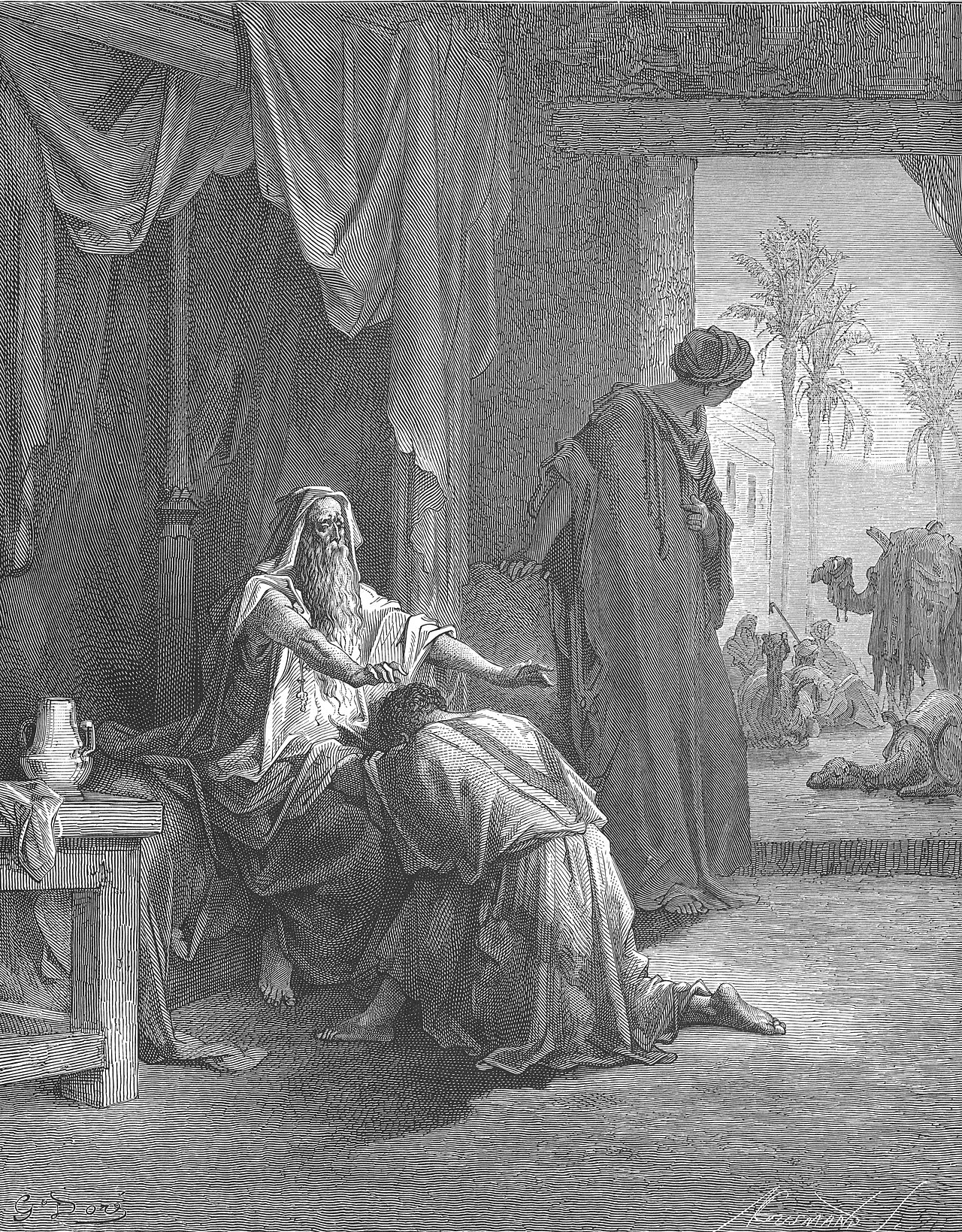
The Father in Scripture, in full
When Jesus taught people to pray, he began with two simple words: Our Father. That was not the way most people spoke to God before Jesus came. He revealed God not primarily as a distant ruler or an unreachable judge, but as a Father: the one who made everything, who loves his children, and who can be known personally.
The Old Testament already hints at this. Moses reminded Israel that God was the Father who had made them, who had bought them, and who had established them as a people (Deuteronomy 32:6). The prophet Isaiah, in a moment of national grief, cried out to God as Father, the one who had known Israel from ancient days even when their earthly fathers did not recognize them anymore (Isaiah 63:16). The relationship was there before Jesus came, but it grew immeasurably clearer through him.
Jesus called God his Father constantly, and he claimed a closeness with the Father that no one else claimed. He told his disciples that whoever had seen him had seen the Father, because he and the Father were one in such a deep way that his own words and works were really the Father's works done through him (John 14:9-10). To know Jesus was to know the Father, because Jesus was showing the world exactly what the Father is like.
Jesus taught his followers to bring their needs to the Father with confidence, the way a child brings a request to a good parent. He said that if human parents, who are imperfect, know how to give good gifts to their children, how much more will the Father in heaven give good things to those who ask him (Matthew 7:11). This was not a picture of a distant deity keeping score. It was the picture of a Father who wants to be asked.
The clearest window into this relationship comes at the end of Jesus' life, in his prayer just before the cross. He spoke to the Father with complete trust, even while facing suffering, asking that the Father's will be done and that his own followers would be kept safe and made one (John 17). His whole life led up to and flowed out of this relationship with the Father.
This Fatherhood is not only Jesus' own. Paul writes that believers receive the Spirit of adoption, and through that Spirit they are able to cry out to God as Father, using the same intimate word Jesus himself used (Romans 8:15; Galatians 4:6). Being adopted as a child of God is not a formality. It comes with the same closeness Jesus had, made possible only because of what he accomplished.
John marvels at this gift, saying that people should stop and consider what kind of love the Father has given, that sinful people would be called his children (1 John 3:1). That is the heart of the whole subject. The Father is not a title borrowed from human family structures and pasted onto God. He is the true and original Father, and every earthly father, however good, is only a shadow of him.
To know God as Father is to know him the way Jesus knew him: with trust, with closeness, and with the confidence of a child who has been welcomed home.
5 voices
What teachers have said
Even before he became man, he was King and Lord everlasting, being image and word of the Father.
Athanasius of Alexandria · Discourses Against the Arians 2.13
Written before 373.
He did not say "having a nature like that of God," as would be said of [a man] who was made in the image of God. Rather Paul says "being in the very form of God." All that is the Father's is in the Son.
Gregory of Nyssa · Antirrheticus Against Apollinarius
Written before 395.
If the Father is greater by virtue of giving, is the Son less by confessing the gift? The giver is the greater, but He to whom unity with that giver is given, is not the less.
Hilary of Poitiers · Catena Aurea by Aquinas
Written before 367.
That we may have, therefore the assurance that we are the children of God, "He hath sent forth His Spirit into our hearts, crying, Abba, Father."
Tertullian · Against Marcion Book V
Written before 220.
We have been enriched with God's Spirit, for his Spirit has come to dwell in our hearts, and we have taken our place among the children of God and yet have not lost being what we are. For we are men according to nature, even though we cry: "Abba! Father!"
Cyril of Alexandria · Letter 1.35
Written before 444.
The words underneath
Each card is one Hebrew or Greek word behind the father. It gives the sense, the count across the canon, and the number in Strong's 1890 concordance.
gennao: to beget
Greek · G1080Strong's entry: to procreate (properly, of the father, but by extension of the mother); figuratively, to regenerate
the Father's own life given
97 times in the New Testament · gennao, in full →
Abba: Abba
Greek · G5Strong's entry: father as a vocative
Abbâ — 'Father,' the intimate cry the Spirit puts in a believer's heart
3 times in the New Testament · Abba, in full →
Who it is about
The subjects beside it
On this page
Subjects11