
On this page, 6 sections
The one drawing
Across the canon
Old Testament
New Testament
The other 58 books of the canon carry none.
9 passages
Where Scripture speaks
The passages this subject stands on, in canon order.
I will make you into a great nation, and I will bless you; I will make your name great, so that you will be a blessing.Then the man said, “Your name will no longer be Jacob, but Israel, because you have struggled with God and with men, and you have prevailed.”Now if you will indeed obey My voice and keep My covenant, you will be My treasured possession out of all the nations—for the whole earth is Mine.For you are a people holy to the LORD your God. The LORD your God has chosen you to be a people for His prized possession out of all peoples on the face of the earth.For You have established Your people Israel as Your very own forever, and You, O LORD, have become their God.For the LORD has chosen Jacob as His own, Israel as His treasured possession.Behold, the days are coming, declares the LORD, when I will make a new covenant with the house of Israel and with the house of Judah.Therefore prophesy and tell them that this is what the Lord GOD says: ‘O My people, I will open your graves and bring you up from them, and I will bring you back to the land of Israel.And so all Israel will be saved, as it is written: “The Deliverer will come from Zion; He will remove godlessness from Jacob.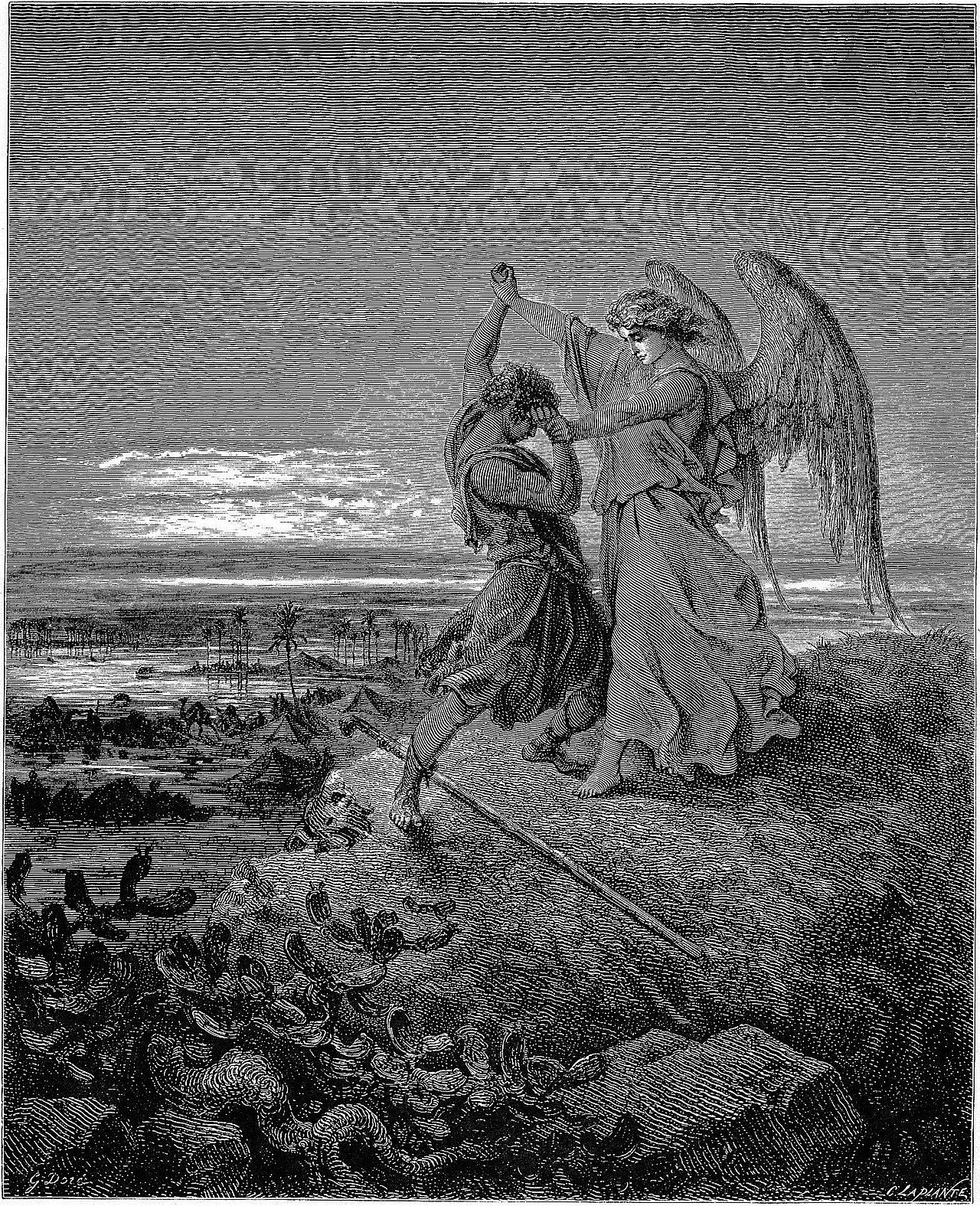
Israel in Scripture, in full
Israel begins as a name before it is a nation. Jacob wrestles with a mysterious visitor through the night and will not let go until he is blessed. At daybreak he receives a new name: no longer Jacob, 'heel-grabber,' but Israel: 'he strives with God' (Genesis 32:28). That struggle, and that stubborn refusal to let go of the blessing, becomes the pattern for the whole people who carry his name.
The promise behind the name goes back further still, to Abraham. God calls one man out of Ur and tells him He will make of him a great nation, blessing him so that he becomes a blessing to everyone else (Genesis 12:2-3). Everything that follows (the twelve tribes descended from Jacob's sons, the exodus from Egypt, the covenant at Sinai), grows out of that single promise to one family.
At Sinai the relationship is spelled out plainly. Israel is called God's peculiar treasure, set apart from every other nation on earth not because of size or strength but because the LORD loved them and chose to keep His promise to their fathers (Exodus 19:5; Deuteronomy 7:6-8). The law given there was never meant to earn that love. It was meant to shape a people who already belonged to Him into a light for the nations around them.
Israel's story does not move in a straight line upward. Judges, kings, prophets, exile: the Old Testament tells this history with unusual honesty, including Israel's repeated failures alongside God's repeated faithfulness. Even the exile to Babylon, which looked like the end of the story, becomes the occasion for one of Scripture's most striking promises: a new covenant with the house of Israel, in which God's law would be written not on stone but on the heart (Jeremiah 31:31-33). Ezekiel pictures the same hope as dry bones rising to life again in the land (Ezekiel 37:12-14): a nation that looked finished, restored by God's own breath.
The New Testament does not set this promise aside. Jesus Himself is born a Jew, of the seed of David according to the flesh (Romans 1:3), and His earliest followers were entirely Jewish. When the apostle Paul writes at length about Israel's place in God's plan, he asks directly whether God has cast off His people, and answers just as directly: God forbid (Romans 11:1). He goes on to say that all Israel will be saved, and that the gifts and calling of God are without repentance: meaning God does not take back what He has given (Romans 11:26, 29).
This matters for how the whole Bible is read. Israel is not simply a stage that the church replaced once Christ came. The root that carries the tree is still Israel's root (Romans 11:18), and the covenant faithfulness God has shown to Jacob's children for four thousand years is the same faithfulness every believer, Jew or Gentile, now stands inside of through Christ.
Israel's story is, in the end, a story about a God who keeps His word even when His people cannot keep theirs: a God still writing chapters in a story He began with one man, one promise, and a name given after a long night of wrestling.
3 voices
What teachers have said
Fear thou not, O my servant Jacob! neither be dismayed. Note, Those that are God's servants must not give way to disquieting fears, whatever difficulties and dangers may be before them.
Matthew Henry · Commentary on the Whole Bible, 1710
A stone anointed; why a stone? "Behold, I lay in Zion a stone, elect, precious; and he that believes on him shall not be confounded." Why anointed? Because Christ comes from "anointing" (chrisma).
Augustine of Hippo · Tractates on the Gospel of John 7:23
Written before 430.
Therefore, God has opened an entrance to all the sons of Abraham, and Isaac, and Jacob, in order that they may be in the faith of profession towards Him.
Apostolic Constitutions · Constitutions of the Holy Apostles
Written before 380.
The words underneath
Each card is one Hebrew or Greek word behind israel. It gives the sense, the count across the canon, and the number in Strong's 1890 concordance.
Yisrael: Israel
Hebrew · H3478Strong's entry: Jisrael, a symbolical name of Jacob; also (typically) of his posterity
Israel's very identity.
2,507 times in the Old Testament · Yisrael, in full →
Tsion: Zion
Hebrew · H6726Strong's entry: Tsijon (as a permanent capital), a mountain of Jerusalem
God's chosen dwelling with His people.
154 times in the Old Testament · Tsion, in full →
Yaaqob: Jacob
Hebrew · H3290Strong's entry: Jaakob, the Israelitish patriarch
father of the twelve tribes.
350 times in the Old Testament · Yaaqob, in full →
Who it is about
The subjects beside it
On this page
Subjects11