
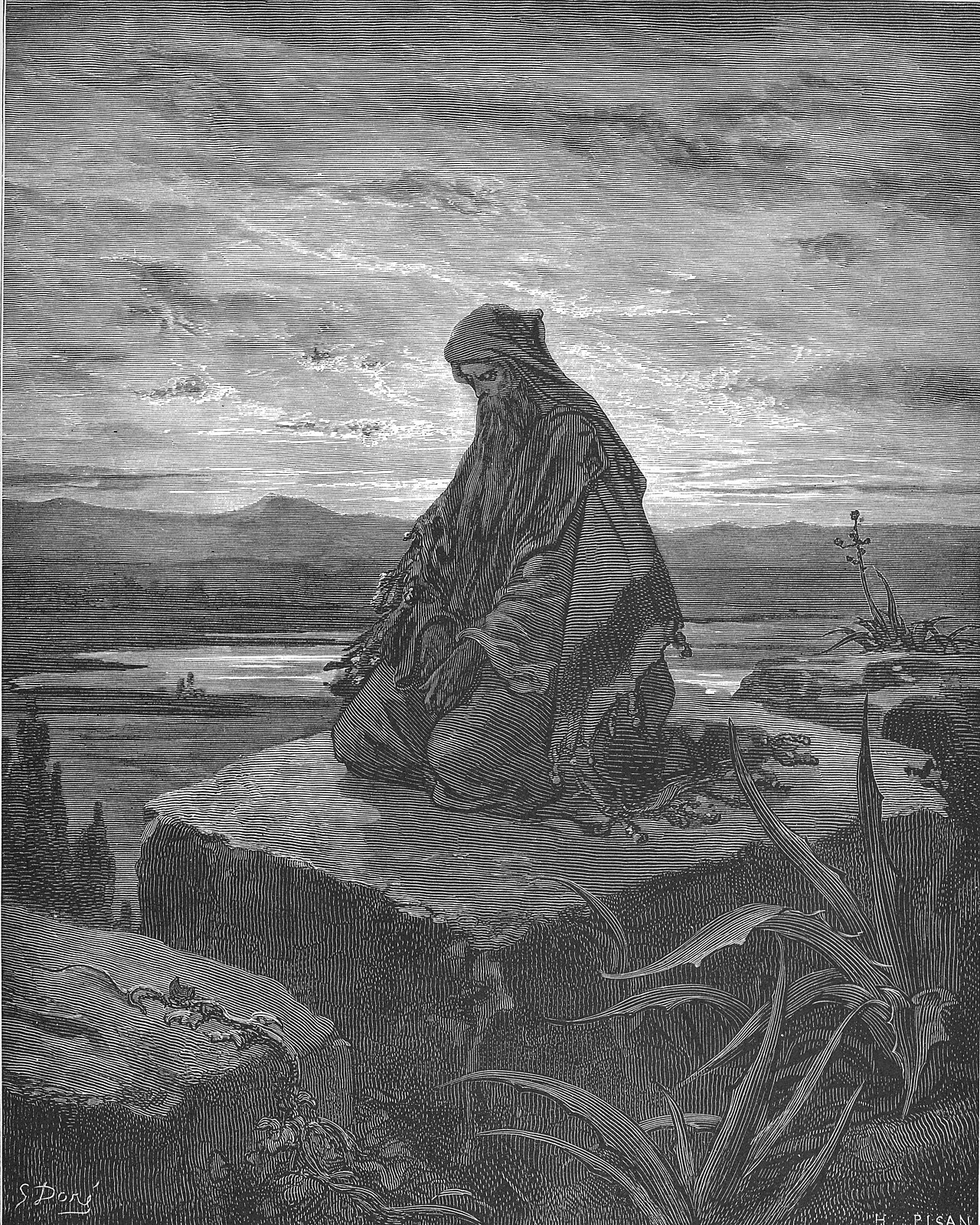
Isaiahchapter 3
26 verses · Isaiah · 8th century BC · The Prophets
The expression on their faces testifies against them, and like Sodom they flaunt their sin; they do not conceal it. Woe to them, for they have brought disaster upon themselves.
Introduction
Isaiah, The Prophets, Isaiah Overview.
Isaiah spoke this chapter in Jerusalem in the late years of Judah's prosperity, and it continues the case the book has opened. Its first hearers were the leading families of the capital, the judges and elders who sat in the gate and the wealthy households that set the fashion of the city. It describes the collapse of a society by naming the people who hold it together. Listen for the list of who is taken away and who is left to rule. Notice where God takes His stand, and whom He calls to account first. The chapter treats public order as a gift God can withdraw.
Context
- Who
- Judah's leading families and the women of the capital
- What
- A prophecy that God will remove Judah's leaders and supports, a charge against the elders who plundered the poor, and a sentence on the proud women of Zion.
- Where
- Jerusalem, in its courts, its markets and the streets where the wealthy walked.
- When
- The later reign of Uzziah or Jotham, about 740 to 730 BC, before the Assyrian crisis.
- Why
- To hold the rulers of Jerusalem responsible for the ruin of the city and to warn the proud that their finery would be taken away.
Historical context
The list of who gets removed is a list of who holds a city together: the soldier, the judge, the prophet, the elder, the officer, the skilled craftsman, and the man who knows how to speak. That was not a poetic list. Assyrian policy in a conquered land was to deport exactly those people, the officers, the scribes, the smiths, the artisans, because a population without its leadership and its metalworkers cannot organize a revolt or make a weapon.
Show the rest of the historical context, 3 more paragraphs
Then comes the picture of what is left: children in charge, neighbors bullying neighbors, and a man grabbed by his relatives and pushed into leadership because he still owns a cloak. In a famine-struck town a coat really was a mark of remaining wealth, since the outer cloak was a poor man's whole estate and his blanket at night.
The jewelry inventory is an excavated wardrobe. Ankle chains that jingled, headbands, crescent-shaped moon amulets, ear pendants, bracelets, veils, headdresses, ankle chains, sashes, perfume bottles, charms, signet rings, nose rings, festival robes, capes, purses, hand mirrors of polished bronze, fine linen shifts, turbans, and shawls. Nearly every item on that list has turned up in Iron Age digs in the land, including the bronze mirrors and the crescent amulets, which were worn partly for luck.
The reversals at the end are the marks of a deportee. Perfume replaced by the stench of a march, a sash replaced by a rope, styled hair replaced by a shaved head, captives were routinely shorn, and a fine robe replaced by sackcloth, the coarse dark goat-hair cloth of mourners.
Significance
The women of the capital were the visible face of the boom, and the chapter turns their own wardrobe into the itemized bill.
Show the rest of the significance, 1 more paragraph
Under it lies a harder charge aimed at the men: the vineyard has been eaten and the plunder of the poor is in your houses. God says he will stand up and enter into judgment with the elders, the very men who sat as judges in the gate.
This chapter in Jewish lifeWhat this chapter is in Jewish life and reading.
What is done
No part of this chapter is read in the synagogue. Probed for this lane, the site's own table in src/lib/hebraic/readings.ts printed parashot 0 and haftarah uses 0 for Isaiah 3, and no festival reading for the book. Across chapters 1 to 22 of Isaiah the same probe found a Haftarah only in chapters 1, 6, 7 and 9.
How it is read
Rashi is the main commentator on this chapter in the corpus, quoted here from The Judaica Press complete Tanach with Rashi, translated by A. J. Rosenberg, which Sefaria reports as CC-BY. Ibn Ezra is quoted from the Commentary of Ibn Ezra on Isaiah, translated by M. Friedlander in 1873, which Sefaria reports as Public Domain.
Rashi sends the reader of this chapter to the Talmud. He writes that the whole section "is explained in Tractate Chagigah (14a)". There Isaiah pronounced eighteen curses on Israel, and he was not satisfied until he reached the fifth verse, the young against the old (Rashi on Isaiah 3:1:1).
His notes read the leaders the chapter removes through the life of the house of study. The counsellor is "One who knows how to intercolate the years and fix the months" (Rashi on Isaiah 3:3:1). The youths set over the people "are people devoid of any observance of the commandments" (Rashi on Isaiah 3:4:1). At the sixth and seventh verses the man who is urged to rule answers that he knows neither the Mishnah nor the Aggadah (Rashi on Isaiah 3:6:1 and 3:7:1).
On the elders of the fourteenth verse Rashi cites Shabbat 55a: they are judged "For they should have protested" (Rashi on Isaiah 3:14:1). The judge who stands in the thirteenth verse stands "so as not to be strict in their judgment" (Rashi on Isaiah 3:13:1). The long list of ornaments is glossed item by item through the Targum of Jonathan, with Old French words for the necklaces and the mirrors (Rashi on Isaiah 3:19:1 and 3:23:1).
What the rabbis say
The corpus carries 40 rabbinic locators on the verses of this chapter, 15 in the Talmud and 25 in the Midrash. It carries the text of none, so each is cited by ref here and never quoted or paraphrased. The verse numbers are the Hebrew ones the corpus prints.
On verse 1 it holds Chagigah 14a:8 and Introductions to Tanaitic Literature, Introduction to Mishnah and Tosefta, Ancient Tannaitic Compilations 29. On verse 3 it holds Bamidbar Rabbah 18:21 and Chagigah 13a:6. On verse 4 it holds Chagigah 14a:13. On verse 5 it holds Chagigah 14a:14 and Ein Yaakov (Glick Edition), Khagigah 2:17. On verse 6 it holds Bamidbar Rabbah 9:47 and Chagigah 14a:15.
On verse 7 it holds Shabbat 120a:1. On verse 8 it holds Introductions to Tanaitic Literature, Introduction to Mishnah and Tosefta, Ancient Tannaitic Compilations 23 and Midrash Lekach Tov, Exodus 23:33:2. On verse 9 it holds Bekhorot 46b:12 and Bereshit Rabbah 65:20. On verse 10 it holds Avot DeRabbi Natan 40:2 and Bamidbar Rabbah 3:1. On verse 11 it holds Kiddushin 40a:9 and Midrash Lekach Tov, Deuteronomy 11:26:2.
On verse 12 it holds Esther Rabbah 3:2. On verse 13 it holds Bereshit Rabbah 82:8 and Bereshit Rabbati, Parashat Vayetze 28. On verse 14 it holds Berakhot 6b:37 and Devarim Rabbah 1:10. On verse 15 it holds Tractate Soferim 7:3. On verse 16 it holds Bamidbar Rabbah 7:10 and Bamidbar Rabbah 9:11.
On verse 17 it holds Bamidbar Rabbah 7:5 and Midrash Lekach Tov, Leviticus 14:4:2. On verse 18 it holds Berakhot 24a:15 and Bereshit Rabbah 18:1. On verse 19 it holds Midrash Sekhel Tov, Shemot 16:29:125. On verse 20 it holds Bamidbar Rabbah 20:19. On verse 21 it holds Midrash Lekach Tov, Exodus 35:22:4.
On verse 23 it holds Midrash Sekhel Tov, Bereshit 24:65:3 and Yalkut Shimoni on Torah 27:2. On verse 24 it holds Midrash Lekach Tov, Genesis 41:10:1 and Shabbat 62b:20. On verse 25 it holds Midrash Tannaim on Deuteronomy 33:6:13 and Shemot Rabbah 3:2. On verse 26 it holds Eikhah Rabbah, Petichta 7.
What each of them teaches is a saying of the rabbis, and is reported as theirs wherever this site quotes one. The quotations wait on a fetch that carries the text.
Sources: Rashi, Rashi on Isaiah 3:1:1 to 3:24:1, The Judaica Press complete Tanach with Rashi, translated by A. J. Rosenberg, reported CC-BY; Ibn Ezra, Ibn Ezra on Isaiah 3:21:1, Commentary of Ibn Ezra on Isaiah - trans. by M. Friedlander, 1873, reported Public Domain; The Sefaria corpus, scripts/data/sources/sefaria/isaiah/3.json, the 40 Talmud and Midrash locators on the verses of this chapter; The site's own files, src/lib/hebraic/readings.ts, probed for Isaiah 3: parashot 0, haftarah uses 0, and no festival reading for the book.
The heads below are this chapter's scenes. The numbered points under each are its verses.
Jerusalem's Props Removed, Children Made Princes
Isaiah 3:1-3
For behold, the Lord GOD: The oracle opens with the plainest picture of removed support. Verses 2 and 3 then list the leaders taken away in one breath, a society losing every kind of competence at once. The range of the list argues that no single reform could answer a judgment this wide.
the judge and the prophet: Verses 1 to 3 list the supports the LORD removes, and each one is a person the city leaned on. The soothsayer, forbidden at Deuteronomy 18:10, stands beside the prophet. Jamieson, Fausset and Brown saw it fulfilled when Babylon carried off the city's leaders, as 2 Kings 24:14 records.
the commander of fifty: A commander of fifty appears at 2 Kings 1:9. Older English versions read a craftsman where the Berean reads the cunning magician. The clever enchanter is one skilled in whispered spells, and the counselor and the dignitary fall with him.
Isaiah 3:3
“The mechanic's business will come to a standstill in the siege and subsequent desolation of the state; artisans are no mean "stay" among a nation's safeguards. eloquent orator--rather, as Vulgate, "skilled in whispering," that is, incantation (Ps 58:5).”
Jamieson, Fausset & Brown · Commentary Critical and Explanatory on the Whole Bible (1871)reformed
Isaiah 3:4-7
Verse 4 names the judgment that follows the removal of leaders, "mere lads" as rulers, incompetent rule in place of none. A man begs his own brother to lead, because no one qualified is left. The brother refuses, "I am not a healer," having no food or clothing.
Isaiah 3:4
“I will give children to be their princes “I will make boys their princes” - This also was fully accomplished in the succession of weak and wicked princes, from the death of Josiah to the destruction of the city and temple, and the taking of Zedekiah, the last of them, by Nebuchadnezzar. Babes shall rule over them - Dymennysche men schul lordschopen to hem. - Old MS. Bible.”
Adam Clarke · Commentary on the Bible (1810-1826)evangelical
1 more voice on this verse
Isaiah 3:4
“And I will give children to be their princes,.... Either in age, or in understanding, who are really so, or act like such; and in either sense, when this is the case, it is an unhappiness to a nation, Ecc 10:16, and babes shall rule over them; which is the same as before.”
the young will rise up against the old: With mere lads as their leaders in verse 4, the people oppress one another, and the young rise up against the old. Leviticus 19:32 told Israel to honor the aged. Barnes read it as anarchy in a land where law has lost its force.
Isaiah 3:5
“And the people shall be oppressed - This describes the state of anarchy and confusion which would exist under the reign of children and babes Isa 3:4, when all law would be powerless, and all rights violated, and when the feeble would be oppressed and borne down by the strong. The word used here, properly denotes that “unjust exactions or demands” would be made, or that the people would be “urged” to fulfill them. Every one by another - In turn they shall oppress and vex one another.”
The men are so poor that owning a cloak qualifies a man to rule. Changes of clothing counted as wealth in the East, as at 2 Kings 5:5, Jamieson, Fausset and Brown note. What he is offered to rule is a heap of rubble.
Isaiah 3:6
“Of the house of his father “Of his father’s house” - For בית beith, the house, the ancient interpreters seem to have read מבית mibbeith, from the house; του οικειου του πατρος αυτου, Septuagint; domesticum patris sui, Vulgate; which gives no good sense. But the Septuagint MS. 1. D. 2: for οικειου has οικου. And, his brother, of his father’s house, is little better than a tautology.”
Adam Clarke · Commentary on the Bible (1810-1826)evangelical
1 more voice on this verse
Isaiah 3:6
“Thou hast clothing--which none of us has. Changes of raiment are wealth in the East (2Ki 5:5). ruin--Let our ruined affairs be committed to thee to retrieve.”
Jamieson, Fausset & Brown · Commentary Critical and Explanatory on the Whole Bible (1871)reformed
The man cries aloud that he is no healer, and the wounds of the people in 1:6 need one. He says his house has no food or clothing, denying the cloak his brother named in verse 6. Matthew Henry drew from it that rulers must be healers.
Isaiah 3:8-9
For Jerusalem has stumbled: Verse 8 states the ruin as accomplished before naming its cause, words and deeds against the LORD. Verse 9 names the manner of the sin: "The expression on their faces testifies against them," guilt worn openly. Flaunting their sin "like Sodom" returns to the comparison of 1:9-10.
The Elders Who Have Eaten Up the Vineyard
like Sodom they flaunt their sin: Sodom returns from 1:10, now in open sin. The Hebrew for the expression on their faces occurs only here, John Gill notes. The people flaunt their sin and bring disaster upon themselves, and verse 11 states the same of the wicked.
Isaiah 3:9
“The shew of their countenance doth witness against them,.... The word translated "shew" is only used in this place.”
1 more voice on this verse
Isaiah 3:9
“The show of their countenance - The word rendered “the show” is probably derived from a word signifying “to know,” or “to recognize,” and here denotes “impudence” or “pride.” Septuagint, ‘The shame of their face.’ Doth witness against them - “Answers” to them; or “responds” to them (ענתה ‛ânetâh). There is a correspondence between the feeling of the heart and the looks, an “answering” of the countenance to the purposes of the soul that shows their true character, and betrays their plans.”
Isaiah 3:10-11
Tell the righteous it will: Verses 10 and 11 break the oracle with a couplet of assurance: the righteous "will enjoy the fruit of their labor" while the nation falls. The wicked "will be repaid with what their hands have done," so the ruin is measured to conduct within a judgment on the whole nation.
Isaiah 3:10
“Say ye to the righteous - לצדיק letsaddik, the ל lamed is added here by one MS. and the Chaldee. The righteous is the person, 1. Who fears God. 2. Departs from evil. 3. Walks according to the testimony of God. 4. And expects and prepares for a glorious immortality. “Pronounce ye.” - The reading of this verse is very dubious. The Septuagint for אמרו imru read נאסר neasor, or both, אמרו נאסר imru neasor, and כי לא טוב לנו ki lo tob lanu. Δησωμεν τον δικαιον, ὁτι δυσχρηστος ἡμιν εστι.”
Adam Clarke · Commentary on the Bible (1810-1826)evangelical
1 more voice on this verse
Isaiah 3:10
THERE are two classes mentioned here, the righteous and the wicked. And into these two orders the Book of God is accustomed to divide the whole population of the globe. It speaks but little of upper and lower classes. It says but little concerning the various ranks into which civil and political institutions have divided the race of man—but from its first page to its last it is taken up with this grand division—the righteous and the wicked. Very early in human history we find the "Seed of the woman," and the "seed of the serpent."
they will be repaid with what their hands have done: Verses 10 and 11 set the righteous and the wicked side by side, each receiving the fruit of their own doings. The same rule stands at Galatians 6:7. Adam Clarke traced the wicked man's evil through his heart, his purposes and his life.
Isaiah 3:11
“Wo unto the wicked - To all the wicked - but here having particular reference to the Jews whom Isaiah was addressing. It shall be ill with him - The word “ill” is the only word here in the original. It is an emphatic mode of speaking - expressing deep abhorrence and suddenness of denunciation. ‘Woe to the impious! Ill!’ For the reward of his hands - Of his conduct. The hands are the instruments by which we accomplish anything, and hence, they are put for the whole man.”
Youths oppress My people: Verse 12 continues the picture of verse 4, where mere lads were made rulers. Here youths and women rule, after the loss of the leaders named at verses 2 and 3. The crime the verse names is misleading guidance: "your guides mislead you; they turn you from your paths."
Isaiah 3:12
Err “Pervert” - בלעו billeu, “swallow.” Among many unsatisfactory methods of accounting for the unusual meaning of this word in this place, I choose Jarchi’s explication, as making the best sense. “Read בללו billalu, ‘confound.’ Syriac.” - Dr. Judd. “Read בהלו beholu, ‘disturb or trouble.’” - Secker. So Septuagint. This verse might be read, “The collectors of grapes shall be their oppressors; and usurers (noshim, instead of nashim, women) shall rule over them.”
Adam Clarke · Commentary on the Bible (1810-1826)evangelical
1 more voice on this verse
Isaiah 3:12
“Let us hearken to God, as he proclaims through Isaiah: "O my people, they that call you blessed lead you astray, throw you down headlong." Who is more guilty of throwing the people of God down headlong? He who relies on the power of the free will and scorns the help of the Creator and is secure in his own will, or he who fears the judgment of God at every thought of his precepts?”
Jerome · written before 420 · Against the Pelagians 2.24patristic
Isaiah 3:13-15
The LORD arises to contend: Verse 13 resumes the courtroom scene of chapter 1. Verse 14 names the accused, the elders and leaders, and the charge, "You have devoured the vineyard," leaders meant to tend it stripping it. The question of verse 15, why they "grind the faces of the poor," makes the oppression concrete.
Isaiah 3:13
“The Lord standeth up - To “stand up” may mean the same as to “arise.” God would not sit in silence and see their wicked conduct; but he would come forth to inflict on them exemplary and deserved chastisement. To plead - To “litigate,” to contend with, that is, to condemn, to inflict punishment.”
The vineyard is Israel, as the song of 5:1 to 7 will spell out, and the leaders set to keep it have eaten it themselves. The plunder of the poor sits in their houses. Augustine, reading with the elders, took them as saints who judge beside the Lord.
Isaiah 3:14
“Or the vineyards of the poor they wrested out of their possession, as Jezebel did Naboth's, or devoured the fruits of them, fed their lusts with that which should have been the necessary food of indigent families; the spoil of the poor was hoarded up in their houses; when God came to search for stolen goods there he found it, and it was a witness against them.”
Matthew Henry · Commentary on the Whole Bible (1707-1721)puritan
2 more voices on this verse
Isaiah 3:14
“With the ancients ... - With the old men, the counselors. Ye have eaten up the vineyard - Hebrew ‘Ye have burnt up’ - that is, you have oonsumed or destroyed it. By the vineyard is represented the Jewish republic or people; Psa 80:9-13; compare the notes at Isa 5:1-7. The princes and rulers had, by their exactions and oppressions, ruined the people, and destroyed the country. The spoil of the poor - The “plunder” of the poor; or that which you have taken from the poor by exactions and oppressions.”
Isaiah 3:14
“But, says someone, "Are these things to be understood of the Lord? Could the Lord be held prisoner by men and dragged to judgment?" Of this also the same prophet shall convince you. For he says, "The Lord himself shall come into judgment with the elders and princes of the people." The Lord is judged then according to the prophet's testimony, and not only judged but scourged and slapped on the face with the palms [of men's hands], and spit on, and suffers every insult and indignity for our sake.”
Tyrannius Rufinus · written before 411 · Commentary on the Apostles' Creed 21patristic
The elders and leaders of verse 14 crush the people who belong to the LORD, and they "grind the faces of the poor." Micah, prophesying in the same years, gave a harsher picture at Micah 3:1 to 3. Adam Clarke set the two side by side.
Isaiah 3:15
“What mean ye - What is your object? Or, What advantage is it to you? Or, By what right or pretence do you do this? Beat my people to pieces - That is, that you trample on them; or cruelly oppress them; Psa 94:5. And grind the faces of the poor - This is an expression also denoting great oppression. It is taken from the act of grinding a substance on a stone until it is worn away and nothing is left.”
The Haughty Daughters of Zion Stripped Bare
The LORD also says: Verse 16 turns the oracle from the leaders to the wealthy women of the city. The jingling of "the bracelets on their ankles" points to the ornaments listed from verse 18. The pride condemned is beauty made into a display of status while the poor have their faces ground down.
Isaiah 3:16
“Because the daughters of Zion are haughty, &c.--Luxury had become great in Uzziah's prosperous reign (2Ch 26:5). stretched forth--proudly elevated (Ps 75:5). wanton--rather, "making the eyes to glance about," namely, wantonly (Pr 6:13) [MAURER].”
Jamieson, Fausset & Brown · Commentary Critical and Explanatory on the Whole Bible (1871)reformed
1 more voice on this verse
Isaiah 3:16
“And wanton eyes “And falsely setting off their eyes with paint” - Hebrew, falsifying their eyes. I take this to be the true meaning and literal rendering of the word; from שקר shakar. The Masoretes have pointed it, as if it were from שקר sakar, a different word.”
Adam Clarke · Commentary on the Bible (1810-1826)evangelical
Isaiah 3:17-23
the Lord will bring sores: Judgment falls on the finery just described: verses 18 to 23 list more than twenty items taken away. The older commentators treat this fullest list of dress in the book as a real inventory. Its length is the point, a whole wardrobe built for display removed piece by piece.
Isaiah 3:17
“Therefore the Lord will smite with a scab the crown of the head of the daughters of Zion,.... This is opposed to the lifting up of their heads in that haughty manner they did, and to the binding, and plaiting, and curling of their hair, which now will fall off, through the scab or leprosy upon them, or must be obliged to be shaven off. And the Lord will discover their secret parts; the Vulgate Latin renders it, "their hair", which is their glory, 1Co 11:6. The Targum is, "and the Lord shall take away their glory".”
1 more voice on this verse
Isaiah 3:17
“Therefore the Lord will smite with a scab - There is some diversity of rendering to this expression. The Septuagint reads it: ‘The Lord will humble the principal daughters of Zion’ - those who belong to the court, or to the families of the princes. The Chaldee, ‘The Lord will prostrate the glory of the daughters of Zion.’ The Syriac is the same. The Hebrew word שׂפח s'ı̂phach, translated ‘will smite with a scab,’ means to “make bald,” particularly to make the hair fall off by sickness.”
their anklets and headbands and crescents: Verses 18 to 23 name the finery of the haughty daughters of Zion of verse 16. The anklets are the jingling bracelets of verse 16. The crescents were moon-shaped ornaments, like those on the camels of Judges 8:21, and Wesley judged the exact nature of each piece of no concern.
Isaiah 3:18
“Ornaments about their feet “The ornaments of the feet rings” - The late learned Dr. Hunt, professor of Hebrew and Arabic in the University of Oxford, has very well explained the word עכס both verb and noun, in his very ingenious Dissertation on Prov, Isa 7:22, Isa 7:23. The verb means to skip, to bound, to dance along, and the noun, those ornaments of the feet which the Eastern ladies wore; chains or rings, which made a tinkling sound as they moved nimbly in walking.”
Adam Clarke · Commentary on the Bible (1810-1826)evangelical
their pendants, bracelets, and veils: The pendants were drop-shaped ornaments, named from a Hebrew verb meaning to fall in drops, as Albert Barnes explains. The veils covered the face, leaving openings for the eyes. The Lord takes away every piece of their finery in that day.
Isaiah 3:19
“The chains - Margin, “sweet balls.” The word used here is derived from the verb נטף nâṭaph, to drop, to fall in drops, or to distil,” as juice from a plant. Hence, it means that which “resembles drops” - as pearls, or precious stones, used as ornaments for the neck or ears. We retain a similar word as applicable to the ornaments of the ears, by calling them “drops.” The Chaldee renders this “chains,” and so also the Vulgate.”
their perfume bottles and charms: The perfume bottles are in Hebrew houses of the soul, and Adam Clarke took them as scented bottles. The charms were amulets. Their Hebrew word shares its root with the enchanter of verse 3, so the magic of the leaders shows again in the women's dress.
Isaiah 3:20
“The tablets - The words בתי הנפש bottey hannephesh, which we translate tablets, and Bishop Lowth, perfume boxes, literally signify houses of the soul; and may refer to strong scented bottles used for pleasure and against fainting; similar to bottles with otto of roses, worn by the ladies of the East to the present time.”
Adam Clarke · Commentary on the Bible (1810-1826)evangelical
their signet rings and nose rings: Signet rings sealed documents and marked rank, and a nose ring was the gift Rebekah received at Genesis 24:47. Barnes noted the custom in the East. The Lord takes the rings from the daughters of Zion with the rest of their finery.
Isaiah 3:21
“The rings - Usually worn on the fingers. And nose-jewels - The custom of wearing jewels in the “nose” has generally prevailed in savage tribes, and was common, and is still, in Eastern nations - among the Arabians, Persians, etc. Sir John Chardin says, ‘It is the custom in almost all the East for the women to wear rings in their noses, in the left nostril, which is bored low down in the middle. These rings are of gold, and have commonly two pearls and one ruby between, placed in the ring.”
their festive robes, capes, cloaks, and purses: Here the list turns from single ornaments to whole garments: festive robes, capes, cloaks and purses. Festive robes were worn only on special occasions. Matthew Henry saw in the long list how closely the daughters of Zion kept account of their finery.
Isaiah 3:22
“Here begin entire articles of apparel. Those before were single ornaments. changeable--from a root, "to put off"; not worn commonly; put on and off on special occasions. So, dress-clothes (Zec 3:4). mantles--fuller tunics with sleeves, worn over the common one, reaching down to the feet. wimples--that is, mufflers, or hoods.”
Jamieson, Fausset & Brown · Commentary Critical and Explanatory on the Whole Bible (1871)reformed
their mirrors, linen garments, tiaras, and shawls: The mirrors were polished bronze, like those the women gave for the basin of the tabernacle at Exodus 38:8. The Septuagint read the word as a sheer garment instead. Albert Barnes records the range of views.
Isaiah 3:23
“The glasses - There is a great variety of opinion about the expression used here. That ancient Jews had “looking-glasses,” or mirrors, is manifest from the account in Exo 38:8. These “mirrors” were made of polished plates of brass. The Vulgate and Chaldee understand this of “mirrors.” The Septuagint understands by it a “thin, transparent covering like gauze,” perhaps like silk. The word is derived from the verb “to reveal, to make apparent,” etc., and applies either to mirrors or to a splendid shining garment.”
1 more voice on this verse
Isaiah 3:23
“But the Septuagint, a transparent, gauze-like, garment. hoods--miters, or diadems (Isa 62:3; Zec 3:5). veils--large enough to cover the head and person. Distinct from the smaller veils ("mufflers") above (Ge 24:65).”
Jamieson, Fausset & Brown · Commentary Critical and Explanatory on the Whole Bible (1871)reformed
Instead of fragrance there will: Verse 24 states the judgment as exact reversal in five pairs, from "Instead of fragrance there will be a stench" to "instead of beauty, shame." Each pair turns something from the list just given into its opposite. The judgment fits the sin, vanity undone by the means vanity had used.
Isaiah 3:24
“Instead of a stomacher, or a scarf or sash, there shall be a girding of sackcloth, in token of deep humiliation; and burning instead of beauty. Those that had a good complexion, and were proud of it, when they are carried into captivity shall be tanned and sun-burnt; and it is observed that the best faces are soonest injured by the weather.”
Matthew Henry · Commentary on the Whole Bible (1707-1721)puritan
1 more voice on this verse
Isaiah 3:24
“Instead of sweet smell “perfume” - A principal part of the delicacy of the Asiatic ladies consists in the use of baths, and of the richest oils and perfumes; an attention to which is in some degree necessary in those hot countries. Frequent mention is made of the rich ointments of the spouse in the Song of Solomon, Son 4:10, Son 4:11: - “How beautiful are thy breasts, my sister, my spouse! How much more excellent than wine; And the odour of thine ointments than all perfumes! Thy lips drop as the honey-comb, my spouse!”
Adam Clarke · Commentary on the Bible (1810-1826)evangelical
Isaiah 3:25-26
Your men will fall by: Verse 25 widens the judgment from dress to the loss of the defenders of the city. The gates of Zion "will lament and mourn," the city pictured as a widow. She will "sit on the ground," destitute, and the picture runs straight into the seven women of 4:1.
Isaiah 3:25
“Thy men shall fall by the sword,.... Of the Romans; which would be a punishment to the women for their pride and luxury, being deprived thereby of their husbands: and thy mighty in the war; of Vespasian and Titus, and which the Jews (i) call פולמוס של אספסינוס, "the war of Vespasian": in which great multitudes of men, even of mighty men, were slain. (i) Misn. Sabbat, c. 6. sect. 3.”
the gates of Zion will lament and mourn: The gates were where the elders judged and the crowds gathered, so empty gates mean a dead city. Zion sits on the ground like a mourning widow. Jamieson, Fausset and Brown note that Roman coins after the fall of Jerusalem under Titus showed Judea as a woman seated in grief.
Isaiah 3:26
“Sit upon the ground - Sitting on the ground was a posture that denoted mourning and deep distress.”
Adam Clarke · Commentary on the Bible (1810-1826)evangelical
Keep studying
Sources for this chapter
The summary
Jamieson, Fausset & Brown, Commentary Critical and Explanatory; John Calvin, Commentaries; John Wesley, Notes on the Old Testament and Matthew Henry, Complete Commentary.
The exposition
Adam Clarke, Commentary on the Bible; Albert Barnes; Augustine of Hippo, EXPLANATIONS OF THE PSALMS 50 (49).11; Franz Delitzsch, Biblical Commentary on the Prophecies of Isaiah; Jamieson, Fausset & Brown, Commentary Critical and Explanatory on the Whole Bible; Jamieson, Fausset and Brown, Commentary Critical and Explanatory on the Whole Bible; John Calvin, Commentary on the Book of the Prophet Isaiah; John Gill; John Wesley, Explanatory Notes upon the Old Testament and Matthew Henry, Commentary on the Whole Bible.