
Zechariah 6:1
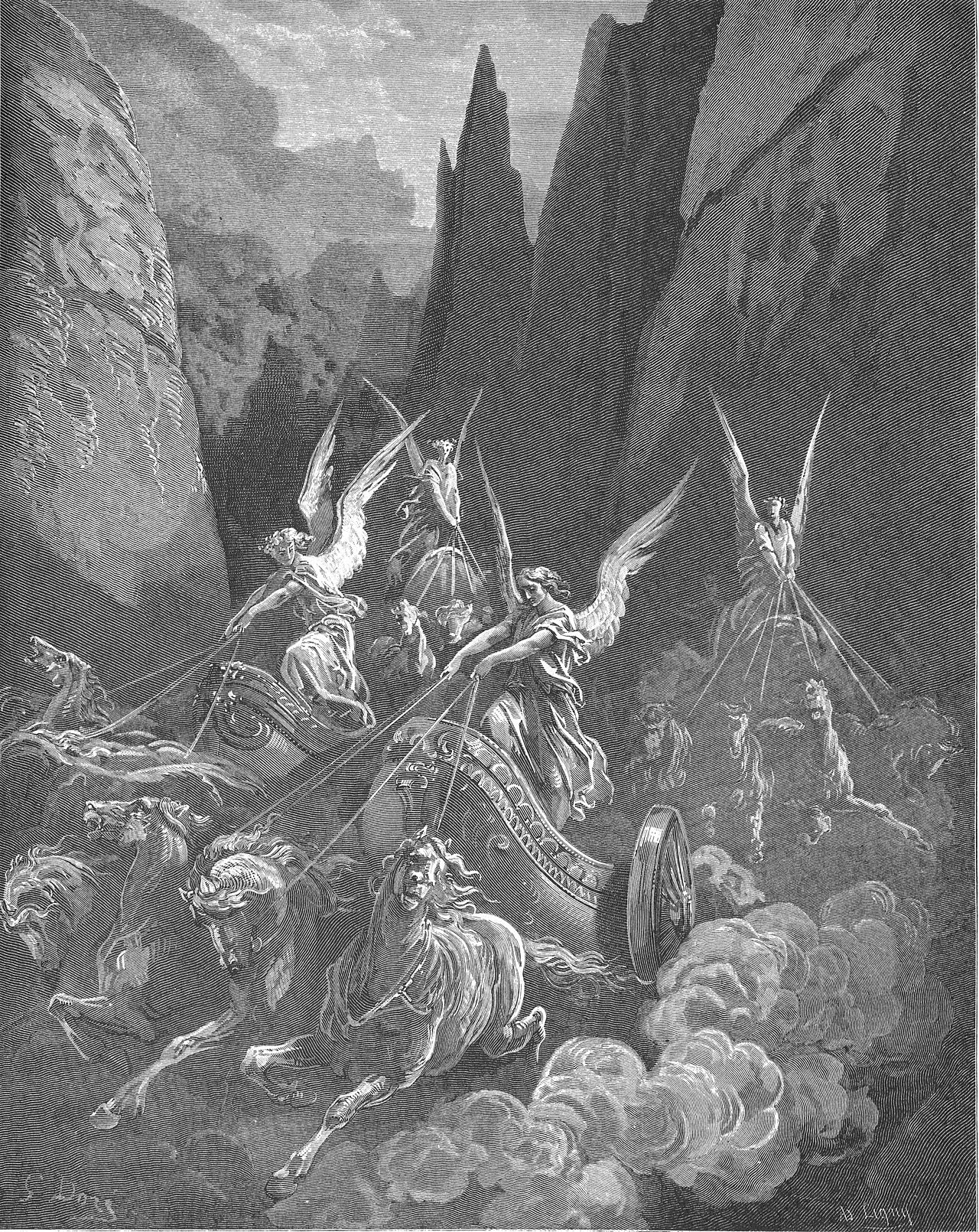
in Zechariah 6And again I lifted up my eyes and saw four chariots coming out from between two mountains—mountains of bronze.
BSB
The same verse in ASV and KJV ▾
ASV
And again I lifted up mine eyes, and saw, and, behold, there came four chariots out from between two mountains; and the mountains were mountains of brass.
KJV
And I turned, and lifted up mine eyes, and looked, and, behold, there came four chariots out from between two mountains; and the mountains were mountains of brass.
⋯
This verse in Zechariah 6
Commentary
7 notes on this verseA commentator
Albert Barnes1798–1870
Notes, Explanatory and Practical, on the Old and New Testaments (1832-1869)
Behold, four chariots going forth - Alb.: “By the secret disposal of God into the theater of the world,” “from between two mountains of brass.” Both Jews and Christians have seen that the four chariots relate to the same four empires, as the visions in Daniel. “The two mountains.” It may be that the imagery is from the two mountains on either side of the valley of Jehoshaphat, which Joel had spoken of as the place of God’s judgment, Joe 3:2, and Zechariah afterward Zec 14:4. It may then picture that the judgments go forth from God.
This site's exposition
four chariots coming out from between two mountains
on Zechariah 6:1-3
The last night vision closes the series where it began in chapter 1, with colored horses. Now they draw “four chariots coming out from between two mountains”, and the mountains are “mountains of bronze”. The teams are red, black, white and “dappled horses”, “all of them strong”.
The record, by era
The Puritans and the Awakening3 voices
Four chariots - Angels who are sometimes styled chariots of God. These as employed in the affairs of church and empire, act their part in the revolution and changes of things, 'till the gospel be preached by the Messiah, and the apostles.
And I turned, and lifted up mine eyes, and looked,....
He did not look long before he discovered that which was worth seeing, and which would serve very much for the encouraging of himself and his friends in this dark day. We are very much in the dark concerning the meaning of this vision.
The Nineteenth Century2 voices
A commentator
Jamieson, Fausset & Brown1802–1910
Commentary Critical and Explanatory on the Whole Bible (1871)
HENDERSON explains them to be the Medo-Persian kingdom, represented by the "two horns" (Da 8:3, 4), now employed to execute God's purpose in punishing the nations; but the prophecy reaches far beyond those times.
There came four chariots - Four monarchies or empires. This is supposed to mean the same with the vision of the four horns, in chap. 1. Mountains of brass - The strong barriers of God’s purposes, which restrained those powers within the times and limits appointed by Jehovah.
The words behind it
14 Hebrew wordsEvery Hebrew word of this verse in the order it stands, with what it means and the door to its own study. The last column counts the times a word stands in the whole Bible: the rarer the word, the more the places it appears belong together.
| Hebrew | Sound | Meaning | Word study | In the Bible |
|---|---|---|---|---|
| וָאָשֻׁ֗ב | vaashuv | and I returned | H7725 → | 1056 times |
| וָאֶשָּׂ֤א | vaesa' | and I lifted up | H5375 → | 656 times |
| עֵינַי֙ | ʾeinai | eyes my | H5869 → | 887 times |
| וָֽאֶרְאֶ֔ה | vaereh | and I saw | H7200 → | 1300 times |
| וְהִנֵּ֨ה | vehineh | and there! | H2009 → | 843 times |
| אַרְבַּ֤ע | ʾarba' | four | H702 → | 318 times |
| מַרְכָּבוֹת֙ | markavot | chariots | H4818 → | 44 times |
| יֹֽצְא֔וֹת | yotzeot | [were] coming forth | H3318 → | 1067 times |
| מִבֵּ֖ין | mibein | from between | H996 → | 407 times |
| שְׁנֵ֣י | shenei | [the] two | H8147 → | 768 times |
| הֶֽהָרִ֑ים | heharim | the mountains | H2022 → | 546 times |
| וְהֶהָרִ֖ים | veheharim | and the mountains | H2022 → | 546 times |
| הָרֵ֥י | harei | [were] mountains of | H2022 → | 546 times |
| נְחֹֽשֶׁת׃ | nechoshet | bronze | H5178 → |
וָאָשֻׁ֗בand I returned
vaashuvH7725 →1056 times
וָאֶשָּׂ֤אand I lifted up
vaesa'H5375 →656 times
עֵינַי֙eyes my
ʾeinaiH5869 →887 times
וָֽאֶרְאֶ֔הand I saw
vaerehH7200 →1300 times
וְהִנֵּ֨הand there!
vehinehH2009 →843 times
אַרְבַּ֤עfour
ʾarba'H702 →318 times
מַרְכָּבוֹת֙chariots
markavotH4818 →44 times
יֹֽצְא֔וֹת[were] coming forth
yotzeotH3318 →1067 times
מִבֵּ֖יןfrom between
mibeinH996 →407 times
שְׁנֵ֣י[the] two
sheneiH8147 →768 times
הֶֽהָרִ֑יםthe mountains
heharimH2022 →546 times
וְהֶהָרִ֖יםand the mountains
veheharimH2022 →546 times
הָרֵ֥י[were] mountains of
hareiH2022 →546 times
נְחֹֽשֶׁת׃bronze
nechoshetH5178 →
A shaded row is a word that stands 400 times or fewer in the Bible.
The walk
8 stopsEach card is a verse this one points to, and under it the verses that one points to in turn. Where several paths arrive at the same place, that place is listed first: the text keeps returning to it.
Through
Ephesians 1:11In Him we were also chosen as God’s own, having been predestined according to the plan of Him who works out everything by the counsel of His will,
it leads to
- Romans 8:28
And we know that God works all things together for the good of those who love Him, who are called according to His purpose.
- 1 Peter 1:4
and into an inheritance that is imperishable, undefiled, and unfading, reserved in heaven for you,
- Isaiah 46:10–11
I declare the end from the beginning, and ancient times from what is still to come. I say, ‘My purpose will stand, and all My good pleasure I will accomplish.’
- Ephesians 1:14
who is the pledge of our inheritance until the redemption of those who are God’s possession, to the praise of His glory.
- Ephesians 3:11
according to the eternal purpose that He accomplished in Christ Jesus our Lord.
- Romans 8:28
Through
Acts 4:28They carried out what Your hand and will had decided beforehand would happen.
it leads to
- Acts 2:23
He was delivered up by God’s set plan and foreknowledge, and you, by the hands of the lawless, put Him to death by nailing Him to the cross.
- Isaiah 46:10
I declare the end from the beginning, and ancient times from what is still to come. I say, ‘My purpose will stand, and all My good pleasure I will accomplish.’
- Acts 2:23
Through
Zechariah 6:5And the angel told me, “These are the four spirits of heaven, going forth from their station before the Lord of all the earth.
it leads to
- Ezekiel 10:9–19
Then I looked and saw four wheels beside the cherubim, one wheel beside each cherub. And the wheels gleamed like a beryl stone.
- Ezekiel 10:9–19
Where this verse is studied
On this page
About Zechariah
This page draws on Adam Clarke, Commentary on the Bible; Albert Barnes, Notes, Explanatory and Practical, on the Old and New Testaments (1832-1869); Carl Friedrich Keil, The Twelve Minor Prophets; Jamieson, Fausset & Brown, Commentary Critical and Explanatory on the Whole Bible; John Gill, Exposition of the Old Testament; John Gill, Exposition of the Old Testament (1748-1763); John Wesley, Explanatory Notes upon the Old Testament and Matthew Henry, Commentary on the Whole Bible.