
Zechariah 6:3
in Zechariah 6the third white horses, and the fourth dappled horses—all of them strong.
BSB
The same verse in ASV and KJV ▾
ASV
and in the third chariot white horses; and in the fourth chariot grizzled strong horses.
KJV
And in the third chariot white horses; and in the fourth chariot grisled and bay horses.
⋯
This verse in Zechariah 6
Commentary
7 notes on this verseThe third chariot white horses - The empire of the Greeks, founded by Alexander the Great, which destroyed the empire of the Persians. The fourth chariot grisled and bay horses - That is party-coloured horses, or with horses, some grisled and some bay. The empire of the Romans or of the Greeks. The Greeks divided after the death of Alexander; one part pointing out the Lagidae, who attacked and subdued Egypt; and the other, the seleucidae, who subdued Syria under Seleucus.
This site's exposition
four chariots coming out from between two mountains
on Zechariah 6:1-3
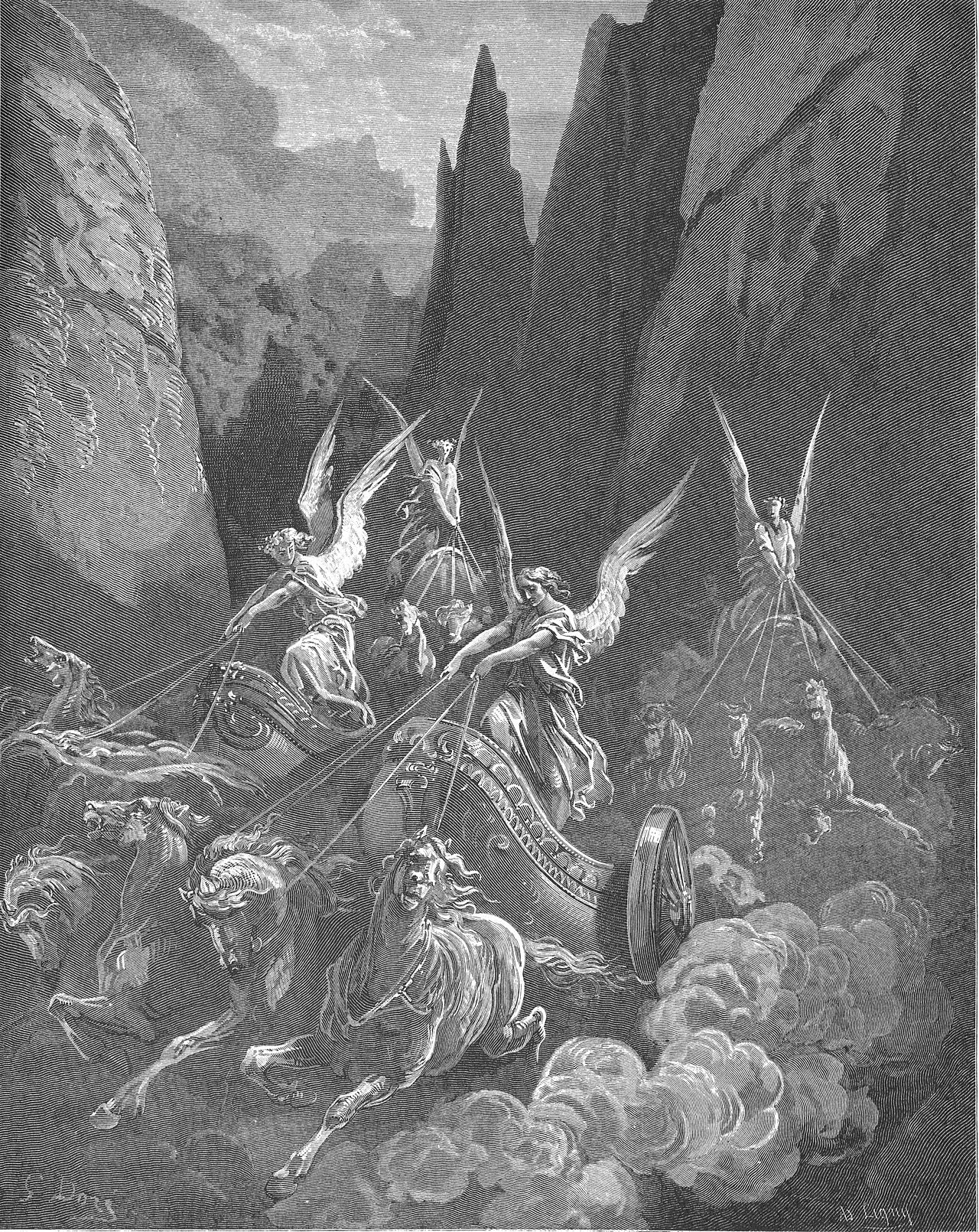
The last night vision closes the series where it began in chapter 1, with colored horses. Now they draw “four chariots coming out from between two mountains”, and the mountains are “mountains of bronze”. The teams are red, black, white and “dappled horses”, “all of them strong”.
This site's exposition
the fourth dappled horses
Clarke took the white horses as the Greeks under Alexander and the dappled horses as Rome or the divided Greek kingdoms. The Berean “all of them strong” follows the sense Jamieson, Fausset and Brown preferred for the horses. Calvin dismissed reading the chariots as the four Gospels.
The record, by era
The Reformation1 voice
But as the vision is obscure, interpreters have given it different meanings. They who think that the four Gospels are designated by the four chariots, give a very frigid view. I have elsewhere reminded you, that we are to avoid these futile refinements which of themselves vanish away.
The Puritans and the Awakening2 voices
And in the third chariot white horses,....
He did not look long before he discovered that which was worth seeing, and which would serve very much for the encouraging of himself and his friends in this dark day. We are very much in the dark concerning the meaning of this vision.
The Nineteenth Century1 voice
A commentator
Jamieson, Fausset & Brown1802–1910
Commentary Critical and Explanatory on the Whole Bible (1871)
All four dispensations, though various in character to the Gentile nation, portended alike good to God's people. bay--rather, "strong" or "fleet"; so Vulgate [GESENIUS]. The horses have this epithet, whose part it was to "walk to and fro through the earth" (Zec 6:7). However, the Septuagint and Chaldee agree with English Version in referring the Hebrew to color, not strength.
The words behind it
9 Hebrew wordsEvery Hebrew word of this verse in the order it stands, with what it means and the door to its own study. The last column counts the times a word stands in the whole Bible: the rarer the word, the more the places it appears belong together.
| Hebrew | Sound | Meaning | Word study | In the Bible |
|---|---|---|---|---|
| וּבַמֶּרְכָּבָ֥ה | uvamerkavah | and [were] with the chariot | H4818 → | 44 times |
| הַשְּׁלִשִׁ֖ית | hashelishit | <the> third | H7992 → | 107 times |
| סוּסִ֣ים | susim | horses | H5483 → | 140 times |
| לְבָנִ֑ים | levanim | white | H3836 → | 29 times |
| וּבַמֶּרְכָּבָה֙ | uvamerkavah | and [were] with the chariot | H4818 → | 44 times |
| הָרְבִעִ֔ית | hareviit | <the> fourth | H7243 → | |
| סוּסִ֥ים | susim | horses | H5483 → | 140 times |
| בְּרֻדִּ֖ים | berudim | dappled | H1261 → | |
| אֲמֻצִּֽים׃ | ʾamutzim | strong | H554 → |
וּבַמֶּרְכָּבָ֥הand [were] with the chariot
uvamerkavahH4818 →44 times
הַשְּׁלִשִׁ֖ית<the> third
hashelishitH7992 →107 times
סוּסִ֣יםhorses
susimH5483 →140 times
לְבָנִ֑יםwhite
levanimH3836 →29 times
וּבַמֶּרְכָּבָה֙and [were] with the chariot
uvamerkavahH4818 →44 times
הָרְבִעִ֔ית<the> fourth
hareviitH7243 →
סוּסִ֥יםhorses
susimH5483 →140 times
בְּרֻדִּ֖יםdappled
berudimH1261 →
אֲמֻצִּֽים׃strong
ʾamutzimH554 →
A shaded row is a word that stands 400 times or fewer in the Bible.
The walk
8 stopsEach card is a verse this one points to, and under it the verses that one points to in turn. Where several paths arrive at the same place, that place is listed first: the text keeps returning to it.
Through
Revelation 19:11Then I saw heaven standing open, and there before me was a white horse. And its rider is called Faithful and True. With righteousness He judges and wages war.
it leads to
- Psalms 96:13
before the LORD, for He is coming— He is coming to judge the earth. He will judge the world in righteousness and the peoples in His faithfulness.
- Isaiah 11:3–5
And He will delight in the fear of the LORD. He will not judge by what His eyes see, and He will not decide by what His ears hear,
- Psalms 98:9
before the LORD, for He comes to judge the earth. He will judge the world with righteousness and the peoples with equity.
- Revelation 6:2
So I looked and saw a white horse, and its rider held a bow. And he was given a crown, and he rode out to overcome and conquer.
- Psalms 50:6
And the heavens proclaim His righteousness, for God Himself is Judge. Selah
- Psalms 96:13
Through
Revelation 6:2So I looked and saw a white horse, and its rider held a bow. And he was given a crown, and he rode out to overcome and conquer.
it leads to
- Zechariah 6:3–8
the third white horses, and the fourth dappled horses—all of them strong.
- Zechariah 6:3–8
Through
Revelation 6:8Then I looked and saw a pale green horse. Its rider’s name was Death, and Hades followed close behind. And they were given authority over a fourth of the earth, to kill by sword,…
it leads to
- Hosea 13:14
I will ransom them from the power of Sheol; I will redeem them from Death. Where, O Death, are your plagues? Where, O Sheol, is your sting? Compassion is hidden from My eyes.
- Revelation 1:18
the Living One. I was dead, and behold, now I am alive forever and ever! And I hold the keys of Death and of Hades.
- Hosea 13:14
Where this verse is studied
On this page
About Zechariah
This page draws on Adam Clarke, Commentary on the Bible; Carl Friedrich Keil, The Twelve Minor Prophets; Jamieson, Fausset & Brown, Commentary Critical and Explanatory on the Whole Bible; John Calvin, Commentaries; John Gill, Exposition of the Old Testament; John Gill, Exposition of the Old Testament (1748-1763) and Matthew Henry, Commentary on the Whole Bible.