
Zechariah 6:14
in Zechariah 6The crown will reside in the temple of the LORD as a memorial to Helem, Tobijah, Jedaiah, and the gracious son of Zephaniah.
BSB
The same verse in ASV and KJV ▾
ASV
And the crowns shall be to Helem, and to Tobijah, and to Jedaiah, and to Hen the son of Zephaniah, for a memorial in the temple of Jehovah.
KJV
And the crowns shall be to Helem, and to Tobijah, and to Jedaiah, and to Hen the son of Zephaniah, for a memorial in the temple of the Lord.
⋯
This verse in Zechariah 6
Commentary
8 notes on this verseAnd the crowns shall be - One of my MSS. has אטרות ataroth, crowns, corrected into עטרת atereth, crown; and so the Septuagint, Syriac, and Arabic. The Chaldee has, “And praise shall be,” etc. The meaning appears to be this, that the crown made for Joshua should be delivered to the persons mentioned here and in Zec 6:10, to be laid up in the temple of the Lord, as a memorial of this typical transaction.
This site's exposition
And the crowns shall be to Helem
on Zechariah 6:14-15
The crowns are kept in the temple itself as a memorial to the men who brought the offering, a standing witness rather than a one-time ceremony. The chapter and the whole cycle of night visions close on a wider hope, that those far off shall come and build in the temple of the Lord, and on a plain condition, if ye will diligently obey the voice of the Lord your God, the promise held together with the same call to obedience the book has carried from its opening word.
The record, by era
The Puritans and the Awakening4 voices
The crowns - The two crowns before mentioned. Helem - These persons we know no more of than their names. A memorial - Of the Messiah's certain and speedy coming.
Either they were laid up in the temple treasury or (as the Jews' tradition is) they were hung up in the windows of the temple, in the view of all, in perpetuam rei memoriam--for a perpetual memorial, for a traditional evidence of the promise of the Messiah and this typical transaction used for the confirmation of that promise.
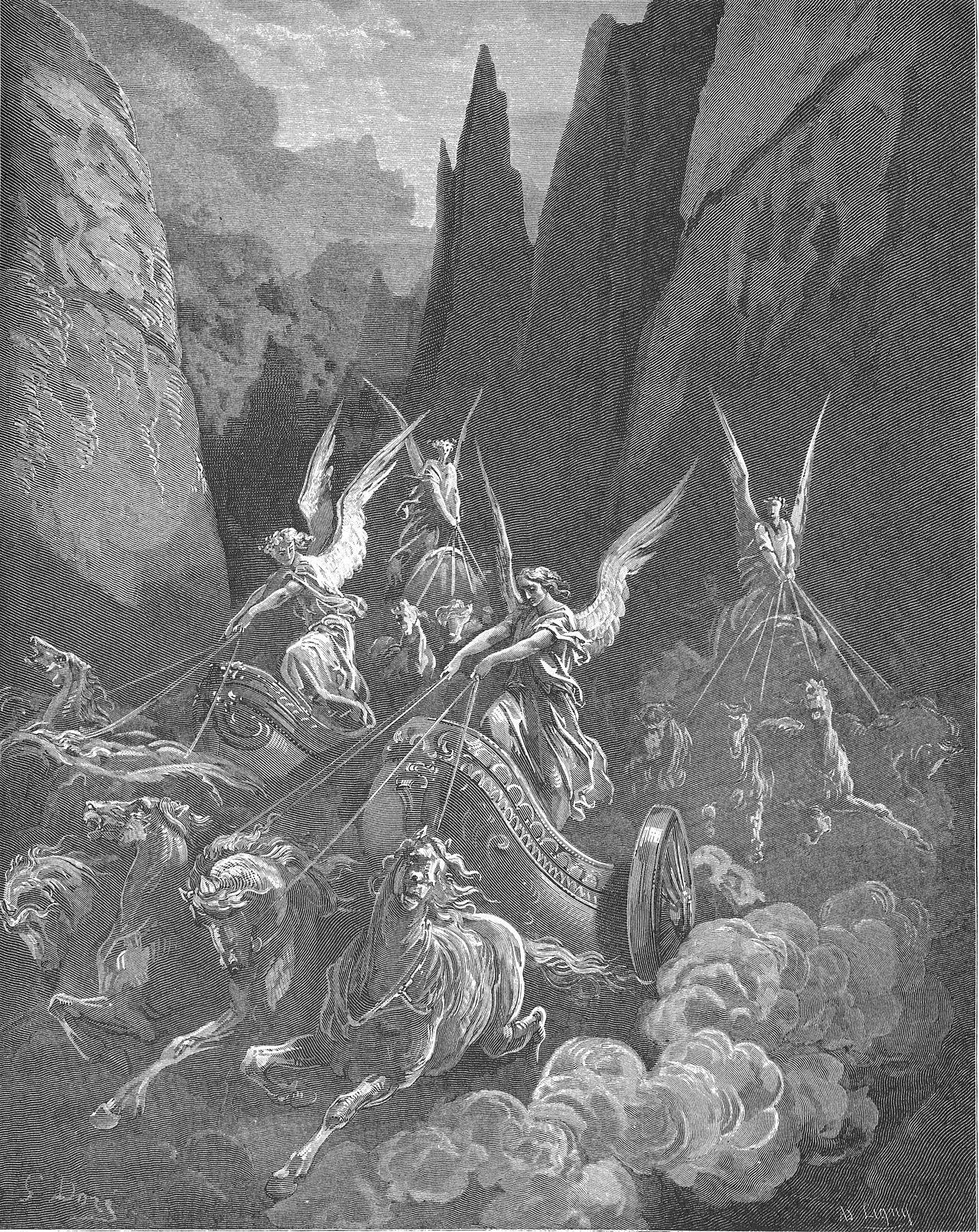
3 And in the third chariot white horses; and in the fourth chariot grisled and bay horses. 4 Then I answered and said unto the angel that talked with me, What are these, my lord? 5 And the angel answered and said unto me, These are the four spirits of the heavens, which go forth from standing before the Lord of all the earth.
quarantine:scripture (2026-07-29) — verbatim-scripture
And the crowns shall be to Helem,....
The Nineteenth Century1 voice
A commentator
Jamieson, Fausset & Brown1802–1910
Commentary Critical and Explanatory on the Whole Bible (1871)
proposed
the crowns shall be to Helem . . . a memorial--deposited in the temple, to the honor of the donors; a memorial, too, of the coronation of Joshua, to remind all of Messiah, the promised antitypical king-priest, soon to come. Helem, the same as Heldai above. So Hen (that is, "favor") is another name for Josiah (that is, "God founds") above.
quarantine:debris (2026-07-29) — starts-lowercase
1 more voice on this verse
The Nineteenth Century1 voice
A commentator
Albert Barnes1798–1870
Notes, Explanatory and Practical, on the Old and New Testaments (1832-1869)
proposed
And the crowns shall be to Helem - There is no ground apparent to us, why the name “Helem” appears instead of “Holdai” , or “Hen” for “Josiah:” yet the same person must have been called both Hen and Josiah, since the father’s name is the same in both places. They cannot both be intended as explanations of the former names, since Helem stands insulated in Hebrew, its meaning conjectural. Perhaps then they were the own names of the individuals, and the names compounded with the name of God, honorable names which they had taken. For a memorial in the temple of the Lord - They brought a passing gift, but it should be for a lasting memorial in their behalf. It is a renewal of the well-known term of the law. The two stones, engraven with the names of the children of Israel, upon the shoulders of the Ephod, were to the end, that Aaron should “bear their names before the Lord upon his two shoulders for a memorial” Exo 28:12, Exo 28:22; Exo 39:7; continually, it is added of the “breastplate with its twelve precious stones Exo 28:29; the atonement money of the children of Israel was to be appointed for the service of the tabernacle of the congregation, that it may be a memorial for the children of Israel before the Lord, to make atonement for their souls; “to make an atonement for their souls before the Lord” Exo 30:16. They were to “blow with the trumpets over their burnt-offerings, and over the sacrifice of their peace-offerings, that they may be to you for a memorial before your God” Num 10:10. When Midian had been smitten before Israel, and not one of Israel had been slain, they brought all the gold which had accrued to them, and “Moses and Eleazar took the gold, and brought it into the tabernacle, a memorial for the children of Israel before the Lord” Num 31:50, Num 31:54. […]
How the passage was read
What the Jewish commentators add
And the crowns shall be for Helem, etc. This is a transposed verse. It should be understood as: And the crowns shall be in the Temple of the Lord as a good memorial for Helem and for Tobijah, who donated the silver and the gold.
This section is reception history: how the passage was read and kept in the Jewish tradition. Where a reading parts from an essential of the Christian faith, the section says so at that point.
Texts and citation data: Sefaria; each excerpt follows its version’s licence. 5 further sources are cited on this chapter that carry no English text this site may quote or only restate the verse.
The words behind it
11 Hebrew wordsEvery Hebrew word of this verse in the order it stands, with what it means and the door to its own study. The last column counts the times a word stands in the whole Bible: the rarer the word, the more the places it appears belong together.
| Hebrew | Sound | Meaning | Word study | In the Bible |
|---|---|---|---|---|
| וְהָעֲטָרֹ֗ת | vehaatarot | and the crown<s> | H5850 → | |
| תִּֽהְיֶה֙ | tihyeh | it will be | H1961 → | 3559 times |
| לְחֵ֙לֶם֙ | lechelem | to Helem | H2494 → | |
| וּלְטוֹבִיָּ֣ה | uletoiyah | and to Tobiah | H2900 → | |
| וְלִידַֽעְיָ֔ה | velida'yah | and to Jedaiah | H3048 → | |
| וּלְחֵ֖ן | ulechen | and to Hen | H2581 → | |
| בֶּן־ | ben- | [the] son of | H1121 → | 4930 times |
| צְפַנְיָ֑ה | tzefanyah | Zephaniah | H6846 → | |
| לְזִכָּר֖וֹן | lezikaron | to a memorial | H2146 → | |
| בְּהֵיכַ֥ל | beheikhal | in [the] temple of | H1964 → | 80 times |
| יְהוָֽה׃ | yahweh | Yahweh | H3068 → | 6520 times |
וְהָעֲטָרֹ֗תand the crown<s>
vehaatarotH5850 →
תִּֽהְיֶה֙it will be
tihyehH1961 →3559 times
לְחֵ֙לֶם֙to Helem
lechelemH2494 →
וּלְטוֹבִיָּ֣הand to Tobiah
uletoiyahH2900 →
וְלִידַֽעְיָ֔הand to Jedaiah
velida'yahH3048 →
וּלְחֵ֖ןand to Hen
ulechenH2581 →
בֶּן־[the] son of
ben-H1121 →4930 times
צְפַנְיָ֑הZephaniah
tzefanyahH6846 →
לְזִכָּר֖וֹןto a memorial
lezikaronH2146 →
בְּהֵיכַ֥לin [the] temple of
beheikhalH1964 →80 times
יְהוָֽה׃Yahweh
yahwehH3068 →6520 times
A shaded row is a word that stands 400 times or fewer in the Bible.
The walk
8 stopsEach card is a verse this one points to, and under it the verses that one points to in turn. Where several paths arrive at the same place, that place is listed first: the text keeps returning to it.
Through
1 Samuel 2:30Therefore, the LORD, the God of Israel, declares: ‘I did indeed say that your house and the house of your father would walk before Me forever. But now the LORD declares: Far be it…
it leads to
- John 12:26
If anyone serves Me, he must follow Me; and where I am, My servant will be as well. If anyone serves Me, the Father will honor him.
- Jeremiah 18:9–10
And if at another time I announce that I will build up and establish a nation or kingdom,
- Proverbs 3:9–10
Honor the LORD with your wealth and with the firstfruits of all your harvest;
- Malachi 1:6
“A son honors his father, and a servant his master. But if I am a father, where is My honor? And if I am a master, where is your fear of Me?” says the…
- John 12:26
Through
Acts 10:4Cornelius stared at him in fear and asked, “What is it, Lord?” The angel answered, “Your prayers and gifts to the poor have ascended as a memorial offering before God.
it leads to
- Philippians 4:6
Be anxious for nothing, but in everything, by prayer and petition, with thanksgiving, present your requests to God.
- Hebrews 6:10
For God is not unjust. He will not forget your work and the love you have shown for His name as you have ministered to the saints and continue to do so.
- Malachi 3:16
At that time those who feared the LORD spoke with one another, and the LORD listened and heard them. So a scroll of remembrance was written before Him regarding those who feared the LORD…
- Acts 10:31
and said, ‘Cornelius, your prayer has been heard, and your gifts to the poor have been remembered before God.
- Philippians 4:6
Where this verse is studied
On this page
Studies4
About Zechariah
Who and where
1 name in this verse with a page on the site.
This page draws on Adam Clarke, Commentary on the Bible; Albert Barnes, Notes, Explanatory and Practical, on the Old and New Testaments (1832-1869); Edward Bouverie Pusey, The Minor Prophets: A Commentary; Jamieson, Fausset & Brown, Commentary Critical and Explanatory on the Whole Bible; John Gill, Exposition of the Old Testament (1748-1763); John Wesley, Explanatory Notes upon the Old Testament and Matthew Henry, Commentary on the Whole Bible.