
Psalms 65:13
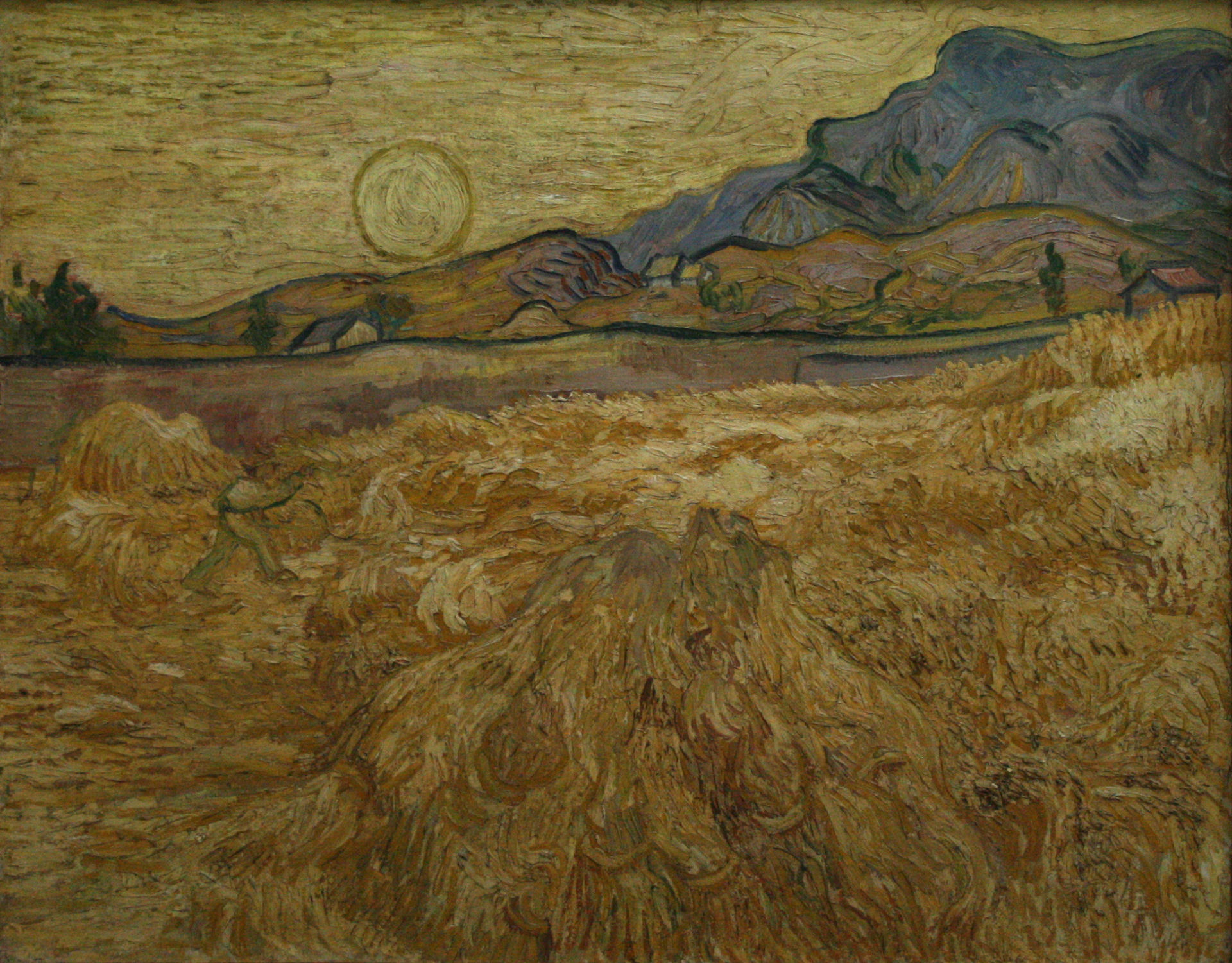
in Psalms 65The pastures are clothed with flocks, and the valleys are decked with grain. They shout in triumph; indeed, they sing.
BSB
The same verse in ASV and KJV ▾
ASV
The pastures are clothed with flocks; The valleys also are covered over with grain; They shout for joy, they also sing.
KJV
The pastures are clothed with flocks; the valleys also are covered over with corn; they shout for joy, they also sing.
⋯
This verse in Psalms 65
Commentary
12 notes on this verseThe pastures are clothed with flocks. The clothing of man first clothes the fields. Pastures appear to be quite covered with numerous flocks when the grass is abundant. The valleys also are covered over with corn. The arable as well as the pasture land is rendered fruitful. God's clouds, like ravens, bring us both bread and flesh. Grazing flocks and waving crops are equally the gifts of the Preserver of men, and for both praise should be rendered. Sheep shearing and harvest should both be holiness unto the Lord. They shout for joy.
This site's exposition
crown the year with Your bounty
on Psalms 65:11-13
The year wears a crown of bounty. God's paths overflow, the hills are robed with joy, and flocks and grain cover the pastures and the valleys. The land itself shouts and sings the praise that waited in Zion at verse 1.
This site's exposition
the valleys are decked with grain
Charles Spurgeon notes that the pastures clothed with flocks will in turn clothe men. Flocks and grain are both God's gifts, he adds. The valleys shout and sing for both.
The record, by era
The Church Fathers1 voice
"Clothed have been the rams of the sheep" [Psalm 65:13]: "with exultation" must be understood. For with what exultation the hills are encircled, with the same are clothed the rams of the sheep. Rams are the very same as hills. For hills they are because of more eminent grace; rams, because they are leaders of the flocks...."They shall shout:" thence they shall abound with wheat, because they shall shout. What shall they shout? "For a hymn they shall say." For one thing it is to shout against God, another thing to say a hymn; one thing to shout iniquities, another thing to shout the praises of God. If you shout in blasphemy, thorns you have brought forth: if you shout in a hymn, you abound in wheat.
The Puritans and the Awakening4 voices
5 By terrible things in righteousness wilt thou answer us, O God of our salvation; who art the confidence of all the ends of the earth, and of them that are afar off upon the sea: The psalmist here has no particular concern of his own at the throne of grace, but begins with an address to God, as the master of an assembly and the mouth of a congregation; and observe, I.
quarantine:scripture (2026-07-29) — verbatim-run:35w-of-72
Sing - They are abundantly satisfied with thy goodness, and in their manner sing forth the praise of their benefactor.
The pastures are clothed with flocks,....
So well stocked are the pastures that they seem to be covered over with the cattle that are laid in them, and yet the pasture not overcharged; so well fed are the cattle that they are the ornament and the glory of the pastures in which they are fed.
4 more voices on this verse
The Nineteenth Century4 voices
A commentator
Jamieson, Fausset & Brown1802–1910
Commentary Critical and Explanatory on the Whole Bible (1871)
proposed
God's great power and goodness are the grounds of this confidence. These are illustrated in His control of the mightiest agencies of nature and nations affecting men with awe and dread (Ps 26:7;
quarantine:debris (2026-07-29) — unbalanced-parens
The pastures are clothed with flocks. The clothing of man first clothes the fields. Pastures appear to be quite covered with numerous flocks when the grass is abundant. The valleys also are covered over with corn. The arable as well as the pasture land is rendered fruitful. God's clouds, like ravens, bring us both bread and flesh. Grazing flocks and waving crops are equally the gifts of the Preserver of men, and for both praise should be rendered. Sheep shearing and harvest should both be holiness unto the Lord. They shout for joy. The bounty of God makes the earth vocal with his praise, and in opened ears it lifts up a joyous shout. The cattle low out the divine praises, and the rustling ears of grain sing a soft sweet melody unto the Lord. They also sing. The voice of nature is articulate to God; it is not only a shout, but a song. Well ordered are the sounds of animate creation as they combine with the equally well tuned ripple of the waters, and sighings of the wind. Nature has no discords. Her airs are melodious, her chorus is full of harmony. All, all is for the Lord; the world is a hymn to the Eternal, blessed is he who, hearing, joins in it, and makes one singer in the mighty chorus.
The pastures are clothed with flocks - Cattle are seen in every plain, avenue, and vista, feeding abundantly; and the valleys are clothed, and wave with the richest harvests; and transports of joy are heard every where in the cheerful songs of the peasantry, the singing of the birds, the neighing of the horse, the lowing of the ox, and the bleating of the sheep. Claudian uses the same image: - Viridis amictus montium. “The green vesture of the mountains.” Shout for joy, they also sing - They are not loud and unmeaning sounds, they are both music and harmony in their different notes; all together form one great concert, and the bounty of God is the subject which they all celebrate. What an inimitable description! And yet the nervous Hebrew is not half expressed, even by the amended translation and paraphrase above.
A commentator
Albert Barnes1798–1870
Notes, Explanatory and Practical, on the Old and New Testaments (1832-1869)
proposed
The pastures are clothed with flocks - The flocks stand so thick together, and are spread so far, that they seem to be a clothing for the pasture; or, the fields are entirely covered with them. The valleys also are covered over with corn - With grain. That is, the parts of the land - the fertile valleys - which are devoted to tillage. They are covered over, or clothed with waving grain, as the pasture-fields are with flocks. They shout for joy, they also sing - They seem to be full of joy and happiness. What a beautiful image is this! How well does it express the loveliness of nature; how appropriately does it describe the goodness of God! Everything seems to be happy; to be full of song; and all this is to be traced to the goodness of God, as it all serves to express that goodness. Strange that there should be an atheist in such a world as this; - strange that there should be an unhappy man; - strange that amidst such beauties, while all nature joins in rejoicing and praise - pastures, cultivated fields, valleys, hills - there can be found a human being who, instead of uniting in the language of joy, makes himself miserable by attempting to cherish the feeling that God is not good!
How the passage was read
What the Jewish commentators add
They drip The heavens [drip] upon the dwellings of the desert.
2 more on this passage, in their own words ▾
You crowned a year of Your goodness Through the rains, You crown with total goodness the year that You wish to benefit.
Meadows are clothed with flocks The Sharon and the Arabah are clothed with the flocks that come to graze on the grass that the rain causes to grow.
This section is reception history: how the passage was read and kept in the Jewish tradition. Where a reading parts from an essential of the Christian faith, the section says so at that point.
Texts and citation data: Sefaria; each excerpt follows its version’s licence. 4 further sources are cited on this chapter that carry no English text this site may quote or only restate the verse.
The words behind it
9 Hebrew wordsEvery Hebrew word of this verse in the order it stands, with what it means and the door to its own study. The last column counts the times a word stands in the whole Bible: the rarer the word, the more the places it appears belong together.
| Hebrew | Sound | Meaning | Word study | In the Bible |
|---|---|---|---|---|
| לָבְשׁ֬וּ | laveshu | they are clothed | H3847 → | 110 times |
| כָרִ֨ים׀ | kharim | [the] pastures | H3733 → | |
| הַצֹּ֗אן | hatzon | <the> flock[s] | H6629 → | 274 times |
| וַעֲמָקִ֥ים | vaamakim | and [the] valleys | H6010 → | 69 times |
| יַֽעַטְפוּ־ | yaatfu- | they cover themselves | H5848 → | 15 times |
| בָ֑ר | var | grain | H1250 → | |
| יִ֝תְרוֹעֲע֗וּ | yitroau | they shout for joy | H7321 → | 44 times |
| אַף־ | ʾaf- | also | H637 → | 134 times |
| יָשִֽׁירוּ׃ | yashiru | they sing | H7891 → | 86 times |
לָבְשׁ֬וּthey are clothed
laveshuH3847 →110 times
כָרִ֨ים׀[the] pastures
kharimH3733 →
הַצֹּ֗אן<the> flock[s]
hatzonH6629 →274 times
וַעֲמָקִ֥יםand [the] valleys
vaamakimH6010 →69 times
יַֽעַטְפוּ־they cover themselves
yaatfu-H5848 →15 times
בָ֑רgrain
varH1250 →
יִ֝תְרוֹעֲע֗וּthey shout for joy
yitroauH7321 →44 times
אַף־also
ʾaf-H637 →134 times
יָשִֽׁירוּ׃they sing
yashiruH7891 →86 times
A shaded row is a word that stands 400 times or fewer in the Bible.
The walk
8 stopsEach card is a verse this one points to, and under it the verses that one points to in turn. Where several paths arrive at the same place, that place is listed first: the text keeps returning to it.
Through
Isaiah 55:12You will indeed go out with joy and be led forth in peace; the mountains and hills will burst into song before you, and all the trees of the field will clap their hands.
it leads to
- Galatians 5:22
But the fruit of the Spirit is love, joy, peace, patience, kindness, goodness, faithfulness,
- Romans 15:13
Now may the God of hope fill you with all joy and peace as you believe in Him, so that you may overflow with hope by the power of the Holy Spirit.
- Isaiah 44:23
Sing for joy, O heavens, for the LORD has done this; shout aloud, O depths of the earth. Break forth in song, O mountains, you forests and all your trees. For the LORD has…
- Psalms 105:43
He brought forth His people with rejoicing, His chosen with shouts of joy.
- Psalms 96:11–13
Let the heavens be glad and the earth rejoice; let the sea resound, and all that fills it.
- Galatians 5:22
Through
Isaiah 44:23Sing for joy, O heavens, for the LORD has done this; shout aloud, O depths of the earth. Break forth in song, O mountains, you forests and all your trees. For the LORD has…
it leads to
- Ephesians 1:6–7
to the praise of His glorious grace, which He has freely given us in the Beloved One.
- Ephesians 1:6–7
Through
Acts 14:17Yet He has not left Himself without testimony to His goodness: He gives you rain from heaven and fruitful seasons, filling your hearts with food and gladness.”
it leads to
- Romans 1:19–20
For what may be known about God is plain to them, because God has made it plain to them.
- Joel 2:23
Be glad, O children of Zion, and rejoice in the LORD your God, for He has given you the autumn rains for your vindication. He sends you showers, both autumn and spring rains, as…
- Romans 1:19–20
Where this verse is studied
On this page
Studies1
About Psalms
This page draws on 10 works. Open the list of works
This page draws on Adam Clarke, Commentary on the Bible; Albert Barnes, Notes, Explanatory and Practical, on the Old and New Testaments (1832-1869); Augustine of Hippo, Exposition on Psalm 65; Charles Spurgeon, The Treasury of David, Vol. 3; Franz Delitzsch, Biblical Commentary on the Psalms; Jamieson, Fausset & Brown, Commentary Critical and Explanatory on the Whole Bible; John Gill, Exposition of the Old Testament; John Gill, Exposition of the Old Testament (1748-1763); John Wesley, Explanatory Notes upon the Old Testament and Matthew Henry, Commentary on the Whole Bible.