
Psalms 65:12
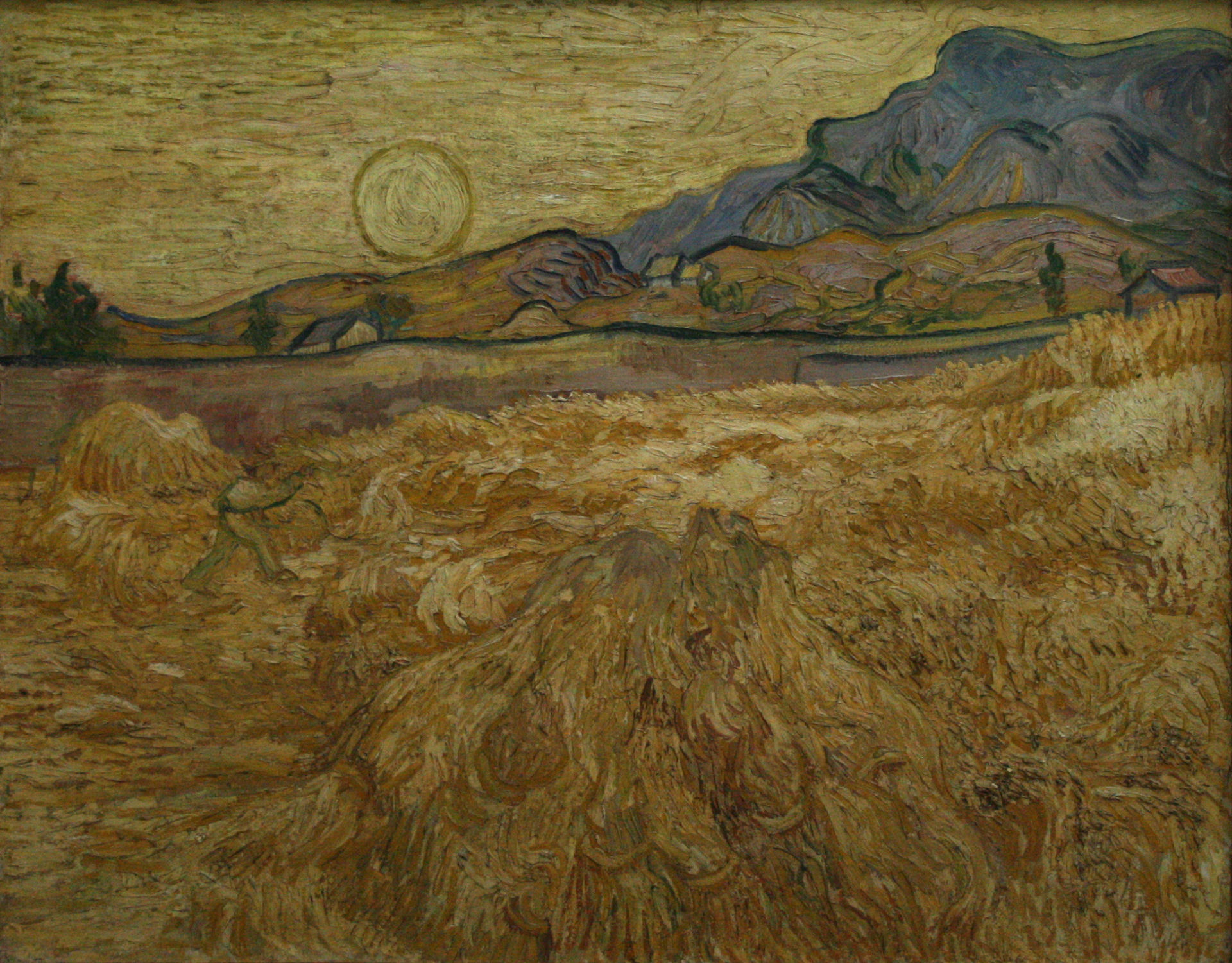
in Psalms 65The pastures of the wilderness overflow; the hills are robed with joy.
BSB
The same verse in ASV and KJV ▾
ASV
They drop upon the pastures of the wilderness; And the hills are girded with joy.
KJV
They drop upon the pastures of the wilderness: and the little hills rejoice on every side.
⋯
This verse in Psalms 65
Commentary
12 notes on this verseThey drop upon the pastures of the wilderness. Not alone where man is found do the showers descend, but away in the lone places, where only wild animals have their haunt, there the bountiful Lord makes the refreshing rain to drop. Ten thousand oases smile while the Lord of mercy passes by. The birds of the air, the wild goats, and the fleet stags rejoice as they drink from the pools, new filled from heaven. The most lonely and solitary souls God will visit in love. And the little hills rejoice on every side.
This site's exposition
crown the year with Your bounty
on Psalms 65:11-13
The year wears a crown of bounty. God's paths overflow, the hills are robed with joy, and flocks and grain cover the pastures and the valleys. The land itself shouts and sings the praise that waited in Zion at verse 1.
This site's exposition
the hills are robed with joy
Charles Spurgeon notes that the rain falls on the pastures of the wilderness, where only wild animals live. After drought, the hills are robed with joy again.
The record, by era
The Church Fathers1 voice
"The ends of the desert shall grow fat, and the hills shall be encircled with exultation" [Psalm 65:12]. Plains, hills, ends of the desert, the same are also men. Plains, because of the equality: because of equality, I say, from thence just peoples have been called plains. Hills, because of lifting up: because God doth lift up in Himself those that humble themselves. Ends of the desert are all nations. Wherefore ends of the desert? Deserted they were, to them no Prophet had been sent: they were in like case as is a desert where no man passeth by. No word of God was sent to the nations: to the people Israel alone the Prophets preached. We came to the Lord; the wheat believed among that same people of the Jews. For He said at that time to the disciples, "Ye say, far off is the harvest: look back, and see how white are the lands to harvest." There hath been therefore a first harvest, there will be a second in the last age. The first harvest was of Jews, because there were sent to them Prophets proclaiming a coming Saviour. Therefore the Lord said to His disciples, "See how white are the lands to harvest:" [John 4:35] the lands, to wit, of Judaea. "Other men," He saith, "have laboured, and into their labours ye have entered." [John 4:38] The Prophets laboured to sow, and ye with the sickle have entered into their labours. There hath been finished therefore the first harvest, and thence, with that very wheat which then was purged, hath been sown the round world; so that there ariseth an other harvest, which at the end is to be reaped. In the second harvest have been sown tares, now here there is labour. Just as in that first harvest the Prophets laboured until the Lord came: so in that second harvest the Apostles laboured, and all preachers of the truth labour, even until at the end the Lord send unto the harvest His Angels. […]
The Puritans and the Awakening3 voices
So extensive are the gifts of God's bounty that in them the hills, the little hills, rejoice on every side, even the north side, that lies most from the sun. Hills are not above the need of God's providence; little hills are not below the cognizance of it.
5 By terrible things in righteousness wilt thou answer us, O God of our salvation; who art the confidence of all the ends of the earth, and of them that are afar off upon the sea: The psalmist here has no particular concern of his own at the throne of grace, but begins with an address to God, as the master of an assembly and the mouth of a congregation; and observe, I.
quarantine:scripture (2026-07-29) — verbatim-run:35w-of-72
They drop upon the pastures of the wilderness,....
The Nineteenth Century1 voice
A commentator
Jamieson, Fausset & Brown1802–1910
Commentary Critical and Explanatory on the Whole Bible (1871)
proposed
God's great power and goodness are the grounds of this confidence. These are illustrated in His control of the mightiest agencies of nature and nations affecting men with awe and dread (Ps 26:7;
quarantine:debris (2026-07-29) — unbalanced-parens
4 more voices on this verse
The Nineteenth Century4 voices
A commentator
Jamieson, Fausset & Brown1802–1910
Commentary Critical and Explanatory on the Whole Bible (1871)
proposed
wilderness--places, though not inhabited by men, fit for pasture (Le 16:21, 22; Job 24:5). pastures--is literally, "folds," or "enclosures for flocks"; and in Ps 65:13 it may be "lambs," the same word used and so translated in Ps 37:20; so that "the flocks are clothed with lambs" (a figure for abundant increase) would be the form of expression.
quarantine:debris (2026-07-29) — starts-lowercase
They drop upon the pastures of the wilderness. Not alone where man is found do the showers descend, but away in the lone places, where only wild animals have their haunt, there the bountiful Lord makes the refreshing rain to drop. Ten thousand oases smile while the Lord of mercy passes by. The birds of the air, the wild goats, and the fleet stags rejoice as they drink from the pools, new filled from heaven. The most lonely and solitary souls God will visit in love. And the little hills rejoice on every side. On all hands the eminences are girt with gladness. Soon they languish under the effects of drought, but after a season of rain they laugh again with verdure.
The pastures of the wilderness - Even the places which are not cultivated have their suffiency of moisture, so as to render them proper places of pasturage for cattle. The terms wilderness and desert, in the Sacred Writings, mean, in general, places not inhabited and uncultivated, though abounding with timber, bushes, and herbage. The little hills rejoice - Literally, The hills gird themselves with exultation. The metaphor appears to be taken from the frisking of lambs, bounding of kids, and dancing of shepherds and shepherdesses, in the joy-inspiring summer season.
A commentator
Albert Barnes1798–1870
Notes, Explanatory and Practical, on the Old and New Testaments (1832-1869)
proposed
They drop upon the pastures of the wilderness - The waste places, or the waste parts of the land; the uncultivated places, the places of rocks and sands. The word wilderness in the Scriptures does not mean, as with us, a tract of country covered with trees, but a place of barren rocks or sands - an uncultivated or thinly inhabited region. See the notes at Mat 3:1; notes at Isa 35:1. In those wastes, however, there would be valleys, or places watered by springs and streams that would afford pastures for flocks and herds. Such are the “pastures of the wilderness” referred to here. God’s passing along those valleys would seem to “drop,” or distil, fertility and beauty, causing grass and flowers to spring up in abundance, and clothing them with luxuriance. And the little hills rejoice on every side - Margin, as in Hebrew, are girded with joy. That is, Joyful, happy scenes surround them; or, they seem to be full of joy and happiness. The valleys and the hills alike seem to be made glad. The following remarks of Professor Hackett (“Illustrations of Scripture,” p. 30), will explain this passage. “Another peculiarity of the desert is that, though the soil is sandy, it rarely consists, for successive days together, of mere sand; it is interspersed, at frequent intervals, with clumps of coarse grass and low shrubs, affording very good pasturage, not only for camels, the proper tenants of the desert, but for sheep and goats. The people of the villages on the borders of the desert are accustomed to lead forth their flocks to the pastures found there. We frequently passed on our way shepherds so employed; and it was interesting to observe as a verification of what is implied in the Saviour’s statement Mat 25:33, that the sheep and goats were not kept distinct, but intermixed with one another. […]
How the passage was read
What the Jewish commentators add
You crowned a year of Your goodness Through the rains, You crown with total goodness the year that You wish to benefit.
1 more on this passage, in their own words ▾
They drip The heavens [drip] upon the dwellings of the desert.
This section is reception history: how the passage was read and kept in the Jewish tradition. Where a reading parts from an essential of the Christian faith, the section says so at that point.
Texts and citation data: Sefaria; each excerpt follows its version’s licence. 4 further sources are cited on this chapter that carry no English text this site may quote or only restate the verse.
The words behind it
6 Hebrew wordsEvery Hebrew word of this verse in the order it stands, with what it means and the door to its own study. The last column counts the times a word stands in the whole Bible: the rarer the word, the more the places it appears belong together.
| Hebrew | Sound | Meaning | Word study | In the Bible |
|---|---|---|---|---|
| יִ֭רְעֲפוּ | yirafu | they drip | H7491 → | |
| נְא֣וֹת | neot | [the] pastures of | H4999 → | 12 times |
| מִדְבָּ֑ר | midbar | [the] wilderness | H4057 → | 270 times |
| וְ֝גִ֗יל | vegil | and rejoicing | H1524 → | 9 times |
| גְּבָע֥וֹת | gevaot | [the] hills | H1389 → | 68 times |
| תַּחְגֹּֽרְנָה׃ | tachgorenah | they gird on | H2296 → | 44 times |
יִ֭רְעֲפוּthey drip
yirafuH7491 →
נְא֣וֹת[the] pastures of
neotH4999 →12 times
מִדְבָּ֑ר[the] wilderness
midbarH4057 →270 times
וְ֝גִ֗ילand rejoicing
vegilH1524 →9 times
גְּבָע֥וֹת[the] hills
gevaotH1389 →68 times
תַּחְגֹּֽרְנָה׃they gird on
tachgorenahH2296 →44 times
A shaded row is a word that stands 400 times or fewer in the Bible.
The walk
8 stopsEach card is a verse this one points to, and under it the verses that one points to in turn. Where several paths arrive at the same place, that place is listed first: the text keeps returning to it.
Through
Joel 2:22Do not be afraid, O beasts of the field, for the open pastures have turned green, the trees bear their fruit, and the fig tree and vine yield their best.
it leads to
- Zechariah 8:12
“For the seed will be prosperous, the vine will yield its fruit, the ground will yield its produce, and the skies will give their dew. To the remnant of this people I will give…
- Psalms 107:35–38
He turns a desert into pools of water and a dry land into flowing springs.
- Amos 9:14–15
I will restore My people Israel from captivity; they will rebuild and inhabit the ruined cities. They will plant vineyards and drink their wine; they will make gardens and eat their fruit.
- Psalms 145:15–16
The eyes of all look to You, and You give them their food in season.
- Joel 1:18–20
How the cattle groan! The herds wander in confusion because they have no pasture. Even the flocks of sheep are suffering.
- Zechariah 8:12
Through
Psalms 65:6You formed the mountains by Your power, having girded Yourself with might.
it leads to
- Psalms 93:1
The LORD reigns! He is robed in majesty; the LORD has clothed and armed Himself with strength. The world indeed is firmly established; it cannot be moved.
- Habakkuk 3:6
He stood and measured the earth; He looked and startled the nations; the ancient mountains crumbled; the perpetual hills collapsed. His ways are everlasting.
- Micah 6:2
Hear, O mountains, the LORD’s indictment, you enduring foundations of the earth. For the LORD has a case against His people, and He will argue it against Israel:
- Psalms 93:1
Where this verse is studied
On this page
Studies1
About Psalms
This page draws on 9 works. Open the list of works
This page draws on Adam Clarke, Commentary on the Bible; Albert Barnes, Notes, Explanatory and Practical, on the Old and New Testaments (1832-1869); Augustine of Hippo, Exposition on Psalm 65; Charles Spurgeon, The Treasury of David, Vol. 3; Franz Delitzsch, Biblical Commentary on the Psalms; Jamieson, Fausset & Brown, Commentary Critical and Explanatory on the Whole Bible; John Gill, Exposition of the Old Testament; John Gill, Exposition of the Old Testament (1748-1763) and Matthew Henry, Commentary on the Whole Bible.