
Psalms 132:2
in Psalms 132how he swore an oath to the LORD, and vowed to the Mighty One of Jacob:
BSB
The same verse in ASV and KJV ▾
ASV
How he sware unto Jehovah, And vowed unto the Mighty One of Jacob:
KJV
How he sware unto the Lord, and vowed unto the mighty God of Jacob;
⋯
This verse in Psalms 132
Commentary
10 notes on this verseAs he swore to the Lord, he vowed a vow to the God of Jacob. In the Hebrew it does not have cos, that is, "as," nor is that the sense; but it has os, that is, "who," and the sense is: Remember, O Lord, David and all his meekness, who swore to the Lord, vowed a vow to the God of Jacob. And this I think was done not so much by a fault of the seventy translators as by an error of the copyists.
This site's exposition
remember on behalf of David
on Psalms 132:1-2
The prayer asks the LORD to remember the hardships David endured. Verse 2 gives what those hardships were about, an oath sworn to the LORD and a vow made to the Mighty One of Jacob. Jacob himself uses that title of God at Genesis 49:24.
This site's exposition
vowed to the Mighty One of Jacob
The Hebrew title is Abir Yaakov, and abir carries the sense of strength, so the Mighty One is the strong one of Jacob. Isaiah 49:26 and 60:16 use the same title. The history in 2 Samuel records no such oath, and verses 3 to 5 alone give its words.
The record, by era
The Church Fathers1 voice
For what purpose? "How he sware unto the Lord, and vowed a vow unto the Almighty God of Jacob" (ver. 2). Therefore remember for this, that he may fulfil what he hath promised. David himself vowed as though he had it in his power, and he prayeth God to fulfil his vow: there is devotion in the vow, but there is humility in the prayer. Let no one presume to think he fulfilled by his own strength what he hath vowed. He who exhorteth thee to vow, Himself aideth thee to fulfil. Let us therefore see what he vowed, and hence we comprehend how David should be understood in a figure. "David" is interpreted, "Strong of hand," for he was a great warrior. Trusting indeed in the Lord his God, he despatched all wars, he laid low all his enemies, God helping him, according to the dispensation of that kingdom; prefiguring nevertheless some One strong of hand to destroy His enemies, the devil and his angels. These enemies the Church warreth against, and conquereth. ...
The Puritans and the Awakening1 voice
How he sware unto the Lord, and vowed unto the mighty God of Jacob.
The Nineteenth Century3 voices
How he sware unto the Lord, and vowed unto the mighty God of Jacob. Moved by intense devotion, David expressed his resolve in the form of a solemn vow, which was sealed with an oath. The fewer of such vows the better under a dispensation whose great Representative has said, "swear not at all." Perhaps even in this case it had been wiser to have left the pious resolve in the hands of God in the form of a prayer; for the vow was not actually fulfilled as intended, since the Lord forbade David to build him a temple.
A commentator
Jamieson, Fausset & Brown1802–1910
Commentary Critical and Explanatory on the Whole Bible (1871)
This vow is not elsewhere recorded. It expresses, in strong language, David's intense desire to see the establishment of God's worship as well as of His kingdom. remember David--literally, "remember for David," that is, all his troubles and anxieties on the matter.
How he sware unto the Lord, and vowed unto the mighty God of Jacob. Moved by intense devotion, David expressed his resolve in the form of a solemn vow, which was sealed with an oath. The fewer of such vows the better under a dispensation whose great Representative has said, "swear not at all." Perhaps even in this case it had been wiser to have left the pious resolve in the hands of God in the form of a prayer; for the vow was not actually fulfilled as intended, since the Lord forbade David to build him a temple. We had better not swear to do anything before we know the Lord's mind about it, and then we shall not need to swear. The instance of David's vows shows that vows are allowable, but it does not prove that they are desirable. Probably David went too far in his words, and it is well that the Lord did not hold him to the letter of his bond, but accepted the will for the deed, and the meaning of his promise instead of the literal sense of it. David imitated Jacob, that great maker of vows at Bethel, and upon him rested the blessing pronounced on Jacob by Isaac, "God Almighty bless thee" (Ge 28:3), which was remembered by the patriarch on his death bed, when he spoke of "the mighty God of Jacob." God is mighty to hear us, and to help us in performing our vow. We should be full of awe at the idea of making any promise to the Mighty God: to dare to trifle with him would be grievous indeed. It is observable that affliction led both David and Jacob into covenant dealings with the Lord: many vows are made in anguish of soul. We may also remark that, if the votive obligations of David are to be remembered of the Lord, much more are the suretyship engagements of the Lord Jesus before the mind of the great Lord, to whom our soul turns in the hour of our distress.
2 more voices on this verse
The Nineteenth Century2 voices
How he sware unto the Lord - It is only in this place that we are informed of David’s vow to the Lord, relative to the building of the temple; but we find he had fully purposed the thing.
A commentator
Albert Barnes1798–1870
Notes, Explanatory and Practical, on the Old and New Testaments (1832-1869)
proposed
How he sware unto the Lord - The solemn oath which he took that he would make this the first object; that he would give himself no rest until this was done; that he would sacrifice his personal ease and comfort in order that he might thus honor God. This oath or purpose is not recorded in the history. The fair interpretation of this would be either (1) that these words properly expressed what was in the mind of David at the time - that is, his acts implied that this purpose was in his heart; or (2) that this vow was actually made by David, though not elsewhere recorded. Such a vow might have been made, and the remembrance of it kept up by tradition, or it might have been suggested to the author of the psalm by direct inspiration. And vowed unto the mighty God of Jacob - See Gen 49:24. The God whom Jacob worshipped, and who had manifested himself so signally to him as a God of might or power.
How the passage was read
What the Jewish commentators add
On the verses either side of this one
A song of ascents. Remember, O Lord, onto David all his affliction The affliction of his soul, how he worked and toiled to find a place for You.
This section is reception history: how the passage was read and kept in the Jewish tradition. Where a reading parts from an essential of the Christian faith, the section says so at that point.
Texts and citation data: Sefaria; each excerpt follows its version’s licence. 6 further sources are cited on this chapter that carry no English text this site may quote or only restate the verse.
The words behind it
6 Hebrew wordsEvery Hebrew word of this verse in the order it stands, with what it means and the door to its own study. The last column counts the times a word stands in the whole Bible: the rarer the word, the more the places it appears belong together.
| Hebrew | Sound | Meaning | Word study | In the Bible |
|---|---|---|---|---|
| אֲשֶׁ֣ר | ʾasher | who | H834 → | 5497 times |
| נִ֭שְׁבַּע | nishba' | he swore an oath | H7650 → | 186 times |
| לַיהוָ֑ה | layahweh | to Yahweh | H3068 → | 6520 times |
| נָ֝דַ֗ר | nadar | he vowed | H5087 → | |
| לַאֲבִ֥יר | laavir | to [the] mighty one of | H46 → | |
| יַעֲקֹֽב׃ | yaako | Jacob | H3290 → | 350 times |
אֲשֶׁ֣רwho
ʾasherH834 →5497 times
נִ֭שְׁבַּעhe swore an oath
nishba'H7650 →186 times
לַיהוָ֑הto Yahweh
layahwehH3068 →6520 times
נָ֝דַ֗רhe vowed
nadarH5087 →
לַאֲבִ֥ירto [the] mighty one of
laavirH46 →
יַעֲקֹֽב׃Jacob
yaakoH3290 →350 times
A shaded row is a word that stands 400 times or fewer in the Bible.
The walk
8 stopsEach card is a verse this one points to, and under it the verses that one points to in turn. Where several paths arrive at the same place, that place is listed first: the text keeps returning to it.
Through
Psalms 65:1Praise awaits You, O God, in Zion; to You our vows will be fulfilled.
it leads to
- Psalms 62:1
In God alone my soul finds rest; my salvation comes from Him.
- Psalms 76:11
Make and fulfill your vows to the LORD your God; let all the neighboring lands bring tribute to Him who is to be feared.
- Psalms 116:17–18
I will offer to You a sacrifice of thanksgiving and call on the name of the LORD.
- Psalms 21:13
Be exalted, O LORD, in Your strength; we will sing and praise Your power.
- Psalms 62:1
Through
2 Samuel 7:1After the king had settled into his palace and the LORD had given him rest from all his enemies around him,
it leads to
- Proverbs 16:7
When a man’s ways please the LORD, He makes even the man’s enemies live at peace with him.
- Luke 1:74–75
deliverance from hostile hands, that we may serve Him without fear,
- Proverbs 16:7
Through
Psalms 132:5until I find a place for the LORD, a dwelling for the Mighty One of Jacob.”
it leads to
- Ephesians 2:22
And in Him you too are being built together into a dwelling place for God in His Spirit.
- Ephesians 2:22
Through
Genesis 49:24Yet he steadied his bow, and his strong arms were tempered by the hands of the Mighty One of Jacob, in the name of the Shepherd, the Rock of Israel,
it leads to
- Psalms 132:5
until I find a place for the LORD, a dwelling for the Mighty One of Jacob.”
- Psalms 132:5
Where this verse is studied
On this page
About Psalms
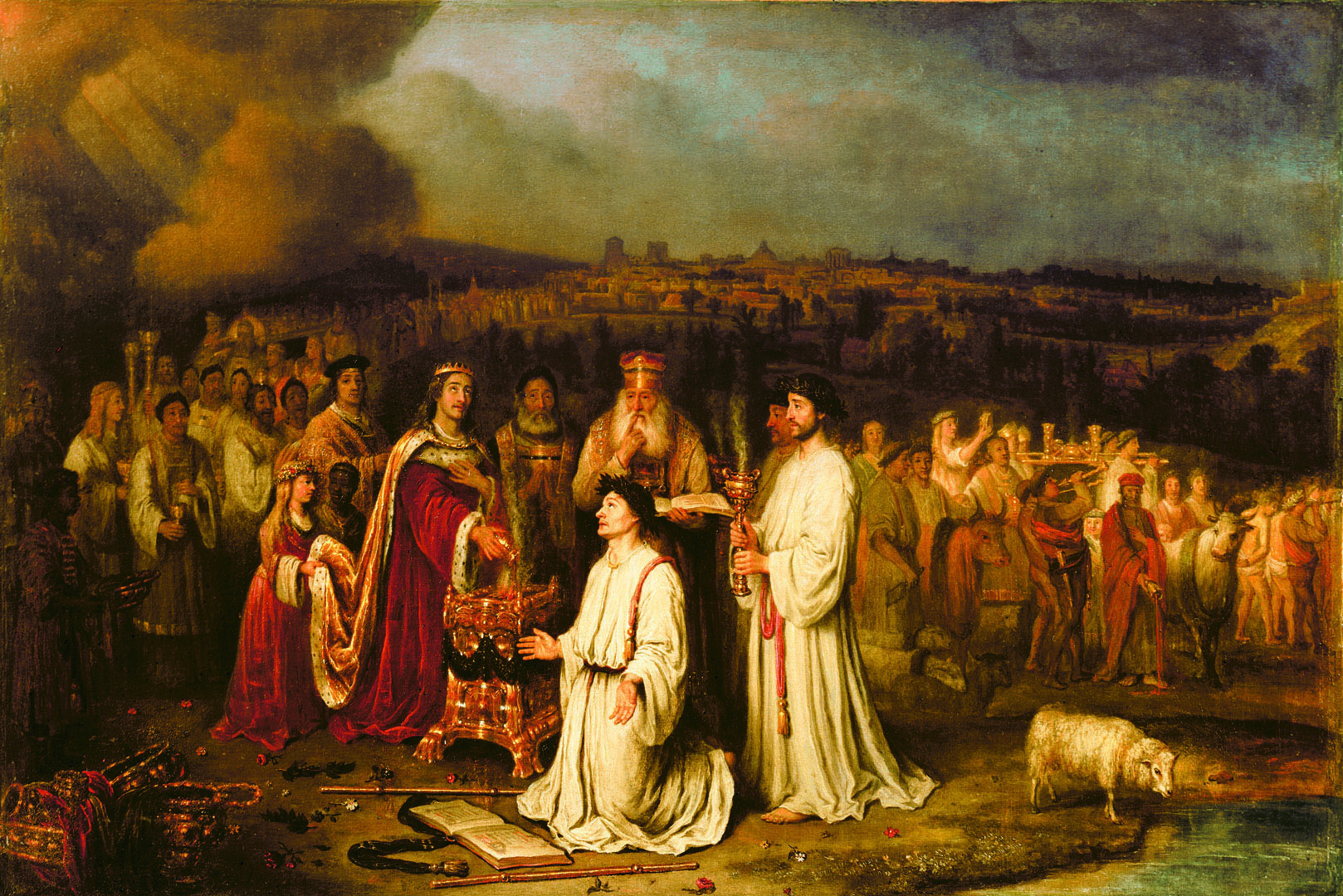
Who and where
1 name in this verse with a page on the site.
This page draws on 11 works. Open the list of works
This page draws on Adam Clarke, Commentary on the Bible; Albert Barnes, Notes on the Book of Psalms; Albert Barnes, Notes, Explanatory and Practical, on the Old and New Testaments (1832-1869); Augustine of Hippo, Exposition on Psalm 132; Charles Spurgeon, The Treasury of David, Vol. 7; Franz Delitzsch, Biblical Commentary on the Psalms; Jamieson, Fausset & Brown, Commentary Critical and Explanatory on the Whole Bible; Jerome, Homily 44, on Psalm 131; John Gill, Exposition of the Old Testament (1748-1763); Keil and Delitzsch, Biblical Commentary on the Old Testament and Matthew Henry, Commentary on the Whole Bible.