
Psalms 132:8
in Psalms 132Arise, O LORD, to Your resting place, You and the ark of Your strength.
BSB
The same verse in ASV and KJV ▾
ASV
Arise, O Jehovah, into thy resting-place; Thou, and the ark of thy strength.
KJV
Arise, O Lord, into thy rest; thou, and the ark of thy strength.
⋯
This verse in Psalms 132
Commentary
8 notes on this verseRest - Into thy resting place, the temple so called, Isaiah lxvi, 1, where thou hast now a fixed habitation. The ark - The seat of thy powerful and glorious presence.
This site's exposition
Arise, O LORD, to Your resting place
on Psalms 132:8-9
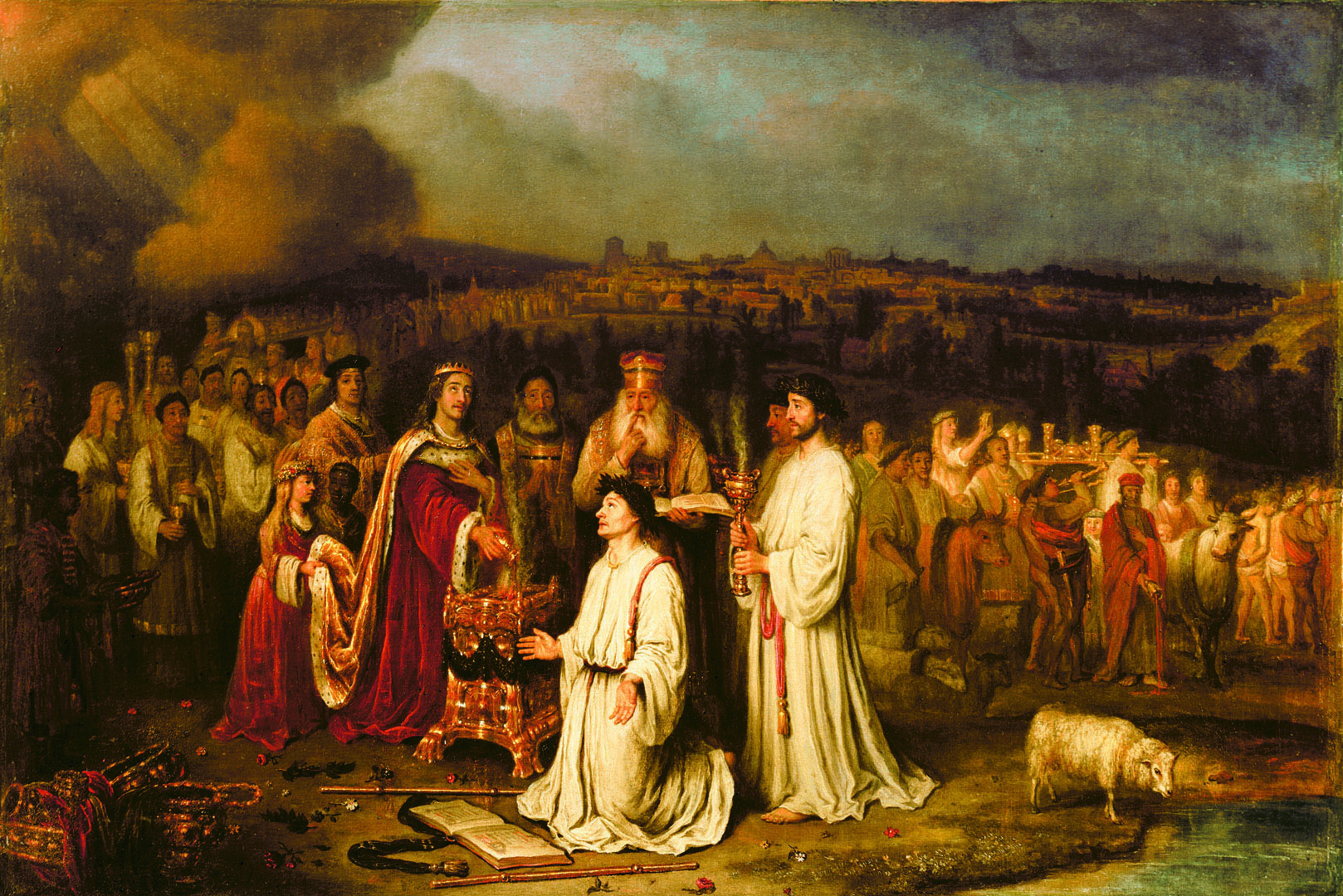
The prayer asks the LORD to rise to His resting place with the ark of His strength. Solomon prays these words almost exactly at the temple's dedication, at 2 Chronicles 6:41. Righteousness is asked for the priests, and joy for the saints.
The record, by era
The Church Fathers1 voice
"Arise, O Lord, into Your resting place" [Psalm 132:8]. He says unto the Lord sleeping, "Arise." You know already who slept, and who rose again...."You, and the ark of Your sanctification:" that is, Arise, that the ark of Your sanctification, which You have sanctified, may arise also. He is our Head; His ark is His Church: He arose first, the Church will arise also. The body would not dare to promise itself resurrection, save the Head arose first. The Body of Christ, that was born of Mary, has been understood by some to be the ark of sanctification; so that the words mean, Arise with Your Body, that they who believe not may handle.
The Puritans and the Awakening3 voices
Note, Righteousness is the best ornament of a minister. Holiness towards God, and goodness towards all men, are habits for ministers of the necessity of which there is no dispute. "They are thy priests, and will therefore discredit their relation to thee if they be not clothed with righteousness. " 3.
Arise, O Lord, into thy rest,....
With these words Solomon concluded his prayer, 2 Chron. vi. He had built it in pursuance of the orders he had received from his father, and therefore his pleas to enforce these petitions refer to David.
The Nineteenth Century1 voice
Arise, O Lord, into thy rest; thou and the ark of thy strength - Using the same expressions which Solomon used when he dedicated the temple, 2Ch 6:41, 2Ch 6:42. There are several difficulties in these passages.
1 more voice on this verse
The Nineteenth Century1 voice
A commentator
Albert Barnes1798–1870
Notes, Explanatory and Practical, on the Old and New Testaments (1832-1869)
proposed
Arise, O Lord, into thy rest - Into that which is appointed for its permanent place of repose, that it may no longer be removed from spot to spot. This is spoken of the ark, considered as the place where God, by an appropriate symbol, abode. That symbol - the Shechinah - rested on the cover of the ark. The same language was used by Solomon at the dedication of the temple: “Now, therefore, arise, O Lord God, into thy resting place, thou and the ark of thy strength,” 2Ch 6:41. Thou, and the ark of thy strength - The ark, the symbol of the divine power, as if the power of God resided there, or as if the Almighty had his abode there. Perhaps the language was derived from the fact that the ark, in the wars of the Hebrews against their foes, was a symbol of the divine presence and protection - that by which the divine power was put forth.
The words behind it
6 Hebrew wordsEvery Hebrew word of this verse in the order it stands, with what it means and the door to its own study. The last column counts the times a word stands in the whole Bible: the rarer the word, the more the places it appears belong together.
| Hebrew | Sound | Meaning | Word study | In the Bible |
|---|---|---|---|---|
| קוּמָ֣ה | kumah | arise ! | H6965 → | 628 times |
| יְ֭הוָה | yahweh | O Yahweh | H3068 → | 6520 times |
| לִמְנוּחָתֶ֑ךָ | limnuchatekha | to resting place your | H4496 → | 22 times |
| אַ֝תָּ֗ה | ʾatah | you | H859 → | 1094 times |
| וַאֲר֥וֹן | vaaron | and [the] ark of | H727 → | |
| עֻזֶּֽךָ׃ | ʾuzekha | strength your | H5797 → | 92 times |
קוּמָ֣הarise !
kumahH6965 →628 times
יְ֭הוָהO Yahweh
yahwehH3068 →6520 times
לִמְנוּחָתֶ֑ךָto resting place your
limnuchatekhaH4496 →22 times
אַ֝תָּ֗הyou
ʾatahH859 →1094 times
וַאֲר֥וֹןand [the] ark of
vaaronH727 →
עֻזֶּֽךָ׃strength your
ʾuzekhaH5797 →92 times
A shaded row is a word that stands 400 times or fewer in the Bible.
The walk
8 stopsEach card is a verse this one points to, and under it the verses that one points to in turn. Where several paths arrive at the same place, that place is listed first: the text keeps returning to it.
Through
Psalms 68:1God arises. His enemies are scattered, and those who hate Him flee His presence.
it leads to
- Numbers 10:35
Whenever the ark set out, Moses would say, “Rise up, O LORD! May Your enemies be scattered; may those who hate You flee before You.”
- Isaiah 51:9–10
Awake, awake, put on strength, O arm of the LORD. Wake up as in days past, as in generations of old. Was it not You who cut Rahab to pieces, who pierced through the…
- Isaiah 42:13–14
The LORD goes forth like a mighty one; He stirs up His zeal like a warrior. He shouts; yes, He roars in triumph over His enemies:
- Psalms 89:10
You crushed Rahab like a carcass; You scattered Your enemies with Your mighty arm.
- Psalms 44:26
Rise up; be our help! Redeem us on account of Your loving devotion.
- Numbers 10:35
Through
Psalms 78:61He delivered His strength to captivity, and His splendor to the hand of the adversary.
it leads to
- 1 Samuel 4:21
And she named the boy Ichabod, saying, “The glory has departed from Israel,” because the ark of God had been captured and her father-in-law and her husband had been killed.
- Judges 18:30
The Danites set up idols for themselves, and Jonathan son of Gershom, the son of Moses, and his sons were priests for the tribe of Dan until the day of the captivity of the…
- 1 Samuel 4:17
The messenger answered, “Israel has fled before the Philistines, and there has been a great slaughter among the people. Your two sons, Hophni and Phinehas, are both dead, and the ark of God has…
- 1 Samuel 4:21
Where this verse is studied
On this page
About Psalms
This page draws on Adam Clarke, Commentary on the Bible; Albert Barnes, Notes, Explanatory and Practical, on the Old and New Testaments (1832-1869); Augustine of Hippo, Exposition on Psalm 132; Charles Spurgeon, The Treasury of David; Franz Delitzsch, Biblical Commentary on the Psalms; John Gill, Exposition of the Old Testament (1748-1763); John Wesley, Explanatory Notes upon the Old Testament and Matthew Henry, Commentary on the Whole Bible.