
Psalms 132:4
in Psalms 132I will not give sleep to my eyes or slumber to my eyelids,
BSB
The same verse in ASV and KJV ▾
ASV
I will not give sleep to mine eyes, Or slumber to mine eyelids;
KJV
I will not give sleep to mine eyes, or slumber to mine eyelids,
⋯
This verse in Psalms 132
Commentary
12 notes on this verseI will not give sleep to mine eyes, or slumber to wine eyelids. He could not enjoy sleep till he had done his best to provide a place for the ark. It is a strong expression, and it is not to be coolly discussed by us. Remember that the man was all on fire, and he was writing poetry also, and therefore his language is not that which we should employ in cold blood. Everybody can see what he means, and how intensely he means it.
This site's exposition
I will not enter my house
on Psalms 132:3-5
The vow puts off house, bed, sleep and slumber until a place is found for the LORD. David's words at 2 Samuel 7:2 give the occasion, the ark still in a tent while he lives in a house of cedar. John Gill read it as hyperbole for a restless mind.
This site's exposition
give sleep to my eyes
Verse 4 pairs sleep with slumber and eyes with eyelids. Proverbs 6:4 uses the same four words for a man who has pledged himself for a neighbour and must be released before he rests.
The record, by era
The Church Fathers3 voices
What then doth he mean, "How he sware," etc.? Let us see what vow is this. We can offer God nothing more pleasing than to swear. Now to swear is to promise firmly. Consider this vow, that is, with what ardour he vowed what he vowed, with what love, with what longing; nevertheless, he prayeth the Lord to fulfil it in these words, "O Lord, remember David, and all his meekness." In this temper he vowed his vow, and there should be a house of God: "I will not come within the tabernacle of mine house, nor climb up into my bed" (ver. 3). "I will not suffer mine eyes to sleep, nor mine eyelids to slumber" (ver. 4). This seemeth not enough; he adds, "Neither the temples of my head to take any rest, until I find out a place for the Lord; an habitation for the God of Jacob" (ver. 5). Where did he seek a place for the Lord? If he was meek, he sought it in himself. For how is one a place for the Lord? Hear the Prophet: "Upon whom shall My Spirit rest? Even upon him that is poor and of a contrite spirit, and trembleth at My words." Dost thou wish to be a place for the Lord? Be thou poor in spirit, and contrite, and trembling at the word of God, and thou wilt thyself be made what thou seekest. For if what thou seekest be not realized in thyself, what doth it profit thee in another. ...
The more I meditate on the mind of the saints, the more I am reminded of something that is high and hard and beyond the powers of human nature. Call to mind what the same psalmist [David] has said: "If I shall go up into …
If I shall give sleep to my eyes, and slumber to my eyelids, And rest to my temples, until I find a place for the Lord, a tabernacle for the God of Jacob. Many think this is said of the Church: but to me it seems to be said not so much of the Church as of holy Mary.
The Medieval Church1 voice
Girded with such things to serve as invincible armor, let us take our stand against the evil one, being wakeful and well prepared, as though it was day. Let us pierce him with the mighty arrows of the Spirit's words and cut off all his …
The Puritans and the Awakening1 voice
1 , Then David said, This is the house of the Lord ); and perhaps it was upon occasion of that judgment that he made this vow, being apprehensive that one of God's controversies with him was for his dilatoriness in this matter.
quarantine:debris (2026-07-29) — unbalanced-parens
4 more voices on this verse
The Puritans and the Awakening1 voice
I will not give sleep to mine eyes, or slumber to mine eyelids. Not that he never would or did take any sleep till this thing was brought about he had so much at heart; but that he could not and would not suffer himself to sleep comfortably and quietly because of it.
The Nineteenth Century3 voices
A commentator
Jamieson, Fausset & Brown1802–1910
Commentary Critical and Explanatory on the Whole Bible (1871)
This vow is not elsewhere recorded. It expresses, in strong language, David's intense desire to see the establishment of God's worship as well as of His kingdom. remember David--literally, "remember for David," that is, all his troubles and anxieties on the matter.
I will not give sleep to mine eyes, or slumber to wine eyelids. He could not enjoy sleep till he had done his best to provide a place for the ark. It is a strong expression, and it is not to be coolly discussed by us. Remember that the man was all on fire, and he was writing poetry also, and therefore his language is not that which we should employ in cold blood. Everybody can see what he means, and how intensely he means it. Oh, that many more were seized with sleeplessness because the house of the Lord lies waste? They can slumber fast enough, and not even disturb themselves with a dream, though the cause of God should be brought to the lowest ebb by their covetousness. What is to become of those who have no care about divine things, and never give a thought to the claims of their God?
A commentator
Albert Barnes1798–1870
Notes, Explanatory and Practical, on the Old and New Testaments (1832-1869)
proposed
I will not give sleep to mine eyes ... - There is no difference here between the words sleep and slumber. The meaning is, that the house of the Lord should be his first care.
The words behind it
6 Hebrew wordsEvery Hebrew word of this verse in the order it stands, with what it means and the door to its own study. The last column counts the times a word stands in the whole Bible: the rarer the word, the more the places it appears belong together.
| Hebrew | Sound | Meaning | Word study | In the Bible |
|---|---|---|---|---|
| אִם־ | ʾim- | if | H518 → | 1069 times |
| אֶתֵּ֣ן | ʾeten | I will give | H5414 → | 2011 times |
| שְׁנַ֣ת | shenat | sleep | H8153 → | |
| לְעֵינָ֑י | leeinai | to eyes my | H5869 → | 887 times |
| לְֽעַפְעַפַּ֥י | leafapai | to eyelids my | H6079 → | |
| תְּנוּמָֽה׃ | tenumah | slumber | H8572 → |
אִם־if
ʾim-H518 →1069 times
אֶתֵּ֣ןI will give
ʾetenH5414 →2011 times
שְׁנַ֣תsleep
shenatH8153 →
לְעֵינָ֑יto eyes my
leeinaiH5869 →887 times
לְֽעַפְעַפַּ֥יto eyelids my
leafapaiH6079 →
תְּנוּמָֽה׃slumber
tenumahH8572 →
A shaded row is a word that stands 400 times or fewer in the Bible.
The walk
8 stopsEach card is a verse this one points to, and under it the verses that one points to in turn. Where several paths arrive at the same place, that place is listed first: the text keeps returning to it.
Through
Ruth 3:18“Wait, my daughter,” said Naomi, “until you find out how things go, for he will not rest unless he has resolved the matter today.”
it leads to
- Psalms 37:3–5
Trust in the LORD and do good; dwell in the land and cultivate faithfulness.
- Isaiah 28:16
So this is what the Lord GOD says: “See, I lay a stone in Zion, a tested stone, a precious cornerstone, a sure foundation; the one who believes will never be shaken.
- Isaiah 30:7
Egypt’s help is futile and empty; therefore I have called her Rahab Who Sits Still.
- Psalms 37:3–5
Through
Proverbs 6:4Allow no sleep to your eyes or slumber to your eyelids.
it leads to
- Ecclesiastes 9:10
Whatever you find to do with your hands, do it with all your might, for in Sheol, where you are going, there is no work or planning or knowledge or wisdom.
Reached by 2 separate paths from here.
- Proverbs 6:10–11
A little sleep, a little slumber, a little folding of the hands to rest,
- Mark 13:35–36
Therefore keep watch, because you do not know when the master of the house will return—whether in the evening, at midnight, when the rooster crows, or in the morning.
- Ecclesiastes 9:10
Through
Genesis 24:33Then a meal was set before the man, but he said, “I will not eat until I have told you what I came to say.” So Laban said, “Please speak.”
it leads to
- Psalms 132:3–5
“I will not enter my house or get into my bed,
- 1 Timothy 6:2
Those who have believing masters should not show disrespect because they are brothers, but should serve them all the more, since those receiving their good service are beloved believers. Teach and encourage these principles.
- Psalms 132:3–5
Where this verse is studied
On this page
About Psalms
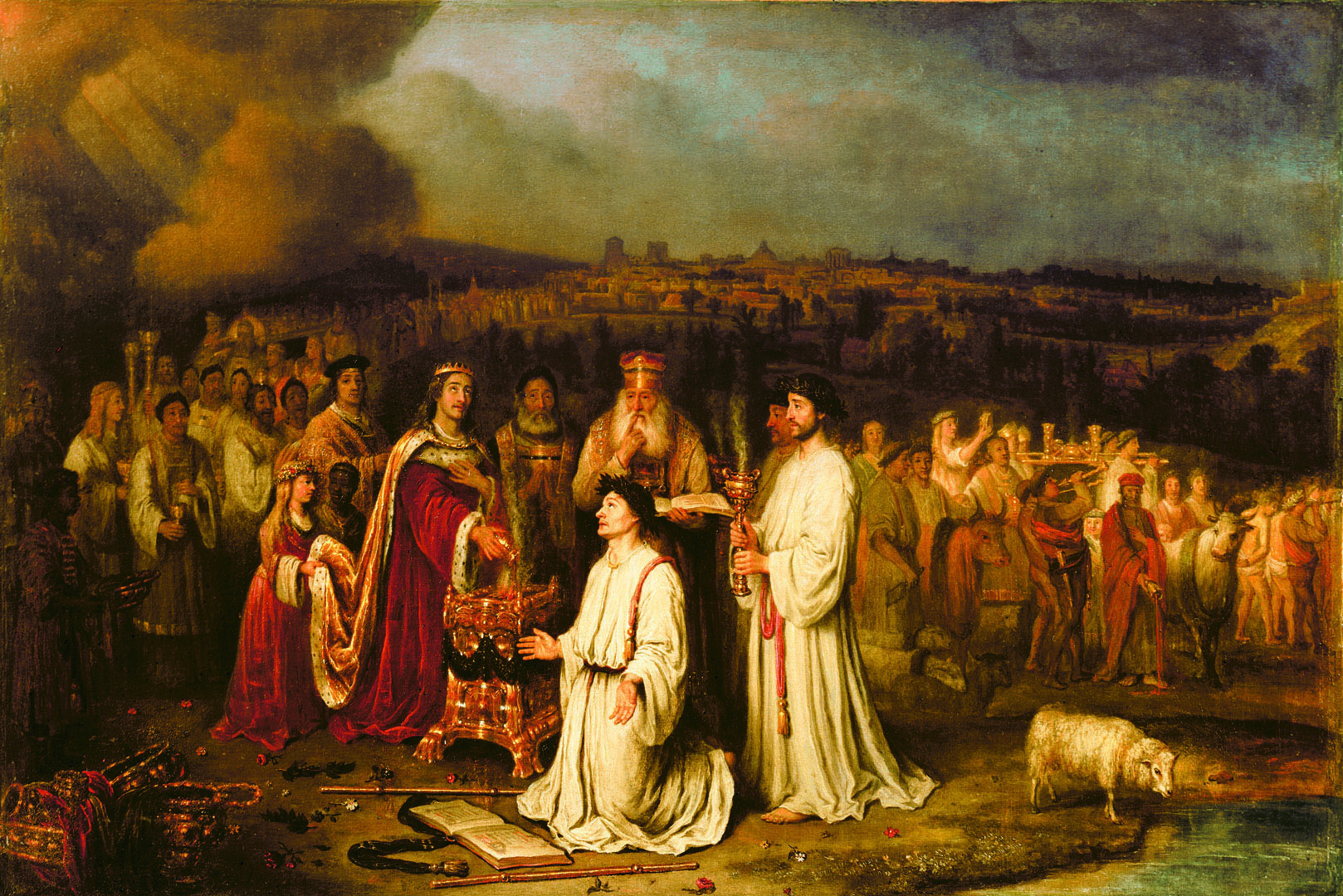
This page draws on 11 works. Open the list of works
This page draws on Albert Barnes, Notes, Explanatory and Practical, on the Old and New Testaments (1832-1869); Augustine of Hippo, Exposition on Psalm 132; Charles Spurgeon, The Treasury of David, Vol. 7; Jamieson, Fausset & Brown, Commentary Critical and Explanatory on the Whole Bible; Jerome, Homily 44, on Psalm 131; John Gill, Exposition of the Old Testament; John Gill, Exposition of the Old Testament (1748-1763); Keil and Delitzsch, Biblical Commentary on the Old Testament; Matthew Henry, Commentary on the Whole Bible; Nicetas of Remesiana, VIGILS OF THE SAINTS 5 and Sahdona the Syrian, BOOK OF PERFECTION 72.