
Numbers 32:8
in Numbers 32This is what your fathers did when I sent them from Kadesh-barnea to inspect the land.
BSB
The same verse in ASV and KJV ▾
ASV
Thus did your fathers, when I sent them from Kadesh-barnea to see the land.
KJV
Thus did your fathers, when I sent them from Kadesh–barnea to see the land.
⋯
This verse in Numbers 32
Commentary
4 notes on this verseA commentator
Albert Barnes1798–1870
Notes, Explanatory and Practical, on the Old and New Testaments (1832-1869)
Your fathers - The generation of the Exodus was now substantially extinct. Compare Num 26:64-65. Kadesh-barnea - See Num 13:26.
This site's exposition
Thus did your fathers, when I sent
on Numbers 32:8-9
Moses takes a request about pasture and reads it as Kadesh starting over. Eshcol is where the cluster was cut at Numbers 13:23, so the men who carried the fruit back are the men he charges with discouraging the heart. The same verb falls in verse 7 and again in verse 9, once of these tribes and once of their fathers, and the two uses are set side by side on purpose.
The record, by era
The Puritans and the Awakening1 voice
Thus did your fathers,....
The Nineteenth Century1 voice
A commentator
Jamieson, Fausset & Brown1802–1910
Commentary Critical and Explanatory on the Whole Bible (1871)
Whether they had really meditated such a withdrawal from all share in the war of invasion, or the effect of their leader's expostulation was to drive them from their original purpose, they now, in answer to his impressive appeal, declared it to be their sincere intention to co-operate with their brethren; but, if so, they ought to have been more explicit at first.
The words behind it
10 Hebrew wordsEvery Hebrew word of this verse in the order it stands, with what it means and the door to its own study. The last column counts the times a word stands in the whole Bible: the rarer the word, the more the places it appears belong together.
| Hebrew | Sound | Meaning | Word study | In the Bible |
|---|---|---|---|---|
| כֹּ֥ה | koh | thus | H3541 → | 577 times |
| עָשׂ֖וּ | ʾasu | they did | H6213 → | 2628 times |
| אֲבֹתֵיכֶ֑ם | ʾavoteikhem | fathers your | H1 → | 1212 times |
| בְּשָׁלְחִ֥י | beshalechi | when sent I | H7971 → | 845 times |
| אֹתָ֛ם | ʾotam | <obj.> them | H853 → | 10935 times |
| מִקָּדֵ֥שׁ | mikadesh | from Kadesh | H6947 → | 20 times |
| בַּרְנֵ֖עַ | barnea' | Barnea | H6947 → | 20 times |
| לִרְא֥וֹת | lirot | to see | H7200 → | 1300 times |
| אֶת־ | ʾet- | <obj.> | H853 → | 10935 times |
| הָאָֽרֶץ׃ | haaretz | the land | H776 → | 2504 times |
כֹּ֥הthus
kohH3541 →577 times
עָשׂ֖וּthey did
ʾasuH6213 →2628 times
אֲבֹתֵיכֶ֑םfathers your
ʾavoteikhemH1 →1212 times
בְּשָׁלְחִ֥יwhen sent I
beshalechiH7971 →845 times
אֹתָ֛ם<obj.> them
ʾotamH853 →10935 times
מִקָּדֵ֥שׁfrom Kadesh
mikadeshH6947 →20 times
בַּרְנֵ֖עַBarnea
barnea'H6947 →20 times
לִרְא֥וֹתto see
lirotH7200 →1300 times
אֶת־<obj.>
ʾet-H853 →10935 times
הָאָֽרֶץ׃the land
haaretzH776 →2504 times
A shaded row is a word that stands 400 times or fewer in the Bible.
The walk
5 stopsEach card is a verse this one points to, and under it the verses that one points to in turn. Where several paths arrive at the same place, that place is listed first: the text keeps returning to it.
Through
Numbers 14:2All the Israelites grumbled against Moses and Aaron, and the whole congregation said to them, “If only we had died in the land of Egypt, or if only we had died in this wilderness!
it leads to
- Exodus 15:24
So the people grumbled against Moses, saying, “What are we to drink?”
- Numbers 16:41
The next day the whole congregation of Israel grumbled against Moses and Aaron, saying, “You have killed the LORD’s people!”
- Exodus 17:3
But the people thirsted for water there, and they grumbled against Moses: “Why have you brought us out of Egypt—to make us and our children and livestock die of thirst?”
- Exodus 16:2–3
And there in the desert they all grumbled against Moses and Aaron.
- 1 Corinthians 10:10
And do not complain, as some of them did, and were killed by the destroying angel.
- Exodus 15:24
About Numbers
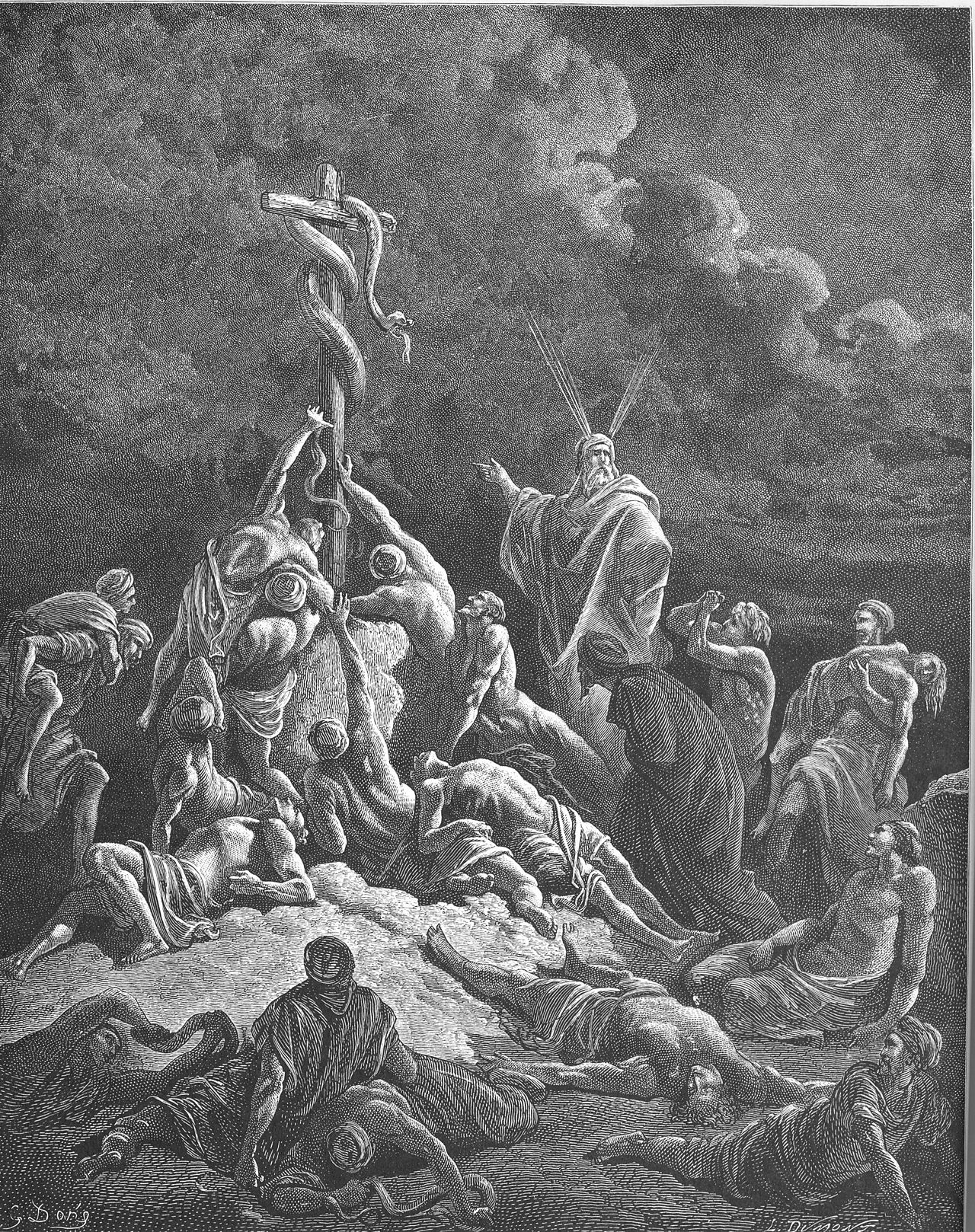
This page draws on Albert Barnes, Notes, Explanatory and Practical, on the Old and New Testaments (1832-1869); Albert Barnes, Notes on the Old Testament; Jamieson, Fausset & Brown, Commentary Critical and Explanatory on the Whole Bible; John Gill, Exposition of the Old Testament (1748-1763) and Matthew Henry, Commentary on the Whole Bible.