
Nehemiah 8:8
in Nehemiah 8So they read from the Book of the Law of God, explaining it and giving insight, so that the people could understand what was being read.
BSB
The same verse in ASV and KJV ▾
ASV
And they read in the book, in the law of God, distinctly; and they gave the sense, so that they understood the reading.
KJV
So they read in the book in the law of God distinctly, and gave the sense, and caused them to understand the reading.
⋯
This verse in Nehemiah 8
Commentary
7 notes on this verseThey - Ezra and his companions successively. Sense - The meaning of the Hebrew words, which they expounded in the common language. Thy gave - So they gave them both a translation of the Hebrew words into the Chaldee, and an exposition of the things contained in them.
This site's exposition
caused the people to understand the law
on Nehemiah 8:7-8
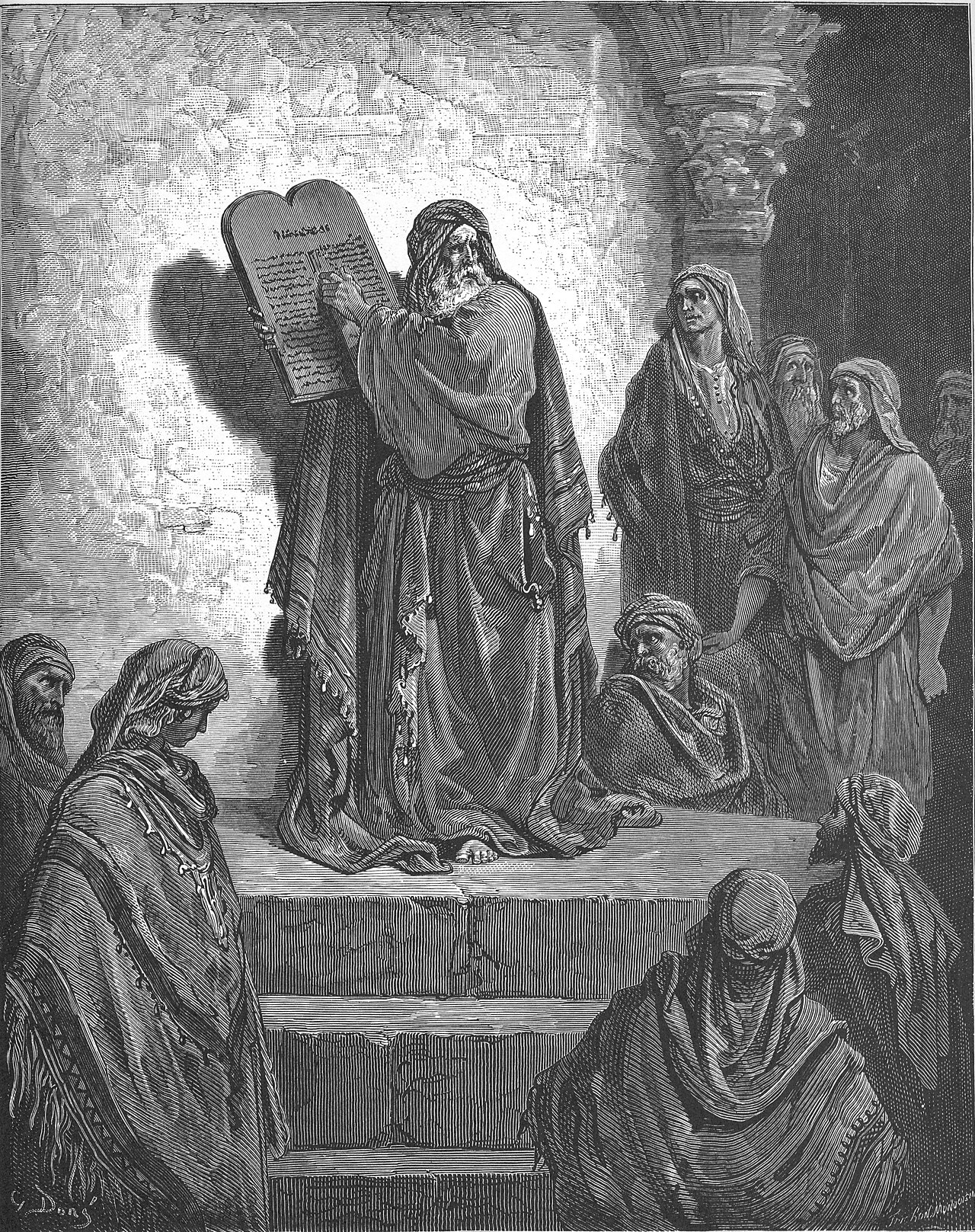
The Levites move among the standing people, and 8:8 states the method in the sentence that occurs nowhere else in Scripture: they read distinctly, and GAVE THE SENSE, and caused them to understand the reading. The readings on what giving the sense meant are named: rabbinic tradition, dated to the Talmudic era, places the origin of the Aramaic Targum in this verse, translation for a people whose tongue had shifted in Babylon, while the bench reads exposition, explanation added to reading; both may be true at once and neither is settled here. Reading plus explanation to the assembly is the shape the synagogue service and the expository sermon descend from, a legacy the commentators draw and name as theirs.
The record, by era
The Puritans and the Awakening3 voices
Let those that read and preach the word learn also to deliver themselves distinctly, as those who understand what they say and are affected with it themselves, and who desire that those they speak to may understand it, retain it, and be affected with it likewise. It is a snare for a man to devour that which is holy.
So they read in the book,....
Note, [1.] It is requisite that those who hear the word should understand it, else it is to them but an empty sound of words, Matt. xxiv. 15 . [2.] It is therefore required of those who are teachers by office that they explain the word and give the sense of it.
The Nineteenth Century2 voices
So they read in the book - For an explanation of this verse, see the observations at the end of the chapter, Neh 8:17 (note).
A commentator
Albert Barnes1798–1870
Notes, Explanatory and Practical, on the Old and New Testaments (1832-1869)
proposed
Gave the sense - Either by rendering the Hebrew into the Aramaic dialect, or perhaps simply by explaining obscure words or passages. Caused them to understand - Either “they (the people) understood what was read;” or, “they (the Levites) expounded as they read.”
How the passage was read
On Nehemiah 8:1-18On Nehemiah 8:1-18
The seventh month, rediscovered
Everything in this chapter happens on the calendar of Leviticus 23. Ezra reads the Law on “the first day of the seventh month”: that is the Day of Trumpets, kept today as Rosh Hashanah, the Jewish new year, announced by the ram's-horn trumpet (shofar). Then the people find the command about booths and keep Tabernacles (Sukkot) for the first time “since the days of Joshua”: seven days living in leafy shelters, remembering the wilderness. Jewish families still build these booths every autumn: a hut in the yard or on the balcony, roofed with branches you can see the stars through, where meals are eaten all week.
The chapter also gives the day its enduring tone: “the joy of the LORD is your strength” was said on Rosh Hashanah, to a congregation weeping under the words of the Law and told instead to feast.
This section is reception history: how the passage was read and kept in the Jewish tradition. Where a reading parts from an essential of the Christian faith, the section says so at that point.
Sources: Leviticus 23:23–43 (the seventh month's appointments) · Mishnah Sukkah 1:1 (the booth's rules)
The words behind it
9 Hebrew wordsEvery Hebrew word of this verse in the order it stands, with what it means and the door to its own study. The last column counts the times a word stands in the whole Bible: the rarer the word, the more the places it appears belong together.
| Hebrew | Sound | Meaning | Word study | In the Bible |
|---|---|---|---|---|
| וַֽיִּקְרְא֥וּ | vaiyikreu | and they read aloud | H7121 → | 733 times |
| בַסֵּ֛פֶר | vasefer | in the scroll | H5612 → | 186 times |
| בְּתוֹרַ֥ת | betorat | in [the] law of | H8451 → | 219 times |
| הָאֱלֹהִ֖ים | haelohim | <the> God | H430 → | 2601 times |
| מְפֹרָ֑שׁ | meforash | making clear | H6567 → | |
| וְשׂ֣וֹם | vesom | and they gave | H7760 → | |
| שֶׂ֔כֶל | sekhel | [the] sense | H7922 → | |
| וַיָּבִ֖ינוּ | vaiyavinu | and they understood | H995 → | 170 times |
| בַּמִּקְרָֽא׃ ס | bamikra' | <in> the reading | H4744 → |
וַֽיִּקְרְא֥וּand they read aloud
vaiyikreuH7121 →733 times
בַסֵּ֛פֶרin the scroll
vaseferH5612 →186 times
בְּתוֹרַ֥תin [the] law of
betoratH8451 →219 times
הָאֱלֹהִ֖ים<the> God
haelohimH430 →2601 times
מְפֹרָ֑שׁmaking clear
meforashH6567 →
וְשׂ֣וֹםand they gave
vesomH7760 →
שֶׂ֔כֶל[the] sense
sekhelH7922 →
וַיָּבִ֖ינוּand they understood
vaiyavinuH995 →170 times
בַּמִּקְרָֽא׃ ס<in> the reading
bamikra'H4744 →
A shaded row is a word that stands 400 times or fewer in the Bible.
The walk
8 stopsEach card is a verse this one points to, and under it the verses that one points to in turn. Where several paths arrive at the same place, that place is listed first: the text keeps returning to it.
Through
Luke 24:45Then He opened their minds to understand the Scriptures.
it leads to
- Acts 16:14
Among those listening was a woman named Lydia, a dealer in purple cloth from the city of Thyatira, who was a worshiper of God. The Lord opened her heart to respond to Paul’s message.
- 1 John 5:20
And we know that the Son of God has come and has given us understanding, so that we may know Him who is true; and we are in Him who is true—in His Son…
- Psalms 119:18
Open my eyes that I may see wondrous things from Your law.
- 2 Corinthians 3:14–18
But their minds were closed. For to this day the same veil remains at the reading of the old covenant. It has not been lifted, because only in Christ can it be removed.
- Acts 26:18
to open their eyes, so that they may turn from darkness to light and from the power of Satan to God, that they may receive forgiveness of sins and an inheritance among those sanctified…
- Acts 16:14
Through
Luke 24:27And beginning with Moses and all the Prophets, He explained to them what was written in all the Scriptures about Himself.
it leads to
- Isaiah 7:14
Therefore the Lord Himself will give you a sign: Behold, the virgin will be with child and will give birth to a son, and will call Him Immanuel.
- Luke 24:44
Jesus said to them, “These are the words I spoke to you while I was still with you: Everything must be fulfilled that is written about Me in the Law of Moses, the Prophets,…
- Deuteronomy 18:15
The LORD your God will raise up for you a prophet like me from among your brothers. You must listen to him.
- Isaiah 7:14
Where this verse is studied
On this page
Studies2
On this verse
On this chapter
About Nehemiah
This page draws on Adam Clarke, Commentary on the Bible; Albert Barnes, Notes, Explanatory and Practical, on the Old and New Testaments (1832-1869); John Gill, Exposition of the Old Testament (1748-1763); John Wesley, Explanatory Notes upon the Old Testament; Keil, The Books of Ezra, Nehemiah, and Esther; Matthew Henry, Commentary on the Whole Bible and W. F. Adeney, Ezra, Nehemiah and Esther (Expositor's Bible).