
Mark 3:17
in Mark 3James son of Zebedee and his brother John (whom He named Boanerges, meaning “Sons of Thunder”),
BSB
The same verse in ASV and KJV ▾
ASV
and James the son of Zebedee, and John the brother of James; and them he surnamed Boanerges, which is, Sons of thunder:
KJV
And James the son of Zebedee, and John the brother of James; and he surnamed them Boanerges, which is, The sons of thunder:
⋯
This verse in Mark 3
Commentary
13 notes on this verseVerse 7. "And the overseer of the eunuchs imposed names upon them, calling Daniel Belteshazzar (Balthasar), and Hananiah Shadrach, and Mishael Meshach, and Azariah Abednego." It was not only the overseer or master of the eunuchs (as others have rendered it, the "chief-eunuch") who changed the names of saints, but also Pharaoh called Joseph in Egypt Somtonphanec (Genesis 41:45), for neither of them wished them to have Jewish names in the land of captivity. Wherefore the prophet says in the Psalm: "How shall we sing the Lord's song in a strange land?" (Psalm 137:4).
This site's exposition
Simon he surnamed Peter
on Mark 3:16-19
Simon he surnamed Peter opens the roll of names, rock, a surname that anchors Peter's role at Caesarea Philippi and beyond, and James and John receive Boanerges, sons of thunder, Mark keeping the actual Aramaic Jesus gave them. The list runs to twelve ordinary men, among them Matthew, the tax collector church tradition identifies with Levi called in chapter 2, and a Simon distinguished as the Canaanite, a term marking zealot sympathies rather than a place name. Judas Iscariot is named last, as in every Gospel list, and marked at once as the one which also betrayed him, the betrayal foretold even at his appointment. The bench reads the sober list of names, unpolished and human, as the true material Jesus builds his church from.
The record, by era
The Church Fathers4 voices
James and his brother He called "sons of thunder." Why then doth He this? To show that it was He who gave the old covenant, that it was He who altered names, who called Abram "Abraham," and Sarai "Sarah," and Jacob "Israel." To many he assigned names even from their birth, as to Isaac, and Samson, and to those in Isaiah and Hosea; but to others He gave them after they had been named by their parents, as to those we have mentioned, and to Joshua the son of Nun. It was also a custom of the Ancients to give names from things, which in fact Leah also has done; and this takes place not without cause, but in order that men may have the appellation to remind them of the goodness of God, that a perpetual memory of the prophecy conveyed by the names may sound in the ears of those who receive it.
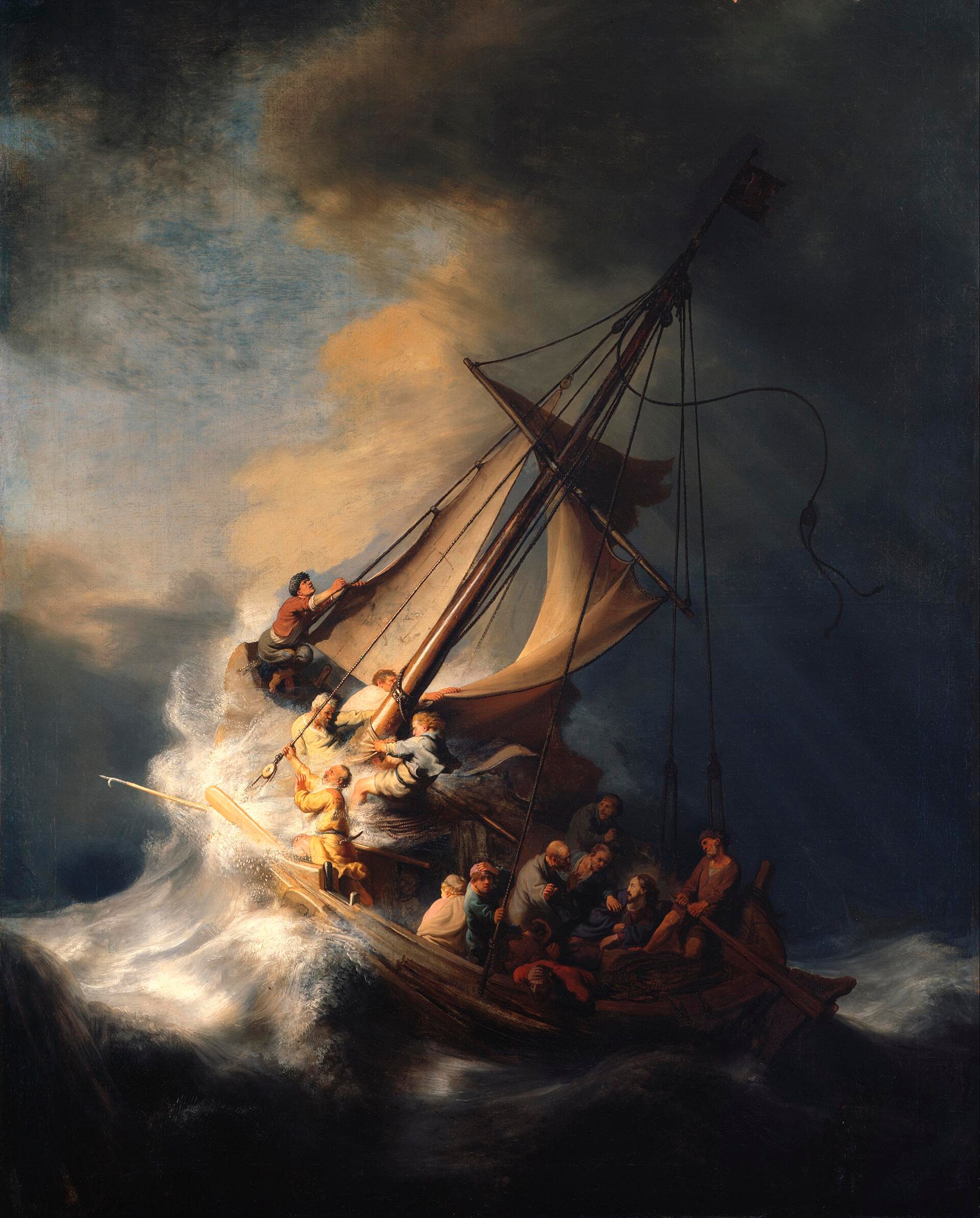
Thunder is produced when a dry and violent wind, closed up in the hollows of a cloud and violently hurled around in the cavities of the clouds, seeks a passage to the outside. The clouds, offering resistance under the excessive pressure, produce that harsh sound from the friction of the wind. But when, like bubbles distended by the air, they are unable to resist and endure any longer, but are violently torn apart and give the air a passage to the outer breeze, they produce the noises of the thunder. And this normally causes the flash of lightning.
Thunder here refers to the preaching of the gospel. For as a heavenly shout occurs like a voice of thunder, surpassing all human power, in the same way also the preaching of the gospel, which is a heavenly happening, does not consist of human strength. The gospel did not fill the world by human planning, but by divine power.
(Vict. Ant. e Cat. in Marc.) He calls the sons of Zebedee by this name, because they were to spread over the world the mighty and illustrious decrees of the Godhead.
The Medieval Church1 voice
And James, the son of Zebedee, and John, the brother of James (it is understood from the previous verses that he called them to him when he went up into the mountain). And he gave them the names Boanerges, which means sons of thunder. They …
6 more voices on this verse
The Medieval Church2 voices
He calls the sons of Zebedee Sons of Thunder, as especially great preachers and theologians.
James the son of Zebedee, and John his brother. Namely, James who has supplanted all the desires of the flesh, and John, who received by grace what others held by labour. There follows: And he surnamed them, Boanerges. (Gen. 27:36. v. Aur. Cat. in Matt. 10:2) Or by this the lofty merit of the three mentioned above is shown, who merited to hear in the mountain the thunders of the Father, when he proclaimed in thunder through a cloud concerning the Son, This is my beloved Son; that they also through the cloud of the flesh and the fire of the word1, (Matt. 17:1) might as it were scatter the thunderbolts in rain on the earth, since the Lord turned the thunderbolts into rain, so that mercy extinguishes what judgment sets on fire.
The Puritans and the Awakening1 voice
And James the son of Zebedee, and John the brother of James,.... These are mentioned next, as being first called after Peter and Andrew: and he surnamed them Boanerges, which is, the sons of thunder: either because of their loud and sonorous voice; or their warm zeal for Christ, and fervency in their ministry: or for their courage in opposing the enemies of Christ, and the power that went along with their words; which either put to confusion and silence, or issued in conviction and conversion. The Syriac version reads, "Benai Regesh", and the Persic, "Beni Reg'sch".
The Nineteenth Century3 voices
Sons of thunder - A Hebraism for thunderers; probably so named because of their zeal and power in preaching the Gospel. The term Boanerges is neither Hebrew nor Syriac. Calmet and others think that there is reason to believe that the Greek transcribers have not copied it exactly. בני רעם beney raam, which the ancient Greeks would pronounce Beneregem, and which means sons of thunder, was probably the appellative used by our Lord: or בני רעש beni reges, sons of tempest, which comes nearest to the Boanerges of the evangelist.
A commentator
J.C. Ryle1816–1900
Expository Thoughts on the Gospels: Mark (lightly modernized text, Grace Gems edition) (1857)
The beginning of this passage describes the appointment of the twelve apostles. It is an event in our Lord's earthly ministry, which should always be read with deep interest. What a vast amount of benefit these few men have conferred on the world! The names of a few Jewish fishermen are known and loved by millions all over the globe, while the names of many kings and rich men are lost and forgotten. It is they who do good to souls who are had "in everlasting remembrance." (Psalm 112:6.)
A commentator
J.C. Ryle1816–1900
Expository Thoughts on the Gospels: Mark (lightly modernized text, Grace Gems edition) (1857)
proposed
The beginning of this passage describes the appointment of the twelve apostles. It is an event in our Lord's earthly ministry, which should always be read with deep interest. What a vast amount of benefit these few men have conferred on the world! The names of a few Jewish fishermen are known and loved by millions all over the globe, while the names of many kings and rich men are lost and forgotten. It is they who do good to souls who are had "in everlasting remembrance." (Psalm 112:6.) Let us notice in these verses, how many of the twelve who are here named, had been called to be disciples before they were ordained apostles . There are six, at least, out of the number, whose first call to follow Christ is specially recorded. These six are Peter and Andrew, James and John, Philip and Matthew. In short, there can be little doubt that eleven of our Lord's apostles were converted before they were ordained. It ought to be the same with all ministers of the Gospel. They ought to be men who have been first called by the Spirit, before they are set apart for the great work of teaching others. The rule should be the same with them as with the apostles — "first converted, then ordained." It is impossible to overrate the importance of this to the interests of true religion. Bishops and presbyteries can never be too strict and particular in the enquiries they make about the spiritual character of candidates for orders. An unconverted minister is utterly unfit for his office. How can he speak experimentally of that grace which he has never tasted himself? How can he commend that Savior to his people whom he himself only knows by name? How can he urge on souls the need of that conversion and new birth, which he himself has not experienced?
The words behind it
20 Greek wordsEvery Greek word of this verse in the order it stands, with what it means and the door to its own study. The last column counts the times a word stands in the whole Bible: the rarer the word, the more the places it appears belong together.
| Greek | Sound | Meaning | Word study | In the Bible |
|---|---|---|---|---|
| καὶ | kai | and | G2532 → | 9120 times |
| Ἰάκωβον | iakobon | James | G2385 → | 42 times |
| τὸν | ton | the [son] | G3588 → | 19766 times |
| τοῦ | tou | <the> | G3588 → | 19766 times |
| Ζεβεδαίου | zebedaiou | of Zebedee | G2199 → | 12 times |
| καὶ | kai | and | G2532 → | 9120 times |
| Ἰωάννην | ioannen | John | G2491 → | 134 times |
| τὸν | ton | the | G3588 → | 19766 times |
| ἀδελφὸν | adelphon | brother | G80 → | 343 times |
| τοῦ | tou | <the> | G3588 → | 19766 times |
| Ἰακώβου, | iakobou | of James, | G2385 → | 42 times |
| καὶ | kai | and | G2532 → | 9120 times |
| ἐπέθηκεν | epetheken | He added | G2007 → | 38 times |
| αὐτοῖς | autois | to them [the] | G846 → | 5565 times |
| ὀνόματα | onomata | names | G3686 → | 227 times |
| Βοανηργές, | boanerges | Boanerges, | G993 → | |
| ὅ | ho | which | G3739 → | 1405 times |
| ἐστιν | estin | is | G1510 → | 2333 times |
| υἱοὶ | huioi | Sons | G5207 → | 377 times |
| βροντῆς· | brontes | of thunder; | G1027 → |
καὶand
kaiG2532 →9120 times
ἸάκωβονJames
iakobonG2385 →42 times
τὸνthe [son]
tonG3588 →19766 times
τοῦ<the>
touG3588 →19766 times
Ζεβεδαίουof Zebedee
zebedaiouG2199 →12 times
καὶand
kaiG2532 →9120 times
ἸωάννηνJohn
ioannenG2491 →134 times
τὸνthe
tonG3588 →19766 times
ἀδελφὸνbrother
adelphonG80 →343 times
τοῦ<the>
touG3588 →19766 times
Ἰακώβου,of James,
iakobouG2385 →42 times
καὶand
kaiG2532 →9120 times
ἐπέθηκενHe added
epethekenG2007 →38 times
αὐτοῖςto them [the]
autoisG846 →5565 times
ὀνόματαnames
onomataG3686 →227 times
Βοανηργές,Boanerges,
boanergesG993 →
ὅwhich
hoG3739 →1405 times
ἐστινis
estinG1510 →2333 times
υἱοὶSons
huioiG5207 →377 times
βροντῆς·of thunder;
brontesG1027 →
A shaded row is a word that stands 400 times or fewer in the Bible.
The walk
8 stopsEach card is a verse this one points to, and under it the verses that one points to in turn. Where several paths arrive at the same place, that place is listed first: the text keeps returning to it.
Through
Hebrews 4:12For the word of God is living and active. Sharper than any double-edged sword, it pierces even to dividing soul and spirit, joints and marrow. It judges the thoughts and intentions of the heart.
it leads to
- Jeremiah 23:29
“Is not My word like fire,” declares the LORD, “and like a hammer that smashes a rock?”
- Isaiah 55:11
so My word that proceeds from My mouth will not return to Me empty, but it will accomplish what I please, and it will prosper where I send it.
- Ephesians 6:17
And take the helmet of salvation and the sword of the Spirit, which is the word of God.
- Psalms 119:130
The unfolding of Your words gives light; it informs the simple.
- 1 Peter 1:23
For you have been born again, not of perishable seed, but of imperishable, through the living and enduring word of God.
- Jeremiah 23:29
Through
Jeremiah 23:29“Is not My word like fire,” declares the LORD, “and like a hammer that smashes a rock?”
it leads to
- Hebrews 4:12
For the word of God is living and active. Sharper than any double-edged sword, it pierces even to dividing soul and spirit, joints and marrow. It judges the thoughts and intentions of the heart.
- Jeremiah 5:14
Therefore this is what the LORD God of Hosts says: “Because you have spoken this word, I will make My words a fire in your mouth and this people the wood it consumes.
- Luke 24:32
They asked each other, “Were not our hearts burning within us as He spoke with us on the road and opened the Scriptures to us?”
- Hebrews 4:12
Where this verse is studied
On this page
About Mark
This page draws on 13 works. Open the list of works
This page draws on Adam Clarke, Commentary on the Bible; Basil of Caesarea, HOMILY 13.3; Bede, On the Gospel of Mark; Eusebius of Caesarea, COMMENTARY ON PSALMS 23; J.C. Ryle, Expository Thoughts on the Gospels: Mark (lightly modernized text, Grace Gems edition); Jerome, St. Jerome, Commentary on Daniel, CHAPTER ONE; John Chrysostom, HOMILIES ON ST. JOHN, HOMILY 19; John Gill, Exposition of the New Testament (1746-1748); John Lightfoot, Horae Hebraicae et Talmudicae; Matthew Henry, Commentary on the Whole Bible; Pseudo-Chrysostom, Catena Aurea by Aquinas; Pseudo-Jerome, Catena Aurea by Aquinas and Theophylact of Ohrid, Commentary on Mark.