
Micah 6:2
in Micah 6Hear, O mountains, the LORD’s indictment, you enduring foundations of the earth. For the LORD has a case against His people, and He will argue it against Israel:
BSB
The same verse in ASV and KJV ▾
ASV
Hear, O ye mountains, Jehovah’s controversy, and ye enduring foundations of the earth; for Jehovah hath a controversy with his people, and he will contend with Israel.
KJV
Hear ye, O mountains, the Lord’s controversy, and ye strong foundations of the earth: for the Lord hath a controversy with his people, and he will plead with Israel.
⋯
This verse in Micah 6
Commentary
7 notes on this verse(Chapter VI—Verses 1, 2.) Listen to what the Lord is saying: Rise up, contend with the mountains, and let the hills hear your voice. Listen, O mountains, to the Lord's judgment, and you mighty foundations of the earth, for the Lord will judge with his people and with Israel. Septuagint: Listen to what the Lord has spoken: Rise up, judge among the mountains, and let the hills hear your voice. Listen, O mountains, to the Lord's judgment, and you valleys, foundations of the earth, for the Lord will judge his people and with Israel.
This site's exposition
Arise, contend thou before the mountains
on Micah 6:1-2
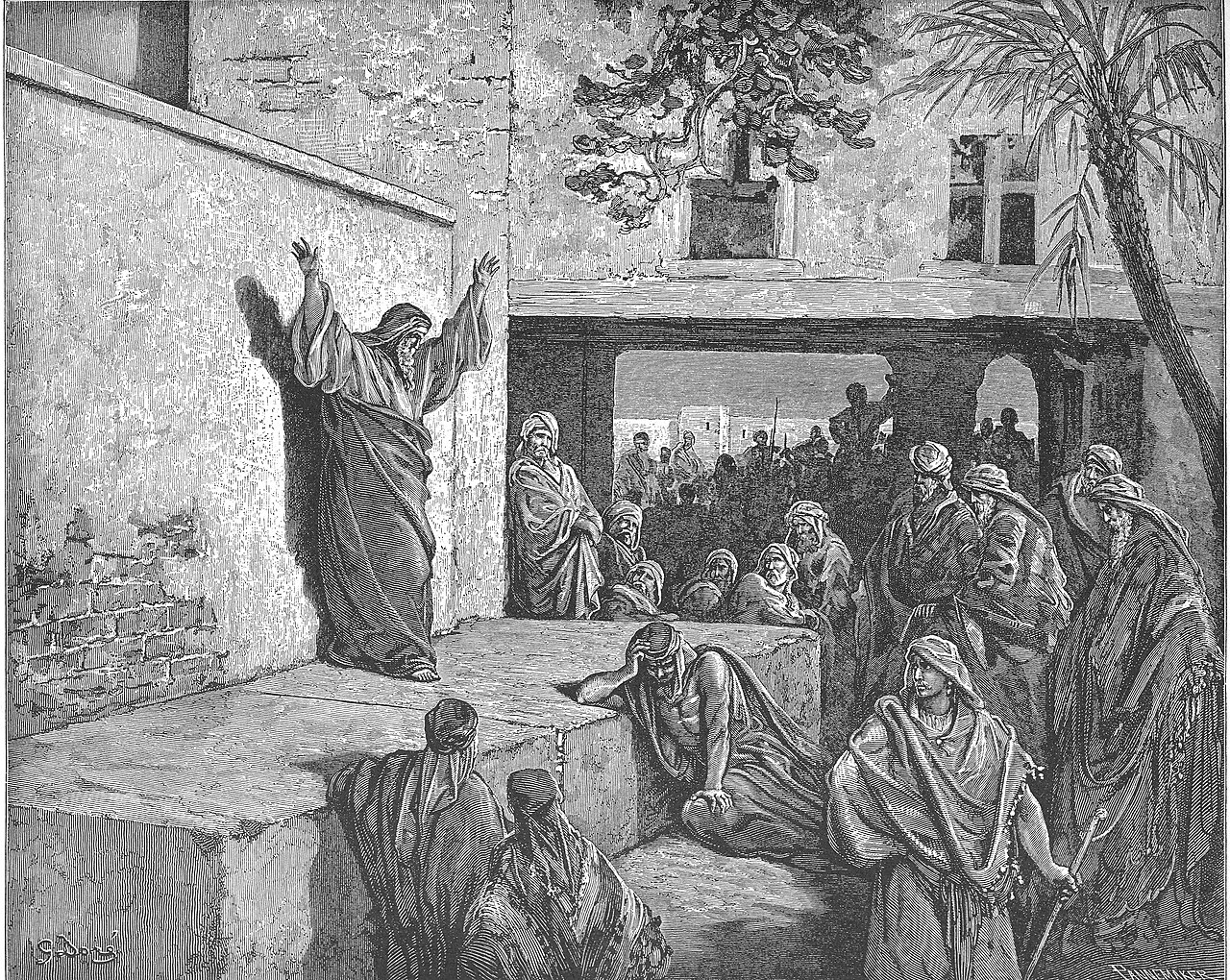
The Lord summons Israel to a lawsuit, arise, contend thou before the mountains, and let the hills hear thy voice, with the mountains and the strong foundations of the earth called as the assembly before whom the case is argued. The form matches the covenant lawsuit shape found elsewhere in the prophets, heaven and earth called as witnesses to a covenant older than any living generation (Deuteronomy 32:1, Isaiah 1:2), since only they were present when the terms were first agreed. The Lord's controversy is not with the mountains but with his own people, the mountains standing as jury rather than defendant.
The record, by era
The Puritans and the Awakening2 voices
Foundations of the earth - The mountains properly so called; the sin of Israel is so notorious, that the whole creation may be summoned as a witness against them.
Hear ye, O mountains, the Lord's controversy, and ye strong foundations of the earth,....
The Nineteenth Century3 voices
Hear ye, O mountains - Micah, as God’s advocate, summons this people into judgment, and makes an appeal to inanimate creation against them. He had spoken to the priests, to the princes, to the people. He had done every thing that was necessary to make them wise, and holy, and happy; they had uniformly disobeyed, and were ever ungrateful. It was not consistent with either the justice or mercy of God to permit them to go on without reprehension and punishment.
A commentator
Jamieson, Fausset & Brown1802–1910
Commentary Critical and Explanatory on the Whole Bible (1871)
proposed
Lord's controversy--How great is Jehovah's condescension, who, though the supreme Lord of all, yet wishes to prove to worms of the earth the equity of His dealings (Isa 5:3;
quarantine:debris (2026-07-29) — unbalanced-parens
A commentator
Albert Barnes1798–1870
Notes, Explanatory and Practical, on the Old and New Testaments (1832-1869)
proposed
Hear, ye strong (or, it may be, ye enduring,) foundations of the earth - Mountains and rocks carry the soul to times far away, before and after. They change net, like the habitable, cultivated, surface of the earth. There they were, before the existence of our short-lived generations; there they will be, until time shall cease to be. They have witnessed so many vicissitudes of human things, themselves unchanging. The prophet is directed to seize this feeling of simple nature. “They have seen so much before me,” Yes! “then they have seen all which befell my forefathers; all God’s benefits, all along, to them and to us, all their and our unthankfulness.” He will plead with Israel - God hath a strict severe judgment with His people, and yet vouchsafes to clear Himself before His creatures, to come down from His throne of glory and place Himself on equal terms with them. He does not plead only, but mutually (such is the force of the word) impleads with His people, hears if they would say aught against Himself, and then gives His own judgment . But this willingness to hear, only makes us condemn ourselves, so that we should be without excuse before Him. We do owe ourselves wholly to Him who made us and hath given us all things richly to enjoy. If we have withdrawn ourselves from His Service, unless He dealt hardly with us, we dealt rebelliously and ungratefully with Him. God brings all pleas into a narrow space. The fault is with Him or with us. He offers to clear Himself. He sets before us His good deeds, His Loving kindness, Providence, Grace, Long-suffering, Bounty, Truth, and contrasts with them our evil deeds, our unthankfulness, despitefulness, our breach of His laws, and disorderings of His creation. […]
The words behind it
16 Hebrew wordsEvery Hebrew word of this verse in the order it stands, with what it means and the door to its own study. The last column counts the times a word stands in the whole Bible: the rarer the word, the more the places it appears belong together.
| Hebrew | Sound | Meaning | Word study | In the Bible |
|---|---|---|---|---|
| שִׁמְע֤וּ | shimu | hear | H8085 → | 1159 times |
| הָרִים֙ | harim | O mountains | H2022 → | 546 times |
| אֶת־ | ʾet- | <obj.> | H853 → | 10935 times |
| רִ֣יב | riv | [the] case of | H7379 → | 61 times |
| יְהוָ֔ה | yahweh | Yahweh | H3068 → | 6520 times |
| וְהָאֵתָנִ֖ים | vehaetanim | and O enduring [ones] | H386 → | |
| מֹ֣סְדֵי | mosedei | [the] foundations of | H4144 → | |
| אָ֑רֶץ | ʾaretz | [the] earth | H776 → | 2504 times |
| כִּ֣י | ki | for | H3588 → | 4482 times |
| רִ֤יב | riv | a case at law | H7379 → | 61 times |
| לַֽיהוָה֙ | layahweh | [belongs] to Yahweh | H3068 → | 6520 times |
| עִם־ | ʾim- | with | H5973 → | 1050 times |
| עַמּ֔וֹ | amo | people his | H5971 → | 1873 times |
| וְעִם־ | veim- | and with | H5973 → | 1050 times |
| יִשְׂרָאֵ֖ל | yisrael | Israel | H3478 → | 2507 times |
| יִתְוַכָּֽח׃ | yitvakach | he will argue | H3198 → |
שִׁמְע֤וּhear
shimuH8085 →1159 times
הָרִים֙O mountains
harimH2022 →546 times
אֶת־<obj.>
ʾet-H853 →10935 times
רִ֣יב[the] case of
rivH7379 →61 times
יְהוָ֔הYahweh
yahwehH3068 →6520 times
וְהָאֵתָנִ֖יםand O enduring [ones]
vehaetanimH386 →
מֹ֣סְדֵי[the] foundations of
mosedeiH4144 →
אָ֑רֶץ[the] earth
ʾaretzH776 →2504 times
כִּ֣יfor
kiH3588 →4482 times
רִ֤יבa case at law
rivH7379 →61 times
לַֽיהוָה֙[belongs] to Yahweh
layahwehH3068 →6520 times
עִם־with
ʾim-H5973 →1050 times
עַמּ֔וֹpeople his
amoH5971 →1873 times
וְעִם־and with
veim-H5973 →1050 times
יִשְׂרָאֵ֖לIsrael
yisraelH3478 →2507 times
יִתְוַכָּֽח׃he will argue
yitvakachH3198 →
A shaded row is a word that stands 400 times or fewer in the Bible.
The walk
8 stopsEach card is a verse this one points to, and under it the verses that one points to in turn. Where several paths arrive at the same place, that place is listed first: the text keeps returning to it.
Through
Isaiah 1:18“Come now, let us reason together,” says the LORD. “Though your sins are like scarlet, they will be as white as snow; though they are as red as crimson, they will become like wool.
it leads to
- Isaiah 44:22
I have blotted out your transgressions like a cloud, and your sins like a mist. Return to Me, for I have redeemed you.
- Revelation 7:14
“Sir,” I answered, “you know.” So he replied, “These are the ones who have come out of the great tribulation; they have washed their robes and made them white in the blood of the…
- Psalms 51:7
Purify me with hyssop, and I will be clean; wash me, and I will be whiter than snow.
- Micah 7:18–19
Who is a God like You, who pardons iniquity and passes over the transgression of the remnant of His inheritance—who does not retain His anger forever, because He delights in loving devotion?
- Isaiah 43:24–26
You have not bought Me sweet cane with your silver, nor satisfied Me with the fat of your sacrifices. But you have burdened Me with your sins; you have wearied Me with your iniquities.
- Isaiah 44:22
Through
Psalms 104:5He set the earth on its foundations, never to be moved.
it leads to
- Job 26:7
He stretches out the north over empty space; He hangs the earth upon nothing.
- Psalms 24:2
For He has founded it upon the seas and established it upon the waters.
- Psalms 33:9
For He spoke, and it came to be; He commanded, and it stood firm.
- Job 26:7
Where this verse is studied
On this page
Studies3
About Micah
This page draws on Adam Clarke, Commentary on the Bible; Albert Barnes, Notes, Explanatory and Practical, on the Old and New Testaments (1832-1869); Carl Friedrich Keil, The Twelve Minor Prophets; Edward Bouverie Pusey, The Minor Prophets: A Commentary; Jamieson, Fausset & Brown, Commentary Critical and Explanatory on the Whole Bible; Jerome, Commentary on Micah; John Gill, Exposition of the Old Testament (1748-1763) and John Wesley, Explanatory Notes upon the Old Testament.