
Micah 6:6
in Micah 6With what shall I come before the LORD when I bow before the God on high? Should I come to Him with burnt offerings, with year-old calves?
BSB
The same verse in ASV and KJV ▾
ASV
Wherewith shall I come before Jehovah, and bow myself before the high God? shall I come before him with burnt-offerings, with calves a year old?
KJV
Wherewith shall I come before the Lord, and bow myself before the high God? shall I come before him with burnt offerings, with calves of a year old?
⋯
This verse in Micah 6
Commentary
11 notes on this verseFor what is asked of you, O man? Only that you fear God: seek for him, walk after him, follow in his ways. "With what shall I win over the Lord? Shall I win him over with burnt offerings?" The Lord is not reconciled, nor are sins redeemed, with tens of thousands of young goats or thousands of rams or with the fruits of unholiness, but the grace of the Lord is won with a good life.
This site's exposition
With what shall I come before the LORD
on Micah 6:6-7
The worshiper's offers climb from "burnt offerings, with year-old calves" to "thousands of rams". The last is "Shall I present my firstborn for my transgression", the child sacrifice the king of Moab made in 2 Kings 3:27. The questions set up the answer of verse 8.
The record, by era
The Church Fathers2 voices
(Vers. 6, 7.) What shall I offer to the Lord? Shall I bow down before the Most High God? Shall I offer burnt offerings to Him, and yearling calves? Can the Lord be pleased with thousands of rams, or with many thousands of fattened goats? Shall I give my firstborn for my transgression, the fruit of my body for the sin of my soul? LXX: Where shall I find the Lord? Shall I seek my God on high? Shall I seek Him in burnt offerings, in yearling calves? May the Lord receive in the thousands of rams, or in the ten thousands of fat goats? If I offer my firstborn for my impiety: the fruit of my womb for the sin of my soul. God has called the people to judgment: he, knowing his own sin, does not want to contend, but to plead, and yet he has no confidence in his own prayers. For nothing is worthy to be offered to God for sin, and no humility can cleanse the stains of transgressions, because it is impossible for the blood of bulls and calves, and the marrow-burning holocaust, and the blood of rams and fat goats, to wash away the filth of the soul. Will I, he says, give my firstborn for my crime, as it is described that the king of Moab did (2 Kings 3)? Or the fruit of my womb for the sin of my soul, as Jephthah did, offering his daughter for the rashness of his vow (Judith 11)? Therefore we who are of the people of God, knowing that not every living creature will be justified in his sight (Psalm 142), and saying: I have become like an animal before you (Psalm 73:22-23), repenting for our sins, we doubt and say: Where shall I find the Lord, shall I receive my exalted Lord? How can I capture him as he flees? How much cleanliness will I be able to prepare for the Trinity's lodging? […]
Is everyone who is turning from sin to faith, turning from sinful practices (as if they were his mother) to life? I shall call in evidence one of the twelve prophets, who says, "Am I to make an offering of my firstborn son for my impiety? Should I offer the fruit of my womb for the sin of my soul?" Can the mother buy her way to God by giving up her firstborn? This must not be taken as an attack on the words "increase in numbers." Micah is naming, by using the word impiety, the first impulses after birth, which do not help us to knowledge of God. If anyone misuses this as a basis for saying that that birth is evil, he should also use it as a basis for saying that it is good, in that in it we come to know the truth. "Come back to a sober and upright life and stop sinning." But the sinner knows nothing of God. "We are not wrestling against flesh and blood but against spiritual beings, potent in temptation, the rulers of this dark world," so there is forbearance. This is why Paul says, "I bruise my own body and treat it as a slave, because every athlete goes into total training." By "total training" we understand not that he abstains from absolutely everything but that he shows self-control in those things he has taken a deliberate decision to use. "They do it to win a crown which dies, we for one which never dies," if we win the contest. No effort, no crown!
The Puritans and the Awakening3 voices
All the proposals of peace but those that are according to the gospel are absurd. One stream of the blood of Christ is worth ten thousand rivers of oil. (2.) Some of them are wicked things, as to give our first-born and the fruit of our body to death, which would but add to the transgression and the sin of the soul.
He calls upon them to hear the voice of his judgments, and sets the sins in order before them for which he still proceeded in his controversy with them (
quarantine:debris (2026-07-29) — unbalanced-parens
Wherewith shall I come before the Lord,....
4 more voices on this verse
The Puritans and the Awakening2 voices
The work of ministers is to explain the providences of God and to quicken and direct men to learn the lessons that are taught by them. What is the ground of the action, and what are the things that are laid to their charge. They are charged with injustice, a sin against the second table.
Though the worship of idols is enacted by the statutes of Omri, recommended by the practice of the house of Ahab, and pleads that it has been the usage of many generations, yet it is still displeasing to God and destructive to Israel; for no laws nor customs are of force against the divine command. What is the judgment given upon this.
The Nineteenth Century2 voices
Wherewith shall I come before the Lord - Now the people, as defendants, appear; but instead of vindicating themselves, or attempting to dispute what has been alleged against them, they seem at once to plead guilty; and now anxiously inquire how they shall appease the wrath of the Judge, how they shall make atonement for the sins already committed. Bow myself before the high God - They wish to pray, and to make supplication to their Judge; but how shall they come before him? They have no right to come into his presence.
A commentator
Albert Barnes1798–1870
Notes, Explanatory and Practical, on the Old and New Testaments (1832-1869)
proposed
Wherewith shall I come before the Lord? - The people, thus arraigned, bursts in, as men do, with professions that they would be no more ungrateful; that they will do anything, everything - but what they ought. With them it shall be but “Ask and have.” They wish only to know, with what they shall come? They would be beforehand with Him, anticipating His wishes; they would, with all the submission of a creature, bow, prostrate themselves before God; they acknowledge His High Majesty, who dwelleth on high, the most High God, and would abase themselves before His lofty greatness, if they but knew, “how” or “wherewith.” They would give of their best; sacrifices the choicest of their kind, which should be wholly His, whole-burnt-offerings, offered exactly according to the law, “bullocks of a year old” Lev 9:2-3; then too, the next choice offering, the rams; and these, as they were offered for the whole people on very solemn occasions, in vast multitudes, thousands or ten thousands ; the oil which accompanied the burnt sacrifice, should flow in rivers ; nay, more still; they would not withhold their sons, their first born sons, from God, part, as they were, of themselves, or any fruit of their own body. They enhance the offering by naming the tender relation to themselves Deu 28:53. They would offer everything, (even what God forbade) excepting only what alone He asked for, their heart, its love and its obedience . The form of their offer contains this; they ask zealously, “with what shall I come.” It is an outward offering only, a thing which they would bring. Hypocritical eagerness! a sin against light. For to enquire further, when God has already revealed anything, is to deny that He has revealed it. It comes from the wish that He had not revealed what lie has revealed. […]
The words behind it
11 Hebrew wordsEvery Hebrew word of this verse in the order it stands, with what it means and the door to its own study. The last column counts the times a word stands in the whole Bible: the rarer the word, the more the places it appears belong together.
| Hebrew | Sound | Meaning | Word study | In the Bible |
|---|---|---|---|---|
| בַּמָּה֙ | bamah | with what? | H4100 → | 752 times |
| אֲקַדֵּ֣ם | ʾakadem | will I come to meet | H6923 → | |
| יְהוָ֔ה | yahweh | Yahweh | H3068 → | 6520 times |
| אִכַּ֖ף | ʾikaf | will I bend myself down? | H3721 → | |
| לֵאלֹהֵ֣י | lelohei | to [the] God of | H430 → | 2601 times |
| מָר֑וֹם | marom | height | H4791 → | |
| הַאֲקַדְּמֶ֣נּוּ | haakaddemenu | ¿ will I come to meet him | H6923 → | |
| בְעוֹל֔וֹת | veolot | with burnt offerings | H5930 → | |
| בַּעֲגָלִ֖ים | baagalim | with calves | H5695 → | |
| בְּנֵ֥י | benei | sons of | H1121 → | 4930 times |
| שָׁנָֽה׃ | shanah | a year | H8141 → |
בַּמָּה֙with what?
bamahH4100 →752 times
אֲקַדֵּ֣םwill I come to meet
ʾakademH6923 →
יְהוָ֔הYahweh
yahwehH3068 →6520 times
אִכַּ֖ףwill I bend myself down?
ʾikafH3721 →
לֵאלֹהֵ֣יto [the] God of
leloheiH430 →2601 times
מָר֑וֹםheight
maromH4791 →
הַאֲקַדְּמֶ֣נּוּ¿ will I come to meet him
haakaddemenuH6923 →
בְעוֹל֔וֹתwith burnt offerings
veolotH5930 →
בַּעֲגָלִ֖יםwith calves
baagalimH5695 →
בְּנֵ֥יsons of
beneiH1121 →4930 times
שָׁנָֽה׃a year
shanahH8141 →
A shaded row is a word that stands 400 times or fewer in the Bible.
The walk
8 stopsEach card is a verse this one points to, and under it the verses that one points to in turn. Where several paths arrive at the same place, that place is listed first: the text keeps returning to it.
Through
Mark 5:7And he shouted in a loud voice, “What do You want with me, Jesus, Son of the Most High God? I beg You before God not to torture me!”
it leads to
- Matthew 8:29
“What do You want with us, Son of God?” they shouted. “Have You come here to torture us before the appointed time?”
- Acts 16:17
This girl followed Paul and the rest of us, shouting, “These men are servants of the Most High God, who are proclaiming to you the way of salvation!”
- Matthew 26:63
But Jesus remained silent. Then the high priest said to Him, “I charge You under oath by the living God: Tell us if You are the Christ, the Son of God.”
- Matthew 8:29
Through
Acts 2:37When the people heard this, they were cut to the heart and asked Peter and the other apostles, “Brothers, what shall we do?”
it leads to
- Luke 3:10
The crowds asked him, “What then should we do?”
- Acts 22:10
Then I asked, ‘What should I do, Lord?’ ‘Get up and go into Damascus,’ He told me. ‘There you will be told all that you have been appointed to do.’
- Acts 16:29–31
Calling for lights, the jailer rushed in and fell trembling before Paul and Silas.
- Hebrews 4:12–13
For the word of God is living and active. Sharper than any double-edged sword, it pierces even to dividing soul and spirit, joints and marrow. It judges the thoughts and intentions of the heart.
- Luke 3:14
Then some soldiers asked him, “And what should we do?” “Do not take money by force or false accusation,” he said. “Be content with your wages.”
- Luke 3:10
Where this verse is studied
On this page
Studies12
On this verse
On this chapter
About Micah
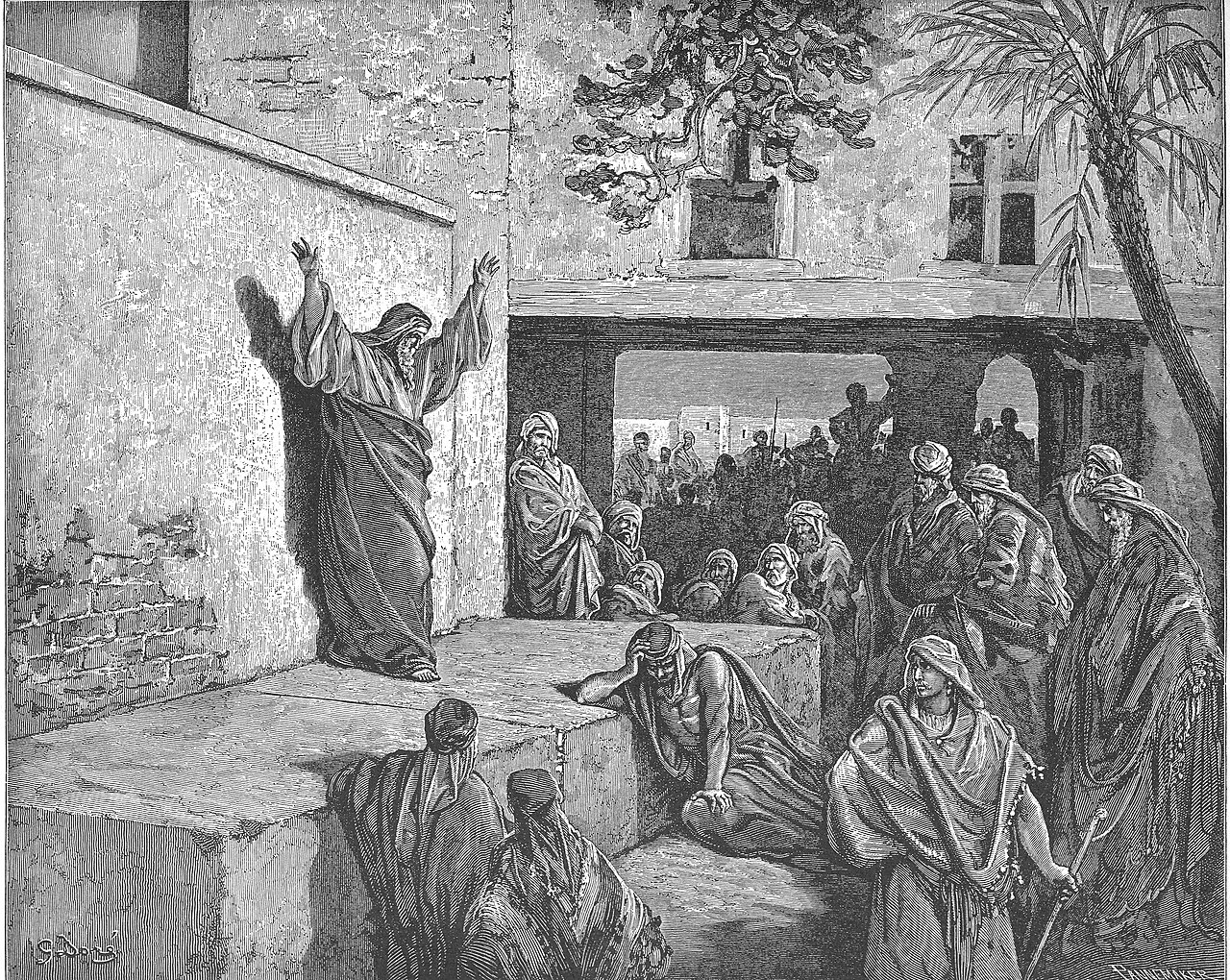
This page draws on Adam Clarke, Commentary on the Bible; Albert Barnes, Notes, Explanatory and Practical, on the Old and New Testaments (1832-1869); Ambrose of Milan, FLIGHT FROM THE WORLD 6:33; Clement of Alexandria, The Stromata Book 3; Jamieson, Fausset and Brown, Commentary Critical and Explanatory on the Whole Bible; Jerome, Commentary on Micah; John Gill, Exposition of the Old Testament (1748-1763) and Matthew Henry, Commentary on the Whole Bible.