
Jeremiah 48:23
in Jeremiah 48upon Kiriathaim, Beth-gamul, and Beth-meon,
BSB
The same verse in ASV and KJV ▾
ASV
and upon Kiriathaim, and upon Beth-gamul, and upon Beth-meon,
KJV
And upon Kiriathaim, and upon Beth–gamul, and upon Beth–meon,
⋯
This verse in Jeremiah 48
Commentary
3 notes on this verseAnd upon Kirjathaim,.... Of which see Jer 48:1; and upon Bethgamul; this is nowhere else mentioned in Scripture; supposed by Grotius to be the Maccala of Ptolemy, put for Camala: and upon Bethmeon: of which see Isa 15:2.
This site's exposition
come down from thy glory
on Jeremiah 48:18-28
Dibon is told to come down from glory and sit in thirst, Aroer to stand by the road and ask the fugitives what is done, and then the catalogue runs the plain country town by town, Holon, Jahazah, Mephaath, Dibon, Nebo, and the rest, judgment given as an itinerary. The horn cut off and the arm broken state the end in the body's own emblems of strength. The ground returns at verse 26, he magnified himself against the Lord, with verse 27's question, was not Israel a derision unto thee?, the mockery of the exiles' calamity now answered in kind, and the counsel to dwell in the rock like the dove nesting at the hole's mouth is the oracle's one mercy in this stretch.
The record, by era
The Nineteenth Century1 voice
A commentator
Albert Barnes1798–1870
Notes, Explanatory and Practical, on the Old and New Testaments (1832-1869)
Beth-meon - Meon is probably the Moabite Olympus, and thus Beth-Baal-Meon, the full name of this town Jos 13:17, would signify the place where the heavenly Baal was worshipped.
The words behind it
8 Hebrew wordsEvery Hebrew word of this verse in the order it stands, with what it means and the door to its own study. The last column counts the times a word stands in the whole Bible: the rarer the word, the more the places it appears belong together.
| Hebrew | Sound | Meaning | Word study | In the Bible |
|---|---|---|---|---|
| וְעַ֧ל | veal | and on | H5921 → | 5755 times |
| קִרְיָתַ֛יִם | kiryatayim | Kiriathaim | H7156 → | |
| וְעַל־ | veal- | and on | H5921 → | 5755 times |
| בֵּ֥ית | beit | Beth | H1014 → | |
| גָּמ֖וּל | gamul | Gamul | H1014 → | |
| וְעַל־ | veal- | and on | H5921 → | 5755 times |
| בֵּ֥ית | beit | Beth | H1010 → | |
| מְעֽוֹן׃ | meon | Meon | H1010 → |
וְעַ֧לand on
vealH5921 →5755 times
קִרְיָתַ֛יִםKiriathaim
kiryatayimH7156 →
וְעַל־and on
veal-H5921 →5755 times
בֵּ֥יתBeth
beitH1014 →
גָּמ֖וּלGamul
gamulH1014 →
וְעַל־and on
veal-H5921 →5755 times
בֵּ֥יתBeth
beitH1010 →
מְעֽוֹן׃Meon
meonH1010 →
A shaded row is a word that stands 400 times or fewer in the Bible.
The walk
8 stopsEach card is a verse this one points to, and under it the verses that one points to in turn. Where several paths arrive at the same place, that place is listed first: the text keeps returning to it.
Through
Jeremiah 48:1Concerning Moab, this is what the LORD of Hosts, the God of Israel, says: “Woe to Nebo, for it will be devastated. Kiriathaim will be captured and disgraced; the fortress will be shattered and…
it leads to
- Numbers 32:37–38
The Reubenites built up Heshbon, Elealeh, Kiriathaim,
Reached by 2 separate paths from here.
- Numbers 32:3
“Ataroth, Dibon, Jazer, Nimrah, Heshbon, Elealeh, Sebam, Nebo, and Beon,
Reached by 2 separate paths from here.
- Jeremiah 48:22–23
upon Dibon, Nebo, and Beth-diblathaim,
- Numbers 32:37–38
Through
Numbers 32:38as well as Nebo and Baal-meon (whose names were changed), and Sibmah. And they renamed the cities they rebuilt.
it leads to
- Isaiah 46:1
Bel crouches; Nebo cowers. Their idols weigh down beasts and cattle. The images you carry are burdensome, a load to the weary animal.
- Isaiah 46:1
Through
Genesis 14:5In the fourteenth year, Chedorlaomer and the kings allied with him went out and defeated the Rephaites in Ashteroth-karnaim, the Zuzites in Ham, the Emites in Shaveh-kiriathaim,
it leads to
- Deuteronomy 1:4
This was after he had defeated Sihon king of the Amorites, who lived in Heshbon, and then at Edrei had defeated Og king of Bashan, who lived in Ashtaroth.
- Genesis 15:20
Hittites, Perizzites, Rephaites,
- Deuteronomy 2:10–11
(The Emites used to live there, a people great and many, as tall as the Anakites.
- Deuteronomy 3:11
(For only Og king of Bashan had remained of the remnant of the Rephaim. His bed of iron, nine cubits long and four cubits wide, is still in Rabbah of the Ammonites.)
- Deuteronomy 1:4
About Jeremiah
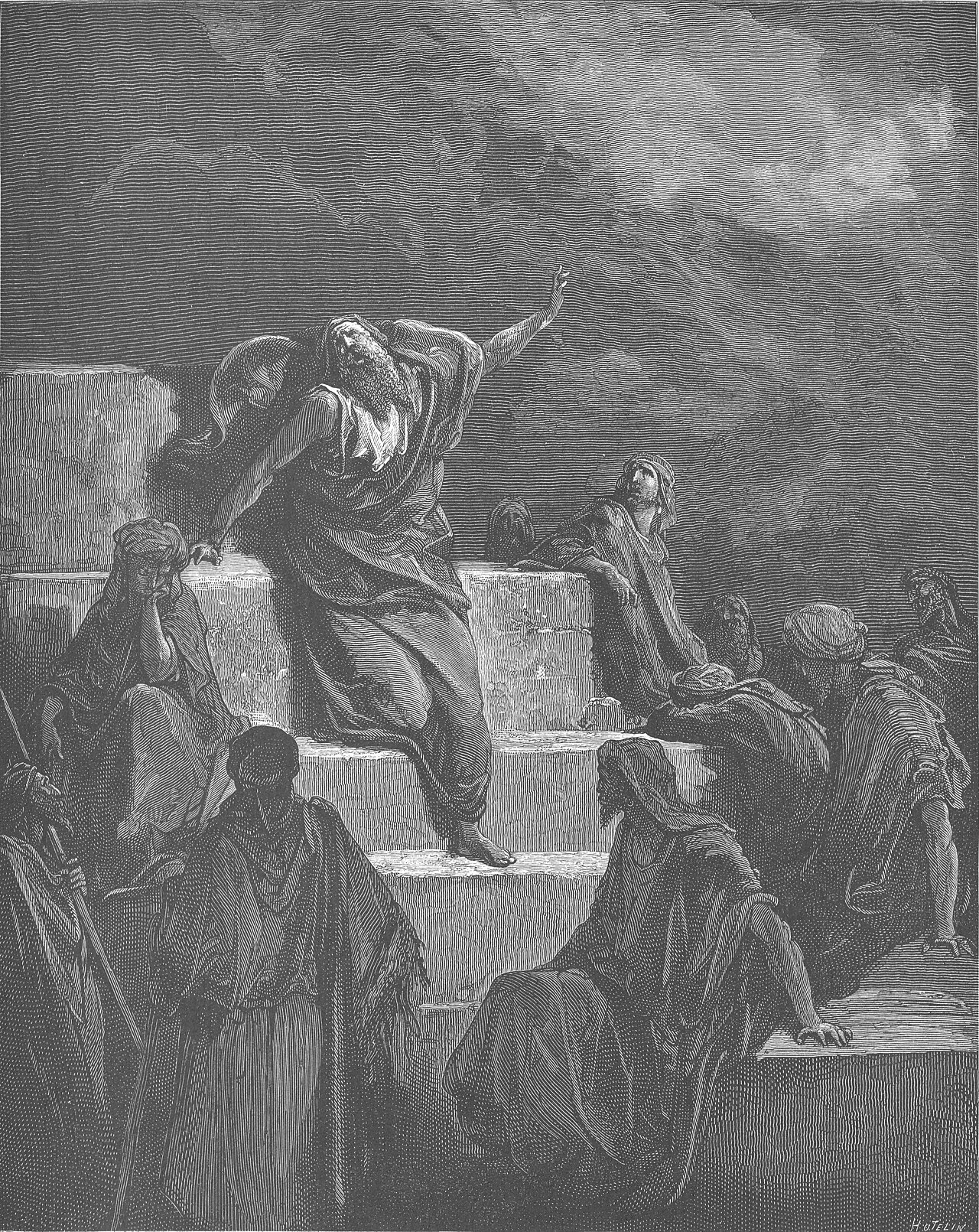
This page draws on Albert Barnes, Notes on the Old Testament; Albert Barnes, Notes, Explanatory and Practical, on the Old and New Testaments (1832-1869); John Gill, Exposition of the Old Testament (1748-1763) and John Gill, Exposition of the Old Testament.