
Jeremiah 26:24
in Jeremiah 26Nevertheless, Ahikam son of Shaphan supported Jeremiah, so he was not handed over to the people to be put to death.
BSB
The same verse in ASV and KJV ▾
ASV
But the hand of Ahikam the son of Shaphan was with Jeremiah, that they should not give him into the hand of the people to put him to death.
KJV
Nevertheless the hand of Ahikam the son of Shaphan was with Jeremiah, that they should not give him into the hand of the people to put him to death.
⋯
This verse in Jeremiah 26
Commentary
9 notes on this verseThe hand of Ahikam - was with Jeremiah - And it was probably by his influence that Jeremiah did not share the same fate with Urijah. The Ahikam mentioned here was probably the father of Gedaliah, who, after the capture of Jerusalem, was appointed governor of the country by Nebuchadnezzar, Jer 40:5. Of the Prophet Urijah, whether he was true or false, we know nothing but what we learn from this place.
This site's exposition
the hand of Ahikam the son of Shaphan
The chapter closes on one name doing what the court's verdict alone might not have secured, the hand of Ahikam the son of Shaphan was with Jeremiah, so that he should not be given into the hand of the people to put him to death. Ahikam's family recurs through the book, his son Gedaliah is later made governor over the land after Jerusalem falls, the same household protecting Jeremiah at the trial and administering the remnant left in the land afterward. The verdict and the protector are both named, the assembly's acquittal and one man's standing together as the means by which the prophet survived.
The record, by era
The Church Fathers2 voices
Jeremiah needed the help of Ahikam. How much more do we need that of God.
(Verse 20 onwards) There was also a prophet man in the name of the Lord, Uriah, the son of Shemai from Kiriath-Jearim, and he prophesied against this city and against this land, according to all the words of Jeremiah. And King Jehoiakim and all his powerful men and officials heard these words, and the king sought to put him to death. But Uriah heard about it and was afraid, so he fled and went to Egypt.
The Puritans and the Awakening3 voices
It is here left upon record, as it were, by way of appeal to the judgment of impartial men in all ages, whether Jeremiah was worthy to die for delivering such a message as this from God, and whether his persecutors were not very wicked and unreasonable men.
Nevertheless - Tho' Jeremiah's enemies pleaded this instance of Urijah, a case judged in this very king's reign; yet the hand, that is, the power and interest of Ahikam, one of Josiah's counsellors, and the father of Gedaliah, was with Jeremiah.
Nevertheless, the hand of Ahikam the son of Shaphan was with Jeremiah,....
2 more voices on this verse
The Nineteenth Century2 voices
A commentator
Jamieson, Fausset & Brown1802–1910
Commentary Critical and Explanatory on the Whole Bible (1871)
Ahikam--son of Shaphan the scribe, or royal secretary. He was one of those whom King Josiah, when struck by the words of the book of the law, sent to inquire of the Lord (2Ki 22:12, 14). Hence his interference here in behalf of Jeremiah is what we should expect from his past association with that good king.
A commentator
Albert Barnes1798–1870
Notes, Explanatory and Practical, on the Old and New Testaments (1832-1869)
proposed
Ahikam - See the marginal reference. His son Gemariah lent Jeremiah his room for the public reading of Jehoiakim’s scroll, and another son Gedaliah was made governor of the land by the Chaldaeans Jer 39:14; the family probably shared the political views of Jeremiah.
The words behind it
14 Hebrew wordsEvery Hebrew word of this verse in the order it stands, with what it means and the door to its own study. The last column counts the times a word stands in the whole Bible: the rarer the word, the more the places it appears belong together.
| Hebrew | Sound | Meaning | Word study | In the Bible |
|---|---|---|---|---|
| אַ֗ךְ | ʾakh | nevertheless | H389 → | 161 times |
| יַ֚ד | yad | [the] hand of | H3027 → | 1618 times |
| אֲחִיקָ֣ם | ʾachikam | Ahikam | H296 → | 20 times |
| בֶּן־ | ben- | [the] son of | H1121 → | 4930 times |
| שָׁפָ֔ן | shafan | Shaphan | H8227 → | 34 times |
| הָיְתָ֖ה | hayetah | it was | H1961 → | 3559 times |
| אֶֽת־ | ʾet- | with | H854 → | 929 times |
| יִרְמְיָ֑הוּ | yirmeyahu | Jeremiah | H3414 → | 147 times |
| לְבִלְתִּ֛י | levilti | to not | H1115 → | 112 times |
| תֵּת־ | tet- | to give | H5414 → | 2011 times |
| אֹת֥וֹ | ʾoto | <obj.> him | H853 → | 10935 times |
| בְיַד־ | veyad- | in [the] hand of | H3027 → | 1618 times |
| הָעָ֖ם | haam | the people | H5971 → | 1873 times |
| לַהֲמִיתֽוֹ׃ פ | lahamito | to put to death him | H4191 → | 839 times |
אַ֗ךְnevertheless
ʾakhH389 →161 times
יַ֚ד[the] hand of
yadH3027 →1618 times
אֲחִיקָ֣םAhikam
ʾachikamH296 →20 times
בֶּן־[the] son of
ben-H1121 →4930 times
שָׁפָ֔ןShaphan
shafanH8227 →34 times
הָיְתָ֖הit was
hayetahH1961 →3559 times
אֶֽת־with
ʾet-H854 →929 times
יִרְמְיָ֑הוּJeremiah
yirmeyahuH3414 →147 times
לְבִלְתִּ֛יto not
leviltiH1115 →112 times
תֵּת־to give
tet-H5414 →2011 times
אֹת֥וֹ<obj.> him
ʾotoH853 →10935 times
בְיַד־in [the] hand of
veyad-H3027 →1618 times
הָעָ֖םthe people
haamH5971 →1873 times
לַהֲמִיתֽוֹ׃ פto put to death him
lahamitoH4191 →839 times
A shaded row is a word that stands 400 times or fewer in the Bible.
The walk
8 stopsEach card is a verse this one points to, and under it the verses that one points to in turn. Where several paths arrive at the same place, that place is listed first: the text keeps returning to it.
Through
1 Kings 18:4for when Jezebel had slaughtered the prophets of the LORD, Obadiah had taken a hundred prophets and hidden them, fifty men per cave, providing them with food and water.)
it leads to
- 1 Kings 18:13
Was it not reported to my lord what I did when Jezebel slaughtered the prophets of the LORD? I hid a hundred prophets of the LORD, fifty men per cave, and I provided them…
- Matthew 10:40–42
He who receives you receives Me, and he who receives Me receives the One who sent Me.
- Hebrews 11:38
The world was not worthy of them. They wandered in deserts and mountains, and hid in caves and holes in the ground.
- Revelation 17:4–6
The woman was dressed in purple and scarlet, and adorned with gold and precious stones and pearls. She held in her hand a golden cup full of abominations and the impurities of her sexual…
- 1 Kings 18:13
Through
Jeremiah 39:14had Jeremiah brought from the courtyard of the guard, and they turned him over to Gedaliah son of Ahikam, the son of Shaphan, to take him home. So Jeremiah remained among his own people.
it leads to
- Jeremiah 38:28
And Jeremiah remained in the courtyard of the guard until the day Jerusalem was captured.
- 2 Kings 25:22–25
Nebuchadnezzar king of Babylon appointed Gedaliah son of Ahikam, the son of Shaphan, over the people he had left behind in the land of Judah.
- 2 Kings 22:12
and commanded Hilkiah the priest, Ahikam son of Shaphan, Achbor son of Micaiah, Shaphan the scribe, and Asaiah the servant of the king:
- Jeremiah 38:13
and they pulled him up with the ropes and lifted him out of the cistern. And Jeremiah remained in the courtyard of the guard.
- Jeremiah 38:28
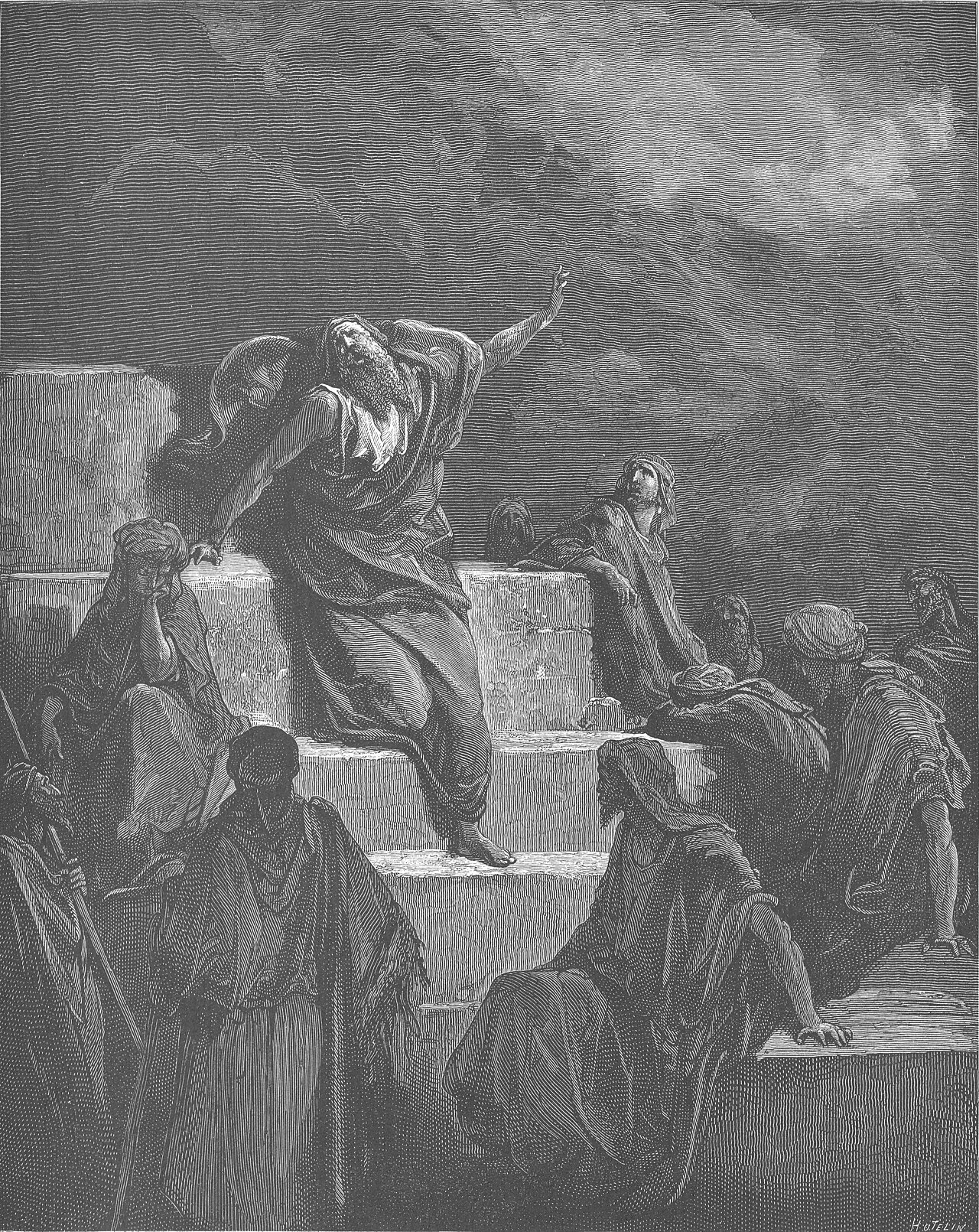
About Jeremiah
Who and where
1 name in this verse with a page on the site.
This page draws on 10 works. Open the list of works
This page draws on Adam Clarke, Commentary on the Bible; Albert Barnes, Notes, Explanatory and Practical, on the Old and New Testaments (1832-1869); Carl Friedrich Keil, The Prophecies of Jeremiah; Jamieson, Fausset & Brown, Commentary Critical and Explanatory on the Whole Bible; Jerome, Against the Pelagians 2.27; Jerome, Commentary on Jeremiah; John Gill, Exposition of the Old Testament; John Gill, Exposition of the Old Testament (1748-1763); John Wesley, Explanatory Notes upon the Old Testament and Matthew Henry, Commentary on the Whole Bible.