
Jeremiah 26:22
in Jeremiah 26Then King Jehoiakim sent men to Egypt: Elnathan son of Achbor along with some other men.
BSB
The same verse in ASV and KJV ▾
ASV
And Jehoiakim the king sent men into Egypt, namely, Elnathan the son of Achbor, and certain men with him, into Egypt;
KJV
And Jehoiakim the king sent men into Egypt, namely, Elnathan the son of Achbor, and certain men with him into Egypt.
⋯
This verse in Jeremiah 26
Commentary
5 notes on this verseAnd Jehoiakim sent men into Egypt,.... To seek for him; and to require the delivery of him upon being found: namely, Elnathan the son of Achbor; the father of this man very probably is the same we read of in Josiah's time, 2Ki 22:12; who is called Abdon in 2Ch 34:20; and certain men with him, into Egypt; to assist him in taking him, whose names are not mentioned; Elnathan's is, as being the principal, and to fix an eternal infamy upon him.
This site's exposition
there was also a man that prophesied
on Jeremiah 26:20-23
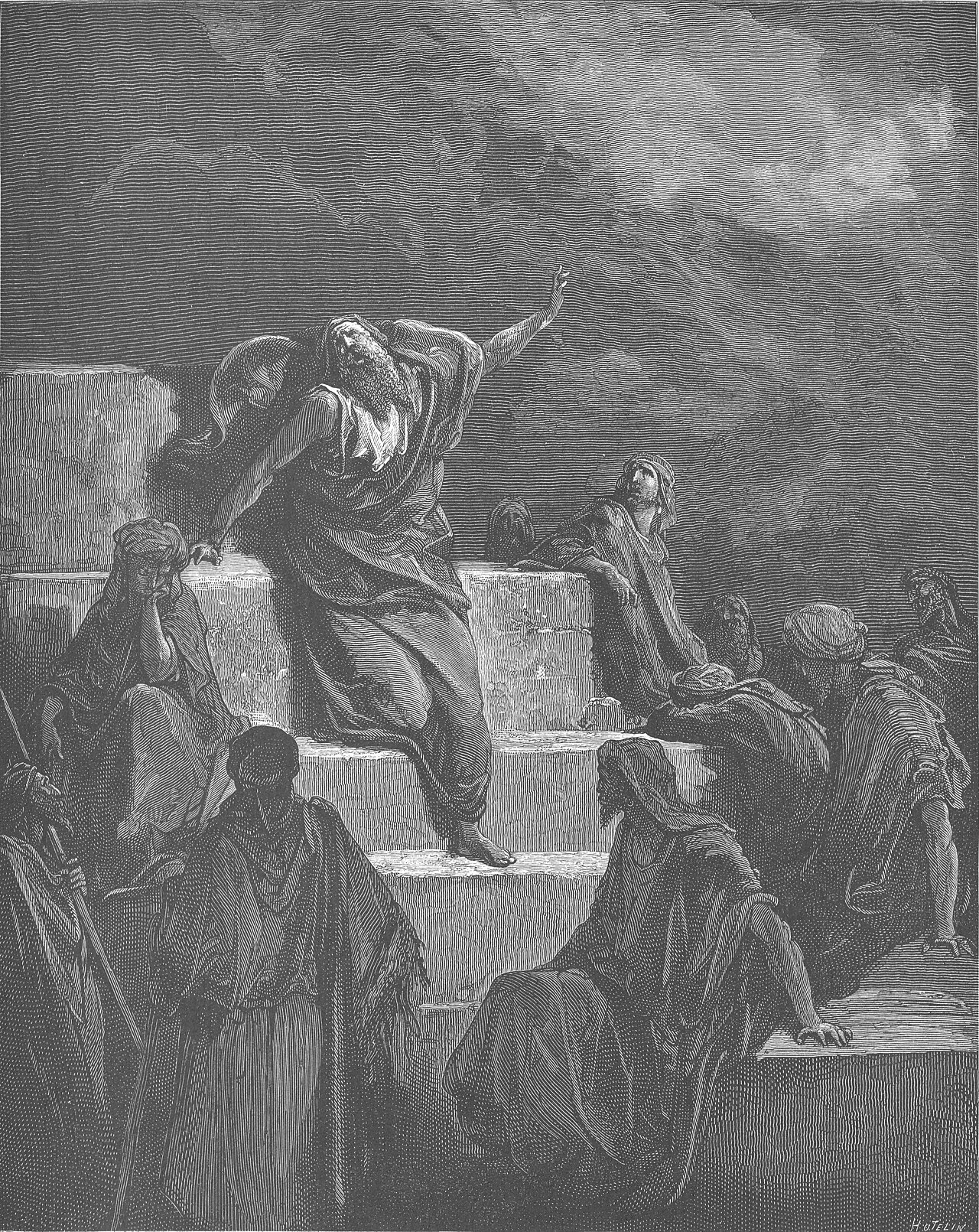
The narrative sets a second case beside the first without softening it, there was also a man that prophesied in the name of the Lord, Urijah the son of Shemaiah, prophesying according to all the words of Jeremiah and meeting a different king. Jehoiakim sought to put him to death, and when Urijah fled to Egypt in fear the king sent Elnathan the son of Achbor after him, fetched him out, and slew him with the sword, casting his body into the graves of the common people, a dishonor added to the execution. The bench reads the two cases together as deliberate: Hezekiah's Judah heard Micah and repented, Jehoiakim's Judah hears the same warning and kills the messenger, the same charge answered by two very different kings.
The record, by era
The Church Fathers1 voice
(Verse 20 onwards) There was also a prophet man in the name of the Lord, Uriah, the son of Shemai from Kiriath-Jearim, and he prophesied against this city and against this land, according to all the words of Jeremiah. And King Jehoiakim and all his powerful men and officials heard these words, and the king sought to put him to death. But Uriah heard about it and was afraid, so he fled and went to Egypt.
The Nineteenth Century2 voices
A commentator
Jamieson, Fausset & Brown1802–1910
Commentary Critical and Explanatory on the Whole Bible (1871)
This explains the readiness with which he got the Egyptians to give up Urijah to him, when that prophet had sought an asylum in Egypt. Urijah was faithful in delivering his message, but faulty in leaving his work, so God permitted him to lose his life, while Jeremiah was protected in danger. The path of duty is often the path of safety.
A commentator
Albert Barnes1798–1870
Notes, Explanatory and Practical, on the Old and New Testaments (1832-1869)
proposed
Elnathan - Possibly the king’s father-in-law 2Ki 24:8.
The words behind it
13 Hebrew wordsEvery Hebrew word of this verse in the order it stands, with what it means and the door to its own study. The last column counts the times a word stands in the whole Bible: the rarer the word, the more the places it appears belong together.
| Hebrew | Sound | Meaning | Word study | In the Bible |
|---|---|---|---|---|
| וַיִּשְׁלַ֞ח | vaiyishlach | and he sent | H7971 → | 845 times |
| הַמֶּ֧לֶךְ | hamelekh | the king | H4428 → | 2525 times |
| יְהוֹיָקִ֛ים | yehoyakim | Jehoiakim | H3079 → | 37 times |
| אֲנָשִׁ֖ים | ʾanashim | men | H582 → | 566 times |
| מִצְרָ֑יִם | mitzrayim | Egypt | H4714 → | 641 times |
| אֵ֣ת | ʾet | <obj.> | H853 → | 10935 times |
| אֶלְנָתָ֧ן | ʾelnatan | Elnathan | H494 → | 7 times |
| בֶּן־ | ben- | [the] son of | H1121 → | 4930 times |
| עַכְבּ֛וֹר | akhbor | Achbor | H5907 → | |
| וַאֲנָשִׁ֥ים | vaanashim | and men | H582 → | 566 times |
| אִתּ֖וֹ | ʾito | with him | H854 → | 929 times |
| אֶל־ | ʾel- | to | H413 → | 5510 times |
| מִצְרָֽיִם׃ | mitzrayim | Egypt | H4714 → | 641 times |
וַיִּשְׁלַ֞חand he sent
vaiyishlachH7971 →845 times
הַמֶּ֧לֶךְthe king
hamelekhH4428 →2525 times
יְהוֹיָקִ֛יםJehoiakim
yehoyakimH3079 →37 times
אֲנָשִׁ֖יםmen
ʾanashimH582 →566 times
מִצְרָ֑יִםEgypt
mitzrayimH4714 →641 times
אֵ֣ת<obj.>
ʾetH853 →10935 times
אֶלְנָתָ֧ןElnathan
ʾelnatanH494 →7 times
בֶּן־[the] son of
ben-H1121 →4930 times
עַכְבּ֛וֹרAchbor
akhborH5907 →
וַאֲנָשִׁ֥יםand men
vaanashimH582 →566 times
אִתּ֖וֹwith him
ʾitoH854 →929 times
אֶל־to
ʾel-H413 →5510 times
מִצְרָֽיִם׃Egypt
mitzrayimH4714 →641 times
A shaded row is a word that stands 400 times or fewer in the Bible.
The walk
8 stopsEach card is a verse this one points to, and under it the verses that one points to in turn. Where several paths arrive at the same place, that place is listed first: the text keeps returning to it.
Through
Psalms 12:8The wicked wander freely, and vileness is exalted among men.
it leads to
- Mark 14:63–65
At this, the high priest tore his clothes and declared, “Why do we need any more witnesses?
- Psalms 55:10–11
Day and night they encircle the walls, while malice and trouble lie within.
- Proverbs 29:12
If a ruler listens to lies, all his officials will be wicked.
- Hosea 5:11
Ephraim is oppressed, crushed in judgment, for he is determined to follow worthless idols.
- Mark 14:63–65
Through
2 Kings 22:12and commanded Hilkiah the priest, Ahikam son of Shaphan, Achbor son of Micaiah, Shaphan the scribe, and Asaiah the servant of the king:
it leads to
- Jeremiah 26:24
Nevertheless, Ahikam son of Shaphan supported Jeremiah, so he was not handed over to the people to be put to death.
- Jeremiah 26:24
Through
Jeremiah 36:12he went down to the scribe’s chamber in the king’s palace, where all the officials were sitting: Elishama the scribe, Delaiah son of Shemaiah, Elnathan son of Achbor, Gemariah son of Shaphan, Zedekiah son…
it leads to
- 2 Kings 22:12
and commanded Hilkiah the priest, Ahikam son of Shaphan, Achbor son of Micaiah, Shaphan the scribe, and Asaiah the servant of the king:
- Jeremiah 36:25
Even though Elnathan, Delaiah, and Gemariah urged the king not to burn the scroll, he would not listen to them.
- 2 Kings 22:12
Through
2 Kings 22:14So Hilkiah the priest, Ahikam, Achbor, Shaphan, and Asaiah went and spoke to Huldah the prophetess, the wife of Shallum son of Tikvah, the son of Harhas, the keeper of the wardrobe. She lived…
it leads to
- 2 Chronicles 34:22
So Hilkiah and those the king had designated went and spoke to Huldah the prophetess, the wife of Shallum son of Tokhath, the son of Hasrah, the keeper of the wardrobe. She lived in…
- 2 Chronicles 34:22
About Jeremiah
Who and where
1 name in this verse with a page on the site.
This page draws on Albert Barnes, Notes on the Old Testament; Albert Barnes, Notes, Explanatory and Practical, on the Old and New Testaments (1832-1869); Jamieson, Fausset & Brown, Commentary Critical and Explanatory on the Whole Bible; Jerome, Commentary on Jeremiah; John Gill, Exposition of the Old Testament (1748-1763) and Matthew Henry, Commentary on the Whole Bible.