
Isaiah 7:3
in Isaiah 7Then the LORD said to Isaiah, “Go out with your son Shear-jashub to meet Ahaz at the end of the aqueduct that feeds the upper pool, on the road to the Launderer’s Field,
BSB
The same verse in ASV and KJV ▾
ASV
Then said Jehovah unto Isaiah, Go forth now to meet Ahaz, thou, and Shear-jashub thy son, at the end of the conduit of the upper pool, in the highway of the fuller’s field;
KJV
Then said the Lord unto Isaiah, Go forth now to meet Ahaz, thou, and Shear–jashub thy son, at the end of the conduit of the upper pool in the highway of the fuller’s field;
⋯
This verse in Isaiah 7
Commentary
10 notes on this verseA commentator
Albert Barnes1798–1870
Notes, Explanatory and Practical, on the Old and New Testaments (1832-1869)
Then said the Lord - In regard to the purposes for which Isaiah was sent to meet Ahaz, and the reason why this place was selected, see the Analysis of the chapter. Thou and Shear-ashub - The meaning of the name “Shear-jashub” is, ‘the remnant shall return.’ The names which Isaiah gave to his sons were significant or emblematic of some important events which were to occur to the Jews.
This site's exposition
Go forth now to meet Ahaz
on Isaiah 7:3-6
The Lord sends Isaiah to meet Ahaz at the conduit of the upper pool, likely the very place where the king was inspecting Jerusalem's water supply against a coming siege, and orders him to bring his son along. Shear-jashub, a remnant shall return, is himself a sign walking beside his father: judgment is coming on the nation but it will not be total. Gill and Clarke both draw out the boy's name as a wordless sermon set before the king before Isaiah speaks a word of his own message.
The record, by era
The Church Fathers1 voice
(Verse 3, 4 and following) And the Lord said to Isaiah: Go out to meet Ahaz, you and your son Shear-Jashub, at the end of the conduit of the upper pool on the highway to the Fuller's Field. And say to him: Take heed, be quiet, do not fear, and do not let your heart be faint because of these two smoldering stumps of firebrands, at the fierce anger of Rezin and Syria, and the son of Remaliah.
The Medieval Church1 voice
And the Lord said to Isaiah. Here liberation is promised. And first, the manner of the promise is set out; second, the promise itself: and you shall say to him (Isa 7:4). And the manner is set out first, as to the person announcing it: …
The Puritans and the Awakening3 voices
Then said the Lord unto Isaiah,....
Note, God sometimes sends comforts to his people very seasonably, and, what time they are most afraid, encourages them to trust in him. He put words in his mouth, else the prophet would not have known how to bring a message of good to such a bad man, a sinner in Zion, that ought to be afraid; but God intended it for the support of faithful Israelites.
The confirmation of this by a sign which God gave to Ahaz, when he refused to ask one, referring to Christ, and our redemption by him,
3 more voices on this verse
The Puritans and the Awakening1 voice
After the comfortable promises made to Ahaz as a branch of the house of David, here follow terrible threatenings against him, as a degenerate branch of that house; for though the loving-kindness of God shall not be utterly taken away, for the sake of David and the covenant made with him, yet his iniquity shall be chastened with the rod, and his sin with stripes.
The Nineteenth Century2 voices
A commentator
Jamieson, Fausset & Brown1802–1910
Commentary Critical and Explanatory on the Whole Bible (1871)
The upper pool is still to be seen, about seven hundred yards from the Jaffa gate. The highway leading to the fullers' field, which was in a position near water for the purposes of washing, previous to drying and bleaching, the cloth, was probably alongside the aqueduct.
Now - נא na, is omitted by two MSS., the Septuagint, Syriac, Arabic, and Vulgate.
The words behind it
21 Hebrew wordsEvery Hebrew word of this verse in the order it stands, with what it means and the door to its own study. The last column counts the times a word stands in the whole Bible: the rarer the word, the more the places it appears belong together.
| Hebrew | Sound | Meaning | Word study | In the Bible |
|---|---|---|---|---|
| וַיֹּ֣אמֶר | vaiyomer | and he said | H559 → | 5305 times |
| יְהוָה֮ | yahweh | Yahweh | H3068 → | 6520 times |
| אֶֽל־ | ʾel- | to | H413 → | 5510 times |
| יְשַׁעְיָהוּ֒ | yesha'yahu | Isaiah | H3470 → | 39 times |
| צֵא־ | tze'- | go out | H3318 → | 1067 times |
| נָא֙ | na' | please | H4994 → | 404 times |
| לִקְרַ֣את | likrat | to meet | H7122 → | 139 times |
| אָחָ֔ז | ʾachaz | Ahaz | H271 → | 42 times |
| אַתָּ֕ה | ʾatah | you | H859 → | 1094 times |
| וּשְׁאָ֖ר | ushear | and Shear- | H7610 → | |
| יָשׁ֣וּב | yashuv | jashub | H7610 → | |
| בְּנֶ֑ךָ | benekha | son your | H1121 → | 4930 times |
| אֶל־ | ʾel- | to | H413 → | 5510 times |
| קְצֵ֗ה | ketzeh | [the] end of | H7097 → | 97 times |
| תְּעָלַת֙ | tealat | [the] conduit of | H8585 → | |
| הַבְּרֵכָ֣ה | haberekhah | the pool | H1295 → | 17 times |
| הָעֶלְיוֹנָ֔ה | haelyonah | <the> upper | H5945 → | 53 times |
| אֶל־ | ʾel- | to | H413 → | 5510 times |
| מְסִלַּ֖ת | mesilat | [the] highway of | H4546 → | 27 times |
| שְׂדֵ֥ה | sedeh | [the] field of | H7704 → | 334 times |
| כוֹבֵֽס׃ | khoves | [the] washer | H3526 → |
וַיֹּ֣אמֶרand he said
vaiyomerH559 →5305 times
יְהוָה֮Yahweh
yahwehH3068 →6520 times
אֶֽל־to
ʾel-H413 →5510 times
יְשַׁעְיָהוּ֒Isaiah
yesha'yahuH3470 →39 times
צֵא־go out
tze'-H3318 →1067 times
נָא֙please
na'H4994 →404 times
לִקְרַ֣אתto meet
likratH7122 →139 times
אָחָ֔זAhaz
ʾachazH271 →42 times
אַתָּ֕הyou
ʾatahH859 →1094 times
וּשְׁאָ֖רand Shear-
ushearH7610 →
יָשׁ֣וּבjashub
yashuvH7610 →
בְּנֶ֑ךָson your
benekhaH1121 →4930 times
אֶל־to
ʾel-H413 →5510 times
קְצֵ֗ה[the] end of
ketzehH7097 →97 times
תְּעָלַת֙[the] conduit of
tealatH8585 →
הַבְּרֵכָ֣הthe pool
haberekhahH1295 →17 times
הָעֶלְיוֹנָ֔ה<the> upper
haelyonahH5945 →53 times
אֶל־to
ʾel-H413 →5510 times
מְסִלַּ֖ת[the] highway of
mesilatH4546 →27 times
שְׂדֵ֥ה[the] field of
sedehH7704 →334 times
כוֹבֵֽס׃[the] washer
khovesH3526 →
A shaded row is a word that stands 400 times or fewer in the Bible.
The walk
8 stopsEach card is a verse this one points to, and under it the verses that one points to in turn. Where several paths arrive at the same place, that place is listed first: the text keeps returning to it.
Through
Isaiah 55:7Let the wicked man forsake his own way and the unrighteous man his own thoughts; let him return to the LORD, that He may have compassion, and to our God, for He will freely…
it leads to
- Proverbs 28:13
He who conceals his sins will not prosper, but whoever confesses and renounces them will find mercy.
- James 4:8–10
Draw near to God, and He will draw near to you. Cleanse your hands, you sinners, and purify your hearts, you double-minded.
- Ezekiel 18:21–23
But if the wicked man turns from all the sins he has committed, keeps all My statutes, and does what is just and right, he will surely live; he will not die.
- Isaiah 44:22
I have blotted out your transgressions like a cloud, and your sins like a mist. Return to Me, for I have redeemed you.
- Luke 15:10
In the same way, I tell you, there is joy in the presence of God’s angels over one sinner who repents.”
- Proverbs 28:13
Through
Romans 9:27Isaiah cries out concerning Israel: “Though the number of the Israelites is like the sand of the sea, only the remnant will be saved.
it leads to
- Isaiah 10:20–23
On that day the remnant of Israel and the survivors of the house of Jacob will no longer depend on him who struck them, but they will truly rely on the LORD, the Holy…
- Romans 11:4–6
And what was the divine reply to him? “I have reserved for Myself seven thousand men who have not bowed the knee to Baal.”
- Isaiah 10:20–23
Through
Isaiah 6:13And though a tenth remains in the land, it will be burned again. As the terebinth and oak leave stumps when felled, so the holy seed will be a stump in the land.”
it leads to
- Job 14:7–9
For there is hope for a tree: If it is cut down, it will sprout again, and its tender shoots will not fail.
- Job 14:7–9
Where this verse is studied
On this page
Studies6
About Isaiah
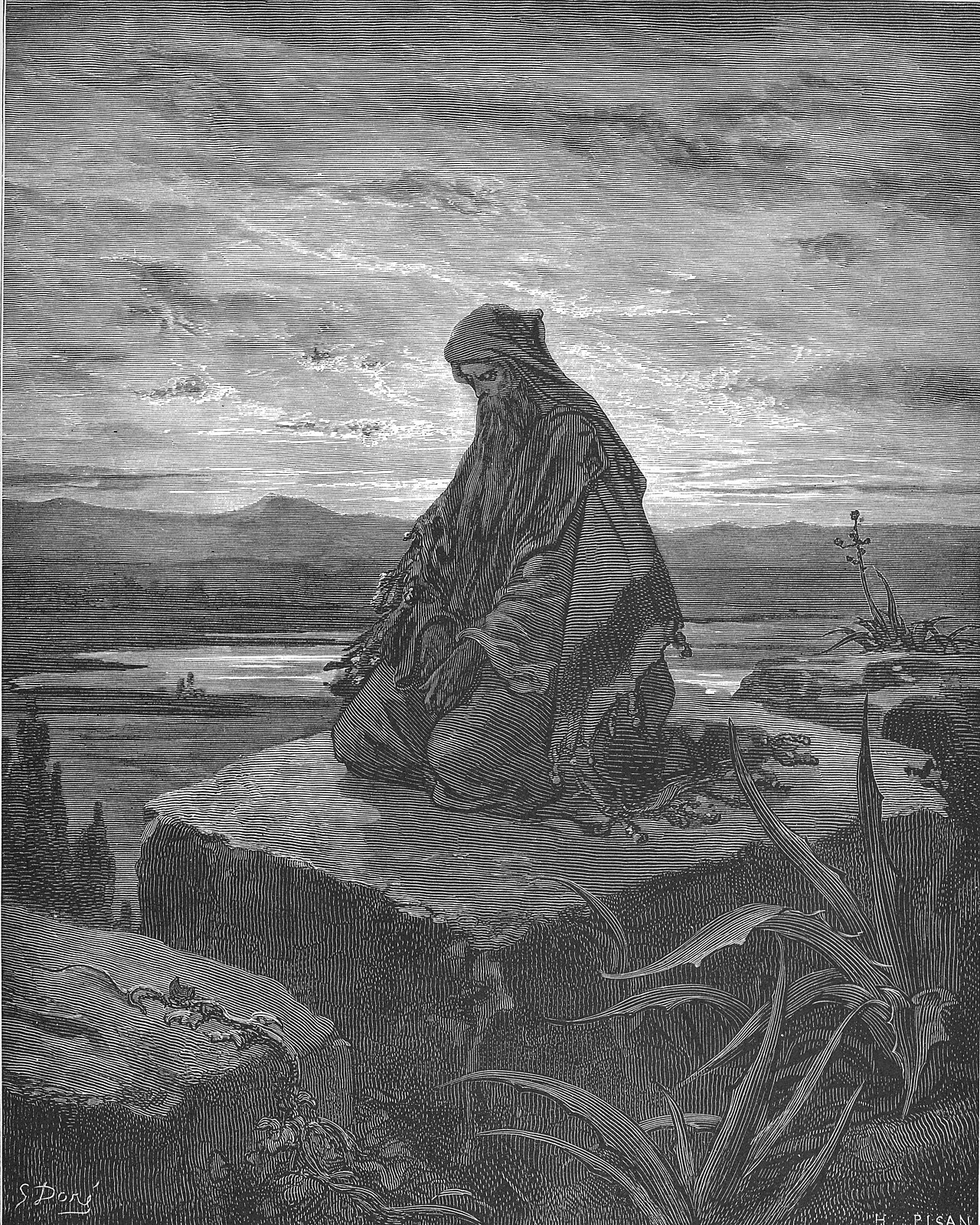
Who and where
1 name in this verse with a page on the site.
This page draws on Adam Clarke, Commentary on the Bible; Albert Barnes, Notes, Explanatory and Practical, on the Old and New Testaments (1832-1869); Jamieson, Fausset & Brown, Commentary Critical and Explanatory on the Whole Bible; Jerome, Commentary on Isaiah; John Gill, Exposition of the Old Testament; John Gill, Exposition of the Old Testament (1748-1763); Matthew Henry, Commentary on the Whole Bible and Thomas Aquinas, Commentary on Isaiah.