
Isaiah 7:24
in Isaiah 7Men will go there with bow and arrow, for the land will be covered with briers and thorns.
BSB
The same verse in ASV and KJV ▾
ASV
With arrows and with bow shall one come thither, because all the land shall be briers and thorns.
KJV
With arrows and with bows shall men come thither; because all the land shall become briers and thorns.
⋯
This verse in Isaiah 7
Commentary
7 notes on this verseIn the multitude of thieves: with arrows and with bows, namely, when you flee, they will enter, below: fear, and the pit, and the snare are upon you and upon the inhabitants of the earth (Isa 24:17).
This site's exposition
a thousand vines at a thousand silverlings
on Isaiah 7:23-25
Vineyards once worth a thousand pieces of silver, the mark of Judah's most valuable cultivated land, will be given over to briers and thorns, ground so overgrown that men must carry bow and arrow to hunt where they once pruned vines. Even the hillsides once worked with the mattock return to open pasture for cattle, the terraces abandoned rather than maintained, and Gill reads the whole close of the chapter as agriculture undone by war within a single generation. The oracle that opened with a king's fear over an army closes with a land gone back to wilderness under a heavier hand than either Syria or Israel could bring.
The record, by era
The Church Fathers1 voice
(Verse 21 onwards) And it shall come to pass on that day, a man shall nurture a cow of oxen, and two sheep, and because of the abundance of milk, he shall eat butter; for everyone who is left in the midst of the land shall eat butter and honey. And it shall come to pass on that day, every place where a thousand vines were worth a thousand silver shekels, there shall be thorns and briers. With arrows and bows they shall come there, for thorns and briers shall cover the whole land.
The Puritans and the Awakening3 voices
With arrows and with bows shall men come thither,.... For fear of wild beasts, serpents, and scorpions, as Jarchi; or in order to hunt them, as others; or because of thieves and robbers, as Aben Ezra: because all the land shall become briers and thorns; among which such creatures, and such sort of men, would hide themselves.
The prophet Isaiah had his commission renewed in the year that king Uzziah died, ch. vi. Jotham his son reigned, and reigned well, sixteen years. All that time, no doubt, Isaiah prophesied as he was commanded, and yet we have not in this book any of his prophecies dated in the reign of Jotham; but this, which is put first, was in the days of Ahaz the son of Jotham.
This denotes a very sad change of the face of that pleasant land. But what melancholy change is there which sin will not make with a people? (6.) Where briers and thorns were wont to be of use and to do good service, even in the hedges, for the defence of the enclosed grounds, they shall be plucked up, and all laid in common.
The Nineteenth Century1 voice
A commentator
Albert Barnes1798–1870
Notes, Explanatory and Practical, on the Old and New Testaments (1832-1869)
With arrows and with bows ... - This is a continuation of the description of its desolation. So entirely would it be abandoned, so utterly desolate would it be, that it would become a vast hunting-ground. It would be covered with shrubs and trees that would afford a convenient covert for wild beasts; and would yield to its few inhabitants a subsistence, not by cultivation, but by the bow and the arrow. There can scarcely be a more striking description of utter desolation. But, perhaps, the long captivity of seventy years in Babylon literally fulfilled it.
The words behind it
10 Hebrew wordsEvery Hebrew word of this verse in the order it stands, with what it means and the door to its own study. The last column counts the times a word stands in the whole Bible: the rarer the word, the more the places it appears belong together.
| Hebrew | Sound | Meaning | Word study | In the Bible |
|---|---|---|---|---|
| בַּחִצִּ֥ים | bachitzim | with <the> arrows | H2671 → | 53 times |
| וּבַקֶּ֖שֶׁת | uvakeshet | and with <the> bow | H7198 → | 76 times |
| יָ֣בוֹא | yavo' | anyone will go | H935 → | 2568 times |
| שָׁ֑מָּה | shamah | there <towards> | H8033 → | 834 times |
| כִּי־ | ki- | for | H3588 → | 4482 times |
| שָׁמִ֥יר | shamir | thorn[s] | H8068 → | 11 times |
| וָשַׁ֖יִת | vashayit | and bush[es] | H7898 → | 7 times |
| תִּֽהְיֶ֥ה | tihyeh | it will be | H1961 → | 3559 times |
| כָל־ | khol- | all | H3605 → | 5413 times |
| הָאָֽרֶץ׃ | haaretz | the land | H776 → | 2504 times |
בַּחִצִּ֥יםwith <the> arrows
bachitzimH2671 →53 times
וּבַקֶּ֖שֶׁתand with <the> bow
uvakeshetH7198 →76 times
יָ֣בוֹאanyone will go
yavo'H935 →2568 times
שָׁ֑מָּהthere <towards>
shamahH8033 →834 times
כִּי־for
ki-H3588 →4482 times
שָׁמִ֥ירthorn[s]
shamirH8068 →11 times
וָשַׁ֖יִתand bush[es]
vashayitH7898 →7 times
תִּֽהְיֶ֥הit will be
tihyehH1961 →3559 times
כָל־all
khol-H3605 →5413 times
הָאָֽרֶץ׃the land
haaretzH776 →2504 times
A shaded row is a word that stands 400 times or fewer in the Bible.
The walk
3 stopsEach card is a verse this one points to, and under it the verses that one points to in turn. Where several paths arrive at the same place, that place is listed first: the text keeps returning to it.
Through
Genesis 27:3Take your weapons—your quiver and bow—and go out into the field to hunt some game for me.
it leads to
- Genesis 25:27–28
When the boys grew up, Esau became a skillful hunter, a man of the field, while Jacob was a quiet man who stayed at home.
- Genesis 10:9
He was a mighty hunter before the LORD; so it is said, “Like Nimrod, a mighty hunter before the LORD.”
- 1 Corinthians 6:12
“Everything is permissible for me,” but not everything is beneficial. “Everything is permissible for me,” but I will not be mastered by anything.
- Genesis 25:27–28
Where this verse is studied
On this page
Studies6
About Isaiah
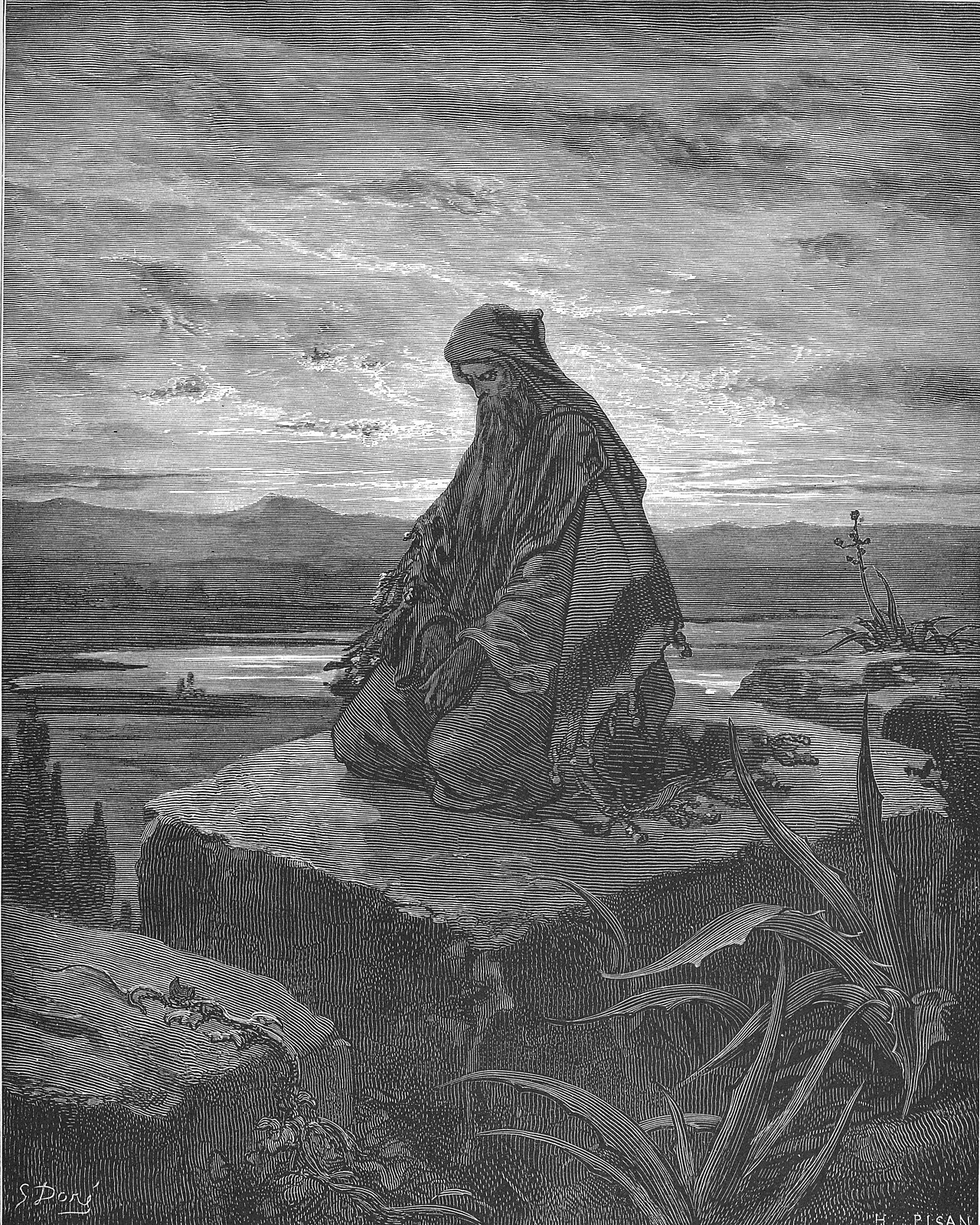
This page draws on Albert Barnes, Notes, Explanatory and Practical, on the Old and New Testaments (1832-1869); Jerome, Commentary on Isaiah; John Gill, Exposition of the Old Testament; John Gill, Exposition of the Old Testament (1748-1763); Matthew Henry, Commentary on the Whole Bible and Thomas Aquinas, Commentary on Isaiah.