
Isaiah 7:13
in Isaiah 7Then Isaiah said, “Hear now, O house of David! Is it not enough to try the patience of men? Will you try the patience of my God as well?
BSB
The same verse in ASV and KJV ▾
ASV
And he said, Hear ye now, O house of David: Is it a small thing for you to weary men, that ye will weary my God also?
KJV
And he said, Hear ye now, O house of David; Is it a small thing for you to weary men, but will ye weary my God also?
⋯
This verse in Isaiah 7
Commentary
12 notes on this verseFor the one and the same Spirit of God, who proclaimed by the prophets what and of what sort the advent of the Lord should be, did by these elders give a just interpretation of what had been truly prophesied; and He did Himself, by the apostles, announce that the fulness of the times of the adoption had arrived, that the kingdom of heaven had drawn nigh, and that He was dwelling within those that believe on Him who was born Emmanuel of the Virgin.
This site's exposition
But Ahaz replied
on Isaiah 7:12-13
Ahaz refuses in pious language, "I will not test the LORD," echoing Deuteronomy's ban on testing God, though God Himself had offered the sign. Isaiah's reply turns to the whole house of David and asks whether they will "try the patience of my God as well," the address moving from singular to plural, as Gill and Clarke note. The sign in the next verse is given to that wider house.
This site's exposition
Hear now, O house of David
The address widens from Ahaz to the whole house of David, and Gill includes the family and counselors who shared his refusal. In verse 11 the LORD was called your God. Jerome notes that the prophet now speaks, and he speaks of the patience of my God.
The record, by era
The Church Fathers2 voices
And when He says, "Hear, O house of David," [Isaiah 7:13] He performed the part of one indicating that He whom God promised David that He would raise up from the fruit of his belly (ventris) an eternal King, is the same who was born of the Virgin, herself of the lineage of David.
(Verse 13.) And he said, hear therefore, house of David: Is it not enough for you to be troublesome to men, that you are also troublesome to my God? Who is this that said, hear therefore, house of David? Not God who had said above to Ahaz: Ask a sign for yourself from the Lord your God; but a Prophet, as is proven from what follows: For you are troublesome to my God. And the meaning is: because you not only persecute the prophets and despise their words; but you also contradict the present and commanding judgment of God; so that you bring upon yourself the labor, as he says in another place: I have labored, enduring (Isaiah 1:14), therefore the Lord will do what follows. Regarding the labor and trouble that Aquila and Symmachus have translated, LXX and Theodotius have interpreted it as a struggle and contest, because the contentious ones do not submit their necks to the Lord's service, but with Him willing to heal their wounds, they reject healing. And it should be noted that when the impious King Ahaz did not want to seek a sign, the prophetic message should be directed to the house of David, that is, to the royal tribe mentioned above: And they reported these things to the house of David, saying: Syria and Ephraim have joined forces.
The Medieval Church1 voice
Third, the rebuke of the one who refuses is set out: and he, namely, Isaiah, said: therefore, since you are so rebellious, hear you therefore, O house of David, because of its consent in the malice of the king, or because the promised Christ is …
The Puritans and the Awakening2 voices
Nothing is more grievous to the God of heaven than to be distrusted. " Will you weary my God? Will you suppose him to be tired and unable to help you, or to be weary of doing you good? Whereas the youths may faint and be weary, you may have tired all your friends, the Creator of the ends of the earth faints not, neither is weary. " ch. xl.
"Here is a sign for you, not in the depth nor in the height, but in the prophecy, in the promise, in the covenant made with David, which you are no strangers to. The promised seed shall be Immanuel, God with us; let that word comfort you ( ch. viii. 10 ), that God is with us, and (
quarantine:debris (2026-07-29) — unbalanced-parens+odd-straight-quotes
4 more voices on this verse
The Puritans and the Awakening2 voices
And he said,.... That is, the Prophet Isaiah; which shows that it was by him the Lord spoke the foregoing words: hear ye now, O house of David; for not only Ahaz, but his family, courtiers, and counsellors, were all of the same mind with him, not to ask a sign of God, nor to depend upon, his promise of safety, but to seek out for help, and provide against the worst themselves.
A threatening of the great desolation that God would bring upon Ahaz and his kingdom by the Assyrians, notwithstanding their escape from this present storm, because they went on still in their wickedness,
The Nineteenth Century2 voices
A commentator
Albert Barnes1798–1870
Notes, Explanatory and Practical, on the Old and New Testaments (1832-1869)
O house of David - Isa 7:2. By this is to be understood not only the king himself, but the princes and rulers. Perhaps in addressing him thus, there was implied no small irony and reproach. David confided in God. But “Ahaz,” his descendant, feared to “tempt” God! As if God could not aid him! Worthy descendant he of the pious and devoted David! Is it a small thing - You are not satisfied with wearying people, but you would also fatigue and wear out the patience of God.
A commentator
Jamieson, Fausset & Brown1802–1910
Commentary Critical and Explanatory on the Whole Bible (1871)
Isaiah as yet had given no outward proof that he was from God; but now God has offered a sign, which Ahaz publicly rejects. The sin is therefore now not merely against "men," but openly against "God." Isaiah's manner therefore changes from mildness to bold reproof.
How the passage was read
What the Jewish commentators add
On the verses either side of this one
and I will not test I do not wish that His Name be hallowed through Me.
This section is reception history: how the passage was read and kept in the Jewish tradition. Where a reading parts from an essential of the Christian faith, the section says so at that point.
Texts and citation data: Sefaria; each excerpt follows its version’s licence. 4 further sources are cited on this chapter that carry no English text this site may quote or only restate the verse.
The words behind it
14 Hebrew wordsEvery Hebrew word of this verse in the order it stands, with what it means and the door to its own study. The last column counts the times a word stands in the whole Bible: the rarer the word, the more the places it appears belong together.
| Hebrew | Sound | Meaning | Word study | In the Bible |
|---|---|---|---|---|
| וַיֹּ֕אמֶר | vaiyomer | and he said | H559 → | 5305 times |
| שִׁמְעוּ־ | shimu- | hear | H8085 → | 1159 times |
| נָ֖א | na' | please | H4994 → | 404 times |
| בֵּ֣ית | beit | O house of | H1004 → | 2046 times |
| דָּוִ֑ד | david | David | H1732 → | 999 times |
| הַמְעַ֤ט | hamat | ¿ [too] little | H4592 → | 101 times |
| מִכֶּם֙ | mikem | for you | ||
| הַלְא֣וֹת | halot | [is] to make weary | H3811 → | 19 times |
| אֲנָשִׁ֔ים | ʾanashim | people | H582 → | 566 times |
| כִּ֥י | ki | that | H3588 → | 4482 times |
| תַלְא֖וּ | talu | you will make weary | H3811 → | 19 times |
| גַּ֥ם | gam | also | H1571 → | 769 times |
| אֶת־ | ʾet- | <obj.> | H853 → | 10935 times |
| אֱלֹהָֽי׃ | ʾelohai | God my | H430 → | 2601 times |
וַיֹּ֕אמֶרand he said
vaiyomerH559 →5305 times
שִׁמְעוּ־hear
shimu-H8085 →1159 times
נָ֖אplease
na'H4994 →404 times
בֵּ֣יתO house of
beitH1004 →2046 times
דָּוִ֑דDavid
davidH1732 →999 times
הַמְעַ֤ט¿ [too] little
hamatH4592 →101 times
מִכֶּם֙for you
mikem
הַלְא֣וֹת[is] to make weary
halotH3811 →19 times
אֲנָשִׁ֔יםpeople
ʾanashimH582 →566 times
כִּ֥יthat
kiH3588 →4482 times
תַלְא֖וּyou will make weary
taluH3811 →19 times
גַּ֥םalso
gamH1571 →769 times
אֶת־<obj.>
ʾet-H853 →10935 times
אֱלֹהָֽי׃God my
ʾelohaiH430 →2601 times
A shaded row is a word that stands 400 times or fewer in the Bible.
The walk
8 stopsEach card is a verse this one points to, and under it the verses that one points to in turn. Where several paths arrive at the same place, that place is listed first: the text keeps returning to it.
Through
Isaiah 63:10But they rebelled and grieved His Holy Spirit. So He turned and became their enemy, and He Himself fought against them.
it leads to
- Ephesians 4:30
And do not grieve the Holy Spirit of God, in whom you were sealed for the day of redemption.
Reached by 2 separate paths from here.
- Acts 7:51
You stiff-necked people with uncircumcised hearts and ears! You always resist the Holy Spirit, just as your fathers did.
- Psalms 78:56
But they tested and disobeyed God Most High, for they did not keep His decrees.
- Psalms 78:40
How often they disobeyed Him in the wilderness and grieved Him in the desert!
- Jeremiah 21:5
And I Myself will fight against you with an outstretched hand and a mighty arm, with anger, fury, and great wrath.
- Ephesians 4:30
Through
Hebrews 3:10Therefore I was angry with that generation, and I said, ‘Their hearts are always going astray, and they have not known My ways.’
it leads to
- Psalms 95:10
For forty years I was angry with that generation, and I said, “They are a people whose hearts go astray, and they have not known My ways.”
Reached by 2 separate paths from here.
- 2 Thessalonians 2:10–12
and with every wicked deception directed against those who are perishing, because they refused the love of the truth that would have saved them.
- Psalms 95:10
Through
Malachi 2:17You have wearied the LORD with your words; yet you ask, “How have we wearied Him?” By saying, “All who do evil are good in the sight of the LORD, and in them He…
it leads to
- Isaiah 43:24
You have not bought Me sweet cane with your silver, nor satisfied Me with the fat of your sacrifices. But you have burdened Me with your sins; you have wearied Me with your iniquities.
- Isaiah 43:24
Where this verse is studied
On this page
Studies6
About Isaiah
Who and where
2 names in this verse with a page on the site.
- PersonUnited MonarchyDavidSecond king of united Israel, shepherd-turned-monarch, ancestor of the Messiah, and traditional author of many Psalms.
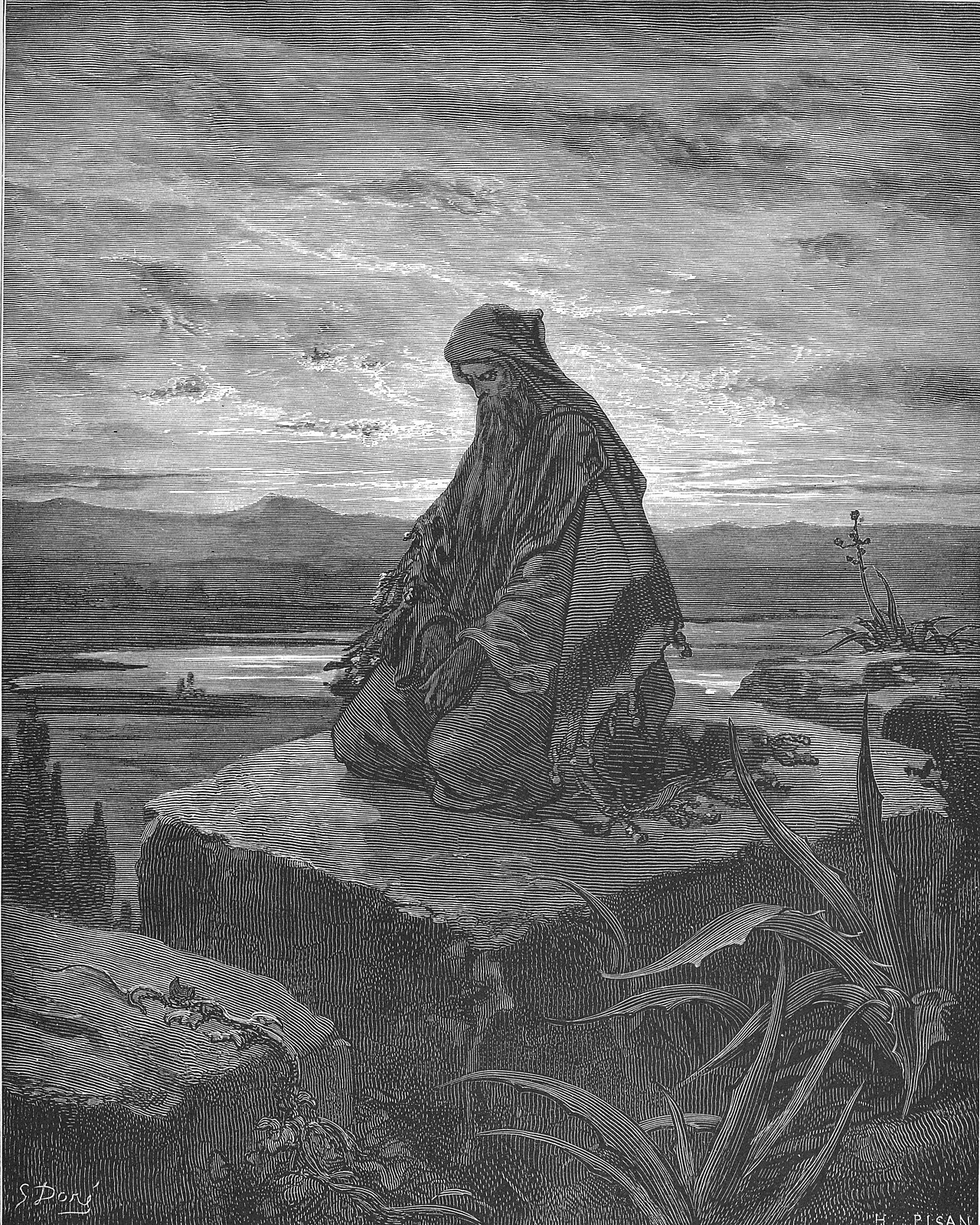
- PersonLate 8th century BCE / Divided KingdomIsaiahEighth-century BCE prophet of Judah whose oracles make up the book of Isaiah; a central voice for messianic prophecy.
This page draws on 10 works. Open the list of works
This page draws on Adam Clarke, Commentary on the Bible; Albert Barnes, Notes, Explanatory and Practical, on the Old and New Testaments (1832-1869); Irenaeus, Against Heresies (Book III, Chapter 21), Section 4; Irenaeus, Against Heresies (Book III, Chapter 21), Section 5; Jamieson, Fausset & Brown, Commentary Critical and Explanatory on the Whole Bible; Jerome, Commentary on Isaiah; John Gill, Exposition of the Old Testament; John Gill, Exposition of the Old Testament (1748-1763); Matthew Henry, Commentary on the Whole Bible and Thomas Aquinas, Commentary on Isaiah.