
Isaiah 42:2
in Isaiah 42He will not cry out or raise His voice, nor make His voice heard in the streets.
BSB
The same verse in ASV and KJV ▾
ASV
He will not cry, nor lift up his voice, nor cause it to be heard in the street.
KJV
He shall not cry, nor lift up, nor cause his voice to be heard in the street.
⋯
This verse in Isaiah 42
Commentary
8 notes on this verse(Verse 2) He will not cry out or raise his voice: his voice will not be heard in the streets. LXX: he will not cry out, nor raise his voice, nor will his voice be heard in the streets. He will not cry out, for he will be gentle and meek. He will not show favoritism in judgment, nor will he raise his voice in the streets. According to Symmachus, he will not be deceived, understanding all the schemes of the devil.
This site's exposition
Behold my servant, whom I uphold
on Isaiah 42:1-2
The first servant song opens with a divine presentation, behold my servant, whom I uphold, mine elect, in whom my soul delighteth, the Spirit placed upon him before a word of his ministry is described. Matthew quotes verses 1 through 4 in full at Matt 12:18-21 and applies them to Jesus after the Pharisees plot against him, the servant's judgment to the Gentiles matched against a Messiah who withdraws from confrontation rather than courting it. The method is stated before the manner, he shall not cry, nor lift up, nor cause his voice to be heard in the street, a servant whose authority needs no public display.
The record, by era
The Church Fathers1 voice
What does it mean that it is written in Matthew: 'A bruised reed shall he not break, and smoking flax shall he not quench' (Matthew 12:20). For the explanation of this passage, the whole testimony that Matthew takes from the Prophet Isaiah must be set forth, even the words of Isaiah (Isaiah 42): according to the Septuagint interpreters and the Hebrew itself, to which Theodotus, Aquila, and Symmachus agree. Thus of the four Evangelists, only Matthew relates: "And Jesus knowing it, retired from thence: and many followed him, and he healed them all. And he charged them that they should not make him known. That it might be fulfilled which was spoken by Isaias the prophet, saying: Behold my servant whom I have chosen, my beloved in whom my soul hath been well pleased. I will put my spirit upon him, and he shall shew judgment to the Gentiles." (Chapter 12, verses 15-18) He will not strive, nor cry out, nor will anyone hear his voice in the streets. A bruised reed he will not break, and smoking flax he will not extinguish, until he brings forth judgment unto victory. And in his name the Gentiles will hope" (Matthew 12:15 and following). For which in Isaiah, according to the Septuagint interpreters, it is thus written: "Jacob my servant, I will uplift him. My chosen one, my soul has received him. I have given my spirit upon him, he shall bring forth judgment to the Gentiles. He shall not cry, nor have respect to person, neither shall his voice be heard abroad. The bruised reed he shall not break: and smoking flax he shall not extinguish: but he shall bring forth judgment unto truth. He shall shine, and shall not be broken, until he set judgment in the earth: and the countries shall wait for his law." However, we translate it from Hebrew like this, "Behold my servant, I will uphold him; my chosen, my soul has delighted in him. […]
The Medieval Church1 voice
To which he joins his meekness: he shall not cry: the words of the wise are heard in silence, more than the cry of a prince among fools (Eccl 9:17). Second, he shows the equality of the judge: nor have respect to person: God is …
The Puritans and the Awakening2 voices
He shall not cry,.....
He shall have no trumpet sounded before him, nor any noisy retinue to follow him. The opposition he meets with he shall not strive against, but patiently endure the contradiction of sinners against himself. His kingdom is spiritual, and therefore its weapons are not carnal, nor is its appearance pompous; it comes not with observation.
The Nineteenth Century1 voice
A commentator
Albert Barnes1798–1870
Notes, Explanatory and Practical, on the Old and New Testaments (1832-1869)
He shall not cry - He will not make a clamor or noise; he will not be boisterous, in the manner of a man of strife and contention. Nor lift up - That is, his voice. Nor cause his voice to be heard in the street - He shall not t use loud and angry words, as they do who are engaged in conflict, but all his teaching shall be gentle, humble, and mild. How well this agrees with the character of the Lord Jesus it is not necessary to pause to show. He was uniformly unostentatious, modest, and retiring.
1 more voice on this verse
The Nineteenth Century1 voice
A commentator
Jamieson, Fausset & Brown1802–1910
Commentary Critical and Explanatory on the Whole Bible (1871)
proposed
Matthew [Mt 12:19] marks the kind of "cry" as that of altercation by quoting it, "He shall not strive" (Isa 53:7). street--the Septuagint translates "outside." An image from an altercation in a house, loud enough to be heard in the street outside: appropriate of Him who "withdrew Himself" from the public fame created by His miracles to privacy (Mt 12:15;
quarantine:debris (2026-07-29) — unbalanced-parens
How the passage was read
What the Jewish commentators add
On the verses either side of this one
Behold My servant, I will support him Behold My servant Jacob is not like you, for I will support him.
This section is reception history: how the passage was read and kept in the Jewish tradition. Where a reading parts from an essential of the Christian faith, the section says so at that point.
Texts and citation data: Sefaria; each excerpt follows its version’s licence. 4 further sources are cited on this chapter that carry no English text this site may quote or only restate the verse.
The words behind it
8 Hebrew wordsEvery Hebrew word of this verse in the order it stands, with what it means and the door to its own study. The last column counts the times a word stands in the whole Bible: the rarer the word, the more the places it appears belong together.
| Hebrew | Sound | Meaning | Word study | In the Bible |
|---|---|---|---|---|
| לֹ֥א | lo' | not | H3808 → | 5168 times |
| יִצְעַ֖ק | yitzak | he will cry out | H6817 → | 55 times |
| וְלֹ֣א | velo' | and not | H3808 → | 5168 times |
| יִשָּׂ֑א | yisa' | he will lift up | H5375 → | 656 times |
| וְלֹֽא־ | velo'- | and not | H3808 → | 5168 times |
| יַשְׁמִ֥יעַ | yashmia' | he will make heard | H8085 → | 1159 times |
| בַּח֖וּץ | bachutz | in the street | H2351 → | 164 times |
| קוֹלֽוֹ׃ | kolo | voice his | H6963 → | 506 times |
לֹ֥אnot
lo'H3808 →5168 times
יִצְעַ֖קhe will cry out
yitzakH6817 →55 times
וְלֹ֣אand not
velo'H3808 →5168 times
יִשָּׂ֑אhe will lift up
yisa'H5375 →656 times
וְלֹֽא־and not
velo'-H3808 →5168 times
יַשְׁמִ֥יעַhe will make heard
yashmia'H8085 →1159 times
בַּח֖וּץin the street
bachutzH2351 →164 times
קוֹלֽוֹ׃voice his
koloH6963 →506 times
A shaded row is a word that stands 400 times or fewer in the Bible.
The walk
8 stopsEach card is a verse this one points to, and under it the verses that one points to in turn. Where several paths arrive at the same place, that place is listed first: the text keeps returning to it.
Through
Matthew 11:29Take My yoke upon you and learn from Me; for I am gentle and humble in heart, and you will find rest for your souls.
it leads to
- Jeremiah 6:16
This is what the LORD says: “Stand at the crossroads and look. Ask for the ancient paths: ‘Where is the good way?’ Then walk in it, and you will find rest for your souls.…
- 1 John 2:6
Whoever claims to abide in Him must walk as Jesus walked.
- Philippians 2:7–8
but emptied Himself, taking the form of a servant, being made in human likeness.
- John 13:15
I have set you an example so that you should do as I have done for you.
- Luke 6:46–48
Why do you call Me ‘Lord, Lord,’ but not do what I say?
- Jeremiah 6:16
Through
2 Timothy 2:24And a servant of the Lord must not be quarrelsome, but must be kind to everyone, able to teach, and forbearing.
it leads to
- Titus 3:2
to malign no one, and to be peaceable and gentle, showing full consideration to everyone.
- James 1:19–20
My beloved brothers, understand this: Everyone should be quick to listen, slow to speak, and slow to anger,
- Titus 3:2
Through
1 Peter 2:23When they heaped abuse on Him, He did not retaliate; when He suffered, He made no threats, but entrusted Himself to Him who judges justly.
it leads to
- Isaiah 53:7
He was oppressed and afflicted, yet He did not open His mouth. He was led like a lamb to the slaughter, and as a sheep before her shearers is silent, so He did not…
- Isaiah 53:7
Where this verse is studied
On this page
About Isaiah
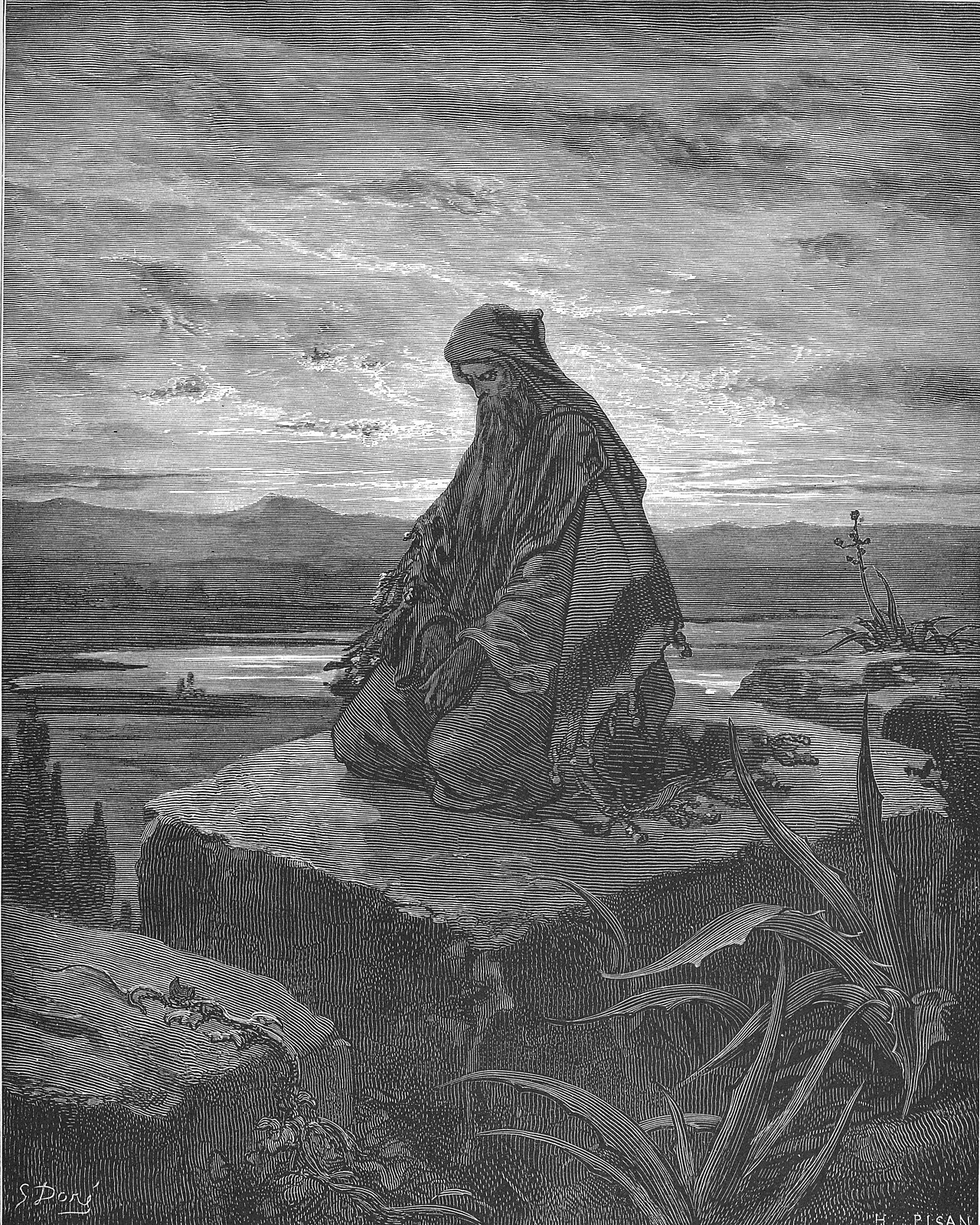
This page draws on Albert Barnes, Notes on the Book of Isaiah; Albert Barnes, Notes, Explanatory and Practical, on the Old and New Testaments (1832-1869); Jamieson, Fausset & Brown, Commentary Critical and Explanatory on the Whole Bible; Jerome, Commentary on Isaiah; Jerome, Letter 121, Chapter 2; John Gill, Exposition of the Old Testament (1748-1763); Matthew Henry, Commentary on the Whole Bible and Thomas Aquinas, Commentary on Isaiah.