
Haggai 2:7
in Haggai 2I will shake all the nations, and they will come with all their treasures, and I will fill this house with glory, says the LORD of Hosts.
BSB
The same verse in ASV and KJV ▾
ASV
and I will shake all nations; and the precious things of all nations shall come; and I will fill this house with glory, saith Jehovah of hosts.
KJV
And I will shake all nations, and the desire of all nations shall come: and I will fill this house with glory, saith the Lord of hosts.
⋯
This verse in Haggai 2
Commentary
15 notes on this verseA commentator
Charles Spurgeon1834–1892
The Metropolitan Tabernacle Pulpit, Sermon No. 3442: “'The Desire Of All Nations'” (lightly modernized text, CCEL edition) · Written before 1892.
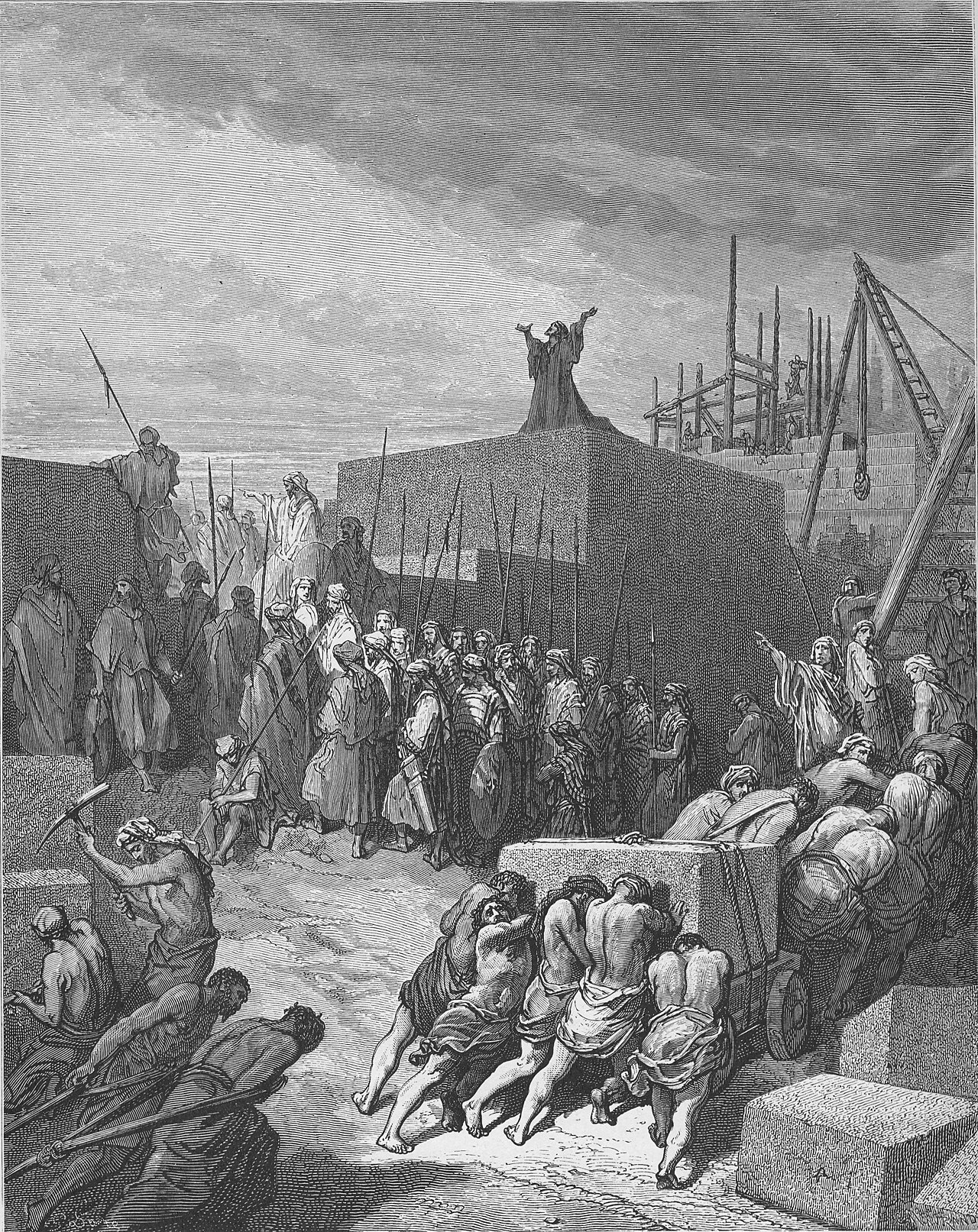
THE second Temple was never intended to be as magnificent as the first. The first was to be the embodiment of the full glory of the dispensation of symbols and types—and was soon to pass away. This comparative feebleness had been proved by the idolatry and apostasy of the people, Israel. And when they returned to Jerusalem they were to have a structure that would be sufficient for the purposes of their worship, but they were not again to be indulged with the splendors of the former house which God had erected by the hand of Solomon.
This site's exposition
Once more, in a little while
on Haggai 2:6-7
“I will shake the heavens and the earth”, words Hebrews 12:26 to 27 applies to the removal of what can be shaken. The King James reads the desire of all nations shall come, which the older commentators take of the Messiah. The recent reading takes the Hebrew as a collective.
This site's exposition
I will fill this house with glory
This glory answers the grief of verse 3. John Wesley reads the glory that will fill this house as the presence of Christ in it. Charles Spurgeon notes that the second temple was never meant to match the first in splendour.
The record, by era
The Church Fathers3 voices
Therefore, gather from this that the establishment of the earth is in the power of God, as it is written: "He looks at the earth, and it trembles." And elsewhere: "Yet once more I shake the earth." Therefore, it does not remain motionless in its balance, but it is frequently moved by the will and power of God, as even Job says: "For the Lord shakes it from its foundation; its pillars tremble."
(Chapter 2, Verse 1 and following) In the seventh month, on the twenty-first day of the month, the word of the Lord came by the prophet Haggai, saying: Speak now to Zerubbabel, the son of Shealtiel, governor of Judah, and to Joshua, the son of Jehozadak, the high priest, and to the remnant of the people, saying: Who among you is left who saw this temple in its former glory? And how do you see it now? In comparison with it, is this not in your eyes as nothing?
There remain for discussion the three minor prophets who belong to the closing days of the captivity, namely, Haggai, Zechariah and Malachi. To begin with, Haggai has the following brief but clear prophecy of Christ and the church: "For thus says the Lord of hosts: yet one little while, and I will move the heaven and the earth, and the sea and the dry land. And I will move all the nations, and the desired of all nations shall come." It is obvious that this prediction is, in part, already fulfilled; the rest we may confidently expect at the end of the world. Surely God set the heavens rocking when angels and a star stood as witnesses to the birth of Christ; surely too he moved the earth when he performed the tremendous miracle of giving Christ a virgin birth. Surely he moved the sea and the dry land when he made Christ's name known throughout the whole world, on island and on mainland. For the rest, we ourselves are witnesses of the fact that all nations are being moved to accept the faith. The last part of the text, "and the desired of all nations shall come," refers to Christ's second coming. For before the whole world can await him and desire his coming, it just first believes in him and loves him.
The Puritans and the Awakening2 voices
With glory - The first temple had a glory in its magnificent structure, rich ornaments, and costly sacrifices; but this was a worldly glory; that which is here promised, is a heavenly glory from the presence of Christ in it.
Here the heavens and the earth are shaken, that proud oppressors may be broken and brought down: I will overthrow the throne of kingdoms. The Chaldean monarchy, which had been the throne of kingdoms a great while, was already overthrown; and the powers that are, and are yet to come, shall in like manner be overthrown; their day will come to fall.
7 more voices on this verse
The Puritans and the Awakening3 voices
Let the Son of man, when he comes, find faith on the earth, and let the children of promise continue still looking for him, for now it is but a little while and he will come; hold out, faith and patience, yet awhile, for he that shall come will come, and will not tarry. " And, as he then said of his first appearance, so now of his second, Surely I come quickly.
quarantine:debris (2026-07-29) — odd-straight-quotes
And I will shake all nations,....
In the second he assures them that though their sin, in delaying to build the temple, had retarded the prosperous progress of all their other affairs, yet now that they had set about it in good earnest he would bless them, and give them success,
The Nineteenth Century4 voices
A commentator
Jamieson, Fausset & Brown1802–1910
Commentary Critical and Explanatory on the Whole Bible (1871)
proposed
2Ch 5:14), so this second temple was filled with the "glory" of God (Joh 1:14) veiled in the flesh (as it were in the cloud) at Christ's first coming, when He entered it and performed miracles there (Mt 21:12-14); but that "glory" is to be revealed at His second coming, as this prophecy in its ulterior reference foretells (Mal 3:1).
quarantine:debris (2026-07-29) — unbalanced-parens
A commentator
Charles Spurgeon1834–1892
The Metropolitan Tabernacle Pulpit, Sermon No. 3442: “'The Desire Of All Nations'” (lightly modernized text, CCEL edition) · Written before 1892.
proposed
THE second Temple was never intended to be as magnificent as the first. The first was to be the embodiment of the full glory of the dispensation of symbols and types—and was soon to pass away. This comparative feebleness had been proved by the idolatry and apostasy of the people, Israel. And when they returned to Jerusalem they were to have a structure that would be sufficient for the purposes of their worship, but they were not again to be indulged with the splendors of the former house which God had erected by the hand of Solomon. Had it been God's Providence that a Temple equally magnificent as the first should be erected, it might have been very readily accomplished. Cyrus appears to have been obedient to the Divine Will and to have been a great friend of the Jews, but he expressly, by edict, diminished the length of the walls and gave express command that the walls should never be erected as high as before. We have also evidence that a lile decree was made by Darius, an equally great friend of the Jews, who could, with the lifting of his finger, have outdone the glory of Solomon's Temple! But in God's Providence it was not arranged that it should be so and, though Herod, not a Jew, and only a Jew by religious pretense to suit his own particular purpose, lavished a good deal of treasure upon the second Temple for the pleasure of the nation he ruled, and to gain some favor from them, yet he rather profaned than adorned the Temple, since he did not follow the prescribed architecture by which it ought to have been built, and he had not the Divine Approval upon his labors. No Prophet ever commanded, and no Prophet ever sanctioned the labors of such a horrible wretch as that Herod! The reason seems to me to be this—in the second Temple, during the time it should stand, the dispensation of Christ was softly melted into the light of spiritual Truth.
And the Desire of all nations shall come - The present Hebrew text is as follows: ובאו חמדת כל הגוים. This is a difficult place if understood of a person: but חמדת chemdath, desire, cannot well agree with באו bau, they shall come. It is true that some learned men suppose that חמדות chemdoth, desirable things, may have been the original reading: but this is supported by no MS., nor is באו found in the singular number in any. It is generally understood of the desirable or valuable things which the different nations should bring into the temple; and it is certain that many rich presents were brought into this temple. All are puzzled with it. But the principal difficulty lies in the verb ובאו ubau, they shall come. If we found ובאה חמדת ubaa chemdath in the singular, then it would read as in our text, And the Desire of all nations shall come: but no such reading appears in any MS.; nor is it fairly acknowledged, except by the Vulgate, which reads, Et veniet desideratus cunctis gentibus, “And that which is desired,” or the desired Person, “shall come to all nations.” In Hag 2:7 God says he will shake or stir up all nations; that these nations shall bring their desirable things; that the house shall be filled with God’s glory; that the silver and gold, which these nations are represented as bringing by way of gifts, are the Lord’s; and that the glory of this latter house shall exceed the former. Bp. Chandler labors to vindicate the present translation; but he makes rash assertions, and is abandoned by the Hebrew text. The בא ba, to come, is often used in the sense of bring, and that חמדת chemdath, desire, may be considered as the plural for חמדות, having the point holem instead of the ו vau, and thus mean desirable things, will not be denied by those who are acquainted with the genius and construction of the Hebrew language. Bp. […]
A commentator
Albert Barnes1798–1870
Notes, Explanatory and Practical, on the Old and New Testaments (1832-1869)
proposed
And the desire of all nations shall come - The words can only mean this, the central longing of all nations He whom they longed for, either through the knowledge of Him spread by the Jews in their dispersion, or mutely by the aching craving of the human heart, longing for the restoration from its decay. “The earnest expectation of the creature” did not begin with the Coming of Christ, nor was it limited to those, who actually came to Him Rom 8:19-22. “The whole creation,” Paul saith, “groaneth and travaileth in pain together until now.” It was enslaved, and the better self longed to be free; every motion of grace in the multitudinous heart of man was a longing for its Deliverer; every weariness of what it was, every fleeting vision of what was better, every sigh from out of its manifold ills, were notes of the one varied cry, “Come and help us.” Man’s heart, formed in the image of God, could not but ache to be reformed by and for Him, though “an unknown God,” who should reform it. This longing increased as the time drew near, when Christ should come. The Roman biographer attests the existence of this expectation, not among the Jews only, but in the East ; this was quickened doubtless among the pagan by the Jewish Sibylline book, in that, amid the expectations of one sent from heaven, who should found a kingdom of righteousness, which the writer drew from the Hebrew prophets, he inserted denunciations of temporal vengeance upon the Romans, which Easterns would share. Still, although written 170 years before our Lord came , it had not apparently much effect until the time, when, from the prophecies of Daniel it was clear, that He must shortly come . […]
The words behind it
16 Hebrew wordsEvery Hebrew word of this verse in the order it stands, with what it means and the door to its own study. The last column counts the times a word stands in the whole Bible: the rarer the word, the more the places it appears belong together.
| Hebrew | Sound | Meaning | Word study | In the Bible |
|---|---|---|---|---|
| וְהִרְעַשְׁתִּי֙ | vehirashti | and I will shake | H7493 → | 30 times |
| אֶת־ | ʾet- | <obj.> | H853 → | 10935 times |
| כָּל־ | kol- | all | H3605 → | 5413 times |
| הַגּוֹיִ֔ם | hagoyim | the nations | H1471 → | 561 times |
| וּבָ֖אוּ | uvau | and they will come | H935 → | 2568 times |
| חֶמְדַּ֣ת | chemdat | [the] precious thing of | H2532 → | |
| כָּל־ | kol- | all | H3605 → | 5413 times |
| הַגּוֹיִ֑ם | hagoyim | the nations | H1471 → | 561 times |
| וּמִלֵּאתִ֞י | umileti | and I will fill | H4390 → | |
| אֶת־ | ʾet- | <obj.> | H853 → | 10935 times |
| הַבַּ֤יִת | habayit | the house | H1004 → | 2046 times |
| הַזֶּה֙ | hazeh | <the> this | H2088 → | 1180 times |
| כָּב֔וֹד | kavod | splendor | H3519 → | 200 times |
| אָמַ֖ר | ʾamar | he says | H559 → | 5305 times |
| יְהוָ֥ה | yahweh | Yahweh | H3068 → | 6520 times |
| צְבָאֽוֹת׃ | tzevaot | of hosts | H6635 → | 485 times |
וְהִרְעַשְׁתִּי֙and I will shake
vehirashtiH7493 →30 times
אֶת־<obj.>
ʾet-H853 →10935 times
כָּל־all
kol-H3605 →5413 times
הַגּוֹיִ֔םthe nations
hagoyimH1471 →561 times
וּבָ֖אוּand they will come
uvauH935 →2568 times
חֶמְדַּ֣ת[the] precious thing of
chemdatH2532 →
כָּל־all
kol-H3605 →5413 times
הַגּוֹיִ֑םthe nations
hagoyimH1471 →561 times
וּמִלֵּאתִ֞יand I will fill
umiletiH4390 →
אֶת־<obj.>
ʾet-H853 →10935 times
הַבַּ֤יִתthe house
habayitH1004 →2046 times
הַזֶּה֙<the> this
hazehH2088 →1180 times
כָּב֔וֹדsplendor
kavodH3519 →200 times
אָמַ֖רhe says
ʾamarH559 →5305 times
יְהוָ֥הYahweh
yahwehH3068 →6520 times
צְבָאֽוֹת׃of hosts
tzevaotH6635 →485 times
A shaded row is a word that stands 400 times or fewer in the Bible.
The walk
8 stopsEach card is a verse this one points to, and under it the verses that one points to in turn. Where several paths arrive at the same place, that place is listed first: the text keeps returning to it.
Through
Genesis 49:10The scepter will not depart from Judah, nor the staff from between his feet, until Shiloh comes and the allegiance of the nations is his.
it leads to
- Numbers 24:17
I see him, but not now; I behold him, but not near. A star will come forth from Jacob, and a scepter will arise from Israel. He will crush the skulls of Moab and…
- Luke 1:32–33
He will be great and will be called the Son of the Most High. The Lord God will give Him the throne of His father David,
- Psalms 60:7
Gilead is Mine, and Manasseh is Mine; Ephraim is My helmet, Judah is My scepter.
- Isaiah 9:6
For unto us a child is born, unto us a son is given, and the government will be upon His shoulders. And He will be called Wonderful Counselor, Mighty God, Everlasting Father, Prince of…
- Isaiah 33:22
For the LORD is our Judge, the LORD is our lawgiver, the LORD is our King. It is He who will save us.
- Numbers 24:17
Through
Malachi 3:1“Behold, I will send My messenger, who will prepare the way before Me. Then the Lord whom you seek will suddenly come to His temple—the Messenger of the covenant, in whom you delight—see, He…
it leads to
- Malachi 4:5
Behold, I will send you Elijah the prophet before the coming of the great and awesome Day of the LORD.
- Luke 1:76
And you, child, will be called a prophet of the Most High; for you will go on before the Lord to prepare the way for Him,
- Mark 1:2–3
As it is written in Isaiah the prophet: “Behold, I will send My messenger ahead of You, who will prepare Your way.”
- Malachi 4:5
Where this verse is studied
About Haggai
This page draws on 13 works. Open the list of works
This page draws on Adam Clarke, Commentary on the Bible; Albert Barnes, Notes on the Old Testament; Albert Barnes, Notes, Explanatory and Practical, on the Old and New Testaments (1832-1869); Ambrose of Milan, The Six Days of Creation 1.6.22; Augustine of Hippo, City of God 18.35; Charles Spurgeon, The Metropolitan Tabernacle Pulpit, Sermon No. 3442: “'The Desire Of All Nations'” (lightly modernized text, CCEL edition); Charles Spurgeon, The Metropolitan Tabernacle Pulpit, Sermon No. 3442, The Desire of All Nations; Edward Bouverie Pusey, The Minor Prophets: A Commentary; Jamieson, Fausset & Brown, Commentary Critical and Explanatory on the Whole Bible; Jerome, Commentary on Haggai; John Gill, Exposition of the Old Testament (1748-1763); John Wesley, Explanatory Notes upon the Old Testament and Matthew Henry, Commentary on the Whole Bible.