
Haggai 1:2
in Haggai 1that this is what the LORD of Hosts says: “These people say, ‘The time has not yet come to rebuild the house of the LORD.’”
BSB
The same verse in ASV and KJV ▾
ASV
Thus speaketh Jehovah of hosts, saying, This people say, It is not the time for us to come, the time for Jehovah’s house to be built.
KJV
Thus speaketh the Lord of hosts, saying, This people say, The time is not come, the time that the Lord’s house should be built.
⋯
This verse in Haggai 1
Commentary
8 notes on this verse(Ver. 2.) Thus says the Lord of hosts, saying: This people says, 'The time has not yet come, the time for the house of the Lord to be built.' Pay careful attention to the fact that it is not Zerubbabel or Joshua who says, 'The time has not yet come, the time for the house of the Lord to be built,' but the people who are still under the rule of King Darius and have not yet thrown off the yoke of servitude.
This site's exposition
In the second year of Darius
on Haggai 1:1-3
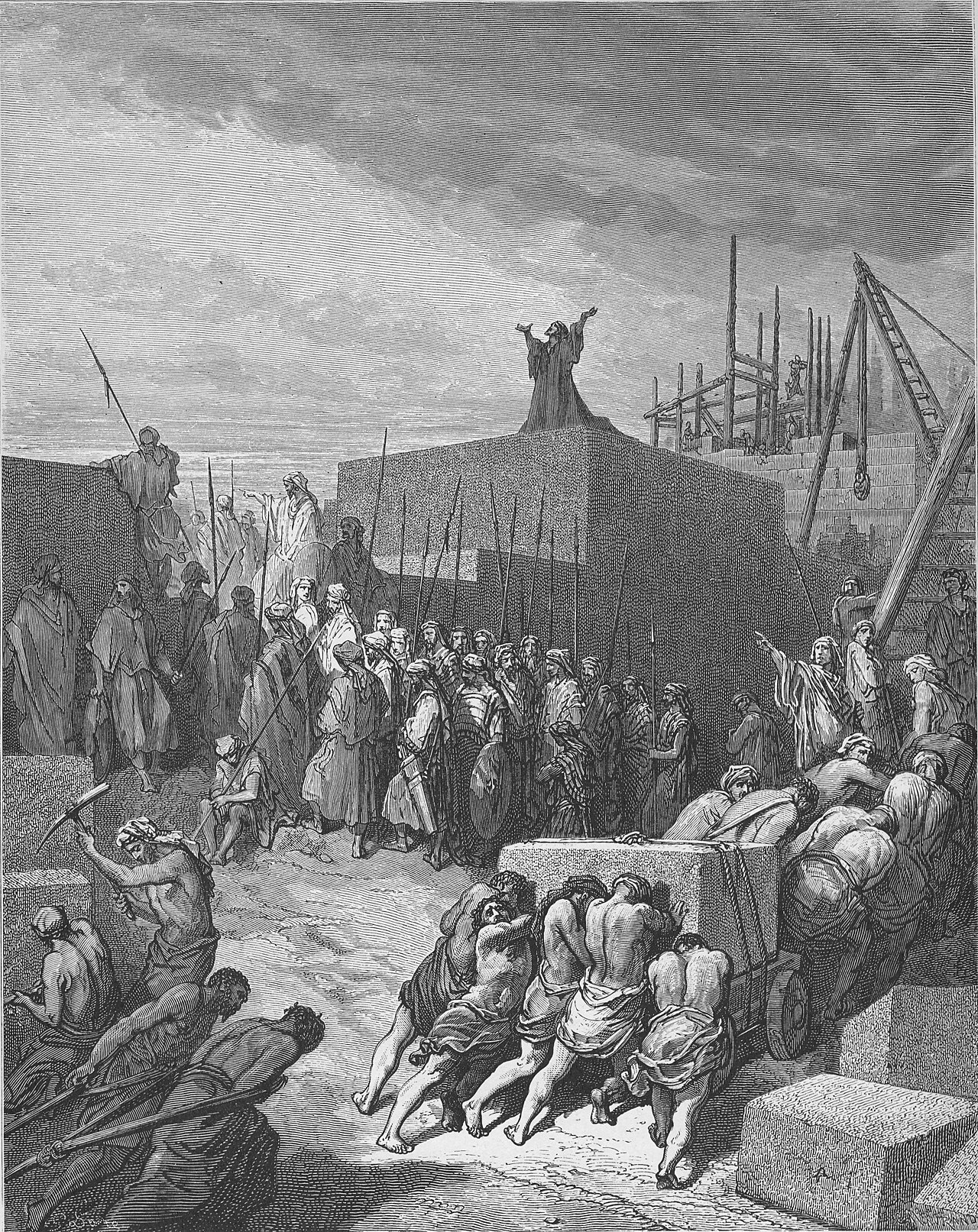
The date is exact, the second year of Darius, the sixth month, the first day, and the bench reads the precision itself as a claim: this word came at a datable hour to a datable king, addressed jointly to Zerubbabel the governor and Joshua the high priest, the civil and priestly heads of the returned remnant. Sixteen years had passed since the altar's foundation was laid and the work had stalled under opposition and discouragement. The people's excuse is quoted in their own words, the time is not come, the time that the Lord's house should be built, a sentence verse 3's second word from the Lord will spend the chapter answering.
The record, by era
The Puritans and the Awakening3 voices
And that which they suggested one to another was, The time has not come, the time that the Lord's house should be built; that is, 1. "Our time has not come for the doing of it, because we have not yet recovered, after our captivity; our losses are not repaired, nor have we yet got before-hand in the world.
quarantine:debris (2026-07-29) — odd-straight-quotes
Thus speaketh the Lord of hosts,.... Of armies above and below; whom all ought to reverence, honour, and obey; who was able to support his people in building his house, and protect them from their enemies, which should have been an encouragement to them; and to punish them for their neglect of it, which might have deterred them from it.
The good success of this sermon, appearing in the people's return and close application to that work, wherein the prophet, in God's name, animated and encouraged them, assuring them that God was with them,
The Nineteenth Century2 voices
The time is not come - They thought that the seventy years spoken of by Jeremiah were not yet completed, and it would be useless to attempt to rebuild until that period had arrived. But Abp. Usher has shown that from the commencement of the last siege of Jerusalem unto this time, precisely sixty-nine years had been completed.
A commentator
Jamieson, Fausset & Brown1802–1910
Commentary Critical and Explanatory on the Whole Bible (1871)
"God," say they, "hath interposed many difficulties to punish our rash haste" [CALVIN]. Smerdis' interdict was no longer in force, now that Darius the rightful king was on the throne; therefore they had no real excuse for not beginning at once to build. AUBERLEN denies that by "Artaxerxes" in Ezr 4:7-22 is meant Smerdis.
1 more voice on this verse
The Nineteenth Century1 voice
A commentator
Albert Barnes1798–1870
Notes, Explanatory and Practical, on the Old and New Testaments (1832-1869)
proposed
Thus speaketh the Lord of hosts, saying, This people say - Not Zerubbabel or Joshua, but “this people.” He says not, “My people,” but reproachfully “this people,” as, in acts, disowning Him, and so deserving to be disowned by Him. “The time is not come,” literally “It is not time to come, time for the house of the Lord to be built” . They might yet sit still; the time for them “to come” was not yet, for not yet was the “time for the house of the Lord to be built.” Why it was not time, they did not say. The government did not help them; the original grant by Cyrus Ezr 3:7 was exhausted; the Samaritans hindered them, because they would not own them, (amid their mishmash of worship, “worshiping,” our Lord tells them Joh 4:22, “they know not what”), as worshipers of the same God. It was a bold excuse, if they said, that the 70 years during which the temple was to lie waste, were not yet ended. The time had long since come, when, 16 years before, Cyrus had given command that the house of God should be built. The prohibition to build, under Artaxerxes or Pseudo-Smerdis, applied directly to the city and its walls, not to the temple, except so far as the temple itself, from its position, might be capable of being used as a fort, as it was in the last siege of, Jerusalem. Yet in itself a building of the size of the temple, apart from outer buildings, could scarcely so be used. The prohibition did not hinder the building of stately private houses, as appears from Haggai’s rebuke. The hindrances also, whatever they were, had not begun with that decree. The death of Pseudo-Smerdis had now, for a year, set them free, if had they had any zeal for the glory and service of God. Otherwise, Haggai would not blamed them. God, knowing that He would bend the heart of Darius, as He had that of Cyrus, requires the house to be built without the king’s decree. […]
How the passage was read
What the Jewish commentators add
On the verses either side of this one
In the second year of King Darius This was Darius king of Persia, who succeeded Ahasuerus. We find in Midrash Leviticus Rabbah (13:4) that he was Esther’s son.
This section is reception history: how the passage was read and kept in the Jewish tradition. Where a reading parts from an essential of the Christian faith, the section says so at that point.
Texts and citation data: Sefaria; each excerpt follows its version’s licence. 4 further sources are cited on this chapter that carry no English text this site may quote or only restate the verse.
The words behind it
15 Hebrew wordsEvery Hebrew word of this verse in the order it stands, with what it means and the door to its own study. The last column counts the times a word stands in the whole Bible: the rarer the word, the more the places it appears belong together.
| Hebrew | Sound | Meaning | Word study | In the Bible |
|---|---|---|---|---|
| כֹּ֥ה | koh | thus | H3541 → | 577 times |
| אָמַ֛ר | ʾamar | he says | H559 → | 5305 times |
| יְהוָ֥ה | yahweh | Yahweh | H3068 → | 6520 times |
| צְבָא֖וֹת | tzevaot | of hosts | H6635 → | 485 times |
| לֵאמֹ֑ר | lemor | <to> saying | H559 → | 5305 times |
| הָעָ֤ם | haam | the people | H5971 → | 1873 times |
| הַזֶּה֙ | hazeh | <the> this | H2088 → | 1180 times |
| אָֽמְר֔וּ | ʾameru | they have said | H559 → | 5305 times |
| לֹ֥א | lo' | not | H3808 → | 5168 times |
| עֶת־ | ʾet- | a time | H6256 → | 296 times |
| בֹּ֛א | bo' | to come | H935 → | 2568 times |
| עֶת־ | ʾet- | [the] time of | H6256 → | 296 times |
| בֵּ֥ית | beit | [the] house of | H1004 → | 2046 times |
| יְהוָ֖ה | yahweh | Yahweh | H3068 → | 6520 times |
| לְהִבָּנֽוֹת׃ פ | lehibanot | to be rebuilt | H1129 → |
כֹּ֥הthus
kohH3541 →577 times
אָמַ֛רhe says
ʾamarH559 →5305 times
יְהוָ֥הYahweh
yahwehH3068 →6520 times
צְבָא֖וֹתof hosts
tzevaotH6635 →485 times
לֵאמֹ֑ר<to> saying
lemorH559 →5305 times
הָעָ֤םthe people
haamH5971 →1873 times
הַזֶּה֙<the> this
hazehH2088 →1180 times
אָֽמְר֔וּthey have said
ʾameruH559 →5305 times
לֹ֥אnot
lo'H3808 →5168 times
עֶת־a time
ʾet-H6256 →296 times
בֹּ֛אto come
bo'H935 →2568 times
עֶת־[the] time of
ʾet-H6256 →296 times
בֵּ֥ית[the] house of
beitH1004 →2046 times
יְהוָ֖הYahweh
yahwehH3068 →6520 times
לְהִבָּנֽוֹת׃ פto be rebuilt
lehibanotH1129 →
A shaded row is a word that stands 400 times or fewer in the Bible.
The walk
8 stopsEach card is a verse this one points to, and under it the verses that one points to in turn. Where several paths arrive at the same place, that place is listed first: the text keeps returning to it.
Through
Ecclesiastes 9:10Whatever you find to do with your hands, do it with all your might, for in Sheol, where you are going, there is no work or planning or knowledge or wisdom.
it leads to
- Colossians 3:23
Whatever you do, work at it with your whole being, for the Lord and not for men,
- Ephesians 5:16
redeeming the time, because the days are evil.
- Romans 12:11
Do not let your zeal subside; keep your spiritual fervor, serving the Lord.
- Psalms 6:5
For there is no mention of You in death; who can praise You from Sheol?
- Ecclesiastes 11:6
Sow your seed in the morning, and do not rest your hands in the evening, for you do not know which will succeed, whether this or that, or if both will equally prosper.
- Colossians 3:23
Through
Numbers 13:31But the men who had gone up with him replied, “We cannot go up against the people, for they are stronger than we are!”
it leads to
- Numbers 32:9
For when your fathers went up to the Valley of Eshcol and saw the land, they discouraged the Israelites from entering the land that the LORD had given them.
Reached by 2 separate paths from here.
- Deuteronomy 1:28
Where can we go? Our brothers have made our hearts melt, saying: ‘The people are larger and taller than we are; the cities are large, with walls up to the heavens. We even saw…
- Joshua 14:8
Although my brothers who went with me made the hearts of the people melt with fear, I remained loyal to the LORD my God.
- Numbers 32:9
Where this verse is studied
On this page
Studies3
On this verse
On this chapter
About Haggai
This page draws on Adam Clarke, Commentary on the Bible; Albert Barnes, Notes, Explanatory and Practical, on the Old and New Testaments (1832-1869); Carl Friedrich Keil, The Twelve Minor Prophets; Jamieson, Fausset & Brown, Commentary Critical and Explanatory on the Whole Bible; Jerome, Commentary on Haggai; John Gill, Exposition of the Old Testament (1748-1763) and Matthew Henry, Commentary on the Whole Bible.