
Haggai 1:8
in Haggai 1Go up into the hills, bring down lumber, and build the house, so that I may take pleasure in it and be glorified, says the LORD.
BSB
The same verse in ASV and KJV ▾
ASV
Go up to the mountain, and bring wood, and build the house; and I will take pleasure in it, and I will be glorified, saith Jehovah.
KJV
Go up to the mountain, and bring wood, and build the house; and I will take pleasure in it, and I will be glorified, saith the Lord.
⋯
This verse in Haggai 1
Commentary
11 notes on this verseGo up to the mountain, and bring wood - Go to Lebanon, and get timber. In the second year of the return from the captivity, they had procured cedar trees from Lebanon, and brought them to Joppa, and had hired masons and carpenters from the Tyrians and Sidonians; but that labor had been nearly lost by the long suspension of the building. Ezr 3:7.
This site's exposition
Consider carefully your ways
on Haggai 1:7-9
The call to “Consider carefully your ways” comes a second time: “Go up into the hills, bring down lumber, and build the house”. Verse 9 names the losses of verse 6 as the act of the LORD: “what you brought home, I blew away”.
This site's exposition
Go up into the hills, bring down lumber
Lumber lay near at hand in the hills. Adam Clarke recalls cedar had come from Lebanon for the first attempt, as Ezra 3:7 records, and the labor was nearly lost in the delay. Matthew Henry reads the promise as the LORD glorified in His house once it is built.
The record, by era
The Church Fathers2 voices
I believe, brothers, that you remarked and committed to memory the title of this psalm. "The conversion," he said, "of Haggai and Zechariah." These prophets were not as yet in existence when these verses were sung.… But both, the one within the year after the other, began to prophesy that which seemed to pertain to the restoration of the temple, as was foretold so long before. … "For the temple of God is holy, which temple you are." Whoever therefore converted himself to the work of this building together, and to the hope of a firm and holy edifice, like a living stone from the miserable ruin of this world, understands the title of the psalm, understands "the conversion of Haggai and Zechariah." Let him therefore chant the following verses, not so much with the voice of his tongue as of his life. For the completion of the building will be that ineffable peace of wisdom, the "beginning" of which is the "fear of the Lord." Let him therefore, whom this conversion builds together, begin there.
Neither does he build a sepulchre for himself who dies before the time, for "he is dead while he liveth;" and he hears not the voice of Haggai, that is being interpreted, of the Feaster, for he enters not the Tabernacle of God, "in the voice of praise and thanksgiving, the sound of one feasting." For how can he hear His voice, who sees not His works?
The Puritans and the Awakening3 voices
They were sensible of the smart of the judgment, and every one complained of the unseasonable weather, the great losses they sustained in their corn and cattle, and the decay of trade; but they were not sensible of the cause of the judgment, and the ground of God's controversy with them.
(2.) That he would be honoured by them in it: I will be glorified, saith the Lord. He will be served and worshipped in the temple when it is built, and sanctified in those that come nigh to him. It is worth while to bestow all possible care, and pains, and cost, upon that by which God may be glorified.
Go up to the mountain,....
3 more voices on this verse
The Puritans and the Awakening1 voice
The good success of this sermon, appearing in the people's return and close application to that work, wherein the prophet, in God's name, animated and encouraged them, assuring them that God was with them,
The Nineteenth Century2 voices
A commentator
Jamieson, Fausset & Brown1802–1910
Commentary Critical and Explanatory on the Whole Bible (1871)
Stones also were doubtless needed. That the old walls were not standing, as the Hebrew interpreters quoted by JEROME state, or the new walls partly built, appears from Hag 2:18, where express mention is made of laying the foundations.
A commentator
Albert Barnes1798–1870
Notes, Explanatory and Practical, on the Old and New Testaments (1832-1869)
proposed
Go up into the mountain - Not Mount Lebanon, from where the cedars had been brought for the first temple; from where also Zerubbabel and Joshua had procured some out of Cyrus’ grant Ezr 3:7, at the first return from the captivity. They were not required to buy, expend, but simply to give their own labor. They were themselves to “go up to the mountain,” i. e., the mountainous country where the trees grew, “and bring” them. So, in order to keep the Feast of Tabernacles, Ezra made a proclamation Neh 8:15 “in all their cities and in Jerusalem, go ye up to the mountain and bring leafy branches of vines, olives, myrtles, palms.” The palms, anyhow, were timber. God required not goodly stones, such as had been already used, and such as hereafter, in the temple which was built, were the admiration even of disciples of Jesus Mat 24:1, but which were, for the wickedness of those who rejected their Saviour, “not to be left, one stone upon another.” He required not costly gifts, but the heart. The neglect to build the temple was neglect of Himself, who ought to be worshiped there. His worship sanctified the offering; offerings were acceptable, only if made with a free heart. And I will have pleasure in it - God, who has declared that He has no Mic 6:7 “pleasure in thousands of rams, ten thousands of rivers of oil,” had delight in Psa 147:11 “them that feared Him,” that are “upright in their way,” Pro 11:20 that “deal truly” Pro 12:22 in the “prayer” of the “upright” Pro 15:8, and so in the temple too, when it should be built to His glory. And will be glorified - o God is glorified in man, when man serves Him; in Himself, when He manifests aught of His greatness; in His great doings to His people Isa 26:15; Isa 44:23; Isa 60:21; Isa 61:3, as also in the chastisement of those who disobey Him Exo 14:4; Eze 28:22. […]
The words behind it
11 Hebrew wordsEvery Hebrew word of this verse in the order it stands, with what it means and the door to its own study. The last column counts the times a word stands in the whole Bible: the rarer the word, the more the places it appears belong together.
| Hebrew | Sound | Meaning | Word study | In the Bible |
|---|---|---|---|---|
| עֲל֥וּ | ʾalu | go up | H5927 → | |
| הָהָ֛ר | hahar | the hill country | H2022 → | |
| וַהֲבֵאתֶ֥ם | vahavetem | and you will bring | H935 → | 2568 times |
| עֵ֖ץ | ʾetz | wood | H6086 → | |
| וּבְנ֣וּ | uvenu | and rebuild | H1129 → | |
| הַבָּ֑יִת | habayit | the house | H1004 → | 2046 times |
| וְאֶרְצֶה־ | veertzeh- | so I may take pleasure | H7521 → | |
| בּ֥וֹ | bo | in it | ||
| וְאֶכָּבְדָ֖ה | veekaved | so let me be honored | H3513 → | |
| אָמַ֥ר | ʾamar | he says | H559 → | 5305 times |
| יְהוָֽה׃ | yahweh | Yahweh | H3068 → | 6520 times |
עֲל֥וּgo up
ʾaluH5927 →
הָהָ֛רthe hill country
haharH2022 →
וַהֲבֵאתֶ֥םand you will bring
vahavetemH935 →2568 times
עֵ֖ץwood
ʾetzH6086 →
וּבְנ֣וּand rebuild
uvenuH1129 →
הַבָּ֑יִתthe house
habayitH1004 →2046 times
וְאֶרְצֶה־so I may take pleasure
veertzeh-H7521 →
בּ֥וֹin it
bo
וְאֶכָּבְדָ֖הso let me be honored
veekavedH3513 →
אָמַ֥רhe says
ʾamarH559 →5305 times
יְהוָֽה׃Yahweh
yahwehH3068 →6520 times
A shaded row is a word that stands 400 times or fewer in the Bible.
The walk
8 stopsEach card is a verse this one points to, and under it the verses that one points to in turn. Where several paths arrive at the same place, that place is listed first: the text keeps returning to it.
Through
2 Chronicles 7:16For I have now chosen and consecrated this temple so that My Name may be there forever. My eyes and My heart will be there for all time.
it leads to
- 2 Chronicles 7:15
Now My eyes will be open and My ears attentive to the prayers offered in this place.
- 2 Chronicles 7:12
the LORD appeared to him at night and said to him: “I have heard your prayer and have chosen this place for Myself as a house of sacrifice.
- 2 Chronicles 6:5–6
‘Since the day I brought My people out of the land of Egypt, I have not chosen a city from any tribe of Israel in which to build a house so that My Name…
- 1 Kings 9:3
And the LORD said to him: “I have heard your prayer and petition before Me. I have consecrated this temple you have built by putting My Name there forever; My eyes and My heart…
- 2 Chronicles 6:20
May Your eyes be open toward this temple day and night, toward the place where You said You would put Your Name, so that You may hear the prayer that Your servant prays toward…
- 2 Chronicles 7:15
Through
Haggai 2:7I will shake all the nations, and they will come with all their treasures, and I will fill this house with glory, says the LORD of Hosts.
it leads to
- Malachi 3:1
“Behold, I will send My messenger, who will prepare the way before Me. Then the Lord whom you seek will suddenly come to His temple—the Messenger of the covenant, in whom you delight—see, He…
- 1 Kings 8:11
so that the priests could not stand there to minister because of the cloud; for the glory of the LORD filled the house of the LORD.
- John 7:37–39
On the last and greatest day of the feast, Jesus stood up and called out in a loud voice, “If anyone is thirsty, let him come to Me and drink.
- Malachi 3:1
Where this verse is studied
On this page
About Haggai
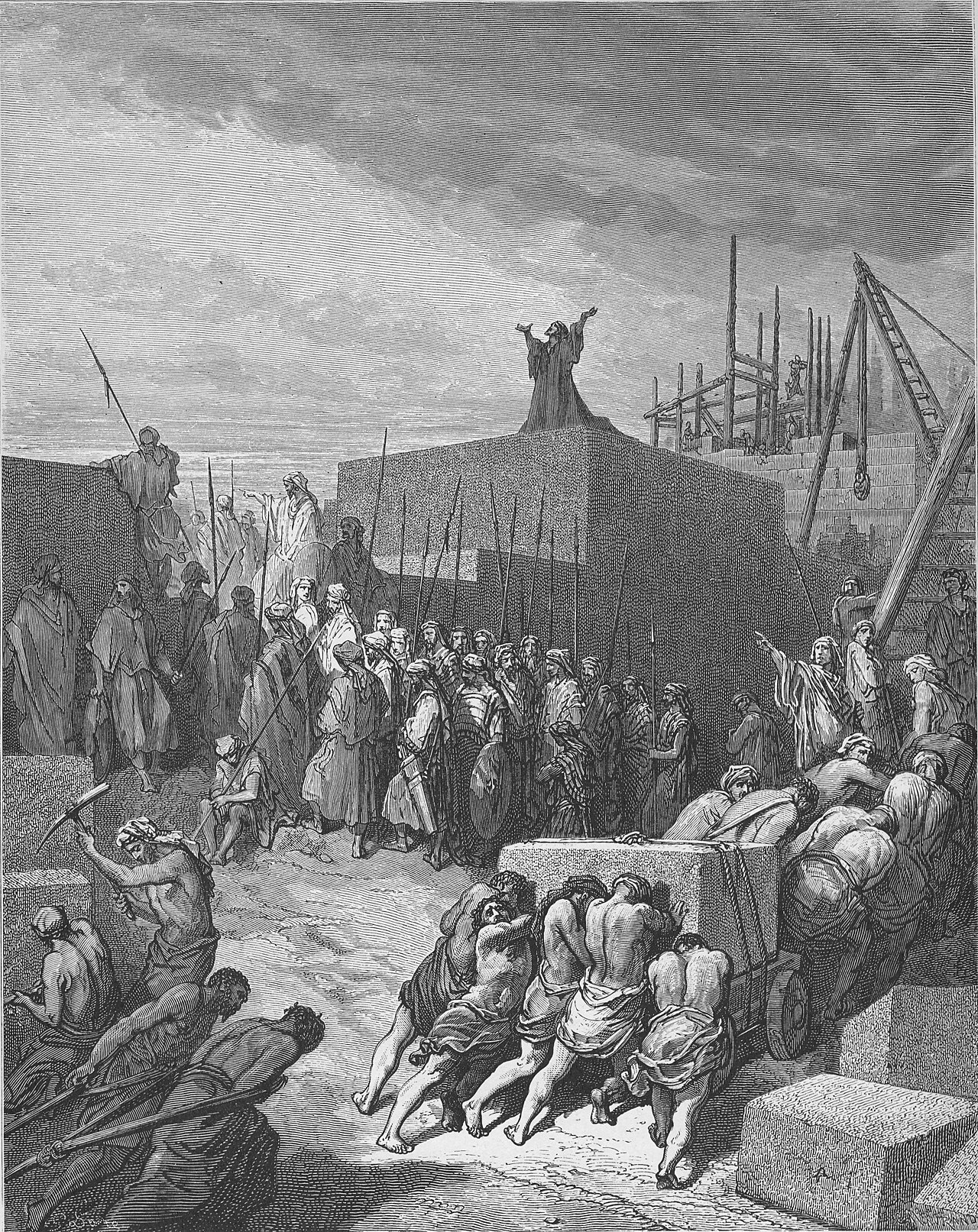
This page draws on Adam Clarke, Commentary on the Bible; Albert Barnes, Notes on the Old Testament; Albert Barnes, Notes, Explanatory and Practical, on the Old and New Testaments (1832-1869); Ambrose of Milan, Letter 30; Augustine of Hippo, EXPLANATION OF THE PSALMS 112:1; Jamieson, Fausset & Brown, Commentary Critical and Explanatory on the Whole Bible; John Gill, Exposition of the Old Testament (1748-1763) and Matthew Henry, Commentary on the Whole Bible.