
Genesis 12:4
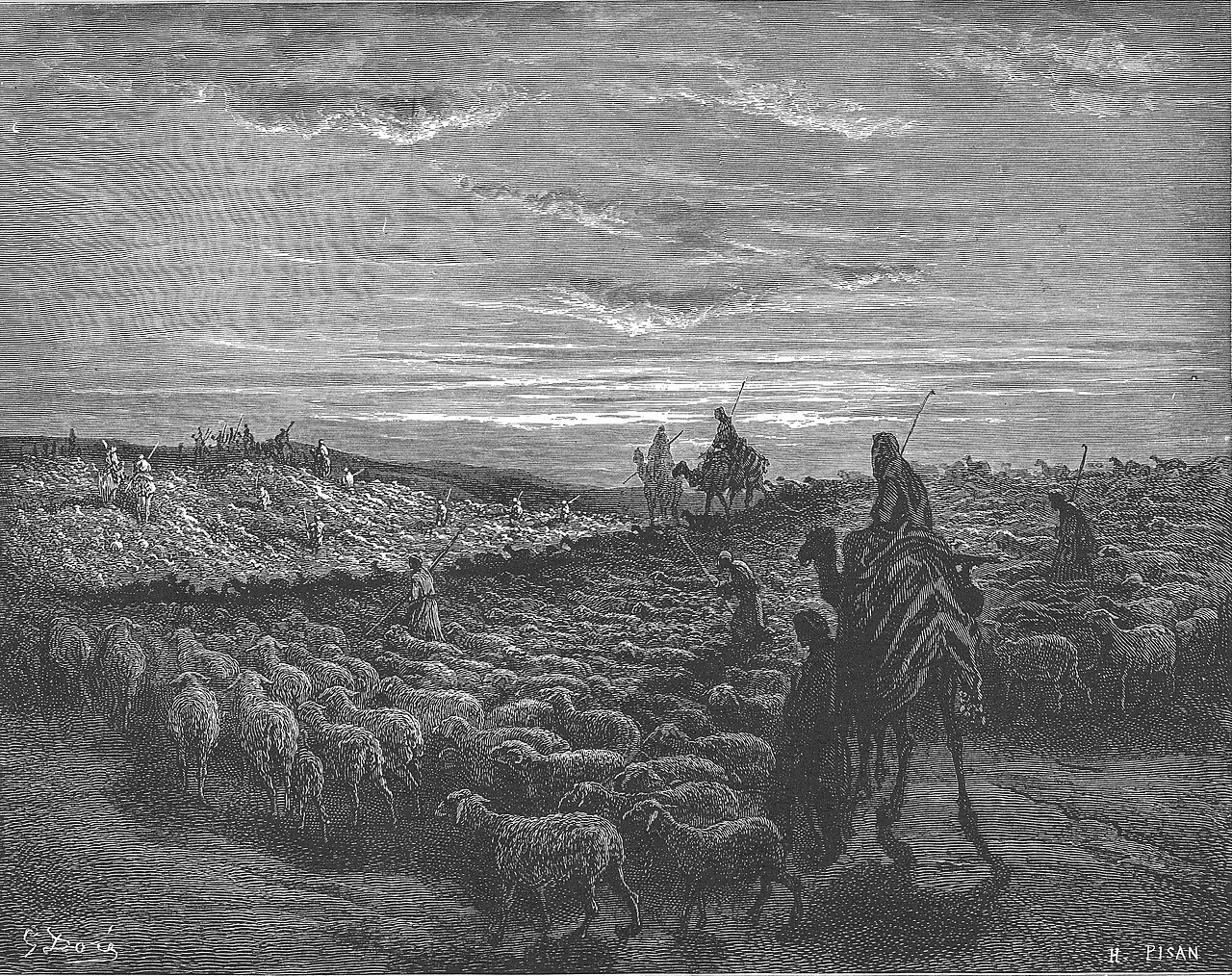
in Genesis 12So Abram departed, as the LORD had directed him, and Lot went with him. Abram was seventy-five years old when he left Haran.
BSB
The same verse in ASV and KJV ▾
ASV
So Abram went, as Jehovah had spoken unto him; and Lot went with him: and Abram was seventy and five years old when he departed out of Haran.
KJV
So Abram departed, as the Lord had spoken unto him; and Lot went with him: and Abram was seventy and five years old when he departed out of Haran.
⋯
This verse in Genesis 12
Commentary
5 notes on this verse(Chapter 12, Verse 4) Now Abram was seventy-five years old when he departed from Haran. There arises an unsolvable question: for if Terah, the father of Abram, when he was still in the land of the Chaldeans, at seventy years old begot Abram, and afterwards died in Haran at the age of two hundred and five: how is it now mentioned that Abram, after the death of Terah, when departing from Haran, was seventy-five years old? Since from the birth of Abram until the death of his father, it is said that one hundred and thirty-five years passed.
This site's exposition
as the LORD had directed him
on Genesis 12:4-5
Abram leaves at seventy-five, and the text lists what goes with him, his wife Sarai, his nephew Lot, the possessions and the people they had acquired in Haran. Hebrews 11:8 reads the same departure as faith, that he went out without knowing where he was going. The whole household moves on one word from the LORD.
The record, by era
The Medieval Church1 voice
So Abram departed as the Lord had directed him, and Lot went with him. Abram was seventy-five years old when he left Haran.
The Puritans and the Awakening1 voice
So Abram departed, as the Lord had spoken unto him,....
The Nineteenth Century1 voice
And Abram was seventy and five years old - As Abram was now seventy-five years old, and his father Terah had just died, at the age of two hundred and five, consequently Terah must have been one hundred and thirty when Abram was born; and the seventieth year of his age mentioned Gen 11:26, was the period at which Haran, not Abram, was born. See on Genesis 11 (note).
The words behind it
17 Hebrew wordsEvery Hebrew word of this verse in the order it stands, with what it means and the door to its own study. The last column counts the times a word stands in the whole Bible: the rarer the word, the more the places it appears belong together.
| Hebrew | Sound | Meaning | Word study | In the Bible |
|---|---|---|---|---|
| וַיֵּ֣לֶךְ | vaiyelekh | and he went | H1980 → | 1546 times |
| אַבְרָ֗ם | ʾavram | Abram | H87 → | 61 times |
| כַּאֲשֶׁ֨ר | kaasher | just as | H834 → | 5497 times |
| דִּבֶּ֤ר | diber | he had said | H1696 → | 1141 times |
| אֵלָיו֙ | ʾelav | to him | H413 → | 5510 times |
| יְהוָ֔ה | yahweh | Yahweh | H3068 → | 6520 times |
| וַיֵּ֥לֶךְ | vaiyelekh | and he went | H1980 → | 1546 times |
| אִתּ֖וֹ | ʾito | with him | H854 → | 929 times |
| ל֑וֹט | lot | Lot | H3876 → | 33 times |
| וְאַבְרָ֗ם | veavram | and Abram | H87 → | 61 times |
| בֶּן־ | ben- | [was] a son of | H1121 → | 4930 times |
| חָמֵ֤שׁ | chamesh | five | H2568 → | 343 times |
| שָׁנִים֙ | shanim | years | H8141 → | 877 times |
| וְשִׁבְעִ֣ים | veshivim | and seventy | H7657 → | 91 times |
| שָׁנָ֔ה | shanah | year[s] | H8141 → | 877 times |
| בְּצֵאת֖וֹ | betzeto | when came out he | H3318 → | 1067 times |
| מֵחָרָֽן׃ | mecharan | from Haran | H2771 → | 12 times |
וַיֵּ֣לֶךְand he went
vaiyelekhH1980 →1546 times
אַבְרָ֗םAbram
ʾavramH87 →61 times
כַּאֲשֶׁ֨רjust as
kaasherH834 →5497 times
דִּבֶּ֤רhe had said
diberH1696 →1141 times
אֵלָיו֙to him
ʾelavH413 →5510 times
יְהוָ֔הYahweh
yahwehH3068 →6520 times
וַיֵּ֥לֶךְand he went
vaiyelekhH1980 →1546 times
אִתּ֖וֹwith him
ʾitoH854 →929 times
ל֑וֹטLot
lotH3876 →33 times
וְאַבְרָ֗םand Abram
veavramH87 →61 times
בֶּן־[was] a son of
ben-H1121 →4930 times
חָמֵ֤שׁfive
chameshH2568 →343 times
שָׁנִים֙years
shanimH8141 →877 times
וְשִׁבְעִ֣יםand seventy
veshivimH7657 →91 times
שָׁנָ֔הyear[s]
shanahH8141 →877 times
בְּצֵאת֖וֹwhen came out he
betzetoH3318 →1067 times
מֵחָרָֽן׃from Haran
mecharanH2771 →12 times
A shaded row is a word that stands 400 times or fewer in the Bible.
The walk
8 stopsEach card is a verse this one points to, and under it the verses that one points to in turn. Where several paths arrive at the same place, that place is listed first: the text keeps returning to it.
Through
Hebrews 11:8By faith Abraham, when called to go to a place he would later receive as his inheritance, obeyed and went, without knowing where he was going.
it leads to
- Acts 7:2–4
And Stephen declared: “Brothers and fathers, listen to me! The God of glory appeared to our father Abraham while he was still in Mesopotamia, before he lived in Haran,
Reached by 2 separate paths from here.
- Genesis 12:1–4
Then the LORD said to Abram, “Leave your country, your kindred, and your father’s household, and go to the land I will show you.
- Matthew 7:24–25
Therefore everyone who hears these words of Mine and acts on them is like a wise man who built his house on the rock.
- Genesis 15:7–8
The LORD also told him, “I am the LORD, who brought you out of Ur of the Chaldeans to give you this land to possess.”
- Genesis 22:18
And through your offspring all nations of the earth will be blessed, because you have obeyed My voice.”
- Acts 7:2–4
Through
Genesis 11:31And Terah took his son Abram, his grandson Lot son of Haran, and his daughter-in-law Sarai the wife of Abram, and they set out from Ur of the Chaldeans for the land of Canaan.…
it leads to
- Nehemiah 9:7
You are the LORD, the God who chose Abram, who brought him out of Ur of the Chaldeans and gave him the name Abraham.
- Genesis 15:7
The LORD also told him, “I am the LORD, who brought you out of Ur of the Chaldeans to give you this land to possess.”
- Joshua 24:2–3
And Joshua said to all the people, “This is what the LORD, the God of Israel, says: ‘Long ago your fathers, including Terah the father of Abraham and Nahor, lived beyond the Euphrates and…
- Nehemiah 9:7
Where this verse is studied
On this page
Studies10
About Genesis
Who and where
2 names in this verse with a page on the site.
This page draws on Adam Clarke, Commentary on the Bible; Bede, Commentary on Genesis (Hexaemeron); Jerome, Hebrew Questions on Genesis; John Gill, Exposition of the Old Testament; John Gill, Exposition of the Old Testament (1748-1763) and Matthew Henry, Commentary on the Whole Bible.