
Ezra 10:1
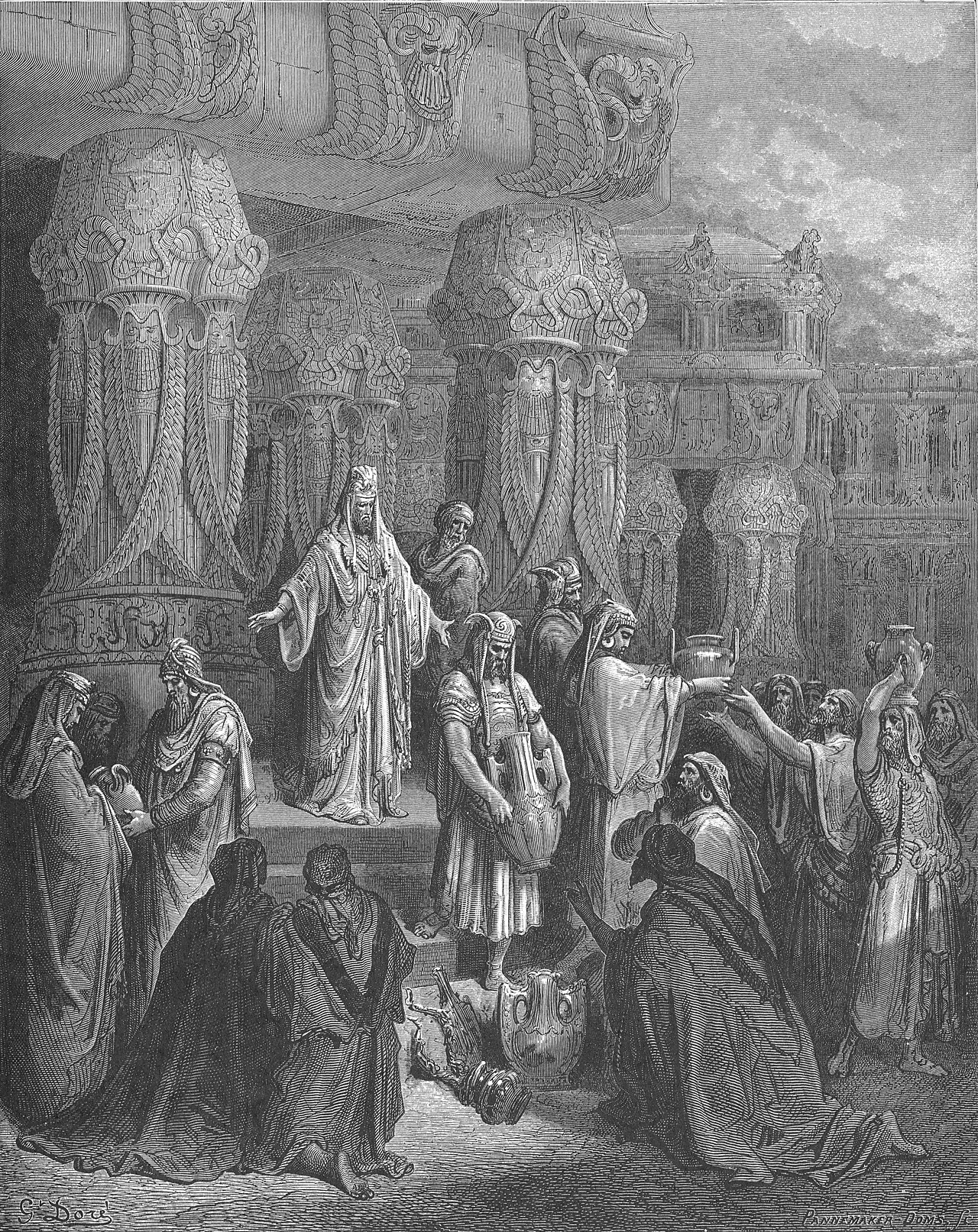
in Ezra 10While Ezra prayed and made this confession, weeping and falling facedown before the house of God, a very large assembly of Israelites—men, women, and children—gathered around him, and the people wept bitterly as well.
BSB
The same verse in ASV and KJV ▾
ASV
Now while Ezra prayed and made confession, weeping and casting himself down before the house of God, there was gathered together unto him out of Israel a very great assembly of men and women and children; for the people wept very sore.
KJV
Now when Ezra had prayed, and when he had confessed, weeping and casting himself down before the house of God, there assembled unto him out of Israel a very great congregation of men and women and children: for the people wept very sore.
⋯
This verse in Ezra 10
Commentary
6 notes on this verseA commentator
Albert Barnes1798–1870
Notes, Explanatory and Practical, on the Old and New Testaments (1832-1869)
Before the house of God - i. e., in front of the temple, praying toward it 1Ki 8:30, 1Ki 8:35; Dan 6:10, and thus in the sight of all the people who happened at the time to be in the great court.
This site's exposition
falling facedown before the house of God
on Ezra 10:1-3
Shecaniah son of Jehiel speaks first, and his own name is absent from the list, though he says "We have been unfaithful to our God". He proposes a covenant to send away the foreign wives and their children according to the Law and says "there is hope for Israel".
The record, by era
The Medieval Church1 voice
Therefore, as Ezra prayed and implored, etc. The effectiveness of Ezra's prayer, weeping, and lamentation is shown when immediately a very large assembly of both sexes and all ages is reported to have gathered to him. They wept, either those who had sinned, repenting of …
The Puritans and the Awakening2 voices
What a good motion Shechaniah made upon this occasion. The place was Bochim --a place of weepers; but, for aught that appears, there was a profound silence among them, as among Job's friends, who spoke not a word to him, because they saw that his grief was very great, till Shechaniah (one of Ezra's companions from Babylon, ch. viii.
quarantine:debris (2026-07-29) — unbalanced-parens
Now when Ezra had prayed, and when he had confessed, weeping,....
The Nineteenth Century1 voice
The people wept very sore - They were deeply affected at the thought of God’s displeasure, which they justly feared was about to light upon them, because of their transgressions.
The words behind it
22 Hebrew wordsEvery Hebrew word of this verse in the order it stands, with what it means and the door to its own study. The last column counts the times a word stands in the whole Bible: the rarer the word, the more the places it appears belong together.
| Hebrew | Sound | Meaning | Word study | In the Bible |
|---|---|---|---|---|
| וּכְהִתְפַּלֵּ֤ל | ukhehitpalel | and just as was praying | H6419 → | |
| עֶזְרָא֙ | ʾezra' | Ezra | H5830 → | 22 times |
| וּכְ֨הִתְוַדֹּת֔וֹ | ukhehitvadoto | and just as was confessing he | H3034 → | |
| בֹּכֶה֙ | bokheh | weeping | H1058 → | 114 times |
| וּמִתְנַפֵּ֔ל | umitnapel | and prostrating himself | H5307 → | |
| לִפְנֵ֖י | lifnei | <to> before | H6440 → | 2123 times |
| בֵּ֣ית | beit | [the] house of | H1004 → | 2046 times |
| הָאֱלֹהִ֑ים | haelohim | <the> God | H430 → | 2601 times |
| נִקְבְּצוּ֩ | nikbetzu | they gathered | H6908 → | 127 times |
| אֵלָ֨יו | ʾelav | to him | H413 → | 5510 times |
| מִיִּשְׂרָאֵ֜ל | miyisrael | from Israel | H3478 → | 2507 times |
| קָהָ֣ל | kahal | a company | H6951 → | 123 times |
| רַב־ | rav- | great | H7227 → | 454 times |
| מְאֹ֗ד | meod | very | H3966 → | |
| אֲנָשִׁ֤ים | ʾanashim | men | H582 → | 566 times |
| וְנָשִׁים֙ | venashim | and women | H802 → | 781 times |
| וִֽילָדִ֔ים | viladim | and children | H3206 → | |
| כִּֽי־ | ki- | for | H3588 → | 4482 times |
| בָכ֥וּ | vakhu | they wept | H1058 → | 114 times |
| הָעָ֖ם | haam | the people | H5971 → | 1873 times |
| הַרְבֵּה־ | harbeh- | great | H7235 → | 227 times |
| בֶֽכֶה׃ ס | vekheh | weeping | H1059 → |
וּכְהִתְפַּלֵּ֤לand just as was praying
ukhehitpalelH6419 →
עֶזְרָא֙Ezra
ʾezra'H5830 →22 times
וּכְ֨הִתְוַדֹּת֔וֹand just as was confessing he
ukhehitvadotoH3034 →
בֹּכֶה֙weeping
bokhehH1058 →114 times
וּמִתְנַפֵּ֔לand prostrating himself
umitnapelH5307 →
לִפְנֵ֖י<to> before
lifneiH6440 →2123 times
בֵּ֣ית[the] house of
beitH1004 →2046 times
הָאֱלֹהִ֑ים<the> God
haelohimH430 →2601 times
נִקְבְּצוּ֩they gathered
nikbetzuH6908 →127 times
אֵלָ֨יוto him
ʾelavH413 →5510 times
מִיִּשְׂרָאֵ֜לfrom Israel
miyisraelH3478 →2507 times
קָהָ֣לa company
kahalH6951 →123 times
רַב־great
rav-H7227 →454 times
מְאֹ֗דvery
meodH3966 →
אֲנָשִׁ֤יםmen
ʾanashimH582 →566 times
וְנָשִׁים֙and women
venashimH802 →781 times
וִֽילָדִ֔יםand children
viladimH3206 →
כִּֽי־for
ki-H3588 →4482 times
בָכ֥וּthey wept
vakhuH1058 →114 times
הָעָ֖םthe people
haamH5971 →1873 times
הַרְבֵּה־great
harbeh-H7235 →227 times
בֶֽכֶה׃ סweeping
vekhehH1059 →
A shaded row is a word that stands 400 times or fewer in the Bible.
The walk
8 stopsEach card is a verse this one points to, and under it the verses that one points to in turn. Where several paths arrive at the same place, that place is listed first: the text keeps returning to it.
Through
Daniel 9:20While I was speaking, praying, confessing my sin and that of my people Israel, and presenting my petition before the LORD my God concerning His holy mountain—
it leads to
- Psalms 145:18
The LORD is near to all who call on Him, to all who call out to Him in truth.
- Daniel 9:3–4
So I turned my attention to the Lord God to seek Him by prayer and petition, with fasting, sackcloth, and ashes.
- Romans 3:23
for all have sinned and fall short of the glory of God,
- Psalms 145:18
Through
Psalms 119:136My eyes shed streams of tears because Your law is not obeyed.
it leads to
- Jeremiah 9:1
Oh, that my head were a spring of water, and my eyes a fountain of tears! I would weep day and night over the slain daughter of my people.
- Ezekiel 9:4
“Go throughout the city of Jerusalem,” said the LORD, “and put a mark on the foreheads of the men sighing and groaning over all the abominations committed there.”
- Psalms 119:158
I look on the faithless with loathing because they do not keep Your word.
- Jeremiah 9:18
Let them come quickly and take up a lament over us, that our eyes may overflow with tears, and our eyelids may gush with water.
- Jeremiah 9:1
Through
Romans 9:2I have deep sorrow and unceasing anguish in my heart.
it leads to
- Philippians 3:18
For as I have often told you before, and now say again even with tears: Many live as enemies of the cross of Christ.
- Philippians 3:18
Where this verse is studied
On this page
Studies1
About Ezra
Who and where
1 name in this verse with a page on the site.
This page draws on Adam Clarke, Commentary on the Bible; Albert Barnes, Notes, Explanatory and Practical, on the Old and New Testaments (1832-1869); Bede, Commentary on Ezra and Nehemiah; Jamieson Fausset and Brown, Commentary Critical and Explanatory on the Whole Bible; John Gill, Exposition of the Old Testament (1748-1763) and Matthew Henry, Commentary on the Whole Bible.