
Ezra 9:3
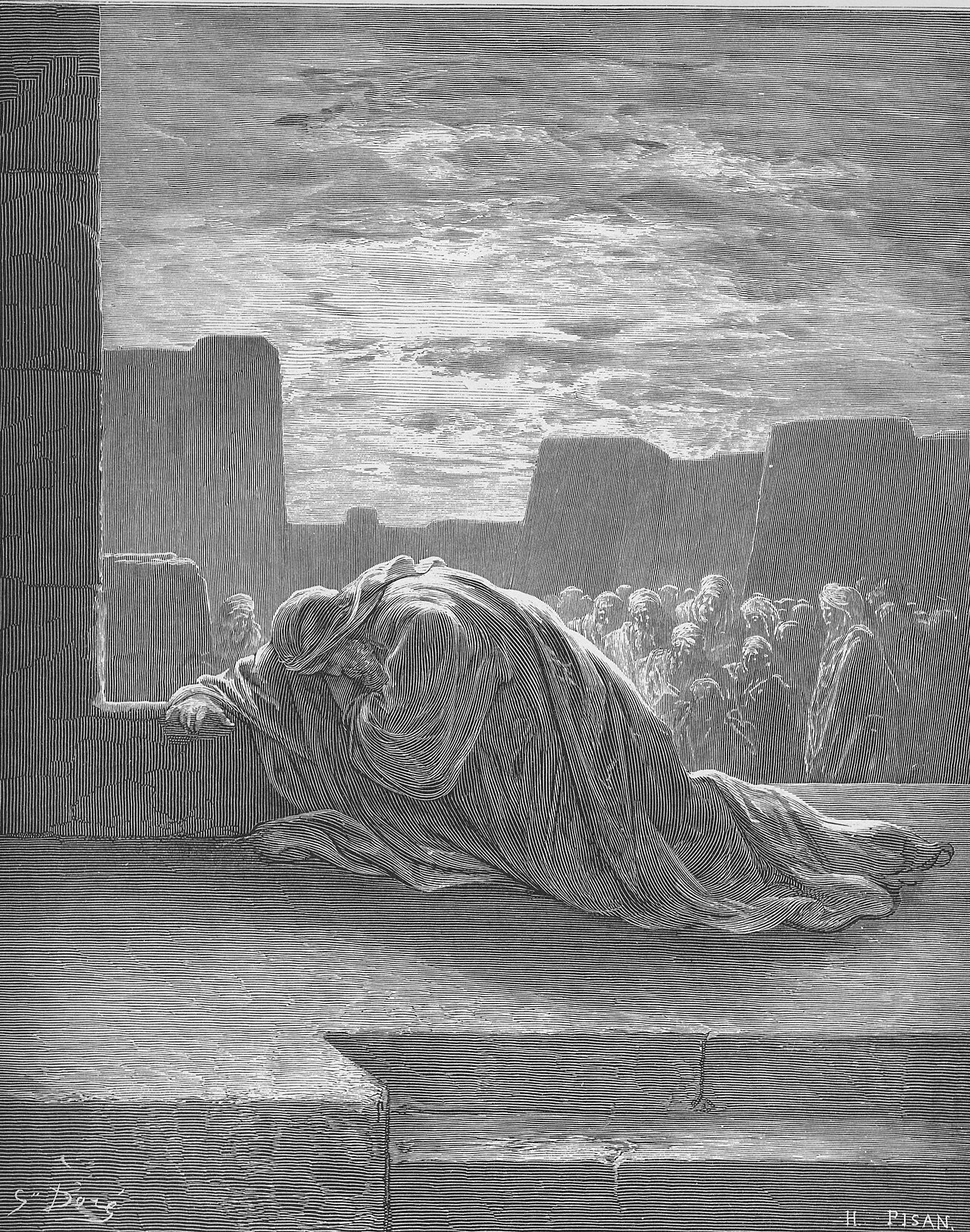
in Ezra 9When I heard this report, I tore my tunic and cloak, pulled out some hair from my head and beard, and sat down in horror.
BSB
The same verse in ASV and KJV ▾
ASV
And when I heard this thing, I rent my garment and my robe, and plucked off the hair of my head and of my beard, and sat down confounded.
KJV
And when I heard this thing, I rent my garment and my mantle, and plucked off the hair of my head and of my beard, and sat down astonied.
⋯
This verse in Ezra 9
Commentary
3 notes on this verseA commentator
Albert Barnes1798–1870
Notes, Explanatory and Practical, on the Old and New Testaments (1832-1869)
Plucking out the hair with the hands, so common among the Classical nations, is, comparatively speaking, rarely mentioned as practiced by Asiatics.
This site's exposition
rent my garment and my mantle
on Ezra 9:3-4
Ezra answers the report with his body before he answers it with words: he rents his garment and his mantle, plucks the hair of his head and beard, and sits down astonied. Those who tremble at the words of the God of Israel gather to him, drawn by grief rather than by summons, and Ezra sits astonied until the evening sacrifice. No blame is spoken yet; the chapter's first response to sin is sorrow, worn openly in the street rather than argued in private.
The record, by era
The Puritans and the Awakening1 voice
Note, (1.) The sins of others should be our sorrow, and the injury done by them to God's honour and the souls of men is what we should lay to heart. (2.) Sorrow for sin must be great sorrow; such Ezra's was, as for an only son or a first-born. (3.) The scandalous sins of professors are what we have reason to be astonished at.
The words behind it
14 Hebrew wordsEvery Hebrew word of this verse in the order it stands, with what it means and the door to its own study. The last column counts the times a word stands in the whole Bible: the rarer the word, the more the places it appears belong together.
| Hebrew | Sound | Meaning | Word study | In the Bible |
|---|---|---|---|---|
| וּכְשָׁמְעִי֙ | ukheshamei | and just as heard I | H8085 → | 1159 times |
| אֶת־ | ʾet- | <obj.> | H853 → | 10935 times |
| הַדָּבָ֣ר | hadavar | the matter | H1697 → | 1440 times |
| הַזֶּ֔ה | hazeh | <the> this | H2088 → | 1180 times |
| קָרַ֥עְתִּי | kara'ti | I tore | H7167 → | |
| אֶת־ | ʾet- | <obj.> | H853 → | 10935 times |
| בִּגְדִ֖י | bigdi | garment my | H899 → | |
| וּמְעִילִ֑י | umeili | and robe my | H4598 → | |
| וָאֶמְרְטָ֞ה | vaemretah | and I pulled out ! | H4803 → | |
| מִשְּׂעַ֤ר | misear | some of [the] hair of | H8181 → | |
| רֹאשִׁי֙ | roshi | head my | H7218 → | 599 times |
| וּזְקָנִ֔י | uzekani | and beard my | H2206 → | |
| וָאֵשְׁבָ֖ה | vaeshevah | and I sat down ! | H3427 → | 1079 times |
| מְשׁוֹמֵֽם׃ | meshomem | appalled | H8074 → |
וּכְשָׁמְעִי֙and just as heard I
ukheshameiH8085 →1159 times
אֶת־<obj.>
ʾet-H853 →10935 times
הַדָּבָ֣רthe matter
hadavarH1697 →1440 times
הַזֶּ֔ה<the> this
hazehH2088 →1180 times
קָרַ֥עְתִּיI tore
kara'tiH7167 →
אֶת־<obj.>
ʾet-H853 →10935 times
בִּגְדִ֖יgarment my
bigdiH899 →
וּמְעִילִ֑יand robe my
umeiliH4598 →
וָאֶמְרְטָ֞הand I pulled out !
vaemretahH4803 →
מִשְּׂעַ֤רsome of [the] hair of
misearH8181 →
רֹאשִׁי֙head my
roshiH7218 →599 times
וּזְקָנִ֔יand beard my
uzekaniH2206 →
וָאֵשְׁבָ֖הand I sat down !
vaeshevahH3427 →1079 times
מְשׁוֹמֵֽם׃appalled
meshomemH8074 →
A shaded row is a word that stands 400 times or fewer in the Bible.
The walk
8 stopsEach card is a verse this one points to, and under it the verses that one points to in turn. Where several paths arrive at the same place, that place is listed first: the text keeps returning to it.
Through
Nehemiah 1:4When I heard these words, I sat down and wept. I mourned for days, fasting and praying before the God of heaven.
it leads to
- Daniel 9:3
So I turned my attention to the Lord God to seek Him by prayer and petition, with fasting, sackcloth, and ashes.
- Psalms 137:1
By the rivers of Babylon we sat and wept when we remembered Zion.
- Ezra 10:1
While Ezra prayed and made this confession, weeping and falling facedown before the house of God, a very large assembly of Israelites—men, women, and children—gathered around him, and the people wept bitterly as well.
- Psalms 102:13–14
You will rise up and have compassion on Zion, for it is time to show her favor— the appointed time has come.
- Nehemiah 2:4
“What is your request?” replied the king. So I prayed to the God of heaven
- Daniel 9:3
Through
Joshua 7:6Then Joshua tore his clothes and fell facedown before the ark of the LORD until evening, as did the elders of Israel; and they all sprinkled dust on their heads.
it leads to
- Genesis 37:34
Then Jacob tore his clothes, put sackcloth around his waist, and mourned for his son many days.
Reached by 2 separate paths from here.
- Genesis 37:29
When Reuben returned to the pit and saw that Joseph was not there, he tore his clothes,
- Genesis 37:34
Through
Daniel 4:19For a time, Daniel, who was also known as Belteshazzar, was perplexed, and his thoughts alarmed him. So the king said, “Belteshazzar, do not let the dream or its interpretation alarm you.” “My lord,”…
it leads to
- Daniel 7:28
Thus ends the matter. As for me, Daniel, my thoughts troubled me greatly, and my face turned pale. But I kept the matter to myself.”
- Daniel 7:28
Where this verse is studied
On this page
Studies1
About Ezra
This page draws on Albert Barnes, Notes, Explanatory and Practical, on the Old and New Testaments (1832-1869); Jamieson Fausset and Brown, Commentary Critical and Explanatory on the Whole Bible and Matthew Henry, Commentary on the Whole Bible.