
Deuteronomy 18:15
in Deuteronomy 18The LORD your God will raise up for you a prophet like me from among your brothers. You must listen to him.
BSB
The same verse in ASV and KJV ▾
ASV
Jehovah thy God will raise up unto thee a prophet from the midst of thee, of thy brethren, like unto me; unto him ye shall hearken;
KJV
The Lord thy God will raise up unto thee a Prophet from the midst of thee, of thy brethren, like unto me; unto him ye shall hearken;
⋯
This verse in Deuteronomy 18
Commentary
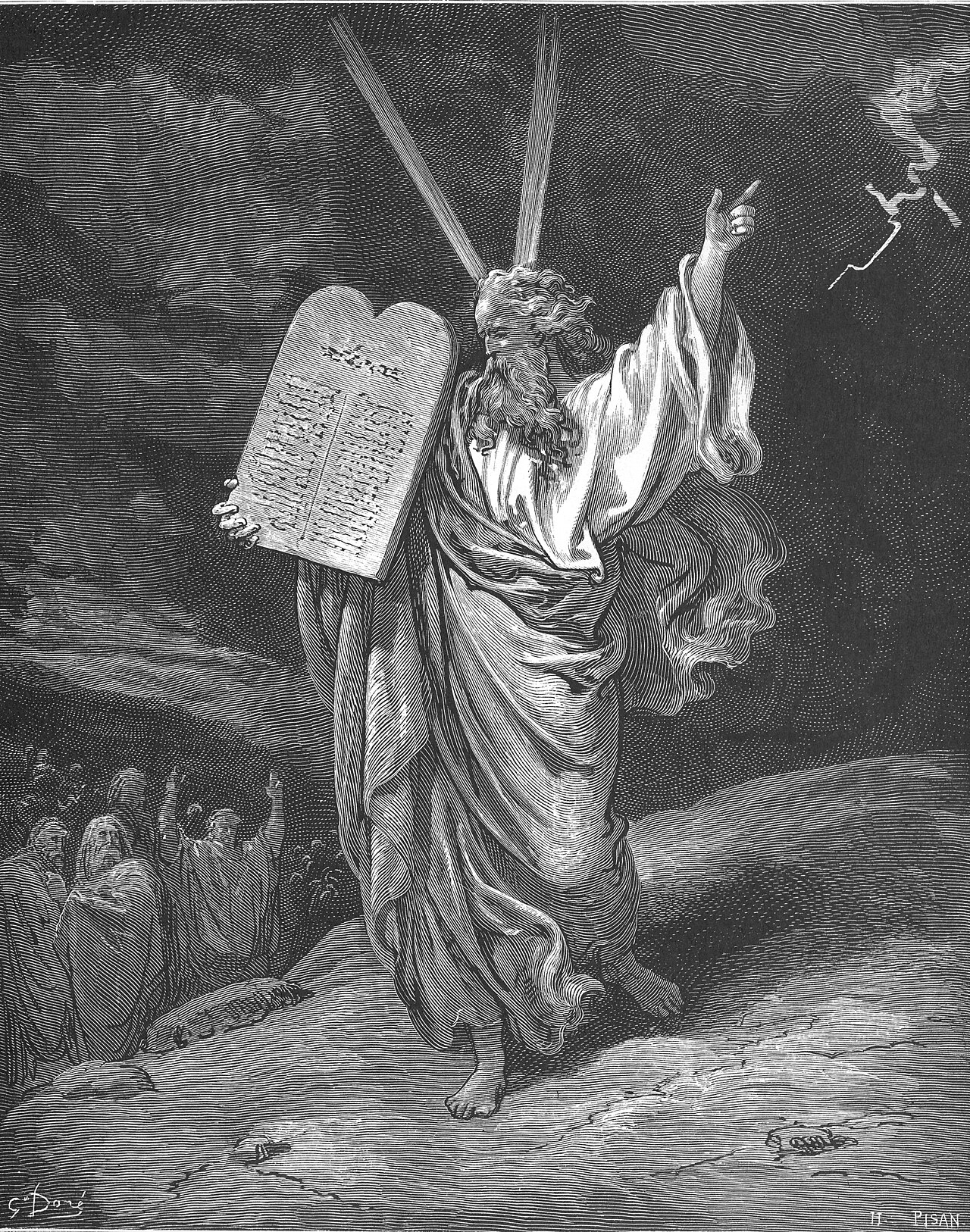
12 notes on this verseIt is written in Deuteronomy, "[The Lord] your God will raise up a prophet like me for you from your brothers. You shall hear him; and it shall be that every soul which will not hear that prophet shall be destroyed from his people." Therefore some prophet was specially expected who would be similar to Moses in some respect, to mediate between God and humanity, and who would receive the covenant from God and give the new covenant to those who became disciples.
This site's exposition
will raise up unto thee a Prophet
on Deuteronomy 18:15-17
The promise is dated to a request. At Horeb the people asked not to hear the voice or see the great fire again, which Exodus 20:18-21 records and Deuteronomy 5:23-28 retells, and verse 17 has God answering that they have well spoken. The office is granted on the people's own terms, a man out of their own brethren standing where the fire stood. Readers divide over whether the singular Prophet covers the line of prophets who followed, or one man, or both; Matthew Henry holds it primarily of Christ while allowing the succession, and Albert Barnes records that the messianic reading was already the standing one among Jews in the first century.
The record, by era
The Church Fathers2 voices
A commentator
Augustine of HippoTRACTATE ON THE GOSPEL OF JOHN 15.23.1 · Written in the 5th century.
proposed
"Like me," says Moses. This means according to the form of the flesh, not to the eminence of majesty. Therefore we find the Lord Jesus called a prophet. Accordingly that woman is no longer greatly in error when she says, "I see that you are a prophet." She begins to call her husband, to exclude the adulterer. "I see that you are a prophet." And she begins to ask about a thing that constantly disturbs her.
A prophet shall the Lord your God raise up unto you—him ye shall hear. And that man who shall not hear what ever that prophet shall speak in my name, that soul shall be cut off from his people.
The Puritans and the Awakening3 voices
These prophets were like unto Moses in some respects, though far inferior to him, Deut. xxxiv. Whether a succession of prophets be included in this promise or not, we are sure that it is primarily intended as a promise of Christ, and it is the clearest promise of him that is in all the law of Moses.
Will raise up - Will produce and send into the world in due time. A prophet like unto me - Christ was truly, and in all commendable parts like him, in being both a prophet and a king and a priest and mediator, in the excellency of his ministry and work, in the glory of his miracles, in his familiar and intimate converse with God.
The Lord thy God will raise up unto thee a prophet,....
5 more voices on this verse
The Puritans and the Awakening1 voice
Moses was such a prophet as was a law-giver to Israel and their deliverer out of Egypt, and so was Christ: he not only teaches, but rules and saves. Moses was the founder of a new dispensation by signs and wonders and mighty deeds, and so was Christ, by which he proved himself a teacher come from God.
The Nineteenth Century4 voices
A commentator
Albert Barnes1798–1870
Notes, Explanatory and Practical, on the Old and New Testaments (1832-1869)
The ancient fathers of the Church and the generality of modern commentators have regarded our Lord as the prophet promised in these verses. It is evident from the New Testament alone that the Messianic was the accredited interpretation among the Jews at the beginning of the Christian era (compare the marginal references, and Joh 4:25); nor can our Lord Himself, when He declares that Moses “wrote of Him” Joh 5:45-47, be supposed to have any other words more directly in view than these, the only words in which Moses, speaking in his own person, gives any prediction of the kind.
MAN, the creature, may well desire communion with his Creator. When we are right-minded we cannot bear to be like fatherless children, born into the world by a parent of whom we know nothing whatever. We long to hear our father's voice. Of old time, before sin had entered into the world, the Lord God was on the most intimate terms with His creature, man. He communed with Adam in the garden. In the cool of the day He made the evening to be seven-fold refreshing by the shadow of His own Presence. There was no cloud between unfallen man and the Ever-Blessed One— they could commune together, for no sin had set up a middle wall of partition. Alas, man, being in honor, continued not, but broke the Law of his God and not only forfeited his own inheritance, but entailed upon his descendants a character with which the holy God can hold no converse. By nature we love that which is evil and within us there is an evil heart of unbelief in departing from the living God—consequently, communion between God and man has had to be upon quite another footing from that which commenced and ended in the glades of Eden. It was condescension at the first, which made the Lord speak with man, the creature. It is mercy, unutterable mercy, now, if God deigns to speak with man the sinner! Through His Divine Grace, the Lord did not leave our fathers altogether without a word from Himself even after the Fall, for between the days of Adam and Moses there were occasional voices heard as of God speaking with man. "Enoch walked with God," which implies that God walked with him and had communion with him. And we may rest assured it was no silent walk which Enoch had with the Most High. The Lord also spoke to Noah, once and again, and made a Covenant with him. And then He, at still greater length and with greater frequency, spoke with Abraham, whom He graciously called His friend.
MAN, the creature, may well desire communion with his Creator. When we are right-minded we cannot bear to be like fatherless children, born into the world by a parent of whom we know nothing whatever. We long to hear our father's voice. Of old time, before sin had entered into the world, the Lord God was on the most intimate terms with His creature, man. He communed with Adam in the garden. In the cool of the day He made the evening to be seven-fold refreshing by the shadow of His own Presence.
The Lord thy God will raise up unto thee a Prophet - Instead of diviners, observers of times, etc., God here promises to give them an infallible guide, who should tell them all things that make for their peace, so that his declarations should completely answer the end of all the knowledge that was pretended to be gained by the persons already specified. Like unto me - Viz., a prophet, a legislator, a king, a mediator, and the head or chief of the people of God. This was the very person of whom Moses was the type, and who should accomplish all the great purposes of the Divine Being. Such a prophet as had never before appeared, and who should have no equal till the consummation of the world. This prophet is the Lord Jesus, who was in the bosom of the Father, and who came to declare him to mankind. Every word spoken by him is a living infallible oracle from God himself; and must be received and obeyed as such, on pain of the eternal displeasure of the Almighty. See Deu 18:19, and Act 3:22, Act 3:23; and see the conclusion of this chapter, Deu 18:22 (note).
The words behind it
10 Hebrew wordsEvery Hebrew word of this verse in the order it stands, with what it means and the door to its own study. The last column counts the times a word stands in the whole Bible: the rarer the word, the more the places it appears belong together.
| Hebrew | Sound | Meaning | Word study | In the Bible |
|---|---|---|---|---|
| נָבִ֨יא | navi' | a prophet | H5030 → | 314 times |
| מִקִּרְבְּךָ֤ | mikirbecha | from midst your | H7130 → | 227 times |
| מֵאַחֶ֙יךָ֙ | meacheikha | one of countrymen your | H251 → | 630 times |
| כָּמֹ֔נִי | kamoni | like me | H3644 → | 143 times |
| יָקִ֥ים | yakim | he will raise up | H6965 → | 628 times |
| לְךָ֖ | lekha | for <the> you | ||
| יְהוָ֣ה | yahweh | Yahweh | H3068 → | 6520 times |
| אֱלֹהֶ֑יךָ | ʾeloheikha | God your | H430 → | 2601 times |
| אֵלָ֖יו | ʾelav | to him | H413 → | 5510 times |
| תִּשְׁמָעֽוּן׃ | tishmaun | you will listen ! | H8085 → | 1159 times |
נָבִ֨יאa prophet
navi'H5030 →314 times
מִקִּרְבְּךָ֤from midst your
mikirbechaH7130 →227 times
מֵאַחֶ֙יךָ֙one of countrymen your
meacheikhaH251 →630 times
כָּמֹ֔נִיlike me
kamoniH3644 →143 times
יָקִ֥יםhe will raise up
yakimH6965 →628 times
לְךָ֖for <the> you
lekha
יְהוָ֣הYahweh
yahwehH3068 →6520 times
אֱלֹהֶ֑יךָGod your
ʾeloheikhaH430 →2601 times
אֵלָ֖יוto him
ʾelavH413 →5510 times
תִּשְׁמָעֽוּן׃you will listen !
tishmaunH8085 →1159 times
A shaded row is a word that stands 400 times or fewer in the Bible.
The walk
8 stopsEach card is a verse this one points to, and under it the verses that one points to in turn. Where several paths arrive at the same place, that place is listed first: the text keeps returning to it.
Through
John 1:45Philip found Nathanael and told him, “We have found the One Moses wrote about in the Law, the One the prophets foretold—Jesus of Nazareth, the son of Joseph.”
it leads to
- Deuteronomy 18:18–22
I will raise up for them a prophet like you from among their brothers. I will put My words in his mouth, and he will tell them everything I command him.
- Micah 5:2
But you, Bethlehem Ephrathah, who are small among the clans of Judah, out of you will come forth for Me One to be ruler over Israel—One whose origins are of old, from the days…
- Luke 24:27
And beginning with Moses and all the Prophets, He explained to them what was written in all the Scriptures about Himself.
- Matthew 2:23
and he went and lived in a town called Nazareth. So was fulfilled what was spoken through the prophets: “He will be called a Nazarene.”
- Luke 24:44
Jesus said to them, “These are the words I spoke to you while I was still with you: Everything must be fulfilled that is written about Me in the Law of Moses, the Prophets,…
- Deuteronomy 18:18–22
Through
Acts 7:37This is the same Moses who told the Israelites, ‘God will raise up for you a prophet like me from among your brothers.’
it leads to
- Deuteronomy 18:15–19
The LORD your God will raise up for you a prophet like me from among your brothers. You must listen to him.
- Acts 3:22–23
For Moses said, ‘The Lord your God will raise up for you a prophet like me from among your brothers. You must listen to Him in everything He tells you.
- John 18:37
“Then You are a king!” Pilate said. “You say that I am a king,” Jesus answered. “For this reason I was born and have come into the world, to testify to the truth. Everyone…
- Deuteronomy 18:15–19
Where this verse is studied
On this page
About Deuteronomy
This page draws on 10 works. Open the list of works
This page draws on Adam Clarke, Commentary on the Bible; Albert Barnes, Notes on the Old Testament; Albert Barnes, Notes, Explanatory and Practical, on the Old and New Testaments (1832-1869); Augustine of Hippo, TRACTATE ON THE GOSPEL OF JOHN 15.23.1; Charles Spurgeon, The Metropolitan Tabernacle Pulpit, Sermon No. 1487: “The Prophet Like Unto Moses” (lightly modernized text, CCEL edition); Cosmas Indicopleustes, The Christian Topography, Book 5; John Gill, Exposition of the Old Testament (1748-1763); John Wesley, Explanatory Notes upon the Old Testament; Matthew Henry, Commentary on the Whole Bible and Origen of Alexandria, COMMENTARY ON THE GOSPEL OF JOHN 6.90.