
Deuteronomy 14:3
in Deuteronomy 14You must not eat any detestable thing.
BSB
The same verse in ASV and KJV ▾
ASV
Thou shalt not eat any abominable thing.
KJV
Thou shalt not eat any abominable thing.
⋯
This verse in Deuteronomy 14
Commentary
4 notes on this verseAmong the Jews, frugality was made a matter of precept by a very wise dispensation of the law. The Educator forbade them the use of innumerable things. He explained the reasons, the spiritual ones hidden, the material ones obvious, but all of which they trusted. Some animals [were forbidden] because they were [not] cloven-footed; others, because they did not ruminate their food; a third class, because they, alone among all the fish of the seas, had no scales; until finally there were only a few things left fit for food.
This site's exposition
Ye are the children of the Lord your God
on Deuteronomy 14:1-3
The ban on cutting the flesh and shaving the head for the dead is grounded in sonship, since the reason given first is that Israel belongs to God as children. Leviticus 21:5 laid that rule on the priests and Leviticus 19:28 on the people, and here the whole nation is addressed as sons before it is told to keep it. Peculiar people is the phrase of Exodus 19:5, and Titus 2:14 and 1 Peter 2:9 take it up for the church. 1 Kings 18:28 shows the prophets of Baal cutting themselves, and Jeremiah 16:6 and 41:5 show Israelites doing it anyway.
The record, by era
The Puritans and the Awakening1 voice
Thou shall not eat any abominable thing. That is so either in its own nature, or because forbidden by the Lord; what are such are declared in the following verses.
The Nineteenth Century1 voice
A commentator
Albert Barnes1798–1870
Notes, Explanatory and Practical, on the Old and New Testaments (1832-1869)
Compare Lev. 11. The variations here, whether omissions or additions, are probably to be explained by the time and circumstances of the speaker. Deu 14:5 The “pygarg” is a species of gazelle, and the “wild ox” and “chamois” are swift types of antelope. Deu 14:21 The prohibition is repeated from Lev 22:8. The directions as to the disposal of the carcass are unique to Deuteronomy, and their motive is clear.
The words behind it
4 Hebrew wordsEvery Hebrew word of this verse in the order it stands, with what it means and the door to its own study. The last column counts the times a word stands in the whole Bible: the rarer the word, the more the places it appears belong together.
| Hebrew | Sound | Meaning | Word study | In the Bible |
|---|---|---|---|---|
| לֹ֥א | lo' | not | H3808 → | 5168 times |
| תֹאכַ֖ל | tokhal | you will eat | H398 → | 810 times |
| כָּל־ | kol- | any | H3605 → | 5413 times |
| תּוֹעֵבָֽה׃ | toevah | disgusting thing | H8441 → | 117 times |
לֹ֥אnot
lo'H3808 →5168 times
תֹאכַ֖לyou will eat
tokhalH398 →810 times
כָּל־any
kol-H3605 →5413 times
תּוֹעֵבָֽה׃disgusting thing
toevahH8441 →117 times
A shaded row is a word that stands 400 times or fewer in the Bible.
The walk
8 stopsEach card is a verse this one points to, and under it the verses that one points to in turn. Where several paths arrive at the same place, that place is listed first: the text keeps returning to it.
Through
Titus 1:15To the pure, all things are pure; but to the defiled and unbelieving, nothing is pure. Indeed, both their minds and their consciences are defiled.
it leads to
- Romans 14:14
I am convinced and fully persuaded in the Lord Jesus that nothing is unclean in itself. But if anyone regards something as unclean, then for him it is unclean.
- Romans 14:20
Do not destroy the work of God for the sake of food. All food is clean, but it is wrong for a man to let his eating be a stumbling block.
- 1 Corinthians 10:23
“Everything is permissible,” but not everything is beneficial. “Everything is permissible,” but not everything is edifying.
- 1 Timothy 4:3–4
They will prohibit marriage and require abstinence from certain foods that God has created to be received with thanksgiving by those who believe and know the truth.
- Romans 14:14
Through
Romans 14:14I am convinced and fully persuaded in the Lord Jesus that nothing is unclean in itself. But if anyone regards something as unclean, then for him it is unclean.
it leads to
- Titus 1:15
To the pure, all things are pure; but to the defiled and unbelieving, nothing is pure. Indeed, both their minds and their consciences are defiled.
- 1 Timothy 4:4
For every creation of God is good, and nothing that is received with thanksgiving should be rejected,
- Romans 14:2
For one person has faith to eat all things, while another, who is weak, eats only vegetables.
- 1 Corinthians 8:7
But not everyone has this knowledge. Some people are still so accustomed to idols that they eat such food as if it were sacrificed to an idol. And since their conscience is weak, it…
- Titus 1:15
About Deuteronomy
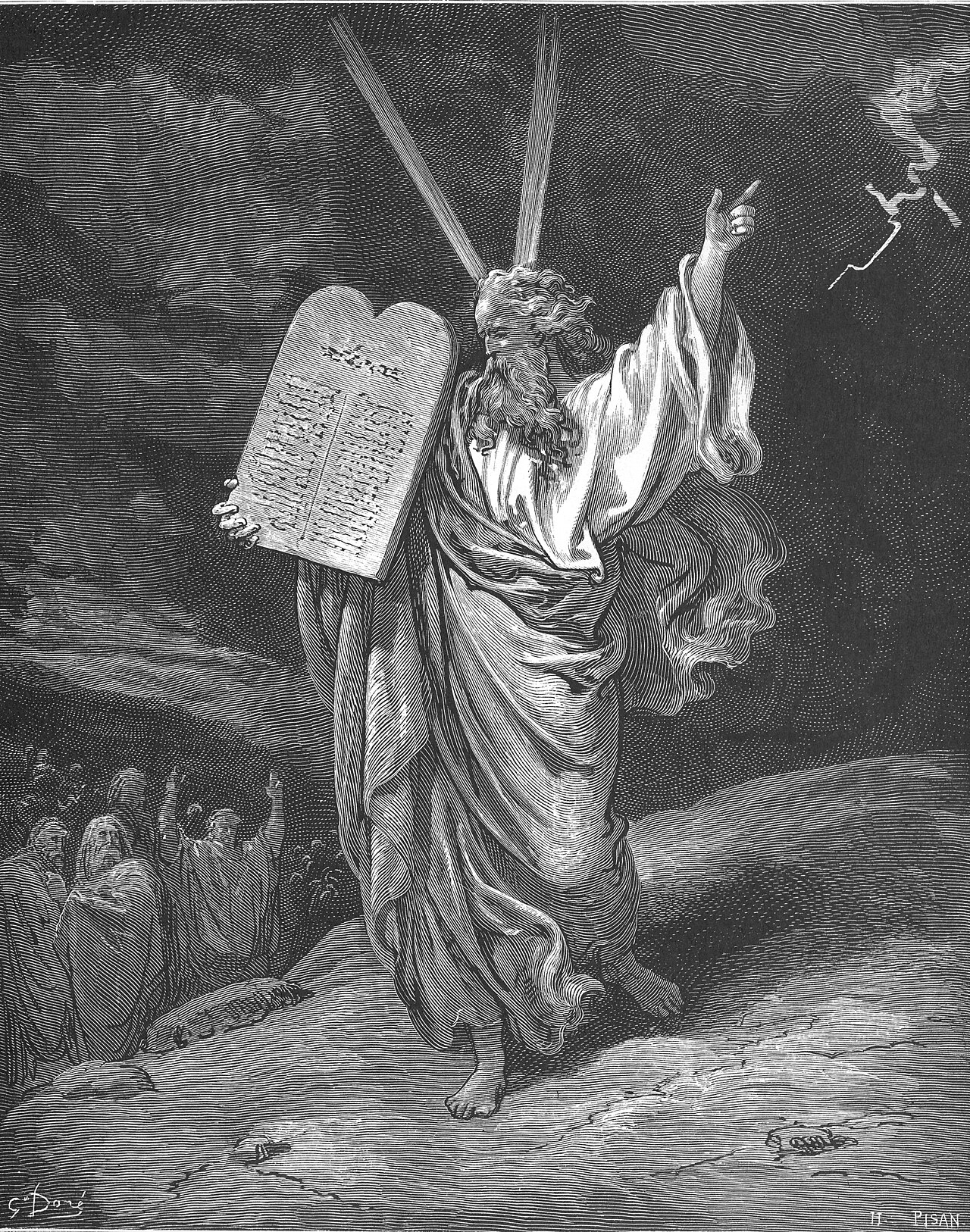
This page draws on Albert Barnes, Notes on the Old Testament; Albert Barnes, Notes, Explanatory and Practical, on the Old and New Testaments (1832-1869); Clement of Alexandria, The Instructor Book 2; John Gill, Exposition of the Old Testament (1748-1763) and Keil and Delitzsch, Biblical Commentary on the Old Testament: The Pentateuch.