
Daniel 3:26
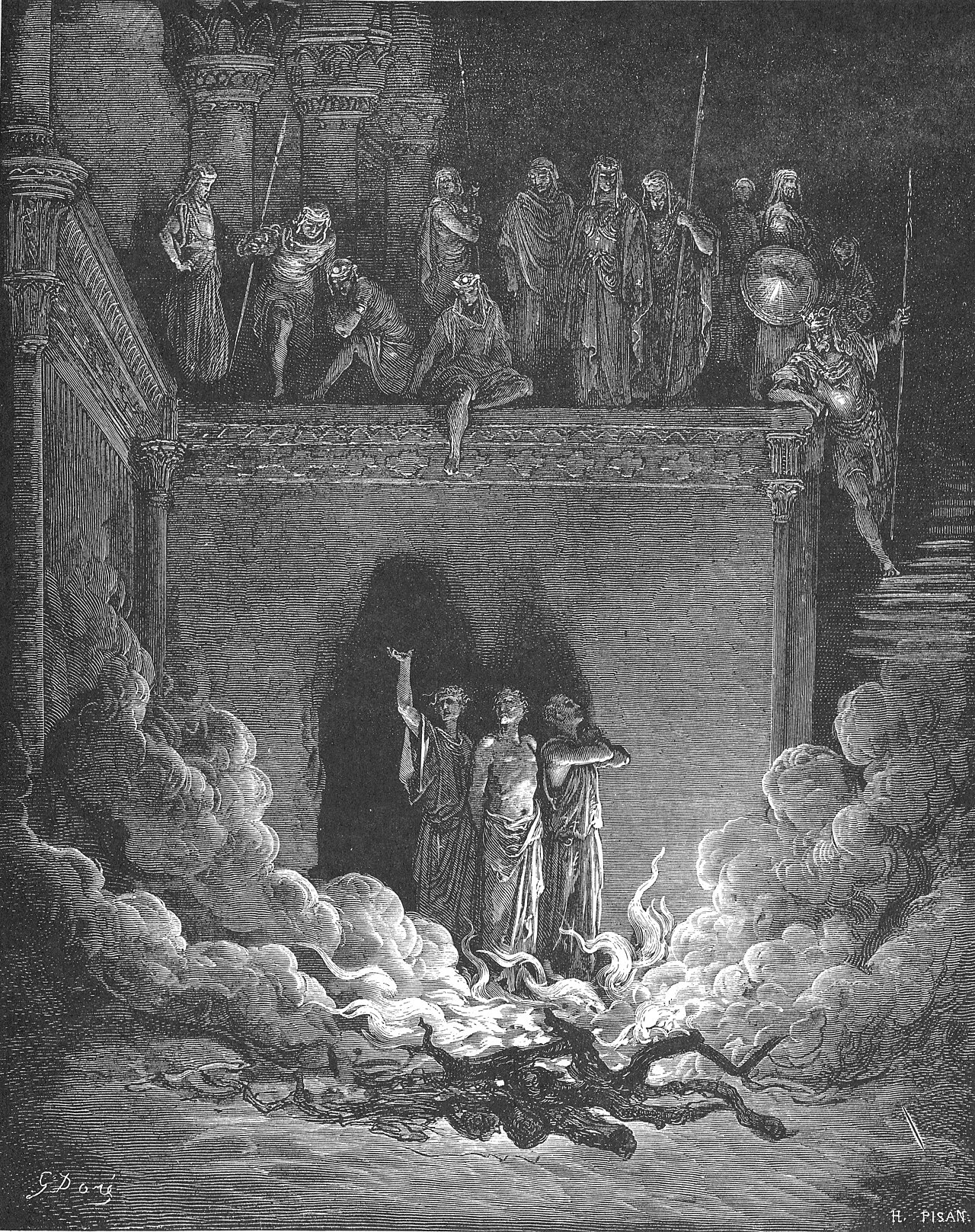
in Daniel 3Then Nebuchadnezzar approached the door of the blazing fiery furnace and called out, “Shadrach, Meshach, and Abednego, servants of the Most High God, come out!” So Shadrach, Meshach, and Abednego came out of the fire,
BSB
The same verse in ASV and KJV ▾
ASV
Then Nebuchadnezzar came near to the mouth of the burning fiery furnace: he spake and said, Shadrach, Meshach, and Abed-nego, ye servants of the Most High God, come forth, and come hither. Then Shadrach, Meshach, and Abed-nego came forth out of the midst of the fire.
KJV
Then Nebuchadnezzar came near to the mouth of the burning fiery furnace, and spake, and said, Shadrach, Meshach, and Abed–nego, ye servants of the most high God, come forth, and come hither. Then Shadrach, Meshach, and Abed–nego, came forth of the midst of the fire.
⋯
This verse in Daniel 3
Commentary
12 notes on this verseObserve the respectful title that he gives them. When he was in the heat of his fury and rage against them it is probable that he called them rebels, and traitors, and all the ill names he could invent; but now he owns them for the servants of the most high God, a God who now appears able to deliver them out of his hand.
This site's exposition
come forth, and come hither
on Daniel 3:26-27
The king calls them out as servants of the most high God, and only three come forth: the fourth is not summoned and does not exit, which the older writers note in passing awe. The inspection is official and total, princes, governors, captains and counsellors gathered as witnesses: the fire had no power on their bodies, not an hair singed, their coats unchanged, and the smell of fire had not passed on them. The only things burned were the ropes, as the bench observes: the furnace consumed exactly what bound them and nothing that was theirs.
The record, by era
The Church Fathers5 voices
A commentator
Augustine of HippoEXPLANATIONS OF THE PSALMS 91:19 · Written in the 5th century.
proposed
Let faith be yours, and God will be with you in your trouble. There are waves on the sea, and you are tossed about in your cabin, because Christ sleeps.… If you allow faith to sleep in your heart, Christ is, you might say, sleeping with you in your ship. Because Christ dwells in you through faith, when you begin to be tossed about, awake Christ from his sleep. Awaken your faith, and you shall be assured he will not desert you. You may think that you are forsaken, because he does not rescue you at the very moment you desire. But did he not deliver the three children from the fire?
A commentator
Augustine of HippoEXPLANATIONS OF THE PSALMS 34:21 · Written in the 5th century.
proposed
The flame could not approach or hurt the innocent and righteous children praising God, and he delivered them out of the fire. Some might say, "Truly, those who are righteous are those that are heard," as it is written, "The righteous cried, and the Lord heard them and delivered them out of their troubles." But I have cried, and he does not deliver me; either I am not righteous, or I do not do the things that he commands me to do or perhaps he just does not see me. Fear not: do what he commands you, and if he does not deliver you in bodily form, he will deliver you spiritually.… He delivered Peter when the angel came to him when he was in prison and said, "Arise, and go forth," and suddenly his chains were released, and he followed the angel, and he delivered him. Had Peter, then, lost his righteousness when he did not deliver him from the cross? Did he not deliver him then? Even then God delivered him.… When God first delivered Peter, how many times did he suffer afterwards? So in the end, God sent him where he could suffer no evil.
"Then Nebuchadnezzar came to the door of the burning furnace and he said, 'Shadrach, Meshach and Abednego, slaves of God Most High, come out and come here.'" [Daniel 3:26] For since he himself was not able to come into the furnace, he called them to come outside. And he called the names of the three, but he found he was not able to declare the fourth. For Jesus had not yet been born of the virgin.
Verse 26. "Then Nebuchadnezzar approached unto the mouth of the burning fiery furnace and said: 'Shadrach, Meshach, and Abednego, servants of the Most High God, come forth and draw near!' And straightway Shadrach, Meshach, and Abednego came forth from the midst of the fire." Being terrified with fear, the king does not address his request to the youths through any messengers, but himself calls upon them by name, addressing them as servants of the Most High God, and begging these very men to come forth whom he himself had cast bound into the furnace.
"Shadrach, Meshach, and Abednego, ye servants of the most high God, come forth, and come hither." Mighty dignity! "Ye servants of the most high God, come forth, and come hither." How are they to come forth, O king? Thou didst cast them into the fire bound; they have continued this long time in the fire. Why, had they been made of adamant, had they been blocks of metal, in singing that entire hymn, must they not have perished? On this account then they were saved, because they sang praises to God. The fire reverenced their readiness to suffer and afterwards it reverenced that wonderful song, and their hymns of praise. By what title dost thou call them? I said before, "Ye servants of the most high God." Yes, to the servants of God, all things are possible; for if some, who are the servants of men, have, nevertheless, power, and authority, and the disposal of their concerns, much more have the servants of God. He called them by the name most delightful to them, he knew that by this means he flattered them most: for indeed, if it was in order to continue servants of God, that they entered into the fire, there could be no sound more delightful to them than this. Had he called them kings, had he called them lords of the world, yet would he not so truly have rejoiced them as when he said, "Ye servants of the most high God."
5 more voices on this verse
The Medieval Church1 voice
A commentator
Symeon the New TheologianTHE PRACTICAL AND THEOLOGICAL CHAPTERS 1:76 · Written before 1022.
proposed
When a person has abandoned the world, it seems to him that he is living in a remote desert, full of wild beasts. He is filled with unutterable fear and indescribable trembling and cries to God like Jonah from the whale, from the sea of …
The Puritans and the Awakening2 voices
And spake - With a milder tone than before, God having abated the fire of his fury. Now he could at once acknowledge the true God to be the most high above all gods, and the three worthies to be his faithful servants.
Then Nebuchadnezzar came near to the mouth of the burning fiery furnace,....
The Nineteenth Century2 voices
A commentator
Jamieson, Fausset & Brown1802–1910
Commentary Critical and Explanatory on the Whole Bible (1871)
proposed
the most high God--He acknowledges Jehovah to be supreme above other gods (not that he ceased to believe in these); so he returns to his original confession, "your God is a God of gods" (Da 2:47), from which he had swerved in the interim, perhaps intoxicated by his success in taking Jerusalem, whose God he therefore thought unable to defend it.
quarantine:debris (2026-07-29) — starts-lowercase
A commentator
Albert Barnes1798–1870
Notes, Explanatory and Practical, on the Old and New Testaments (1832-1869)
proposed
Then Nebuchadnezzar came near to the mouth ... - Margin, “door.” The Chaldee word means door, gate, entrance. The “form” of the furnace is unknown. There was a place, however, through which the fuel was cast into it, and this is doubtless intended by the word “door” or “mouth” here used.
The words behind it
28 Hebrew wordsEvery Hebrew word of this verse in the order it stands, with what it means and the door to its own study. The last column counts the times a word stands in the whole Bible: the rarer the word, the more the places it appears belong together.
| Hebrew | Sound | Meaning | Word study | In the Bible |
|---|---|---|---|---|
| בֵּאדַ֜יִן | bedayin | <in> then | H116 → | 57 times |
| קְרֵ֣ב | kerev | he approached | H7127 → | 9 times |
| נְבוּכַדְנֶצַּ֗ר | nevukhadnetzar | Nebuchadnezzar | H5020 → | 31 times |
| לִתְרַע֮ | litra' | to [the] door of | H8651 → | |
| אַתּ֣וּן | ʾatun | [the] furnace of | H861 → | 10 times |
| נוּרָ֣א | nura' | fire the | H5135 → | 17 times |
| יָקִֽדְתָּא֒ | yakidta' | <the> burning | H3345 → | 8 times |
| עָנֵ֣ה | ʾaneh | [he was] replying | H6032 → | 30 times |
| וְאָמַ֗ר | veamar | and [he was] saying | H560 → | 71 times |
| שַׁדְרַ֨ךְ | shadrakh | O Shadrach | H7715 → | 14 times |
| מֵישַׁ֧ךְ | meishakh | Meshach | H4336 → | 14 times |
| וַעֲבֵד־ | vaaved- | and Abed- | H5665 → | 28 times |
| נְג֛וֹ | nego | -nego | H5665 → | 28 times |
| עַבְד֛וֹהִי | avdohi | servants his | H5649 → | 7 times |
| דִּֽי־ | di- | of | H1768 → | 345 times |
| אֱלָהָ֥א | ʾelaha' | <the> God | H426 → | 95 times |
| עִלָּאָ֖ה | ilaya' | Most High the | H5943 → | 10 times |
| פֻּ֣קוּ | puku | come out! | H5312 → | 11 times |
| וֶאֱת֑וֹ | veeto | and come! | H858 → | 16 times |
| בֵּאדַ֣יִן | bedayin | <in> then | H116 → | 57 times |
| נָֽפְקִ֗ין | nafekin | [were] coming out | H5312 → | 11 times |
| שַׁדְרַ֥ךְ | shadrakh | Shadrach | H7715 → | 14 times |
| מֵישַׁ֛ךְ | meishakh | Meshach | H4336 → | 14 times |
| וַעֲבֵ֥ד | vaaved | and Abed- | H5665 → | 28 times |
| נְג֖וֹ | nego | -nego | H5665 → | 28 times |
| מִן־ | min- | from | H4481 → | 109 times |
| גּ֥וֹא | go' | [the] midst of | H1459 → | 13 times |
| נוּרָֽא׃ | nura' | fire the | H5135 → | 17 times |
בֵּאדַ֜יִן<in> then
bedayinH116 →57 times
קְרֵ֣בhe approached
kerevH7127 →9 times
נְבוּכַדְנֶצַּ֗רNebuchadnezzar
nevukhadnetzarH5020 →31 times
לִתְרַע֮to [the] door of
litra'H8651 →
אַתּ֣וּן[the] furnace of
ʾatunH861 →10 times
נוּרָ֣אfire the
nura'H5135 →17 times
יָקִֽדְתָּא֒<the> burning
yakidta'H3345 →8 times
עָנֵ֣ה[he was] replying
ʾanehH6032 →30 times
וְאָמַ֗רand [he was] saying
veamarH560 →71 times
שַׁדְרַ֨ךְO Shadrach
shadrakhH7715 →14 times
מֵישַׁ֧ךְMeshach
meishakhH4336 →14 times
וַעֲבֵד־and Abed-
vaaved-H5665 →28 times
נְג֛וֹ-nego
negoH5665 →28 times
עַבְד֛וֹהִיservants his
avdohiH5649 →7 times
דִּֽי־of
di-H1768 →345 times
אֱלָהָ֥א<the> God
ʾelaha'H426 →95 times
עִלָּאָ֖הMost High the
ilaya'H5943 →10 times
פֻּ֣קוּcome out!
pukuH5312 →11 times
וֶאֱת֑וֹand come!
veetoH858 →16 times
בֵּאדַ֣יִן<in> then
bedayinH116 →57 times
נָֽפְקִ֗ין[were] coming out
nafekinH5312 →11 times
שַׁדְרַ֥ךְShadrach
shadrakhH7715 →14 times
מֵישַׁ֛ךְMeshach
meishakhH4336 →14 times
וַעֲבֵ֥דand Abed-
vaavedH5665 →28 times
נְג֖וֹ-nego
negoH5665 →28 times
מִן־from
min-H4481 →109 times
גּ֥וֹא[the] midst of
go'H1459 →13 times
נוּרָֽא׃fire the
nura'H5135 →17 times
A shaded row is a word that stands 400 times or fewer in the Bible.
The walk
8 stopsEach card is a verse this one points to, and under it the verses that one points to in turn. Where several paths arrive at the same place, that place is listed first: the text keeps returning to it.
Through
Galatians 1:10Am I now seeking the approval of men, or of God? Or am I striving to please men? If I were still trying to please men, I would not be a servant of Christ.
it leads to
- 1 Thessalonians 2:4
Instead, we speak as those approved by God to be entrusted with the gospel, not in order to please men but God, who examines our hearts.
- Acts 5:29
But Peter and the other apostles replied, “We must obey God rather than men.
- Ephesians 6:6
And do this not only to please them while they are watching, but as servants of Christ, doing the will of God from your heart.
- James 4:4
You adulteresses! Do you not know that friendship with the world is hostility toward God? Therefore, whoever chooses to be a friend of the world renders himself an enemy of God.
- Matthew 22:16
They sent their disciples to Him along with the Herodians. “Teacher,” they said, “we know that You are honest and that You teach the way of God in accordance with the truth. You seek…
- 1 Thessalonians 2:4
Through
Daniel 3:17If the God whom we serve exists, then He is able to deliver us from the blazing fiery furnace and from your hand, O king.
it leads to
- Romans 8:31
What then shall we say in response to these things? If God is for us, who can be against us?
- Luke 1:37
For no word from God will ever fail.”
- Hebrews 7:25
Therefore He is able to save completely those who draw near to God through Him, since He always lives to intercede for them.
- Romans 8:31
Where this verse is studied
On this page
About Daniel
This page draws on 12 works. Open the list of works
This page draws on Albert Barnes, Notes, Explanatory and Practical, on the Old and New Testaments (1832-1869); Augustine of Hippo, EXPLANATIONS OF THE PSALMS 91:19; Augustine of Hippo, EXPLANATIONS OF THE PSALMS 34:21; Hippolytus of Rome, Commentary on Daniel 2.34.1-3; Jamieson, Fausset & Brown, Commentary Critical and Explanatory on the Whole Bible; Jerome, St. Jerome, Commentary on Daniel, CHAPTER THREE; John Chrysostom, HOMILIES ON EPHESIANS 8; John Gill, Exposition of the Old Testament; John Gill, Exposition of the Old Testament (1748-1763); John Wesley, Explanatory Notes upon the Old Testament; Matthew Henry, Commentary on the Whole Bible and Symeon the New Theologian, THE PRACTICAL AND THEOLOGICAL CHAPTERS 1:76.