
Daniel 3:22
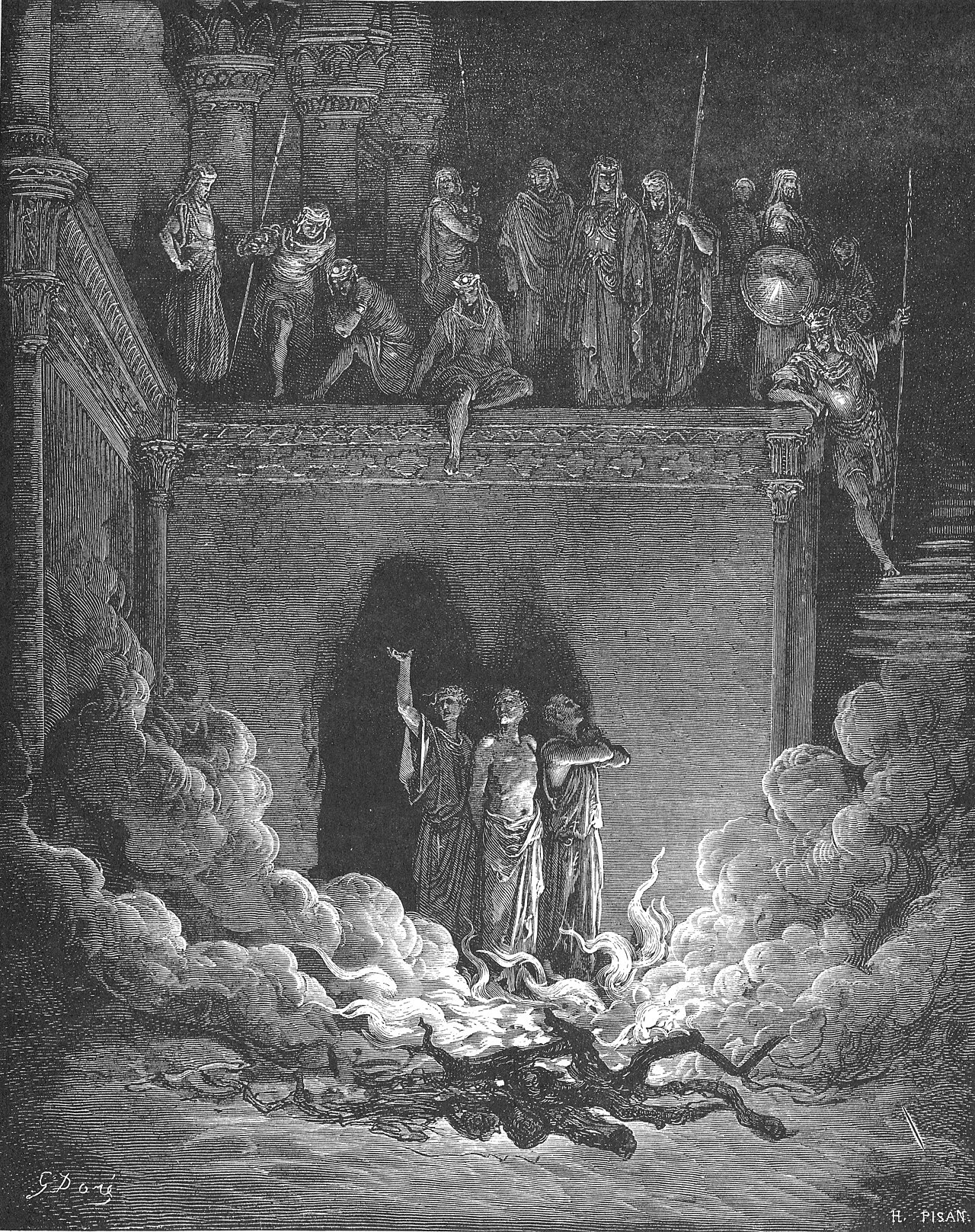
in Daniel 3The king’s command was so urgent and the furnace so hot that the fiery flames killed the men who carried up Shadrach, Meshach, and Abednego.
BSB
The same verse in ASV and KJV ▾
ASV
Therefore because the king’s commandment was urgent, and the furnace exceeding hot, the flame of the fire slew those men that took up Shadrach, Meshach, and Abed-nego.
KJV
Therefore because the king’s commandment was urgent, and the furnace exceeding hot, the flame of the fire slew those men that took up Shadrach, Meshach, and Abed–nego.
⋯
This verse in Daniel 3
Commentary
10 notes on this verseNebuchadnezzar himself was reserved for a further reckoning. There is a day coming when proud tyrants will be punished, not only for the cruelties they have been guilty of, but for employing those about them in their cruelties, and so exposing them to the judgments of God. The deliverance of these three faithful servants of God out of the furnace.
This site's exposition
seven times hotter than usual
on Daniel 3:19-23
The king's face changes and he orders the furnace heated “seven times hotter than usual”. The three are tied up “wearing robes, trousers, turbans, and other clothes,” and “the fiery flames killed the men who carried up” the prisoners, so the fire is shown to be real before the miracle. Still “firmly bound,” they “fell into the blazing fiery furnace”.
This site's exposition
the fiery flames killed the men
Albert Barnes reads the urgency as a king who allowed no delay, even at mortal risk to his own men. The men who carried the three up died first. Matthew Henry notes that tyrants answer to God for exposing their servants to judgment through their cruelties.
The record, by era
The Church Fathers2 voices
And so the Babylonians, seeing the three boys hymning in the furnace, did not cease to heat the furnace with resin, pitch, tar, and brushwood and the flame climbed forty-nine cubits above the furnace and spread out against they who fought against the mighty God. Scripture says, "The fire broke out and engulfed those whom it found around the furnace of the Chaldeans." See how the fire itself was prudent and recognized and punished the culpable? For it did not singe the slaves of God, but consumed the faithless and godless of the Chaldeans, and those who were within the furnace were besprinkled by an angel, but those careless ones who imagined that they stood outside of the furnace, they were destroyed by fire.
Verse 22. "Then those same men who had cast Shadrach, Meshach, and Abednego were slain by the fiery flame." Of course this meant the same men of whom it was said above, "And he commanded the strongest men in his army to bind the legs of Shadrach, Meshach and Abednego and cast them into the burning furnace of fire (another reading: into the furnace of flaming fire)." And so they were not any chance servants of his whom Nebuchadnezzar destroyed, but men who of all his army were strong and most ready for war.
The Medieval Church1 voice
The flames killed because the slanderers, being carried away by their joy, approached the furnace to observe the burning of their [victims], but through divine intervention they were consumed by the heat of the furnace. So also, in order that the king and the Babylonians …
The Puritans and the Awakening2 voices
We are not careful - Hebrew. We care not: there is no need of any answer in this case for it is in vain for us to debate the matter; the king is resolved to have his will of us, and we are resolved on the contrary. But if not - It was therefore all one to them, which way God would honour himself; they were resolved to suffer rather than sin, and leave the cause to God.
And therefore, because the king's commandment was urgent,....
2 more voices on this verse
The Puritans and the Awakening1 voice
Their miraculous preservation in the fire by the power of God, and their invitation out of the fire by the favour of the king, who was by this miracle convinced of his error in casting them in,
The Nineteenth Century1 voice
A commentator
Albert Barnes1798–1870
Notes, Explanatory and Practical, on the Old and New Testaments (1832-1869)
proposed
Therefore, because the king’s commandment was urgent - Margin, as in Chaldee, “word.” The meaning is, that the king would admit of no delay; he urged on the execution of his will, even at the imminent peril of those who were entrusted with the execution of his command. And the furnace exceeding hot - Probably so as to send out the flame so far as to render the approach to it dangerous. The urgency of the king would not admit of any arrangements, even if there could have been any, by which the approach to it would be safe.
The words behind it
24 Hebrew wordsEvery Hebrew word of this verse in the order it stands, with what it means and the door to its own study. The last column counts the times a word stands in the whole Bible: the rarer the word, the more the places it appears belong together.
| Hebrew | Sound | Meaning | Word study | In the Bible |
|---|---|---|---|---|
| כָּל־ | kol- | as to | ||
| קֳבֵ֣ל | kovel | because | H6903 → | 29 times |
| דְּנָ֗ה | denah | this | H1836 → | 58 times |
| מִן־ | min- | from | H4481 → | 109 times |
| דִּ֞י | di | that | H1768 → | 345 times |
| מִלַּ֤ת | milat | [the] word of | H4406 → | 24 times |
| מַלְכָּא֙ | malka' | king the | H4430 → | 180 times |
| מַחְצְפָ֔ה | machtzefah | being harsh | H2685 → | |
| וְאַתּוּנָ֖א | veatuna' | and furnace the | H861 → | 10 times |
| אֵזֵ֣ה | ʾezeh | [was] heated | H228 → | 3 times |
| יַתִּ֑ירָא | yatira' | exceedingly | H3493 → | 8 times |
| גֻּבְרַיָּ֣א | guvraiya' | men the | H1400 → | 21 times |
| אִלֵּ֗ךְ | ʾilekh | these | H479 → | 14 times |
| דִּ֤י | di | who | H1768 → | 345 times |
| הַסִּ֙קוּ֙ | hasiku | they took up | H5267 → | |
| לְשַׁדְרַ֤ךְ | leshadrakh | <obj.> Shadrach | H7715 → | 14 times |
| מֵישַׁךְ֙ | meishakh | Meshach | H4336 → | 14 times |
| וַעֲבֵ֣ד | vaaved | and Abed- | H5665 → | 28 times |
| נְג֔וֹ | nego | -nego | H5665 → | 28 times |
| קַטִּ֣ל | katil | it killed | H6992 → | 7 times |
| הִמּ֔וֹן | himon | them | H1994 → | 12 times |
| שְׁבִיבָ֖א | sheviva' | flame the | H7631 → | |
| דִּ֥י | di | of | H1768 → | 345 times |
| נוּרָֽא׃ | nura' | fire the | H5135 → | 17 times |
כָּל־as to
kol-
קֳבֵ֣לbecause
kovelH6903 →29 times
דְּנָ֗הthis
denahH1836 →58 times
מִן־from
min-H4481 →109 times
דִּ֞יthat
diH1768 →345 times
מִלַּ֤ת[the] word of
milatH4406 →24 times
מַלְכָּא֙king the
malka'H4430 →180 times
מַחְצְפָ֔הbeing harsh
machtzefahH2685 →
וְאַתּוּנָ֖אand furnace the
veatuna'H861 →10 times
אֵזֵ֣ה[was] heated
ʾezehH228 →3 times
יַתִּ֑ירָאexceedingly
yatira'H3493 →8 times
גֻּבְרַיָּ֣אmen the
guvraiya'H1400 →21 times
אִלֵּ֗ךְthese
ʾilekhH479 →14 times
דִּ֤יwho
diH1768 →345 times
הַסִּ֙קוּ֙they took up
hasikuH5267 →
לְשַׁדְרַ֤ךְ<obj.> Shadrach
leshadrakhH7715 →14 times
מֵישַׁךְ֙Meshach
meishakhH4336 →14 times
וַעֲבֵ֣דand Abed-
vaavedH5665 →28 times
נְג֔וֹ-nego
negoH5665 →28 times
קַטִּ֣לit killed
katilH6992 →7 times
הִמּ֔וֹןthem
himonH1994 →12 times
שְׁבִיבָ֖אflame the
sheviva'H7631 →
דִּ֥יof
diH1768 →345 times
נוּרָֽא׃fire the
nura'H5135 →17 times
A shaded row is a word that stands 400 times or fewer in the Bible.
The walk
8 stopsEach card is a verse this one points to, and under it the verses that one points to in turn. Where several paths arrive at the same place, that place is listed first: the text keeps returning to it.
Through
Proverbs 11:8The righteous man is delivered from trouble; in his place the wicked man goes in.
it leads to
- Isaiah 43:3–4
For I am the LORD your God, the Holy One of Israel, your Savior; I give Egypt for your ransom, Cush and Seba in your place.
Reached by 2 separate paths from here.
- Daniel 6:23–24
The king was overjoyed and gave orders to lift Daniel out of the den, and when Daniel was lifted out of the den, no wounds whatsoever were found on him, because he had trusted…
- Proverbs 21:18
The wicked become a ransom for the righteous, and the faithless for the upright.
- Esther 7:9–10
Then Harbonah, one of the eunuchs attending the king, said: “There is a gallows fifty cubits high at Haman’s house. He had it built for Mordecai, who gave the report that saved the king.”…
- Isaiah 43:3–4
Through
Proverbs 21:18The wicked become a ransom for the righteous, and the faithless for the upright.
it leads to
- Proverbs 11:8
The righteous man is delivered from trouble; in his place the wicked man goes in.
- Isaiah 53:4–5
Surely He took on our infirmities and carried our sorrows; yet we considered Him stricken by God, struck down and afflicted.
- Proverbs 11:8
Through
Exodus 12:33And in order to send them out of the land quickly, the Egyptians urged the people on. “For otherwise,” they said, “we are all going to die!”
it leads to
- Psalms 105:38
Egypt was glad when they departed, for the dread of Israel had fallen on them.
- Psalms 105:38
Through
Daniel 6:24At the command of the king, the men who had falsely accused Daniel were brought and thrown into the den of lions—they and their children and wives. And before they had reached the bottom…
it leads to
- Isaiah 38:13
I composed myself until the morning. Like a lion He breaks all my bones; from day until night You make an end of me.
- Isaiah 38:13
Where this verse is studied
On this page
About Daniel
This page draws on 9 works. Open the list of works
This page draws on Albert Barnes, Notes, Explanatory and Practical, on the Old and New Testaments (1832-1869); Carl Friedrich Keil, Biblical Commentary on the Book of Daniel; Hippolytus of Rome, Commentary on Daniel 2.31.1-3; Ishodad of Merv, COMMENTARY ON DANIEL 3:22; Jerome, St. Jerome, Commentary on Daniel, CHAPTER THREE; John Gill, Exposition of the Old Testament; John Gill, Exposition of the Old Testament (1748-1763); John Wesley, Explanatory Notes upon the Old Testament and Matthew Henry, Commentary on the Whole Bible.