
Daniel 3:16
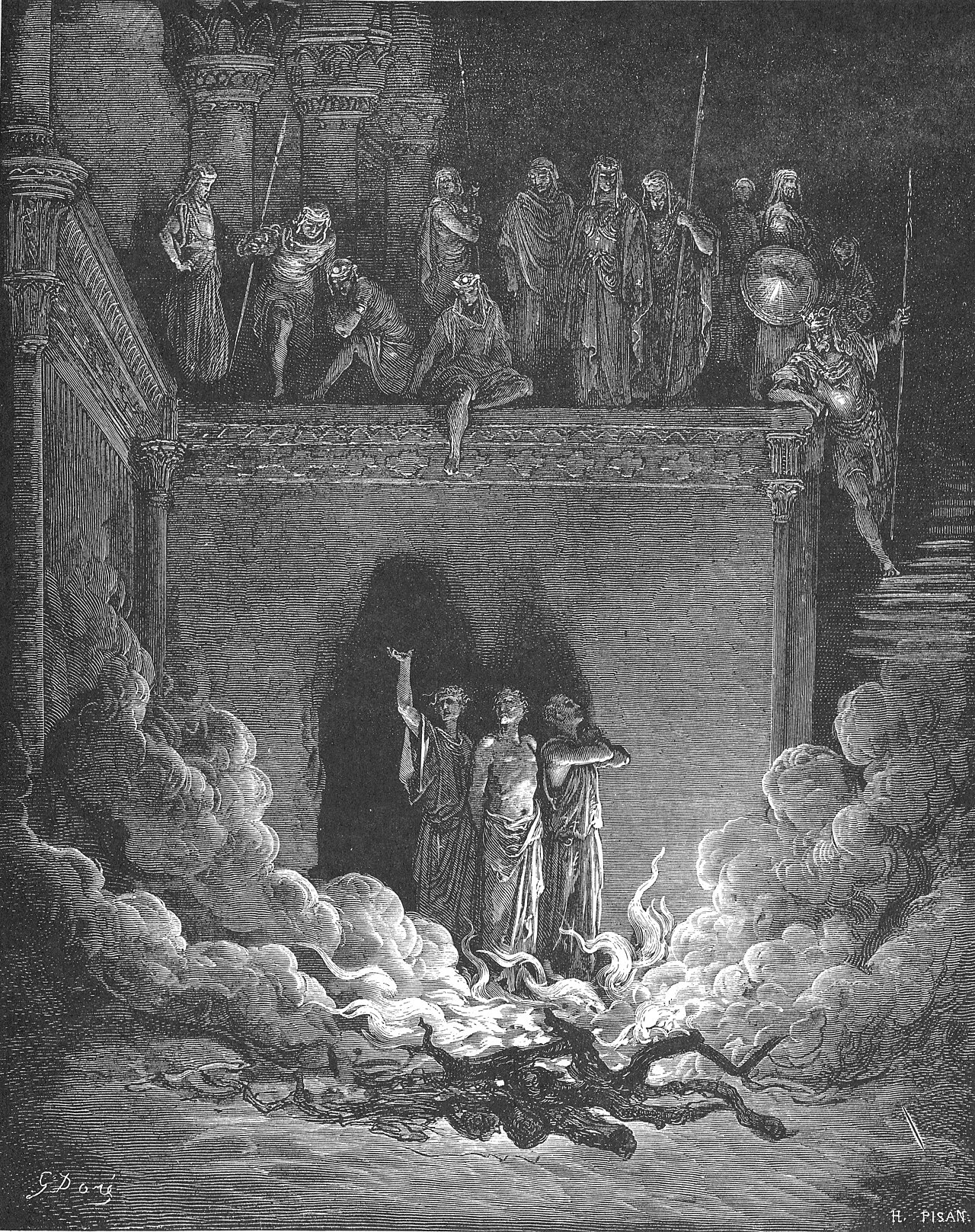
in Daniel 3Shadrach, Meshach, and Abednego replied to the king, “O Nebuchadnezzar, we have no need to answer you in this matter.
BSB
The same verse in ASV and KJV ▾
ASV
Shadrach, Meshach, and Abed-nego answered and said to the king, O Nebuchadnezzar, we have no need to answer thee in this matter.
KJV
Shadrach, Meshach, and Abed–nego, answered and said to the king, O Nebuchadnezzar, we are not careful to answer thee in this matter.
⋯
This verse in Daniel 3
Commentary
21 notes on this verseVerse 16. "King Nebuchadnezzar, we ought not to render thee answer concerning this matter." In the Hebrew original there is no vocative "King" as there is in the Septuagint, lest they should seem to address the ungodly man with servile flattery or to term him a king who was trying to force them to wickedness.
This site's exposition
we are not careful to answer thee
on Daniel 3:16-18
The three men's answer is the summit of confessing faith in the Old Testament: our God whom we serve is able to deliver us, and he will deliver us out of thine hand, O king. Then the three words that have carried martyrs since: BUT IF NOT, be it known unto thee, O king, that we will not serve thy gods. Faith is stated in both of its postures at once, certain of God's power, surrendered about God's plan, and obedient either way; the commentators from Henry onward mark that their obedience does not hang on their deliverance, which is what makes it worship rather than a wager.
The record, by era
The Church Fathers5 voices
Preserve then, my sons, that friendship you have begun with your brothers, for nothing in the world is more beautiful than that. It is indeed a comfort in this life to have one to whom you can open your ear, with whom you can share secrets and to whom you can entrust the secrets of your heart. It is a comfort to have a trusty person by your side who will rejoice with you in prosperity, sympathize in troubles, encourage in persecution. What good friends those Hebrew children were whom the flames of the fiery furnace did not separate from the love of each other!
And so even then, in this way the three boys, who were disciples of faith in Babylon, answered the king saying, "We have no need to answer you concerning this matter." [Daniel 3:16] Daniel, having heard these words, approved. But again they said, "There is a God whom we serve, he is able to deliver us from the burning furnace of fire and from your hands, O king." [Daniel 3:17] The Blessed Daniel, being a prophet and foreseeing what is to come, approved as being true what was spoken by them. And the boys, so that they may exhibit to the king their unsurpassable faith, added saying, "And if not, let it be known to you, O king, that we will not serve your gods and we will not serve the golden image which you set up." [Daniel 3:18] Whom again the blessed Daniel, having heard their voice a third time, and having been amazed, crowned them in faith as speaking beautiful truths.
You see the assurance of the words which were spoken through one mouth, so that in no word may they stumble. For after the king threatened them and said, "Why do you not serve my gods and not worship the golden image which I set up?" [Daniel 3:14] They answered, "We have no need to answer you concerning this matter," [Daniel 3:16] not regarding him worthy of a defense of such a statement. Then, after the king said, "You shall be cast into the burning furnace of fire, and what god is there who shall take you out of my hands?" [Daniel 3:15] They added to the word which was spoken by the king and said, "There is a God whom we serve, he is able to deliver us from the burning furnace of fire and from your hands, O king." After the king again said, "And so, now if you are prepared, when you should hear the sound of the trumpet, pipes and lyres, harp and psaltery and all the family of musical instruments, fall down and worship the golden image." [Daniel 3:15] They said to him, "Let it be known to you O king that we will not serve your gods and we will not worship the golden image which you set up." [Daniel 3:18]
For the king set before them three matters through one word, like those who contend for three prizes in a contest, so that even in one matter, having laid a trap, he might trip these boys up. But they, wishing to be defeated in nothing, genuinely answered in three statements. For they set at naught the first matter of the king, showing that the idol which was worshiped by him was not worthy of any account. Secondly, they taught the king that it is necessary to fear and worship a certain king, saying, "There is a God whom we serve, he is able to deliver us from the burning furnace of fire." [Daniel 3:17] Then thirdly, wishing to demonstrate their faith, they said, "And if not, let it be known to you, O king, that we will not serve your gods and we will not worship the golden image which you set up." [Daniel 3:18] For in this, they fortified themselves through speech, lest, after they were cast into the furnace, they would also be incinerated and the Chaldeans would have boasted and deceived the king saying, "Do not be vexed, O king, you prevailed and you took the prize from them. For they, shrieking and burning in the fire, were saying, 'We beg you, Lord and king, we will do what is commanded by you, we will worship the image.'" Therefore after death believers, who did not wish to give a place of pretext to the devil, are called martyrs, according to every way they fortified themselves. For they who believe have carried up all authority and glory to God, because he is able to deliver us, but if not we would rather gladly die than to do what is prescribed by you, Nebuchadnezzar!
See, the three boys have become examples for all believing men; they who did not fear the crowd of satraps nor, having heard the words of the king, were terrified, nor, having seen the burning fire of the furnace, cringed, but they despised all men and the whole world, holding the fear of God alone before their eyes. Daniel, who was standing a far way off and keeping silent, taught these three to be courageous, while smiling at them, he himself even rejoicing at their witness, while observing the three boys who were about to be crowned against the devil. They were not deluded by musical skill nor enslaved by the pleasure of the instruments, nor carried away by the deceit of the Babylonians, nor subdued by the decree of the king, nor did they bend their knees before the golden image, which was wrought with a hammer. These three believing witnesses were found in Babylon, so that through them God may be glorified and Nebuchadnezzar may be shamed and the idols of the Babylonians be revealed as nothing.
14 more voices on this verse
The Church Fathers7 voices
When they heard these words, the young people Laughed at the great vanity of the king. However, lest he consider himself to be very wise, The wise youths raised their eyes and said: "O Nebuchadnezzar, king of Babylon, We have no need to talk this …
In terms of the honors due to king or emperor, we have a clear ruling to be subject in all obedience, according to the apostle's command, to magistrates and princes and those in authority, but this obedience must be within the bounds of Christian discipline. That is, it is proper so long as we keep ourselves free of idolatry. It was for this reason that the familiar example of the three friends occurred before our time. Obedient in other respects to King Nebuchadnezzar, they most firmly refused to honor his image, and by this they proved that to extend the honor proper to a mortal beyond its due limits until it resembles the grandeur of God is idolatry. Daniel, in the same way, subjected himself to Darius in all points and performed his duty as long as it did not imperil his religion. To avoid that, Daniel showed no more fear of the king's lions than they had shown of the king's fires.
Let us turn our thoughts to the three boys in the fiery furnace in Babylonia, and listen to what they say when Nebuchadnezzar summons them before him and compels them to worship Bel. What is their answer to Nebuchadnezzar? "King, there is no need to defend ourselves." … Look at their faith! We believe, it says, that he is able to save us; but if it should be that our sins prevent him, we still believe in him who will not deliver us. We do not believe in this life but in the future life; nor do we believe in him in order to escape burning here but in order to escape passing from this fire into another fire. Go ahead, then, prepare your furnace; this heat, this fire, is our purgation. Happy is he whose help is the God of Jacob!
So they did not nail him but tied him. Then he, placing his hands behind him and being bound to the stake, like a noble ram out of a great flock for an offering, a burnt sacrifice made ready and acceptable to God, looking up …
Observe that they by a special dispensation are ignorant of the future: for if they had foreknown, there would have been nothing wonderful in their doing what they did. For what marvel is it if when they had a guarantee for safety, they defied all terrors? Then God indeed would have been glorified in that He was able to deliver from the furnace: but they would not have been wondered at, inasmuch as they would not have cast themselves into any dangers. For this cause He suffered them to be ignorant of the future that He might glorify them the more. And as they cautioned the king that he was not to condemn God of weakness though they might be burnt, so God accomplished both purposes; the shewing forth His own power and the causing the zeal of the children to appear more conspicuous.… With these words then, they entered into the fire; and they neither cast insult upon the king, nor overturned the statue.… And this is what they did at that time; shewing forth all fortitude and gentleness, and doing nothing for reward nor for recompense or return.… We then also having already our recompense, (for indeed we have it in that we have been vouchsafed the full knowledge of Him, vouchsafed to be made members of Christ,) let us take care that we make them not members of an harlot.
A commentator
John ChrysostomNONE CAN HARM HIM WHO DOES NOT INJURE HIMSELF 17 · Written in the 5th century.
proposed
Nevertheless the reason why I admire those youths, and pronounce them blessed, and enviable, is not because they tramped on the flame, and vanquished the force of the fire: but because they were bound, and cast into the furnace, and delivered to the fire for the sake of true doctrine. For this it was which constituted the completeness of their triumph, and the wreath of victory was placed on their brows as soon as they were cast into the furnace and before the issue of events it began to be weaved for them from the moment that they uttered those words which they spoke with much boldness and freedom of speech to the king when they were brought into his presence. "We have no need to answer thee concerning this thing: for our God in Heaven whom we serve is able to rescue us out of the burning fiery furnace: and He will deliver us out of thy hands, O King. But if not, be it known unto thee, O King, that we will not serve thy Gods nor worship the golden image which thou hast set up." After the utterance of these words I proclaimed them conquerors; after these words having grasped the prize of victory, they hastened on to the glorious crown of martyrdom, following up the confession which they made through their words with the confession made through their deeds.
Examine the divine Scriptures, and scrutinize them as closely as you can and see whether this [killing oneself] was ever done by any of the good and faithful souls, even though they suffered great trials at the hands of those who were trying to drive them to eternal destruction, not to eternal life.… I have heard that you said the apostle Paul meant that this was lawful when he said, "If I should deliver my body to be burned." … But notice carefully and understand in what sense Scripture says that anyone should deliver his body to be burned: not, certainly, that he should jump into the fire when harassed by a pursuing enemy but that, when a choice is offered him of either doing wrong or suffering wrong, he chooses not to do wrong rather than not to suffer wrong. In this case, he delivers his body not to the power of the slayer, as those three men did who were being forced to adore the golden statue and who were threatened by the one who was forcing them with the furnace of burning fire if they did not do it. They refused to adore the idol, but they did not cast themselves into the fire.
The Puritans and the Awakening2 voices
Note, Those that would avoid sin must not parley with temptation. When that which we are allured or affrighted to is manifestly evil the motion is rather to be rejected with indignation and abhorrence than reasoned with; stand not to pause about it, but say, as Christ has taught us, Get thee behind me, Satan.
Shadrach, Meshach, and Abednego, answered and said to the king,....
The Nineteenth Century5 voices
A commentator
Jamieson, Fausset & Brown1802–1910
Commentary Critical and Explanatory on the Whole Bible (1871)
proposed
not careful to answer thee--rather, "We have no need to answer thee"; thou art determined on thy side, and our mind is made up not to worship the image: there is therefore no use in our arguing as if we could be shaken from our principles. Hesitation, or parleying with sin, is fatal; unhesitating decision is the only safety, where the path of duty is clear (Mt 10:19, 28).
quarantine:debris (2026-07-29) — starts-lowercase
IF YOU read the second chapter of the Book of Daniel, you will think that Nebuchadnezzar was not far from the Kingdom of God. His dream had troubled him, but Daniel had explained it. Then the king made this confession to Daniel, "Of a truth it is, that your God is a God of gods, and a Lord of kings, and a revealer of secrets, seeing you could reveal this secret."
IF YOU read the second chapter of the Book of Daniel, you will think that Nebuchadnezzar was not far from the Kingdom of God. His dream had troubled him, but Daniel had explained it. Then the king made this confession to Daniel, "Of a truth it is, that your God is a God of gods, and a Lord of kings, and a revealer of secrets, seeing you could reveal this secret." He acknowledged that Jehovah, the God of the Jews, was the greatest of gods, and was a great interpreter of secrets, but in a short time we find this man setting up an idol and persecuting to the death those who would not worship it. He seems, indeed, to have turned the blessing into a curse, and made the image of his dream the pattern of the idol he set up for the nation to worship, thus making that through which God had graciously revealed His power and wisdom, the very instrument of his folly and vainglory. Man's proud heart is the same in all generations and the same thing happens even today. Have you not seen in your time men seriously impressed? They could not hold their own. They seemed stricken down by the force of the Truth of God and you felt almost sure that they would become, like Saul of Tarsus, true converts, and even Apostles of the faith. But after a while they forgot it, forgot it all, and became, at last, the most bitter and determined opponents of the Truth of God before which they seemed once to bow. Every minister who has a congregation of any considerable size must have met with such people. I remember one who, being at a Prayer Meeting where there was much wrestling power with God, was so overcome that he prayed aloud and seemed to cry with all his heart for mercy—and before he left, he said that he had found it. But the next day he declared that he would never go to such a meeting again—that he had been almost caught, but he would not trust himself in such society any more.
We are not careful - We have no need to put thee to any farther trouble; we have made up our minds on this subject, and have our answer ready: Be it known unto thee, We Will Not Serve Thy Gods. This was as honest as it was decisive.
A commentator
Albert Barnes1798–1870
Notes, Explanatory and Practical, on the Old and New Testaments (1832-1869)
proposed
Shadrach, Meshach, and Abed-nego answered and said to the king - They appear to have answered promptly, and without hesitation, showing that they had carefully considered the subject, and that with them it was a matter of settled and intelligent principle. But they did it in a respectful manner, though they were firm. They neither reviled the monarch nor his gods. They used no reproachful words respecting the image which he had set up, or any of the idols which he worshipped. Nor did they complain of his injustice or severity. They calmly looked at their own duty, and resolved to do it, leaving the consequences with the God whom they worshipped. We are not careful to answer thee in this matter - The word rendered “careful” (חשׁח chăshach) means, according to Gesenius, “to be needed” or “necessary;” then, “to have need.” The Vulgate renders it, “non oportet nos” - it does not behove us; it is not needful for us. So the Greek, ου ̓ χρείαν ἔχομεν ou chreian echomen - we have no need. So Luther, Es ist Nicht noth - there is no necessity. The meaning therefore is, that it was not “necessary” that they should reply to the king on that point; they would not give themselves trouble or solicitude to do it. They had made up their minds, and, whatever was the result, they could not worship the image which he had set up, or the gods whom he adored. They felt that there was no necessity for stating the reasons why they could not do this. Perhaps they thought that argument in their case was improper. It became them to do their duty, and to leave the event with God. They had no need to go into an extended vindication of their conduct, for it might be presumed that their principles of conduct were well known. […]
The words behind it
15 Hebrew wordsEvery Hebrew word of this verse in the order it stands, with what it means and the door to its own study. The last column counts the times a word stands in the whole Bible: the rarer the word, the more the places it appears belong together.
| Hebrew | Sound | Meaning | Word study | In the Bible |
|---|---|---|---|---|
| עֲנ֗וֹ | ano | they replied | H6032 → | 30 times |
| שַׁדְרַ֤ךְ | shadrakh | Shadrach | H7715 → | 14 times |
| מֵישַׁךְ֙ | meishakh | Meshach | H4336 → | 14 times |
| וַעֲבֵ֣ד | vaaved | and Abed- | H5665 → | 28 times |
| נְג֔וֹ | nego | -nego | H5665 → | 28 times |
| וְאָמְרִ֖ין | veamerin | and [they were] saying | H560 → | 71 times |
| לְמַלְכָּ֑א | lemalka' | to king the | H4430 → | 180 times |
| נְבֽוּכַדְנֶצַּ֔ר | nevukhadnetzar | Nebuchadnezzar | H5020 → | 31 times |
| לָֽא־ | la'- | not | H3809 → | 82 times |
| חַשְׁחִ֨ין | chashchin | [are] needing | H2818 → | |
| אֲנַ֧חְנָה | ʾanachnah | we | H586 → | |
| עַל־ | ʾal- | concerning | H5922 → | 104 times |
| דְּנָ֛ה | denah | this | H1836 → | 58 times |
| פִּתְגָ֖ם | pitgam | affair | H6600 → | |
| לַהֲתָבוּתָֽךְ׃ | lahatavutakh | to send back to you | H8421 → | 8 times |
עֲנ֗וֹthey replied
anoH6032 →30 times
שַׁדְרַ֤ךְShadrach
shadrakhH7715 →14 times
מֵישַׁךְ֙Meshach
meishakhH4336 →14 times
וַעֲבֵ֣דand Abed-
vaavedH5665 →28 times
נְג֔וֹ-nego
negoH5665 →28 times
וְאָמְרִ֖יןand [they were] saying
veamerinH560 →71 times
לְמַלְכָּ֑אto king the
lemalka'H4430 →180 times
נְבֽוּכַדְנֶצַּ֔רNebuchadnezzar
nevukhadnetzarH5020 →31 times
לָֽא־not
la'-H3809 →82 times
חַשְׁחִ֨ין[are] needing
chashchinH2818 →
אֲנַ֧חְנָהwe
ʾanachnahH586 →
עַל־concerning
ʾal-H5922 →104 times
דְּנָ֛הthis
denahH1836 →58 times
פִּתְגָ֖םaffair
pitgamH6600 →
לַהֲתָבוּתָֽךְ׃to send back to you
lahatavutakhH8421 →8 times
A shaded row is a word that stands 400 times or fewer in the Bible.
The walk
8 stopsEach card is a verse this one points to, and under it the verses that one points to in turn. Where several paths arrive at the same place, that place is listed first: the text keeps returning to it.
Through
Daniel 1:7The chief official gave them new names: To Daniel he gave the name Belteshazzar; to Hananiah, Shadrach; to Mishael, Meshach; and to Azariah, Abednego.
it leads to
- Daniel 2:49
And at Daniel’s request, the king appointed Shadrach, Meshach, and Abednego to manage the province of Babylon, while Daniel remained in the king’s court.
Reached by 2 separate paths from here.
- Daniel 5:12
did this because Daniel, the one he named Belteshazzar, was found to have an extraordinary spirit, as well as knowledge, understanding, and the ability to interpret dreams, explain riddles, and solve difficult problems. Summon…
- Daniel 4:8
But at last, into my presence came Daniel (whose name is Belteshazzar after the name of my god, and in whom is the spirit of the holy gods). And I told him the dream:
- 2 Kings 24:17
Then the king of Babylon made Mattaniah, Jehoiachin’s uncle, king in his place and changed his name to Zedekiah.
- Daniel 1:3
Then the king ordered Ashpenaz, the chief of his court officials, to bring in some Israelites from the royal family and the nobility—
- Daniel 2:49
Through
Daniel 3:12But there are some Jews you have appointed to manage the province of Babylon—Shadrach, Meshach, and Abednego—who have ignored you, O king, and have refused to serve your gods or worship the golden statue…
it leads to
- Daniel 6:13
Then they told the king, “Daniel, one of the exiles from Judah, shows no regard for you, O king, or for the decree that you have signed. He still makes his petition three times…
- Acts 17:7
and Jason has welcomed them into his home. They are all defying Caesar’s decrees, saying that there is another king, named Jesus!”
- Proverbs 27:4
Wrath is cruel and anger is like a flood, but who can withstand jealousy?
- Daniel 6:13
Where this verse is studied
On this page
About Daniel
This page draws on 20 works. Open the list of works
This page draws on Adam Clarke, Commentary on the Bible; Albert Barnes, Notes, Explanatory and Practical, on the Old and New Testaments (1832-1869); Ambrose of Milan, On the Duties of the Clergy 3.22.131; Augustine of Hippo, LETTER 173; Charles Spurgeon, The Metropolitan Tabernacle Pulpit, Sermon No. 2217: “Three Names High on the Muster Roll” (lightly modernized text, CCEL edition); Hippolytus of Rome, Commentary on Daniel 2.22.1-5; Hippolytus of Rome, Commentary on Daniel 2.23.1-4; Hippolytus of Rome, Commentary on Daniel 2.24.1-8; Hippolytus of Rome, Commentary on Daniel 2.18.1-3; Jamieson, Fausset & Brown, Commentary Critical and Explanatory on the Whole Bible; Jerome, Commentary on Daniel; Jerome, HOMILIES ON THE PSALMS 55 (PSALM 145); John Calvin, Commentary on the Prophet Daniel; John Chrysostom, HOMILIES ON 1 CORINTHIANS 18; John Chrysostom, NONE CAN HARM HIM WHO DOES NOT INJURE HIMSELF 17; John Gill, Exposition of the Old Testament (1748-1763); Martyrdom Of Polycarp, MARTYRDOM OF POLYCARP 14-16; Matthew Henry, Commentary on the Whole Bible; Romanos the Melodist, KONTAKION ON THE THREE CHILDREN 12 and Tertullian, ON IDOLATRY 15.