
Daniel 3:13
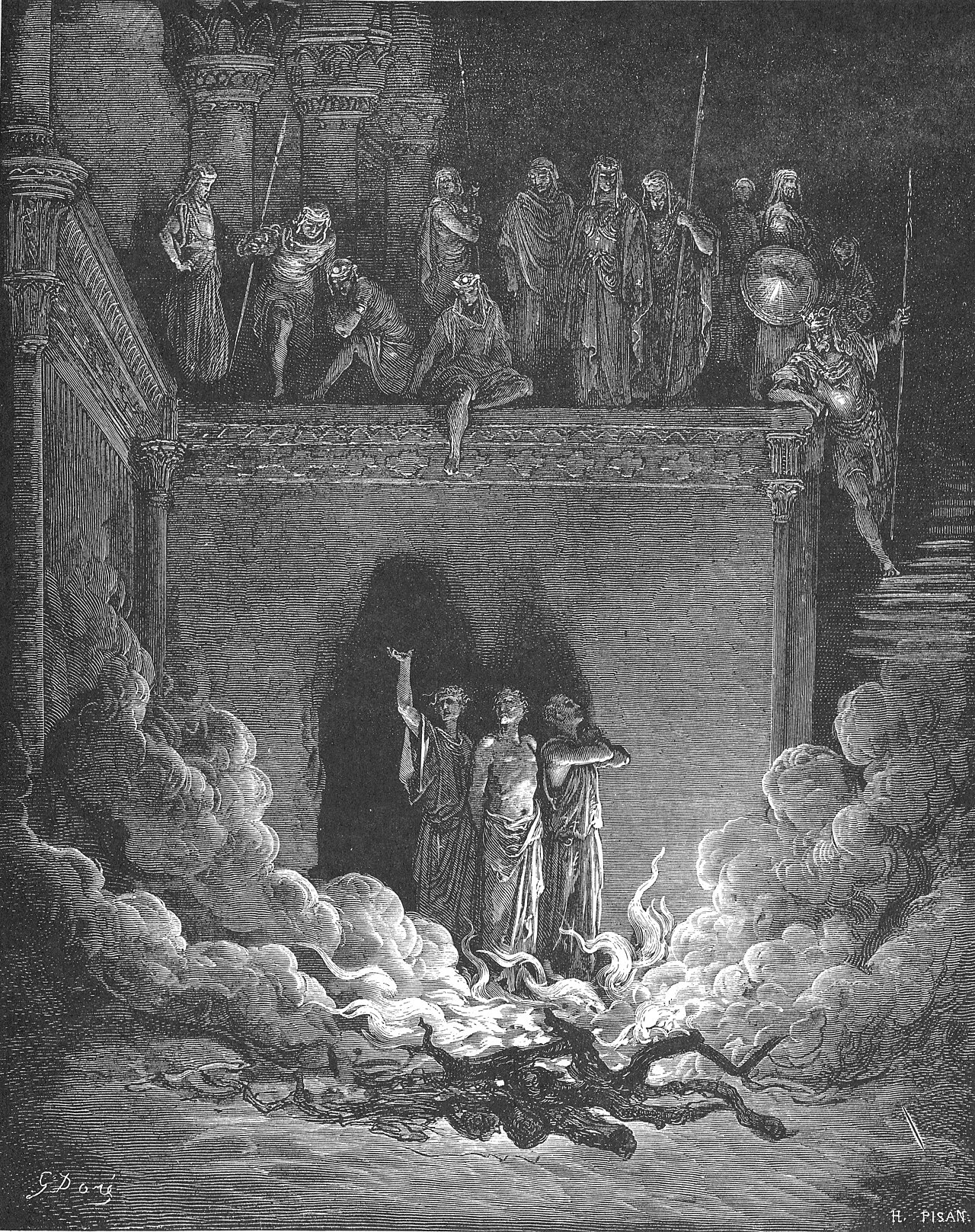
in Daniel 3Then Nebuchadnezzar, furious with rage, summoned Shadrach, Meshach, and Abednego. So these men were brought before the king,
BSB
The same verse in ASV and KJV ▾
ASV
Then Nebuchadnezzar in his rage and fury commanded to bring Shadrach, Meshach, and Abed-nego. Then they brought these men before the king.
KJV
Then Nebuchadnezzar in his rage and fury commanded to bring Shadrach, Meshach, and Abed–nego. Then they brought these men before the king.
⋯
This verse in Daniel 3
Commentary
6 notes on this verseBut someone will say, "You are making sophistries." Be educated, O man, about the things which happen under Antiochus Epiphanes. While the seven brothers together with their mother were taken, they were struck with scourges and whips, but one of them answered the whips, and he said, "Why do you delay to ask and to learn?
This site's exposition
accused the Jews
on Daniel 3:8-15
Certain Chaldeans came near, and accused the Jews: the Aramaic idiom is ate the pieces of, malicious accusation as devouring, a philological note Keil and the bench carry. The charge is exact and the stakes are stated by the king himself, with the taunt that frames the whole chapter: who is that God that shall deliver you out of my hands? Nebuchadnezzar offers a second chance with the whole orchestra recited again, which the narrative's repetition makes faintly absurd, and the question he asks in scorn is the question the chapter exists to answer.
The record, by era
The Church Fathers1 voice
A commentator
John ChrysostomHOMILIES CONCERNING THE STATUES 4:8-9 · Written in the 5th century.
proposed
But when all fell down, and were subdued, then the youths alone are led into the midst; in order that from this too the conquest may become the more illustrious, they alone conquering and being proclaimed victors among so vast a multitude. For this would not have been so surprising if they had acted courageously at the first, when as yet no one had been overthrown. But the greatest, and most astonishing fact was, that the multitude of those who fell down, neither affrighted, nor enfeebled them. They did not say to themselves any such things as many are ofttimes wont to say; "If we were the first, and the only persons to worship the image, this would have been a sin: but if we do this with so many myriads, who will not make allowance? who will not think us worthy of defence?" nothing of that sort did they say or think, when they beheld the prostrate forms of so many tyrants.… What then does the king? He commands that they should be brought into the midst, so that he may affright them in every way. But nothing dismayed them, neither the wrath of the king, nor their being left alone in the midst of so many, nor the sight of the fire, nor the sound of the trumpet, nor the whole multitude looking fire at them; for deriding all these things, as if they were about to be cast into a cool fountain of water, they entered the furnace uttering that blessed sentence, "We will not serve thy gods, nor worship the golden image which thou hast set up."… I have not referred to this history without reason, but that ye may learn that whether it be the wrath of a king, or the violence of soldiers, or the envy of enemies, or captivity, or destitution, or fire, or furnace, or ten thousand terrors, nothing will avail to put to shame or terrify a righteous man.
The Puritans and the Awakening2 voices
Then Nebuchadnezzar, in his rage and fury,....
The case is laid before them in short, and it is put to them whether they will comply or no. The king asked them whether it was true that they had not worshipped the golden image when others did,
The Nineteenth Century1 voice
A commentator
Albert Barnes1798–1870
Notes, Explanatory and Practical, on the Old and New Testaments (1832-1869)
Then Nebuchadnezzar, in his rage and fury - The word rendered “fury” means “wrath.” Everything that we learn of this monarch shows that he was a man of violent passions, and that he was easily excited, though he was susceptible also of deep impressions on religious subjects. There was much here to rouse his rage. His command to worship the image was positive. It extended to all who were summoned to its dedication. Their refusal was an act of positive disobedience, and it seemed necessary that the laws should be vindicated.
The words behind it
16 Hebrew wordsEvery Hebrew word of this verse in the order it stands, with what it means and the door to its own study. The last column counts the times a word stands in the whole Bible: the rarer the word, the more the places it appears belong together.
| Hebrew | Sound | Meaning | Word study | In the Bible |
|---|---|---|---|---|
| בֵּאדַ֤יִן | bedayin | <in> then | H116 → | 57 times |
| נְבוּכַדְנֶצַּר֙ | nevukhadnetzar | Nebuchadnezzar | H5020 → | 31 times |
| בִּרְגַ֣ז | birgaz | in rage | H7266 → | |
| וַחֲמָ֔ה | vachamah | and anger | H2528 → | |
| אֲמַר֙ | ʾamar | he said | H560 → | 71 times |
| לְהַיְתָיָ֔ה | lehaytayah | to bring | H858 → | 16 times |
| לְשַׁדְרַ֥ךְ | leshadrakh | <obj.> Shadrach | H7715 → | 14 times |
| מֵישַׁ֖ךְ | meishakh | Meshach | H4336 → | 14 times |
| וַעֲבֵ֣ד | vaaved | and Abed- | H5665 → | 28 times |
| נְג֑וֹ | nego | -nego | H5665 → | 28 times |
| בֵּאדַ֙יִן֙ | bedayin | <in> then | H116 → | 57 times |
| גֻּבְרַיָּ֣א | guvraiya' | men the | H1400 → | 21 times |
| אִלֵּ֔ךְ | ʾilekh | these | H479 → | 14 times |
| הֵיתָ֖יוּ | heitayu | they were brought | H858 → | 16 times |
| קֳדָ֥ם | kodam | before | H6925 → | 42 times |
| מַלְכָּֽא׃ | malka' | king the | H4430 → | 180 times |
בֵּאדַ֤יִן<in> then
bedayinH116 →57 times
נְבוּכַדְנֶצַּר֙Nebuchadnezzar
nevukhadnetzarH5020 →31 times
בִּרְגַ֣זin rage
birgazH7266 →
וַחֲמָ֔הand anger
vachamahH2528 →
אֲמַר֙he said
ʾamarH560 →71 times
לְהַיְתָיָ֔הto bring
lehaytayahH858 →16 times
לְשַׁדְרַ֥ךְ<obj.> Shadrach
leshadrakhH7715 →14 times
מֵישַׁ֖ךְMeshach
meishakhH4336 →14 times
וַעֲבֵ֣דand Abed-
vaavedH5665 →28 times
נְג֑וֹ-nego
negoH5665 →28 times
בֵּאדַ֙יִן֙<in> then
bedayinH116 →57 times
גֻּבְרַיָּ֣אmen the
guvraiya'H1400 →21 times
אִלֵּ֔ךְthese
ʾilekhH479 →14 times
הֵיתָ֖יוּthey were brought
heitayuH858 →16 times
קֳדָ֥םbefore
kodamH6925 →42 times
מַלְכָּֽא׃king the
malka'H4430 →180 times
A shaded row is a word that stands 400 times or fewer in the Bible.
The walk
8 stopsEach card is a verse this one points to, and under it the verses that one points to in turn. Where several paths arrive at the same place, that place is listed first: the text keeps returning to it.
Through
Daniel 3:19At this, Nebuchadnezzar was filled with rage, and the expression on his face changed toward Shadrach, Meshach, and Abednego. He gave orders to heat the furnace seven times hotter than usual,
it leads to
- Proverbs 27:3–4
A stone is heavy and sand is a burden, but aggravation from a fool outweighs them both.
Reached by 2 separate paths from here.
- Leviticus 26:24
then I will act with hostility toward you, and I will strike you sevenfold for your sins.
- Leviticus 26:28
then I will walk in fury against you, and I, even I, will punish you sevenfold for your sins.
- Proverbs 21:24
Mocker is the name of the proud and arrogant man—of him who acts with excessive pride.
- Leviticus 26:21
If you walk in hostility toward Me and refuse to obey Me, I will multiply your plagues seven times, according to your sins.
- Proverbs 27:3–4
Through
Luke 6:11But the scribes and Pharisees were filled with rage and began to discuss with one another what they might do to Jesus.
it leads to
- Acts 5:33
When the Council members heard this, they were enraged, and they resolved to put the apostles to death.
- Psalms 2:1–2
Why do the nations rage and the peoples plot in vain?
- Ecclesiastes 9:3
This is an evil in everything that is done under the sun: There is one fate for everyone. Furthermore, the hearts of men are full of evil and madness while they are alive, and…
- Acts 5:33
Where this verse is studied
On this page
About Daniel
This page draws on Albert Barnes, Notes, Explanatory and Practical, on the Old and New Testaments (1832-1869); Carl Friedrich Keil, Biblical Commentary on the Book of Daniel; Hippolytus of Rome, Commentary on Daniel 2.20.1-21.3; John Chrysostom, HOMILIES CONCERNING THE STATUES 4:8-9; John Gill, Exposition of the Old Testament; John Gill, Exposition of the Old Testament (1748-1763) and Matthew Henry, Commentary on the Whole Bible.