
2 Kings 4:34
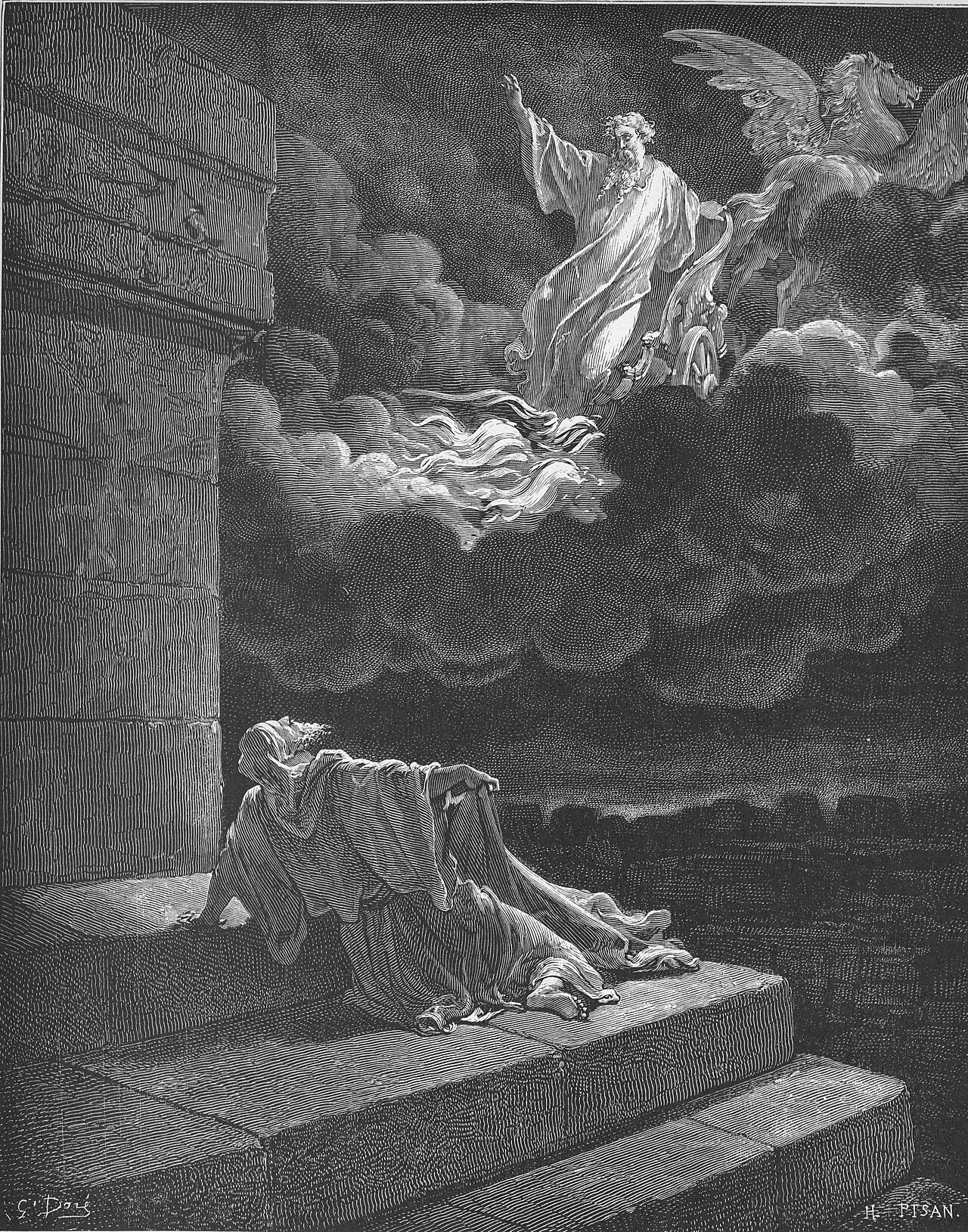
in 2 Kings 4Then Elisha got on the bed and lay on the boy, mouth to mouth, eye to eye, and hand to hand. As he stretched himself out over him, the boy’s body became warm.
BSB
The same verse in ASV and KJV ▾
ASV
And he went up, and lay upon the child, and put his mouth upon his mouth, and his eyes upon his eyes, and his hands upon his hands: and he stretched himself upon him; and the flesh of the child waxed warm.
KJV
And he went up, and lay upon the child, and put his mouth upon his mouth, and his eyes upon his eyes, and his hands upon his hands: and he stretched himself upon the child; and the flesh of the child waxed warm.
⋯
This verse in 2 Kings 4
Commentary
11 notes on this verseLay upon the child - Endeavored to convey a portion of his own natural warmth to the body of the child; and probably endeavored, by blowing into the child’s mouth, to inflate the lungs, and restore respiration. He uses every natural means in his power to restore life, while praying to the Author of it to exert a miraculous influence. Natural means are in our power; those that are supernatural belong to God. We should always do our own work, and beg of God to do his.
This site's exposition
the child was dead, and
on 2 Kings 4:32-35
Elisha shuts the door a fourth time in this chapter and prays before he acts, then stretches himself on the child, mouth to mouth, eyes to eyes, hands to hands, the same posture and the same verb Elijah used raising the widow's son at Zarephath, 1 Ki 17:21, one shape repeated from master to disciple. The warmth returns first, and only after Elisha walks the house and stretches over the boy a second time does life fully return, healing coming in two stages rather than one instant word. Seven sneezes end it, life reasserting itself through breath.
The record, by era
The Church Fathers3 voices
Thus, blessed Elisha came and went up to the chamber, because Christ was to come and ascend the gibbet of the cross. Elisha bent down to revive the child; Christ humbled himself to lift up the world that lay in sin. Elisha further put his …
"Then the mother of the child said, 'As the Lord lives, and as you yourself live, I will not leave without you.' " Now, since Elisha had stayed at home and had sent his disciple, the mother of the [dead] child pressed him to aid …
A commentator
Augustine of HippoTHE NATURE AND ORIGIN OF THE SOUL 3.5.7 · Written in the 5th century.
proposed
What is the point of the addition you thought you should make to this comparison drawn from the example of blessed Elisha, namely, that he raised a dead boy by breathing into his face? Do you really think that the breath of Elisha became the soul of the boy? I would not have thought that you had wandered so far from the truth. If the very same soul, then, that had been taken from the living boy so that he died, was restored to him so that he came back to life, what was the point of your saying that nothing was taken away from Elisha? You imply that we believed that something passed from him into the boy as a result of which the boy was once again alive. But if you said this because he exhaled and still remained whole, what need was there to say this with regard to Elisha raising the dead boy, since you could, in any case, say this of anyone who exhales without raising anyone from the dead? Heaven forbid that you should believe that the breath of Elisha became the soul of the boy when he came back to life! And so, you have certainly spoken without sufficient reflection when you wanted the only difference between what God first did and what Elisha did to be that God breathed once, while Elisha breathed three times. You did, in fact, say that Elisha breathed into the face of the dead son of that Shunammite woman, just as happened at the first beginnings of our race. "And when the divine power," you said, "had by the breath of the prophet warmed the dead members and restored them to life in their former strength, nothing was taken away from Elisha, though by his breath the dead body received its soul and mind restored to life. […]
The Medieval Church1 voice
Therefore fear had no power to raise us from the death of sin, but the infused grace of meekness erected us to the seat of life. Which is well denoted by Elisha when he raised the child of the Shunamite.
The Puritans and the Awakening1 voice
Grew warm - Not by any external heat, which could not be transmitted to the child's body by such slight touches of the prophet's body; but from a principle of life, which was already infused into the child, and by degrees enlivened all the parts of his body.
4 more voices on this verse
The Puritans and the Awakening3 voices
He first put his mouth to the child's mouth, as if, in God's name, he would breathe into him the breath of life; then his eyes to the child's eyes, to open them again to the light of life; then his hands to the child's hands, to put strength into them. He then returned, and walked in the house, as one full of care and concern, and wholly intent upon what he was about.
), which gave the prophet encouragement to continue instant in prayer. After a while, the child sneezed seven times, which was an indication, not only of life, but liveliness.
quarantine:debris (2026-07-29) — leading-punctuation+unbalanced-parens
And he went up,....
The Nineteenth Century1 voice
A commentator
Albert Barnes1798–1870
Notes, Explanatory and Practical, on the Old and New Testaments (1832-1869)
proposed
Be stretched himself - Or, “prostrated himself.” The word is a different one from that used of Elijah, and expresses closer contact with the body. Warmth may have been actually communicated from the living body to the dead one; and Elisha’s persistence Heb 11:35, may have been a condition of the child’s return to life.
The words behind it
19 Hebrew wordsEvery Hebrew word of this verse in the order it stands, with what it means and the door to its own study. The last column counts the times a word stands in the whole Bible: the rarer the word, the more the places it appears belong together.
| Hebrew | Sound | Meaning | Word study | In the Bible |
|---|---|---|---|---|
| וַיַּ֜עַל | vaiyaal | and he went up | H5927 → | 890 times |
| וַיִּשְׁכַּ֣ב | vaiyishkav | and he lay | H7901 → | 212 times |
| עַל־ | ʾal- | on | H5921 → | 5755 times |
| הַיֶּ֗לֶד | haiyeled | the child | H3206 → | 89 times |
| וַיָּשֶׂם֩ | vaiyasem | and he put | H7760 → | 584 times |
| פִּ֨יו | piv | mouth his | H6310 → | 498 times |
| עַל־ | ʾal- | on | H5921 → | 5755 times |
| פִּ֜יו | piv | mouth his | H6310 → | 498 times |
| וְעֵינָ֤יו | veeinav | and eyes his | H5869 → | 887 times |
| עַל־ | ʾal- | on | H5921 → | 5755 times |
| עֵינָיו֙ | ʾeinav | eyes his | H5869 → | 887 times |
| וְכַפָּ֣יו | vekhapav | and palms his | H3709 → | 192 times |
| עַל־ | ʾal- | on | H5921 → | 5755 times |
| כַּפָּ֔יו | kapov | palms his | H3709 → | 192 times |
| וַיִּגְהַ֖ר | vaiyighar | and he crouched | H1457 → | |
| עָלָ֑יו | ʾalav | over him | H5921 → | 5755 times |
| וַיָּ֖חָם | vaiyachom | and it became warm | H2552 → | |
| בְּשַׂ֥ר | besar | [the] flesh of | H1320 → | 270 times |
| הַיָּֽלֶד׃ | haiyaled | the child | H3206 → | 89 times |
וַיַּ֜עַלand he went up
vaiyaalH5927 →890 times
וַיִּשְׁכַּ֣בand he lay
vaiyishkavH7901 →212 times
עַל־on
ʾal-H5921 →5755 times
הַיֶּ֗לֶדthe child
haiyeledH3206 →89 times
וַיָּשֶׂם֩and he put
vaiyasemH7760 →584 times
פִּ֨יוmouth his
pivH6310 →498 times
עַל־on
ʾal-H5921 →5755 times
פִּ֜יוmouth his
pivH6310 →498 times
וְעֵינָ֤יוand eyes his
veeinavH5869 →887 times
עַל־on
ʾal-H5921 →5755 times
עֵינָיו֙eyes his
ʾeinavH5869 →887 times
וְכַפָּ֣יוand palms his
vekhapavH3709 →192 times
עַל־on
ʾal-H5921 →5755 times
כַּפָּ֔יוpalms his
kapovH3709 →192 times
וַיִּגְהַ֖רand he crouched
vaiyigharH1457 →
עָלָ֑יוover him
ʾalavH5921 →5755 times
וַיָּ֖חָםand it became warm
vaiyachomH2552 →
בְּשַׂ֥ר[the] flesh of
besarH1320 →270 times
הַיָּֽלֶד׃the child
haiyaledH3206 →89 times
A shaded row is a word that stands 400 times or fewer in the Bible.
The walk
8 stopsEach card is a verse this one points to, and under it the verses that one points to in turn. Where several paths arrive at the same place, that place is listed first: the text keeps returning to it.
Through
1 Kings 17:21Then he stretched himself out over the child three times and cried out to the LORD, “O LORD my God, please let this boy’s life return to him!”
it leads to
- Acts 20:10
But Paul went down, threw himself on the young man, and embraced him. “Do not be alarmed!” he said. “He is still alive!”
- Acts 9:40
Then Peter sent them all out of the room. He knelt down and prayed, and turning toward her body, he said, “Tabitha, get up!” She opened her eyes, and seeing Peter, she sat up.
- 2 Kings 4:33–35
So he went in, closed the door behind the two of them, and prayed to the LORD.
- Hebrews 11:19
Abraham reasoned that God could raise the dead, and in a sense, he did receive Isaac back from death.
- Acts 20:10
Through
Acts 20:10But Paul went down, threw himself on the young man, and embraced him. “Do not be alarmed!” he said. “He is still alive!”
it leads to
- John 11:40
Jesus replied, “Did I not tell you that if you believed, you would see the glory of God?”
- Mark 5:39
He went inside and asked, “Why all this commotion and weeping? The child is not dead, but asleep.”
- John 11:11
After He had said this, He told them, “Our friend Lazarus has fallen asleep, but I am going there to wake him up.”
- Matthew 9:23–24
When Jesus entered the house of the synagogue leader, He saw the flute players and the noisy crowd.
- John 11:40
Where this verse is studied
On this page
About 2 Kings
Who and where
1 name in this verse with a page on the site.
This page draws on 10 works. Open the list of works
This page draws on Adam Clarke, Commentary on the Bible; Albert Barnes, Notes, Explanatory and Practical, on the Old and New Testaments (1832-1869); Augustine of Hippo, THE NATURE AND ORIGIN OF THE SOUL 3.5.7; Caesarius of Arles, SERMON 128.8; Ephrem the Syrian, ON THE SECOND BOOK OF KINGS 4:30-35; F. W. Farrar, The Second Book of Kings (Expositor's Bible); Gregory the Dialogist, Morals on the Book of Job, Book 9; John Gill, Exposition of the Old Testament (1748-1763); John Wesley, Explanatory Notes upon the Old Testament and Matthew Henry, Commentary on the Whole Bible.