
2 Chronicles 20:9
in 2 Chronicles 20‘If disaster comes upon us—whether sword or judgment, plague or famine—we will stand before this temple and before You, for Your Name is in this temple. We will cry out to You in our distress, and You will hear us and save us.’
BSB
The same verse in ASV and KJV ▾
ASV
If evil come upon us, the sword, judgment, or pestilence, or famine, we will stand before this house, and before thee (for thy name is in this house), and cry unto thee in our affliction, and thou wilt hear and save.
KJV
If, when evil cometh upon us, as the sword, judgment, or pestilence, or famine, we stand before this house, and in thy presence, (for thy name is in this house,) and cry unto thee in our affliction, then thou wilt hear and help.
⋯
This verse in 2 Chronicles 20
Commentary
6 notes on this verseFor thy name is in this house - “Thy Majesty is in this house.” Several of Kennicott’s and De Rossi’s MSS., with the Vulgate, Syriac, and Arabic, add נקרא nikra, “is invoked;” Thy name is invoked in this house - here thou dwellest, and here thou art worshipped.
This site's exposition
before the new court
on 2 Chronicles 20:5-9
The prayer stands on Solomon's dedication and quotes it back to God: verse 9's formula, if the sword, judgment, pestilence or famine come and we stand before this house and cry, then thou wilt hear and help, is the petition of 2 Chr 6:28-30 invoked as a filed covenant document, for thy name is in this house. Abraham is called thy friend, a title Isa 41:8 repeats and Jas 2:23 seals, and the land is argued as the gift given to that friend's seed for ever. Jehoshaphat prays precedent before he prays need.
The record, by era
The Puritans and the Awakening2 voices
If when evil cometh upon us,.... Any calamity: as the sword, judgment, or pestilence, or famine, God's four sore judgments, if by "judgment" is meant wild beasts: we stand before this house; in the court before the holy place, and holy of holies: and in thy presence, for thy name is in this house; called upon in it, and it was called by his name, and in which he dwelt: and cry unto thee in our affliction; as Solomon prayed at the dedication of it: then thou wilt hear and help; as the Lord promised, see 1Ki 8:33.
Here thy name is; here we are. Lord, help us, for the glory of thy name." (5.) He pleads the ingratitude and injustice of his enemies: "We are such as it will be thy glory to appear for; they are such as it will be thy glory to appear against; for, [1.] They ill requite our ancient kindnesses.
The Nineteenth Century2 voices
A commentator
Jamieson, Fausset & Brown1802–1910
Commentary Critical and Explanatory on the Whole Bible (1871)
proposed
Jehoshaphat stood . . . in the house of the Lord, before the new court--that is, the great or outer court (2Ch 4:9) called the new court, probably from having been at that time enlarged or beautified.
A commentator
Jamieson, Fausset & Brown1802–1910
Commentary Critical and Explanatory on the Whole Bible (1871)
proposed
And said, O Lord God of our fathers--This earnest and impressive prayer embraces every topic and argument which, as king and representative of the chosen people, he could urge.
How the passage was read
What the Jewish commentators add
On the verses either side of this one
And now about all that You promised us to save us from our enemies who are coming upon us.
This section is reception history: how the passage was read and kept in the Jewish tradition. Where a reading parts from an essential of the Christian faith, the section says so at that point.
Texts and citation data: Sefaria; each excerpt follows its version’s licence. 3 further sources are cited on this chapter that carry no English text this site may quote or only restate the verse.
The words behind it
22 Hebrew wordsEvery Hebrew word of this verse in the order it stands, with what it means and the door to its own study. The last column counts the times a word stands in the whole Bible: the rarer the word, the more the places it appears belong together.
| Hebrew | Sound | Meaning | Word study | In the Bible |
|---|---|---|---|---|
| אִם־ | ʾim- | if | H518 → | 1069 times |
| תָּב֨וֹא | tavo' | it will come | H935 → | 2568 times |
| עָלֵ֜ינוּ | ʾaleinu | on us | H5921 → | 5755 times |
| רָעָ֗ה | raah | calamity | H7451 → | 662 times |
| חֶרֶב֮ | cherev | sword | H2719 → | 413 times |
| שְׁפוֹט֮ | shefot | judgment | H8196 → | |
| וְדֶ֣בֶר | vedever | and pestilence | H1698 → | 49 times |
| וְרָעָב֒ | veraav | and famine | H7458 → | 101 times |
| נַֽעַמְדָ֞ה | naamdah | we will stand | H5975 → | 521 times |
| לִפְנֵ֨י | lifnei | <to> before | H6440 → | 2123 times |
| הַבַּ֤יִת | habayit | the house | H1004 → | 2046 times |
| הַזֶּה֙ | hazeh | <the> this | H2088 → | 1180 times |
| וּלְפָנֶ֔יךָ | ulefaneikha | and <to> before you | H6440 → | 2123 times |
| כִּ֥י | ki | for | H3588 → | 4482 times |
| שִׁמְךָ֖ | shimkha | name your | H8034 → | 864 times |
| בַּבַּ֣יִת | babayit | [is] in the house | H1004 → | 2046 times |
| הַזֶּ֑ה | hazeh | <the> this | H2088 → | 1180 times |
| וְנִזְעַ֥ק | venizak | so we may cry out | H2199 → | 73 times |
| אֵלֶ֛יךָ | ʾeleikha | to you | H413 → | 5510 times |
| מִצָּרָתֵ֖נוּ | mitzaratenu | from distress our | H6869 → | |
| וְתִשְׁמַ֥ע | vetishma' | so you may hear | H8085 → | 1159 times |
| וְתוֹשִֽׁיעַ׃ | vetoshia' | and you may save | H3467 → |
אִם־if
ʾim-H518 →1069 times
תָּב֨וֹאit will come
tavo'H935 →2568 times
עָלֵ֜ינוּon us
ʾaleinuH5921 →5755 times
רָעָ֗הcalamity
raahH7451 →662 times
חֶרֶב֮sword
cherevH2719 →413 times
שְׁפוֹט֮judgment
shefotH8196 →
וְדֶ֣בֶרand pestilence
vedeverH1698 →49 times
וְרָעָב֒and famine
veraavH7458 →101 times
נַֽעַמְדָ֞הwe will stand
naamdahH5975 →521 times
לִפְנֵ֨י<to> before
lifneiH6440 →2123 times
הַבַּ֤יִתthe house
habayitH1004 →2046 times
הַזֶּה֙<the> this
hazehH2088 →1180 times
וּלְפָנֶ֔יךָand <to> before you
ulefaneikhaH6440 →2123 times
כִּ֥יfor
kiH3588 →4482 times
שִׁמְךָ֖name your
shimkhaH8034 →864 times
בַּבַּ֣יִת[is] in the house
babayitH1004 →2046 times
הַזֶּ֑ה<the> this
hazehH2088 →1180 times
וְנִזְעַ֥קso we may cry out
venizakH2199 →73 times
אֵלֶ֛יךָto you
ʾeleikhaH413 →5510 times
מִצָּרָתֵ֖נוּfrom distress our
mitzaratenuH6869 →
וְתִשְׁמַ֥עso you may hear
vetishma'H8085 →1159 times
וְתוֹשִֽׁיעַ׃and you may save
vetoshia'H3467 →
A shaded row is a word that stands 400 times or fewer in the Bible.
The walk
8 stopsEach card is a verse this one points to, and under it the verses that one points to in turn. Where several paths arrive at the same place, that place is listed first: the text keeps returning to it.
Through
Exodus 20:24You are to make for Me an altar of earth, and sacrifice on it your burnt offerings and peace offerings, your sheep and goats and cattle. In every place where I cause My name…
it leads to
- 2 Chronicles 6:6
But now I have chosen Jerusalem for My Name to be there, and I have chosen David to be over My people Israel.’
Reached by 2 separate paths from here.
- Deuteronomy 12:5
Instead, you must seek the place the LORD your God will choose from among all your tribes to establish as a dwelling for His Name, and there you must go.
- Psalms 132:13–14
For the LORD has chosen Zion; He has desired it for His home:
- 1 Kings 9:3
And the LORD said to him: “I have heard your prayer and petition before Me. I have consecrated this temple you have built by putting My Name there forever; My eyes and My heart…
- 2 Chronicles 7:16
For I have now chosen and consecrated this temple so that My Name may be there forever. My eyes and My heart will be there for all time.
- 2 Chronicles 6:6
Through
1 Kings 8:33When Your people Israel are defeated before an enemy because they have sinned against You, and they return to You and confess Your name, praying and pleading with You in this temple,
it leads to
- Leviticus 26:17
And I will set My face against you, so that you will be defeated by your enemies. Those who hate you will rule over you, and you will flee when no one pursues you.
- Deuteronomy 28:25
The LORD will cause you to be defeated before your enemies. You will march out against them in one direction but flee from them in seven. You will be an object of horror to…
- Leviticus 26:17
Through
1 Kings 8:37When famine or plague comes upon the land, or blight or mildew or locusts or grasshoppers, or when their enemy besieges them in their cities, whatever plague or sickness may come,
it leads to
- Deuteronomy 28:21–22
The LORD will make the plague cling to you until He has exterminated you from the land that you are entering to possess.
- Deuteronomy 28:21–22
About 2 Chronicles
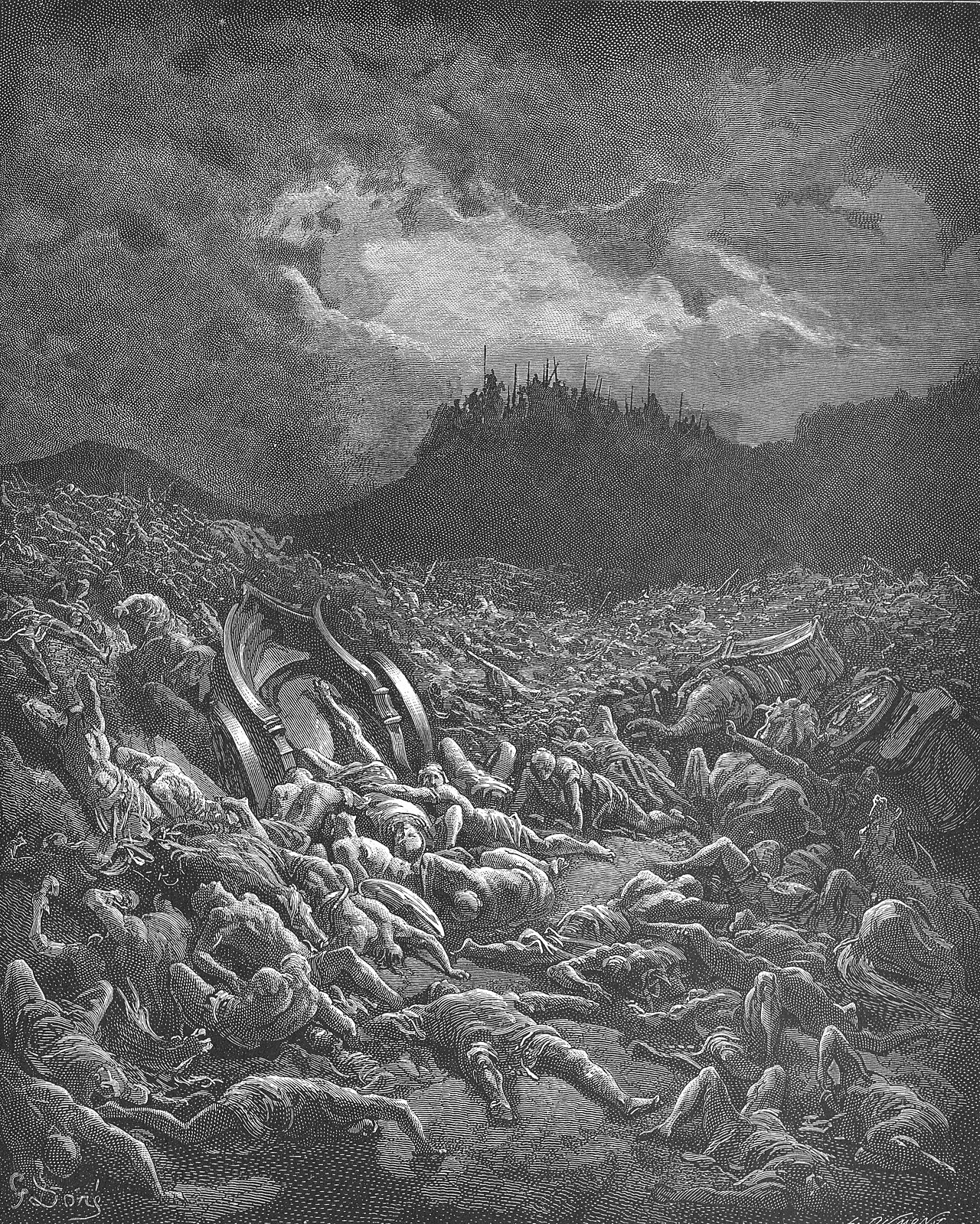
This page draws on Adam Clarke, Commentary on the Bible; Jamieson, Fausset & Brown, Commentary Critical and Explanatory on the Whole Bible; John Gill, Exposition of the Old Testament (1748-1763); Keil, The Books of the Chronicles and Matthew Henry, Commentary on the Whole Bible.