
1 Thessalonians 1:10
in 1 Thessalonians 1and to await His Son from heaven, whom He raised from the dead—Jesus our deliverer from the coming wrath.
BSB
The same verse in ASV and KJV ▾
ASV
and to wait for his Son from heaven, whom he raised from the dead, even Jesus, who delivereth us from the wrath to come.
KJV
And to wait for his Son from heaven, whom he raised from the dead, even Jesus, which delivered us from the wrath to come.
⋯
This verse in 1 Thessalonians 1
Commentary
15 notes on this verseSince those who serve Him deserve a reward, and because this is the case with the Thessalonians, it remains for them to expect a reward; so Paul says to them, "to wait for his Son," that is, God, descending from heaven. "Be like men who …
This site's exposition
to wait for his Son from heaven
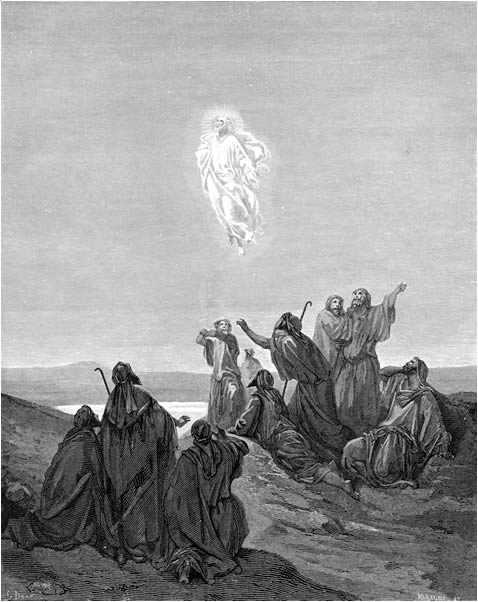
The first chapter ends where every chapter of this letter ends, on the coming of the Lord: to wait for his Son from heaven, whom he raised from the dead. The waiting is expectancy, not idleness, and its object is a person, even Jesus, which delivered us from the wrath to come, the deliverance stated as his settled office. The wrath to come names a real day ahead, and the letter will teach at 5:9 that God hath not appointed us to wrath; the two verses belong together.
The record, by era
The Church Fathers1 voice
"And to wait," he says, "for His Son from heaven, whom He raised from the dead, even Jesus, which delivereth us from the wrath to come." "And to wait," he says, "for His Son from heaven"; Him that was crucified, Him that was buried; to wait for Him from heaven. And how "from heaven"? "Whom He raised from the dead." You see all things at the same time; both the Resurrection, and the Ascension, and the second Coming, the Judgment, the retribution of the just, the punishment of the wicked. "Jesus," he says, "which delivereth us from the wrath to come." This is at once comfort, and exhortation, and encouragement. For if He raised Him from the dead, and He is in heaven, and thence will come, (and ye believed in Him; for if ye had not believed in Him, ye would not have suffered so much), this of itself is sufficient comfort. These shall suffer punishment, which he says in his second epistle, and you will have no small consolation. And to "wait," he says, "for His Son from heaven." The terrible things are in hand, but the good things are in the future, when Christ shall come from heaven. See how much hope is required, in that He who was crucified has been raised, that He has been taken up into heaven, that He will come to judge the quick and the dead.
The Medieval Church2 voices
Jesus, who has rescued us from the approaching wrath that is the punishment of Gehenna.
And this is a characteristic of the same method; because in the form of a narrative he taught them to await the Son of God. For the greatest consolation for those who grieve is that the One who suffered has risen and is in heaven, …
The Puritans and the Awakening2 voices
Whom he hath raised from the dead - In proof of his future coming to judgment. Who delivereth us - He redeemed us once; he delivers us continually; and will deliver all that believe from the wrath, the eternal vengeance, which will then come upon the ungodly.
He came to purchase salvation, and will, when he comes again, bring salvation with him, full and final deliverance from sin, and death, and hell, from that wrath which is yet to come upon unbelievers, and which, when it has once come, will be yet to come, because it is everlasting fire prepared for the devil and his angels, Mt. xxv.
8 more voices on this verse
The Puritans and the Awakening1 voice
And to wait for his Son from heaven,....
The Nineteenth Century7 voices
‘For they themselves show of us what manner of entering in we had unto you, and how ye turned to God from idols to serve the living and true God; and to wait for his Son from heaven, whom he raised from the dead, even Jesus, which delivered us from the wrath to come.’1 Thessalonians 1:9-10. IN Thessalonica the conversions to the faith were remarkable. Paul came there without prestige, without friends, when he was in the very lowest condition; for he had just been beaten and imprisoned at Philippi, and had fled from that city.
A commentator
Jamieson, Fausset & Brown1802–1910
Commentary Critical and Explanatory on the Whole Bible (1871)
This verse distinguishes them from the Jews, as 1Th 1:9 from the idolatrous Gentiles. To wait for the Lord's coming is a sure characteristic of a true believer, and was prominent amidst the graces of the Thessalonians (1Co 1:7, 8).
‘For they themselves show of us what manner of entering in we had unto you, and how ye turned to God from idols to serve the living and true God; and to wait for his Son from heaven, whom he raised from the dead, even Jesus, which delivered us from the wrath to come.’1 Thessalonians 1:9-10. IN Thessalonica the conversions to the faith were remarkable. Paul came there without prestige, without friends, when he was in the very lowest condition; for he had just been beaten and imprisoned at Philippi, and had fled from that city. Yet it mattered not in what condition the ambassador might be; God, who worketh mighty things by weak instruments, blessed the word of his servant Paul. No doubt when the apostle went into the synagogue to address his own countrymen he had great hopes that, by reasoning with them out of their own scriptures, he might convince them that Jesus was the Christ. He soon found that only a few would search the Scriptures and form a judgment on the point; but the bulk of them refused, for we read of the Jews of Berea, to whom Paul fled from Thessalonica, ‘These were more noble than those in Thessalonica, in that they received the word with all readiness of mind, and searched the scriptures daily, whether those things were so.’ Paul must have felt disappointed with his own countrymen; indeed, he had often cause to do so. His heart was affectionately warm toward them, but their hearts were very bitter towards him, reckoning him to be a pervert and an apostate. But if he seemed to fail with the Jews, it is evident that he was abundantly successful with the Gentiles. These turned from their idols to serve the living God, and their turning was so remarkable that the Jew’s charged Paul and Silas with turning the world upside down.
A commentator
Charles Spurgeon1834–1892
The Metropolitan Tabernacle Pulpit, Sermon No. 3551: “The Gospel in Power” (lightly modernized text, CCEL edition) · Written before 1892.
proposed
A WORKMAN likes to see that he has been doing something. It is very dispiriting if he has spent much toil and can see no result. God's workmen by faith would continue still to labor, even if they saw nothing come of it, but it is much more comforting, much more easy for them to continue in service when they see that God is blessing them.
A commentator
Charles Spurgeon1834–1892
The Metropolitan Tabernacle Pulpit, Sermon No. 3551: “The Gospel in Power” (lightly modernized text, CCEL edition) · Written before 1892.
proposed
A WORKMAN likes to see that he has been doing something. It is very dispiriting if he has spent much toil and can see no result. God's workmen by faith would continue still to labor, even if they saw nothing come of it, but it is much more comforting, much more easy for them to continue in service when they see that God is blessing them. Now it is not wrong for a Christian minister to speak about the conversions that have been worked under his ministry, for Paul says that he would have done so, only that others did it so constantly that there was no need of it. Paul, however, would not, under any circumstances, have done a wrong thing and, therefore, we gather that it is sometimes most allowable that we should see what has been done and should speak of it—and the more especially because if any good is done by any ministry, it is God that has done it—and all the glory is due to Him and to Him, alone! Not to speak of what God has done would be ingratitude. It might have a semblance of humility, but in reality it would be disloyalty to the Most High. Paul, therefore, did not hesitate to speak of his converts at Thessalonica and of their good character—and of the good fruit which they had borne and the way in which they had spread abroad the Gospel. He did not boast—he gave God the glory of it, but he did speak of what had been done. And we think we may do the same in any measure in which God shall bless our work—any one of us may tell of it to the praise and glory of God and to the encouragement of our fellow laborers. Now the Apostle in this passage tells us what God had done at Thessalonica. We will proceed at once, for our text is long—we will proceed at once to the handling of it. And you will note that he tells us, first, what he had preached at Thessalonica. Then how it had come to the people. And thirdly, what had been the result of this to themselves.
And to wait for his Son from heaven - To expect a future state of glory, and resurrection of the body, according to the Gospel doctrine, after the example of Jesus Christ, who was raised from the dead, and ascended unto heaven, ever to appear in the presence of God for us. Delivered us from the wrath to come - From all the punishment due to us for our sins, and from the destruction which is about to come on the unbelieving and impenitent Jews. This was the news, the sounding out, that went abroad concerning the converted Thessalonians.
A commentator
Albert Barnes1798–1870
Notes, Explanatory and Practical, on the Old and New Testaments (1832-1869)
proposed
And to wait for his Son from heaven - It is clear from this and from other parts of these two Epistles, that the return of the Lord Jesus to this world was a prominent subject of the preaching of Paul at Thessalonica. No small part of these Epistles is occupied with stating the true doctrine on this point (1 Th 4:v.), and in correcting the errors which prevailed in regard to it after the departure of Paul. Perhaps we are not to infer, however, that this doctrine was made more prominent there than others, or that it had been inculcated there more frequently than it had been elsewhere, but the apostle adverts to it here particularly because it was a doctrine so well fitted to impart comfort to them in their trials 1Th 4:13-18, and because, in that connection, it was so well calculated to rouse them to vigilance and zeal; 1Th 5:1-11. He makes it prominent in the second Epistle, because material errors prevailed there in reference to it which needed to be corrected. In the passage before us, he says that the return of the Son of God from heaven was an important point which had been insisted on when he was there, and that their conduct, as borne witness to by all, had shown with what power it had seized upon them, and what a practical influence it had exerted in their lives. They lived as if they were” waiting” for his return. They fully believed in it; they expected it. They were looking out for it, not knowing when it might occur, and as if it might occur at any moment. They were, therefore, dead to the world, and were animated with an earnest desire to do good. This is one of the instances which demonstrate that the doctrine that the Lord Jesus will return to our world, is fitted, when understood in the true sense revealed in the Scriptures, to exert a powerful influence on the souls of people. […]
The words behind it
22 Greek wordsEvery Greek word of this verse in the order it stands, with what it means and the door to its own study. The last column counts the times a word stands in the whole Bible: the rarer the word, the more the places it appears belong together.
| Greek | Sound | Meaning | Word study | In the Bible |
|---|---|---|---|---|
| καὶ | kai | and | G2532 → | 9120 times |
| ἀναμένειν | anamenein | to await | G362 → | |
| τὸν | ton | the | G3588 → | 19766 times |
| υἱὸν | huion | Son | G5207 → | 377 times |
| αὐτοῦ | autou | of Him | G846 → | 5565 times |
| ἐκ | ek | from | G1537 → | 911 times |
| τῶν | ton | the | G3588 → | 19766 times |
| οὐρανῶν, | ouranon | heavens, | G3772 → | |
| ὃν | hon | whom | G3739 → | 1405 times |
| ἤγειρεν | egeiren | He raised | G1453 → | |
| ἐκ | ek | out from | G1537 → | 911 times |
| τῶν | ton | the | G3588 → | 19766 times |
| νεκρῶν, | nekron | dead, | G3498 → | |
| Ἰησοῦν | iesoun | Jesus | G2424 → | 908 times |
| τὸν | ton | who | G3588 → | 19766 times |
| ῥυόμενον | rhuomenon | is delivering | G4506 → | |
| ἡμᾶς | hemas | us | G3165 → | 1936 times |
| ἐκ | ek | from | G1537 → | 911 times |
| τῆς | tes | the | G3588 → | 19766 times |
| ὀργῆς | orges | wrath | G3709 → | 36 times |
| τῆς | tes | which | G3588 → | 19766 times |
| ἐρχομένης.¶ | erchomenes | is coming. | G2064 → | 628 times |
καὶand
kaiG2532 →9120 times
ἀναμένεινto await
anameneinG362 →
τὸνthe
tonG3588 →19766 times
υἱὸνSon
huionG5207 →377 times
αὐτοῦof Him
autouG846 →5565 times
ἐκfrom
ekG1537 →911 times
τῶνthe
tonG3588 →19766 times
οὐρανῶν,heavens,
ouranonG3772 →
ὃνwhom
honG3739 →1405 times
ἤγειρενHe raised
egeirenG1453 →
ἐκout from
ekG1537 →911 times
τῶνthe
tonG3588 →19766 times
νεκρῶν,dead,
nekronG3498 →
ἸησοῦνJesus
iesounG2424 →908 times
τὸνwho
tonG3588 →19766 times
ῥυόμενονis delivering
rhuomenonG4506 →
ἡμᾶςus
hemasG3165 →1936 times
ἐκfrom
ekG1537 →911 times
τῆςthe
tesG3588 →19766 times
ὀργῆςwrath
orgesG3709 →36 times
τῆςwhich
tesG3588 →19766 times
ἐρχομένης.¶is coming.
erchomenesG2064 →628 times
A shaded row is a word that stands 400 times or fewer in the Bible.
The walk
8 stopsEach card is a verse this one points to, and under it the verses that one points to in turn. Where several paths arrive at the same place, that place is listed first: the text keeps returning to it.
Through
1 Thessalonians 5:9For God has not appointed us to suffer wrath, but to obtain salvation through our Lord Jesus Christ.
it leads to
- 1 Peter 2:10
Once you were not a people, but now you are the people of God; once you had not received mercy, but now you have received mercy.
- 2 Timothy 2:10
For this reason I endure all things for the sake of the elect, so that they too may obtain the salvation that is in Christ Jesus, with eternal glory.
- Acts 13:48
When the Gentiles heard this, they rejoiced and glorified the word of the Lord, and all who were appointed for eternal life believed.
- Proverbs 16:4
The LORD has made everything for His purpose—even the wicked for the day of disaster.
- 1 Peter 2:10
Through
Matthew 3:7But when John saw many of the Pharisees and Sadducees coming to his place of baptism, he said to them, “You brood of vipers, who warned you to flee from the coming wrath?
it leads to
- Matthew 12:34
You brood of vipers, how can you who are evil say anything good? For out of the overflow of the heart, the mouth speaks.
- Matthew 22:23
That same day the Sadducees, who say there is no resurrection, came to Jesus and questioned Him.
- Romans 5:9
Therefore, since we have now been justified by His blood, how much more shall we be saved from wrath through Him!
- Matthew 23:33
You snakes! You brood of vipers! How will you escape the sentence of hell?
- Matthew 12:34
Where this verse is studied
On this page
Studies1
About 1 Thessalonians
This page draws on 13 works. Open the list of works
This page draws on Adam Clarke, Commentary on the Bible; Albert Barnes, Notes on the New Testament; Albert Barnes, Notes, Explanatory and Practical, on the Old and New Testaments (1832-1869); Charles Spurgeon, The Metropolitan Tabernacle Pulpit, Sermon No. 1806: “A Summary of Experience and a Body of Divinity” (lightly modernized text, CCEL edition); Charles Spurgeon, The Metropolitan Tabernacle Pulpit, Sermon No. 3551: “The Gospel in Power” (lightly modernized text, CCEL edition); Jamieson, Fausset & Brown, Commentary Critical and Explanatory on the Whole Bible; John Chrysostom, Homily on 1 Thessalonians 2; John Gill, Exposition of the New Testament (1746-1748); John Wesley, Explanatory Notes upon the New Testament; Matthew Henry, Commentary on the Whole Bible; Nicholas of Lyra, Commentary (church-history corpus); Theophylact of Ohrid, Commentary on 1 Thessalonians and Thomas Aquinas, Commentary on 1 Thessalonians.